
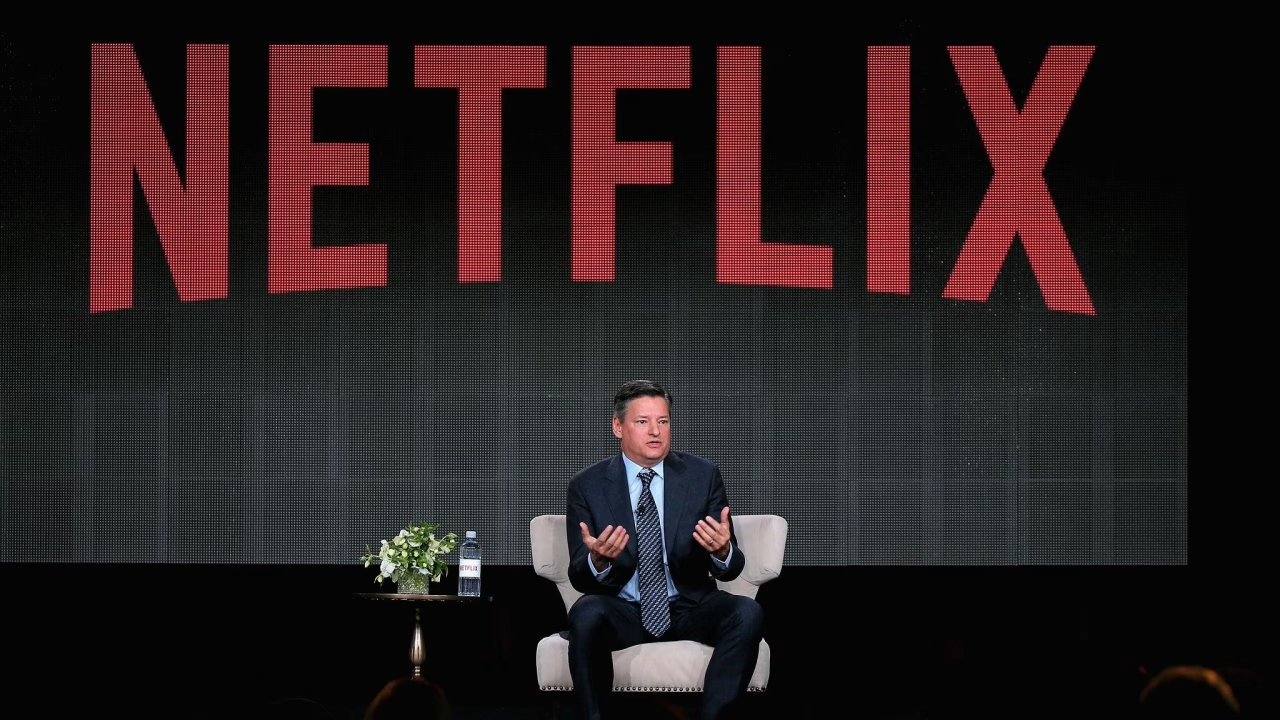
Netflix shares fell more than 7% after the streaming giant released its second-quarter 2026 financial results, with investors reacting negatively to its softer-than-expected third-quarter outlook. While the company delivered solid year-over-year revenue growth, Wall Street focused on slowing momentum, lower guidance, and questions surrounding long-term engagement.
The market reaction pushed Netflix stock to a new 52-week low, extending its decline to more than 40% over the past year. Despite that drop, some analysts believe the company still has multiple avenues for future growth through advertising, live events, and sports streaming.
Why Investors Reacted to Netflix’s Latest Earnings
Netflix reported Q2 revenue of $12.56 billion, up roughly 13% from a year earlier, while earnings per share reached $0.80, broadly matching analyst expectations. However, the company projected Q3 revenue of $12.86 billion and EPS of $0.82, both below Wall Street estimates, triggering concerns about slowing growth.
According to The Fool, Netflix also narrowed its full-year revenue guidance, signaling a more cautious outlook despite continued expansion in its core business.
Paolo Pescatori of PP Foresight said,
“This guidance reflects a combination of management caution and natural growth deceleration rather than a sharp business deterioration.”
He added that Netflix remains financially solid but has entered a more mature growth phase where investor expectations leave little room for disappointment.

Viewing Transparency and Growth Strategy Under Scrutiny
Another major concern was Netflix’s decision to reduce its “What We Watched” engagement report from twice a year to once annually beginning in 2027. The company said it wants investors to focus on financial performance rather than viewing hours.
During the earnings call, co-CEO Greg Peters explained,
“There is no linear relationship between viewing time and revenue or profit, as not all viewing hours hold the same value.”
Meanwhile, co-CEO Ted Sarandos rejected speculation that audience engagement is weakening, saying season-two viewing has
“slightly improved compared to last year.”
Netflix also reiterated that advertising revenue is expected to double to $3 billion this year, supported by live programming including the NFL, WWE, MLB, and the FIFA Women’s World Cup. The company is also reportedly exploring future sports rights opportunities, including potential bids for the 2030 and 2034 FIFA World Cups, though no agreement has been announced.
Despite investor concerns, firms including William Blair and Guggenheim Securities continue to maintain positive views on Netflix, arguing that advertising expansion, paid account sharing, and live content could support long-term growth even as the streaming market becomes more competitive.