
Clock is one of the most thought-provoking psychological horror films released on Hulu. Directed by Alexis Jacknow and starring Dianna Agron as Ella Patel, the movie explores the intense societal pressure placed on women to have children. Unlike traditional horror films that rely on monsters or supernatural threats, Clock turns its focus toward psychological manipulation, bodily autonomy, and the fear of losing control over one’s own identity.
Throughout the film, Ella undergoes an experimental treatment designed to awaken her supposedly “broken” maternal instincts. As the treatment progresses, she experiences disturbing hallucinations, paranoia, and increasingly violent behavior. By the time the film reaches its final act, reality and delusion have become almost impossible to separate.
The ending leaves viewers with several questions. Did Ella actually kill her father? Did she survive her fall from the cliff? And what is the meaning of the strange fish-like creature in the final scene? Here is a complete breakdown of the Clock ending.
The Truth Behind Ella’s Hallucinations
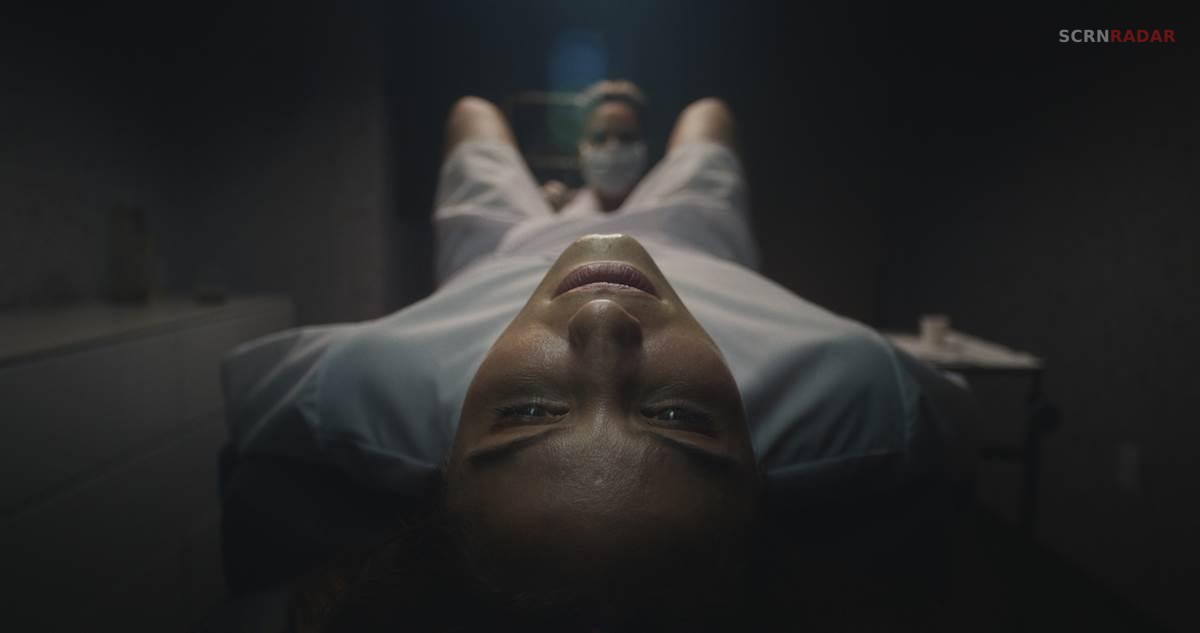
One of the biggest revelations in Clock is that the experimental treatment is causing severe psychological damage. Throughout the movie, Ella sees a terrifying tall woman, hears the ticking of a grandfather clock, and experiences visions related to childbirth and motherhood. She believes these are signs that her maternal instincts are finally awakening.
However, the film gradually reveals that these experiences are symptoms of psychosis triggered by the treatment. Ella repeatedly lies about her worsening condition because she fears being removed from the program. Her desperation to understand what is happening causes her to become increasingly detached from reality.
The hallucinations are symbolic of the pressure surrounding her. The grandfather clock represents the idea of a “biological clock,” while the tall woman embodies the fear and expectations that haunt Ella throughout the story.
The film’s most surprising twist comes near the end. Earlier, Ella believes she destroyed her father’s grandfather clock during a hallucination-filled episode. She later confesses this to her husband, Aidan, assuming she merely damaged a family heirloom.
But after fleeing the fertility clinic, Ella receives a phone call from Aidan that changes everything. He reveals that police are searching for her because she did not destroy the clock at all. Instead, she attacked and killed her father while under the influence of the treatment-induced psychosis.
This revelation reframes much of the movie. The audience has been experiencing events largely through Ella’s distorted perspective, making her an unreliable narrator. The tragedy underscores how completely the treatment has destroyed her grip on reality.
Why Ella Removes the Implant
Before learning the truth about her father, Ella discovers that her husband secretly helped arrange her participation in the experimental program. Aidan believed he was helping her find the desire to have children, but his deception becomes the ultimate betrayal.
Realizing that her longing for motherhood has been artificially manufactured, Ella confronts Dr. Simmons and demands the removal of the implant. When the doctor refuses, Ella takes matters into her own hands and forcibly removes it herself.
This moment symbolizes Ella reclaiming ownership of her body and rejecting the idea that she must become a mother to be complete. It is the film’s strongest statement about bodily autonomy and personal choice.
Did Ella Die at the End?
After learning that she killed her father, Ella runs from the police and jumps off a cliff. The next scene shows her lying peacefully near the water, seemingly unharmed despite the fall. A strange fish-like creature then crawls onto the shore and approaches her.
The movie never explicitly confirms whether Ella survives. However, many viewers and critics interpret the sequence as a death vision. Earlier in the film, Ella’s father describes a near-death experience in which he saw the origins of his family line stretching back through evolution. The fish-like creature appears to reference that story directly.
Under this interpretation, Ella has died from the fall and is witnessing the same ancestral vision her father described. The film intentionally leaves room for interpretation, but the imagery strongly suggests that she has crossed into death rather than survived.
What the Ending Really Means
At its core, Clock is not about pregnancy or fertility. It is about the consequences of forcing someone into a role they never wanted. The horror comes from society’s insistence that motherhood is the natural endpoint for every woman.
Ella’s tragic journey shows how relentless pressure from family, friends, and cultural expectations can become psychologically destructive. Whether she dies at the end or not, she loses everything because others refuse to accept her decision not to have children.
The final scene serves as a haunting reminder that personal autonomy matters. By turning the concept of the biological clock into a psychological nightmare, Clock delivers a disturbing but powerful message that lingers long after the credits roll.