Christmas in the Heartland is the kind of holiday movie that audiences can predict within its first twenty minutes, yet that familiarity is also part of its appeal. The film follows two teenage girls from drastically different backgrounds who meet during a Christmas trip and decide to switch identities to experience each other’s lives. The premise clearly echoes classics like The Parent Trap and The Prince and the Pauper, but the movie leans heavily into cozy holiday themes instead of trying to reinvent the formula.
Directed by Harvey Lowry, the movie stars Sierra McCormick and Brighton Sharbino as Kara and Jessie, two girls who slowly realize that wealth and happiness are not always connected. While critics and viewers remain divided on the film’s execution, Christmas in the Heartland has gained a small audience among fans of low-stakes Christmas dramas. The movie’s strengths come from its sincerity, family-friendly tone, and emotional warmth rather than originality or cinematic polish.
What Christmas in the Heartland Is About
The story centers on Kara Gentry, a wealthy private-school student traveling to Oklahoma for Christmas, and Jessie Wilkins, a girl from a financially struggling family making the same journey. After meeting on a flight, the two discover that despite their different lifestyles, they share many insecurities and emotional struggles. They impulsively decide to switch places and spend Christmas with each other’s families.
The movie uses this setup to explore class differences in a very light and family-friendly way. Kara experiences the warmth and closeness of Jessie’s modest but loving family, while Jessie enters Kara’s world of wealth, social expectations, and emotional distance. Predictably, both girls learn important life lessons before the truth eventually comes out.
Streaming descriptions for the film market it as a story about “seeing how the other half lives,” and that summary accurately captures the movie’s central theme. The plot is simple and straightforward, but the movie commits fully to its holiday tone rather than overcomplicating the premise.

The Film’s Biggest Strength Is Its Holiday Atmosphere
Even critics who disliked the movie often acknowledged that it succeeds at creating a festive holiday environment. From snowy small-town decorations to Christmas pageants and family dinners, the movie constantly reminds viewers that it is designed as comfort entertainment.
The Oklahoma setting also helps differentiate it slightly from more generic Hallmark-style productions. A review from The Lost Ogle specifically noted that the film actually feels rooted in rural Oklahoma culture, even if some performances and accents occasionally become exaggerated.
The film clearly prioritizes emotional coziness over realism. Everything from the lighting to the soundtrack is designed to create a warm seasonal atmosphere. For viewers who primarily watch Christmas movies for comfort and familiarity, that approach works surprisingly well.
This holiday tone becomes especially important because the movie’s plot itself is extremely predictable. Without the Christmas charm, the story likely would not hold much attention. Fortunately, the movie understands exactly what audience it is targeting.
Sierra McCormick and Brighton Sharbino Carry the Movie
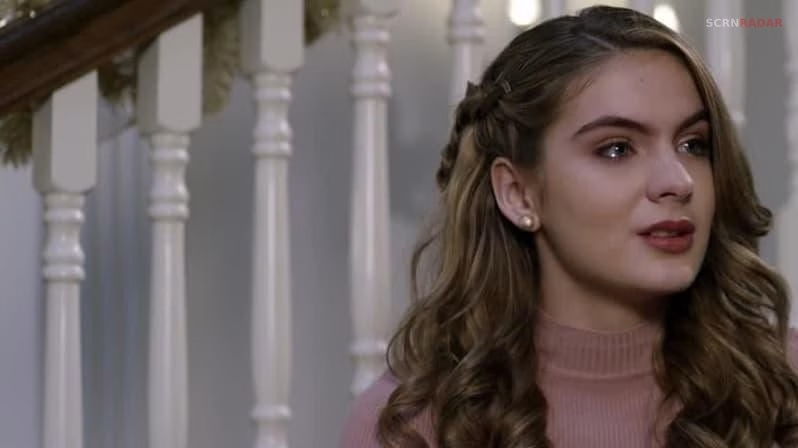
The strongest part of Christmas in the Heartland is the chemistry between its two lead actresses. Sierra McCormick and Brighton Sharbino keep the film watchable even during its most cliché moments. Their performances give emotional sincerity to scenes that could easily have felt overly artificial.
McCormick handles Kara’s emotional loneliness well, especially during moments where the character realizes how disconnected her wealthy family has become. Brighton Sharbino brings warmth and relatability to Jessie, making her immediately likable from the beginning of the film.
The movie works best when the two characters interact directly. Their friendship feels believable enough that audiences become invested in their journey despite the predictable script. Several audience reviews on Rotten Tomatoes also praised the lack of unnecessary drama between the girls, which separates the film from many teen-focused holiday movies.
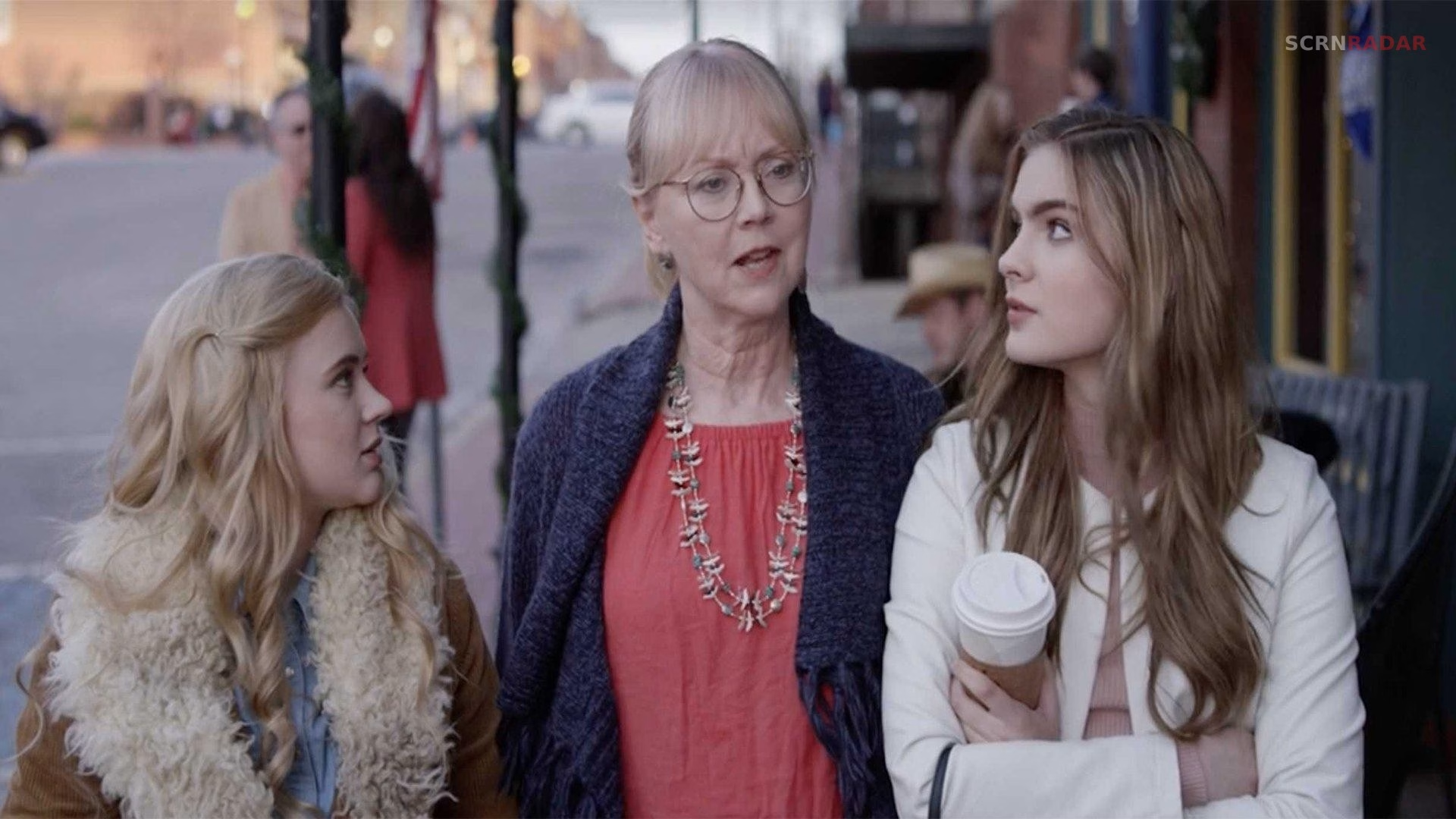
Neither performance is particularly groundbreaking, but both actresses understand the tone of the movie and deliver exactly what the story requires.
The Story Is Extremely Predictable
There is no avoiding the biggest criticism of the film: nearly every major plot point can be anticipated far in advance. The identity-switch storyline follows a formula audiences have seen many times before, and the movie rarely attempts to subvert expectations.
Reviews from sites like The Movie Buff openly described the film as predictable, though still somewhat charming because of its sincerity. The movie does not aim for major twists or emotional shocks. Instead, it focuses on delivering a comforting and safe viewing experience.
For some viewers, this predictability becomes part of the appeal. Christmas movies often function as emotional comfort food rather than suspense-driven storytelling. Audiences generally know the conflicts will be resolved positively and that family bonds will ultimately triumph.
However, viewers looking for a more layered or emotionally complex holiday film may find the script too simplistic. The dialogue occasionally feels overly explanatory, and some emotional moments are handled with very little subtlety.
The Family Themes Work Better Than the Class Commentary
Although the movie introduces themes about wealth and social differences, it is far more successful when focusing on family relationships. The class commentary remains fairly surface-level throughout the story.
Kara’s wealthy family is emotionally distant, while Jessie’s financially struggling household is portrayed as loving and supportive. The contrast is intentionally obvious and leaves little room for nuance. Still, the emotional sincerity behind these family moments helps the movie remain engaging.
The film’s strongest scenes involve characters reconnecting with relatives or realizing what they have been missing emotionally. Those quieter moments feel more authentic than the broader “rich versus poor” storyline.
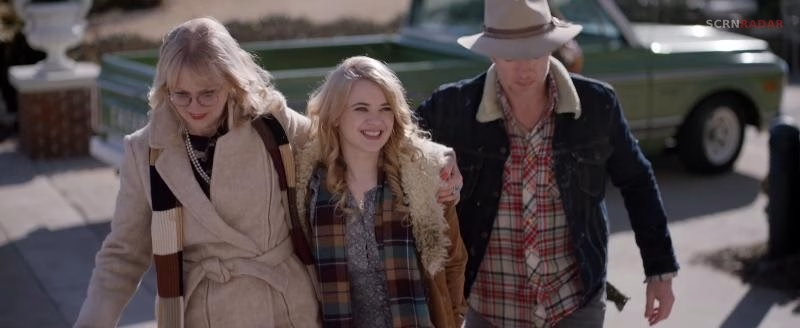
Common Sense Media also highlighted the film’s positive messages about family and authenticity in its review. While the publication criticized the movie’s uninspired storytelling, it acknowledged the movie’s emphasis on being true to oneself and valuing family connections.
That emotional core ultimately gives the movie enough heart to overcome some of its weaker writing.
The Movie Occasionally Feels Like a Hallmark Clone
One reason Christmas in the Heartland struggles critically is because it often feels assembled from familiar holiday movie ingredients. Many scenes resemble moments viewers have already seen in Hallmark and Lifetime Christmas films.
There are Christmas pageants, small-town diners, cozy family gatherings, and multiple emotional speeches about the meaning of Christmas. The movie rarely surprises audiences visually or narratively.
At times, the production quality also feels closer to a made-for-TV holiday special than a theatrical film. Some supporting performances are uneven, and certain emotional scenes feel overly sentimental. Reviews from both independent bloggers and audience reactions frequently mention the movie’s “straight-to-video” quality.
Still, holiday movie fans are often willing to forgive these flaws if the emotional tone feels genuine. That is largely why the film continues finding seasonal viewers years after release.
Why Some Audiences Still Love the Film
Despite mixed reviews, the movie has developed a loyal audience among viewers who enjoy uncomplicated Christmas stories. Audience responses on Rotten Tomatoes show a clear divide between critics and casual viewers, with some praising the movie’s sweetness and family-friendly tone.
Part of the appeal comes from the film’s complete lack of cynicism. The story genuinely believes in kindness, generosity, and emotional connection. In an entertainment terrain filled with darker or more ironic storytelling, that sincerity feels refreshing to some audiences.
The movie is also accessible for younger viewers and families. While Common Sense Media noted mild bullying and some adult drinking references, the content remains very tame compared to many modern teen-focused films.
This broad accessibility makes the movie an easy seasonal watch for families looking for harmless holiday entertainment.
The Ending Delivers Exactly What the Audience Expects
The film’s ending ties together every major storyline in the most emotionally satisfying way possible. Relationships are repaired, families reconnect, and the characters emerge with a better understanding of themselves.
Importantly, the ending avoids becoming overly dramatic. Instead of punishing the girls harshly for switching identities, the film treats the experience as a valuable lesson for everyone involved. This keeps the tone warm and optimistic through the final scenes.
The Christmas pageant sequence acts as the emotional climax, but the movie wisely focuses more on personal growth than competition. The emotional resolution matters far more than who technically wins.
While some viewers may find the ending too neat or sentimental, it fits perfectly with the movie’s tone and goals. The film never pretends to be anything other than a feel-good holiday story.
Is Christmas in the Heartland Worth Watching?
Whether Christmas in the Heartland works for you depends almost entirely on what you want from a Christmas movie. If you are searching for originality, complex storytelling, or sharp dialogue, the film will likely disappoint you.
However, if you enjoy cozy holiday movies built around warmth, family values, and predictable emotional payoffs, the movie delivers exactly that experience. Its charm comes less from technical filmmaking and more from its earnest tone.
The chemistry between the two leads helps lift material that could otherwise have felt forgettable. Even when the script becomes overly cliché, the performances keep the story emotionally grounded enough to remain watchable.
The movie also benefits from understanding its audience. It never tries to become edgy, ironic, or overly dramatic. Instead, it fully embraces traditional holiday storytelling.