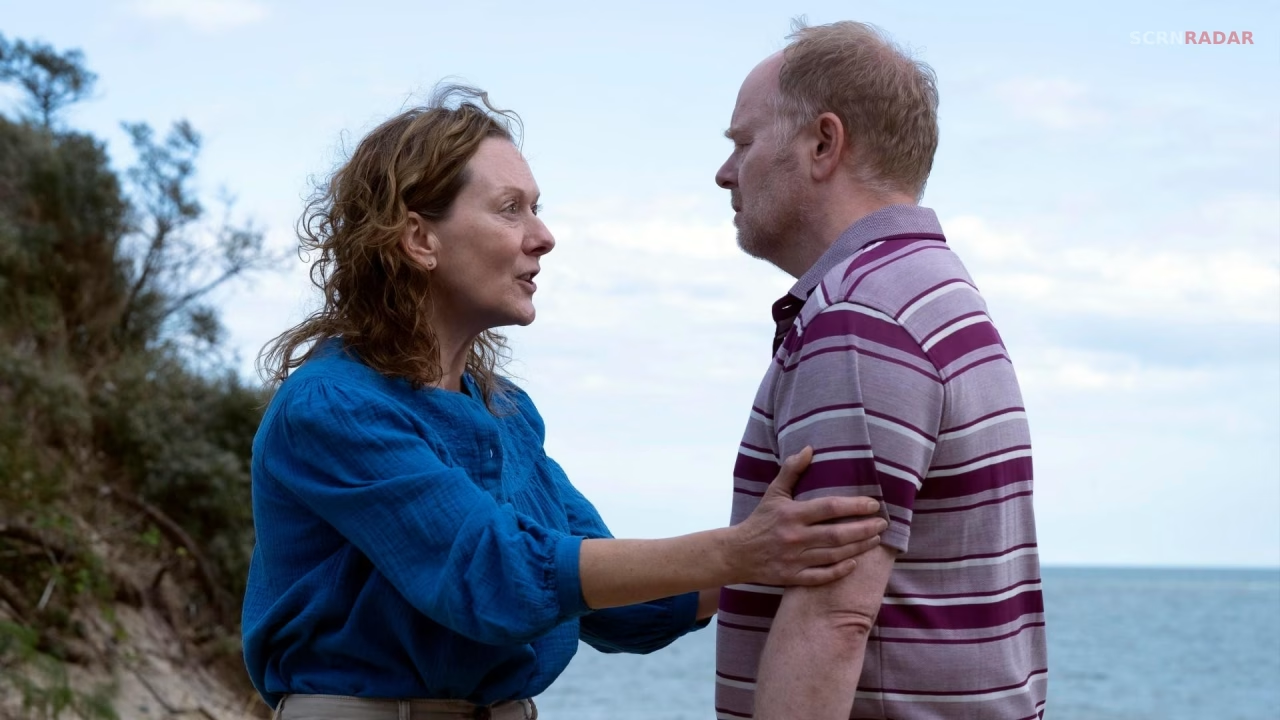
Channel 5’s The Catch stands out not just for its gripping psychological narrative but also for its striking coastal visuals that quietly shape the tone of the series. Led by Jason Watkins, the drama follows a father unraveling under pressure, with the sea acting as both a backdrop and a metaphor for emotional instability. While the show presents itself as set in south-west England, the reality behind its filming locations tells a more intriguing story.
Instead of England, the production was based entirely in Ireland, particularly around Dublin and its surrounding coastal towns. This decision was not just practical but also creative, allowing the filmmakers to access diverse landscapes that mirror the intended setting while offering greater flexibility. Let’s take a deeper look at each major filming location used in The Catch and how these places contribute to the show’s immersive atmosphere.
Bray: The Visual Foundation of the Series
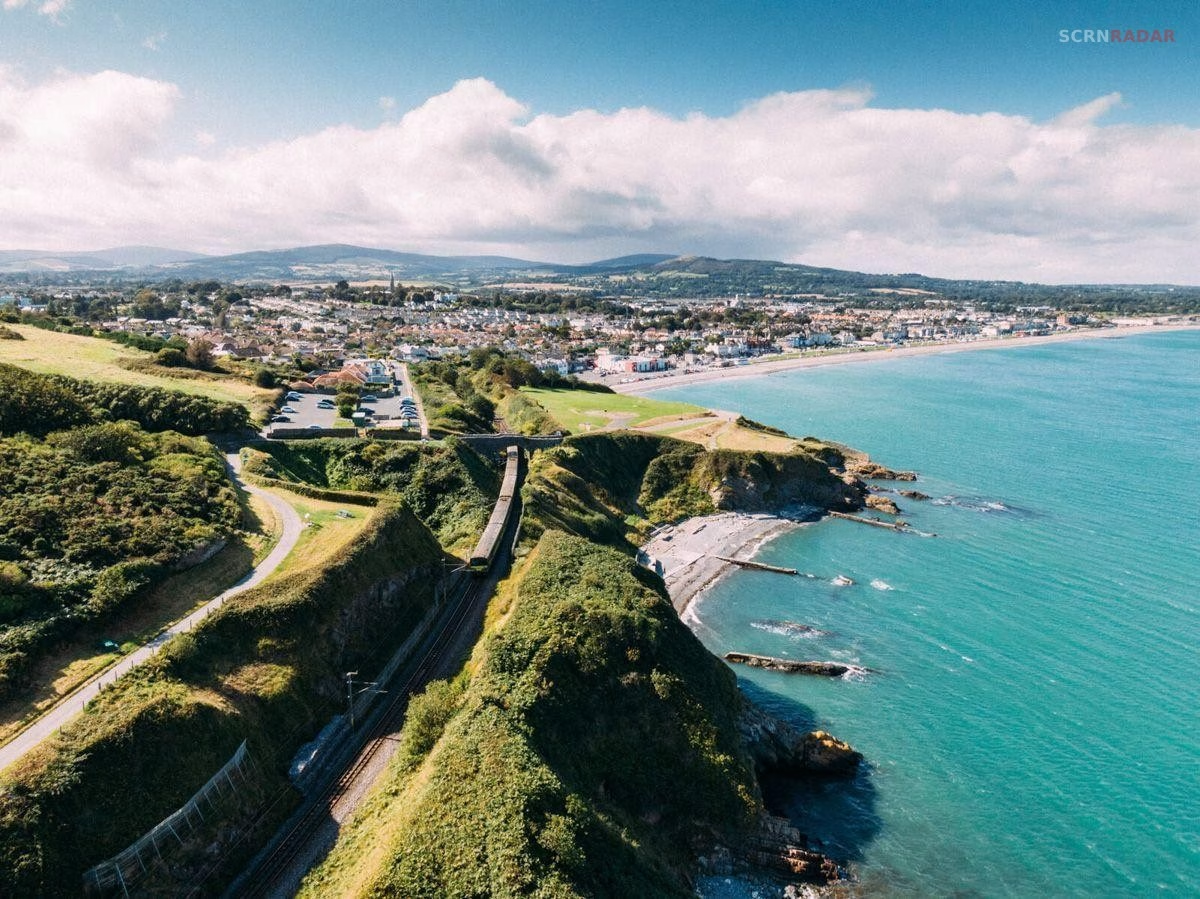
Bray serves as one of the most important filming locations in The Catch, offering a versatile coastal environment that perfectly doubles for an English seaside town. Located just south of Dublin, Bray is known for its long promenade, pebbled beaches, and dramatic cliffs, all of which contribute to the show’s tense and moody aesthetic.
The production team used Bray extensively for exterior shots, particularly those involving open coastline and residential streets. The town’s natural blend of urban and coastal elements makes it ideal for storytelling that requires both intimacy and scale. In The Catch, Bray helps establish the everyday life of the Collier family while subtly reinforcing the sense of isolation that defines the narrative.
Another key asset in Bray is Ardmore Studios, one of Ireland’s most established production facilities. Many interior scenes were likely filmed here, allowing the crew to maintain continuity while controlling lighting and set design. This combination of real-world locations and studio शूटing ensured that the series maintained a consistent visual tone throughout.
What makes Bray particularly effective is its ability to feel familiar yet slightly off. For UK viewers, it resembles coastal towns in England closely enough to maintain immersion, while still offering unique visual textures that enhance the show’s atmosphere.
Balbriggan Harbour: Authenticity and Maritime Realism
Balbriggan Harbour is arguably the most visually distinctive location in The Catch. Situated on the north coast of Dublin, this historic fishing port brings a level of authenticity that would be difficult to replicate on a constructed set.
The harbour was used for several key scenes involving Ed Collier’s life as a fisherman, grounding the story in a believable working environment. The presence of real boats, fishing equipment, and local activity adds texture to the narrative, making the world feel lived-in rather than staged.
Director Robert Quinn chose Balbriggan specifically for its resemblance to English coastal towns. Its architecture, layout, and maritime culture align closely with the show’s fictional setting, allowing it to seamlessly pass as part of south-west England on screen.
The production team reportedly spent several days filming directly within the harbour, working alongside local fishermen. This level of integration not only enhanced realism but also allowed the actors to immerse themselves in the environment. The result is a series of scenes that feel grounded and authentic, elevating the quality of the show.
Beyond its role in The Catch, Balbriggan has been gaining recognition as a filming destination. Its mix of urban streets, coastline, and historic elements makes it a versatile location for various types of productions.
Dublin’s Coastal Identity: A Hidden Advantage
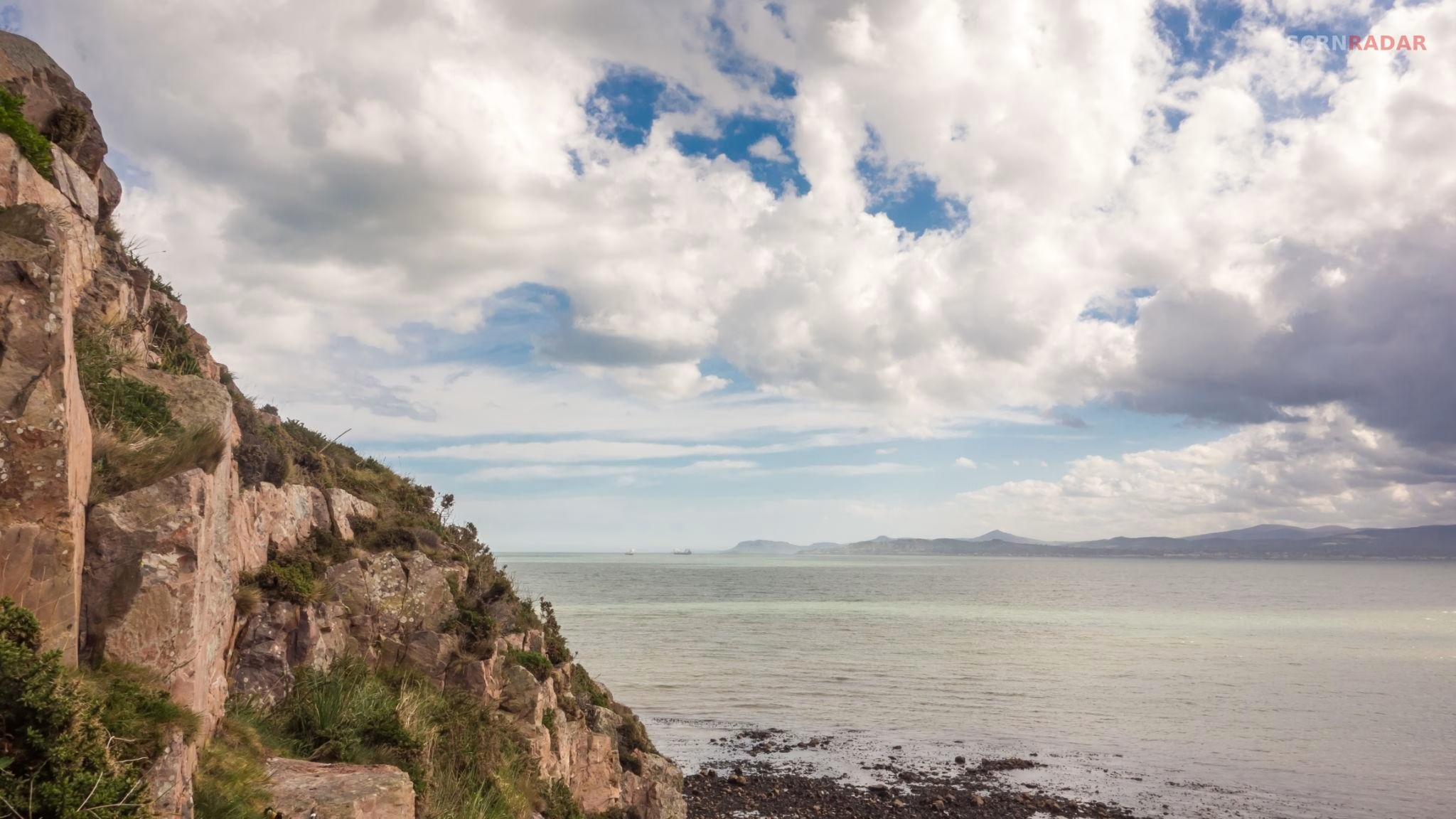
The broader Dublin area plays a crucial role in shaping The Catch, even beyond specific locations like Bray and Balbriggan. What makes Dublin unique is its dual identity as both a bustling capital and a coastal region surrounded by beaches.
This geographic advantage allowed the production to capture a wide range of visuals without traveling far. From quiet residential areas to expansive समुद्री landscapes, Dublin provided everything needed to build the show’s world. Actor Jason Watkins even described the city as a “seaside resort” in some respects, highlighting how its coastal features are often overlooked.
The use of multiple locations across Dublin also enabled seamless editing. Scenes filmed in different parts of the city were combined to create a single cohesive setting, giving the impression of one unified town. This technique is common in television production, but The Catch executes it particularly well due to the visual consistency of its locations.
Dublin’s coastline also benefits from changing weather conditions, which add another layer of atmosphere to the series. From calm, sunlit scenes to overcast, stormy moments, the environment mirrors the emotional shifts of the characters.
Grasmere House: The Collier Family’s Emotional Core
One of the most memorable locations in The Catch is the home of Phyllis, which serves as a central setting for many emotionally charged scenes. This property is believed to be Grasmere House in Sutton, a coastal suburb of Dublin once owned by former Irish President Patrick Hillery.
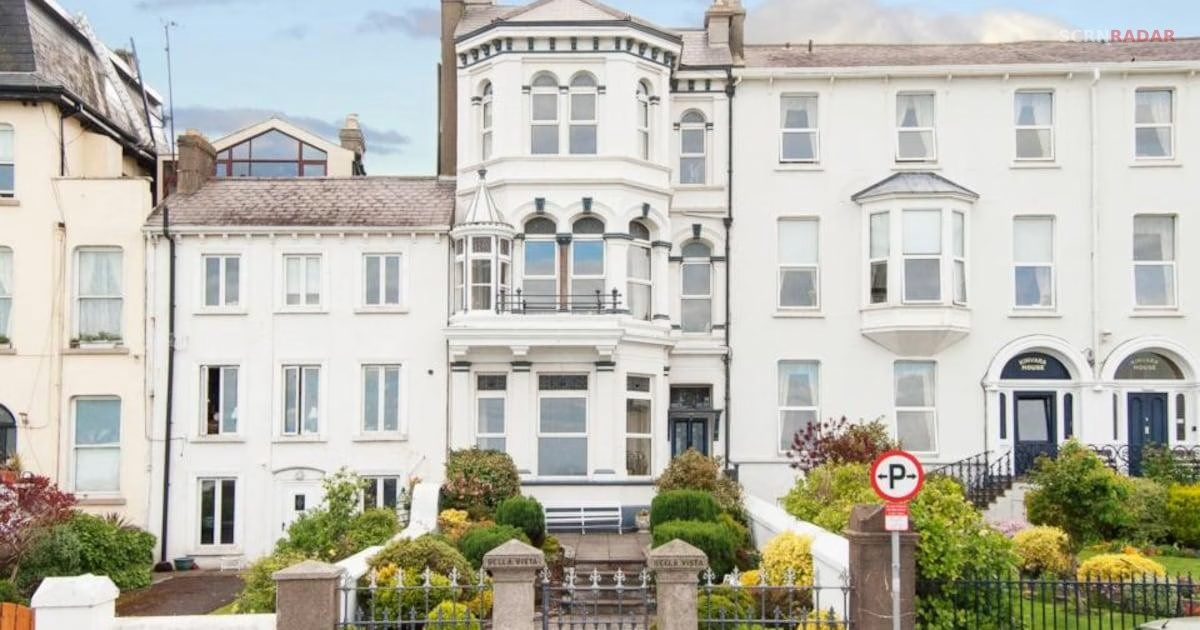
The house’s proximity to the sea makes it visually striking, reinforcing the show’s coastal identity even in domestic scenes. Its architecture, rooted in early 20th-century design, adds a sense of history and permanence, contrasting with the instability experienced by the characters.
Interestingly, the production team enhanced the location by adding sand around the property to match beach scenes filmed elsewhere. This subtle detail demonstrates the level of care taken to maintain visual continuity. By blending practical effects with real locations, the series achieves a polished and believable look.
Grasmere House also highlights how real-world properties can be repurposed for storytelling. Its history as a presidential residence adds an extra layer of intrigue, even if that aspect is not directly referenced in the show.
Filming vs Story Setting: A Strategic Choice
A key aspect of The Catch is the contrast between its filming locations and its narrative setting. While the show depicts a coastal town in England, all production took place in Ireland. This decision reflects a broader trend in the industry, where locations are chosen based on visual suitability and logistical efficiency rather than strict geographic accuracy.
The adaptation also differs significantly from the original novel by T. M. Logan, which is set in Nottingham and the Peak District. By shifting the story to a coastal environment, the series introduces new visual and thematic elements that enhance its psychological tension.
The sea becomes a constant presence, symbolizing uncertainty and emotional depth. This change not only improves the visual appeal of the show but also aligns with its themes of instability and hidden danger.