Netflix’s Bridgerton has charmed audiences worldwide with its lavish costumes, grand ballrooms, and sweeping romance. While the series is set in Regency-era London, much of what viewers see on screen was actually filmed across various historic locations throughout England. From stately homes and royal palaces to charming Georgian streets, the production team carefully selected real-world locations to create the show’s distinctive look.
One of the reasons Bridgerton feels so immersive is its commitment to authentic architecture and breathtaking landscapes. Instead of relying heavily on studio sets, the series uses some of Britain’s most famous heritage sites. Many of these locations have become popular tourist attractions thanks to the show’s global success.
If you’ve ever wondered where Bridgerton is filmed, here’s a closer look at the most important locations that have helped transform modern England into the glamorous world of the Bridgertons.
Ranger’s House Serves as the Bridgerton Family Home
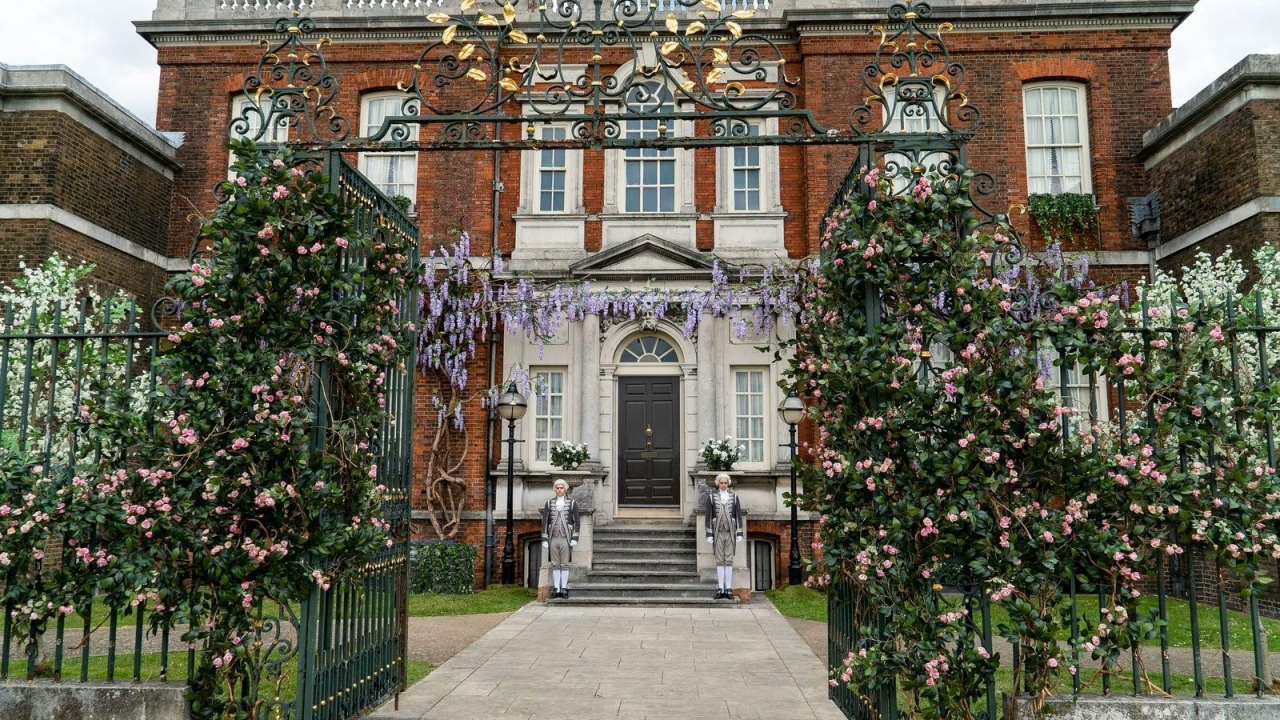
One of the most recognizable locations in the series is Ranger’s House in Greenwich, London. The elegant red-brick Georgian mansion serves as the exterior of the Bridgerton family’s residence, complete with the famous wisteria-covered façade that fans instantly recognize. The property sits on the edge of Greenwich Park and is home to the Wernher Collection, a renowned art collection.
Although viewers associate the house with the Bridgerton family, many of the interior scenes were filmed elsewhere. The production team combined multiple locations to create the luxurious home seen on screen. This approach allows the series to maintain its grand visual style while making use of some of England’s most impressive historic buildings.
Bath Provides the Heart of Regency London
Despite being set in London, many of Bridgerton’s street scenes were filmed in the city of Bath. Known for its remarkably preserved Georgian architecture, Bath offers a perfect stand-in for Regency-era London. Locations such as the Royal Crescent, Bath Street, Abbey Green, and Beauford Square have all appeared throughout the series.
The famous Royal Crescent is one of the most recognizable landmarks featured in the show. Nearby, No. 1 Royal Crescent serves as the exterior of the Featherington family’s home. The production team enhanced certain shots with visual effects, but the architectural beauty seen on screen largely comes from these real locations.
Bath has become a major destination for fans hoping to experience the atmosphere of Bridgerton firsthand. Walking through the city’s historic streets often feels like stepping directly into an episode of the series.
Wilton House and Castle Howard Create the Show’s Grand Estates
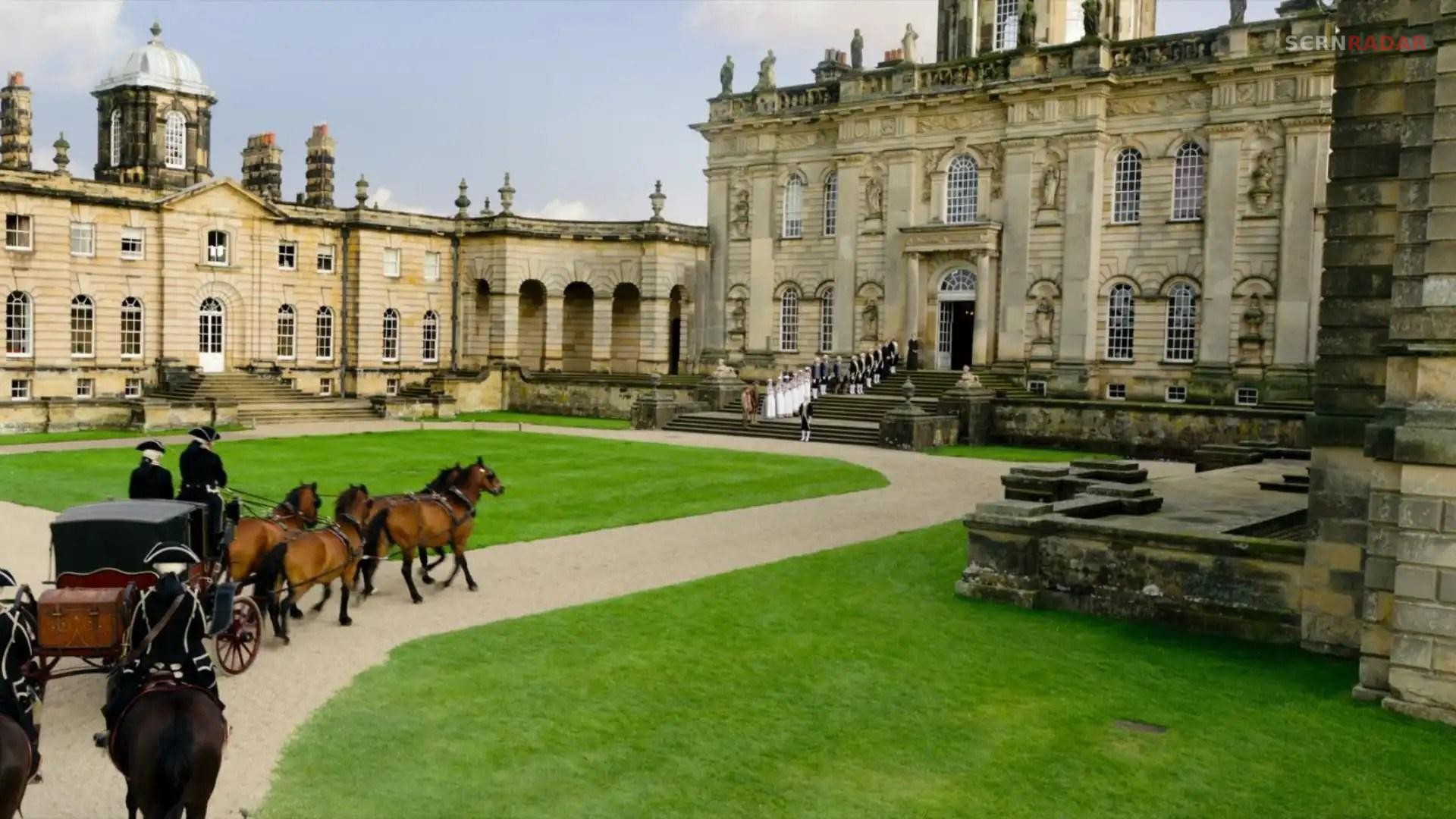
Several of the aristocratic residences featured throughout Bridgerton are actually historic country estates. Wilton House in Wiltshire has been one of the production’s most versatile filming locations. It has doubled as Simon Basset’s residence, sections of Clyvedon Castle, and even royal interiors used throughout the series.
Another important location is Castle Howard in North Yorkshire. The magnificent estate was used as Clyvedon Castle, the country home associated with the Duke of Hastings. Its grand architecture and extensive grounds make it one of the most visually impressive locations in the entire series.
These locations help establish the wealth and prestige of the show’s aristocratic families while adding authenticity that would be difficult to recreate entirely on a soundstage.
Palaces and Estates Continue Expanding the Bridgerton World
As the series has progressed, new filming locations have been added across England. Hampton Court Palace has appeared as part of Queen Charlotte’s royal world, while Wrotham Park became the exterior of Aubrey Hall during Season 2. Other notable locations include Blenheim Palace, Basildon Park, Osterley Park, and Grimsthorpe Castle.
Season 3 and Season 4 introduced even more historic sites to accommodate new storylines and characters. The show’s producers continue to blend multiple estates, gardens, and historic buildings to create a seamless Regency-era setting. This strategy allows Bridgerton to maintain its signature visual grandeur while constantly expanding its world.
The result is a fictional version of London and England that feels both historically inspired and uniquely cinematic.