Albert Wolsky, the acclaimed costume designer whose work defined the visual identity of several classic films, has died at the age of 95. His passing was confirmed by family members, with reports noting that he died at his home in the Hollywood Hills.
Over a career spanning more than five decades, Wolsky became one of the most respected names in costume design. He earned two Academy Awards and multiple nominations, contributing to films that remain culturally significant even today.
His influence extended far beyond fashion, shaping how characters were perceived on screen and helping actors fully inhabit their roles.
The Designer Behind Some of Cinema’s Most Memorable Looks
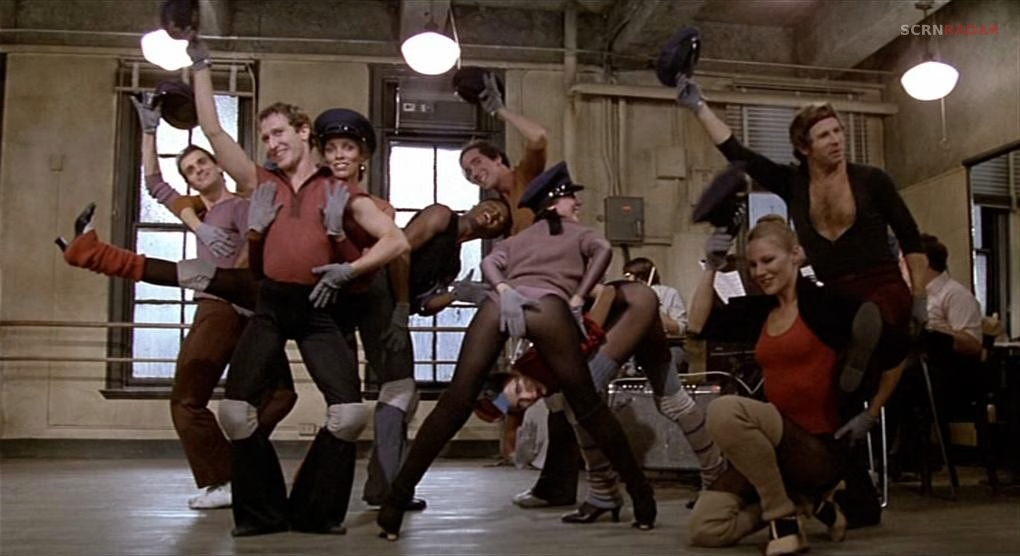
Wolsky’s work touched a wide range of films, but a few stand out as defining moments in his career. He won his first Oscar for All That Jazz, where his designs played a key role in blending fantasy and reality within the film’s narrative.
His second Academy Award came for Bugsy, where he recreated the elegance of the 1940s through meticulously crafted suits, gowns, and period-accurate fabrics.
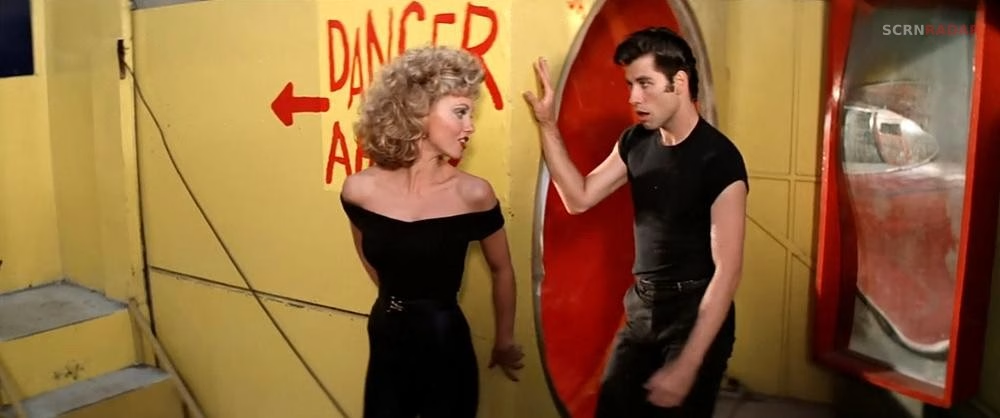
For many audiences, however, his most recognizable contribution remains Grease. The transformation of Sandy, played by Olivia Newton-John, into her iconic black leather outfit became one of the most memorable moments in film history.
Newton-John later recalled the experience, saying,
“When I walked out onto the set in them for the first time, I got quite the reaction — everyone stopped — because it was unlike anything I’d worn before.”
A Career Built on Collaboration and Innovation
Wolsky frequently collaborated with some of Hollywood’s most notable directors. His partnership with director Bob Fosse was particularly influential, especially on All That Jazz, where the costumes helped convey the emotional and psychological depth of the story.
He also worked extensively with director Paul Mazursky, contributing to over ten films. These collaborations allowed Wolsky to experiment with different styles, ranging from contemporary urban looks to historically accurate period pieces.
Reflecting on his work on Lenny, Wolsky once said in a Costume Designers Guild interview,
“I really knew I had gone up one step to another level of learning and of opportunity.”
Attention to Detail Defined His Craft
What set Wolsky apart was his commitment to authenticity. Whether designing for modern settings or historical dramas, he focused on how clothing influenced movement, character, and storytelling.
While working on Road to Perdition, he encountered difficulties sourcing accurate clothing from the 1930s. Instead of compromising, he worked with specialists to recreate fabrics that matched the weight and texture of the era.
“The weight dramatically affects the way the clothes move,”
he explained, highlighting how even subtle details could change the way a performance was perceived on screen.
This dedication ensured that his work not only looked accurate but also felt authentic within the context of each film.
From Broadway Beginnings to Hollywood Legacy
Born in Paris in 1930, Wolsky moved to the United States during World War II. He began his career in theater, working on Broadway productions before transitioning into film.
His early experiences in live performance shaped his understanding of costume design as a storytelling tool. Over time, he built a portfolio that included collaborations with some of the industry’s most respected actors, including Meryl Streep, who publicly thanked him during her Oscar acceptance speech for Sophie’s Choice.
Wolsky remained active well into his later years, with credits spanning from classic films to more recent projects like Amsterdam in 2022.