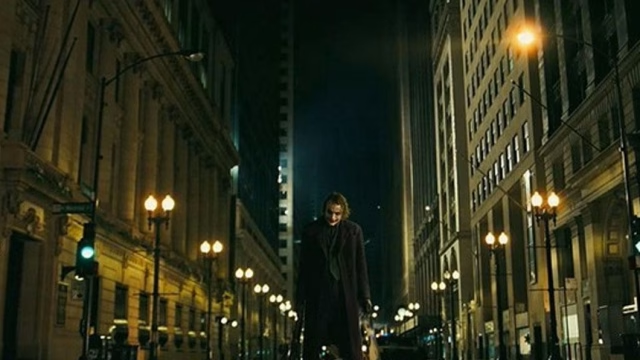

Lynne Ramsay’s You Were Never Really Here follows Joe, a traumatized veteran who makes a living rescuing girls from sex-trafficking operations. His latest assignment becomes increasingly personal after he discovers that the people behind the kidnapping are connected to powerful political figures, while his own mother is murdered during the fallout. The film gradually blurs reality, memory and violent fantasy as Joe struggles with suicidal thoughts and the psychological damage of his past.
By the final act, his rescue mission has transformed into something much more important: a reason for him to keep living. The ending deliberately refuses to provide a conventional resolution, leaving viewers to question exactly what happened during Joe and Nina’s final moments together. However, the film strongly suggests that Joe survives and that his relationship with Nina represents a fragile opportunity for both characters to move beyond their trauma.
What Happens to Joe and Nina at the End?
After discovering his mother’s death, Joe takes her body to a remote lake and prepares to drown himself. He fills his pockets with stones and sinks beneath the water, but a vision of Nina interrupts his suicidal impulse. Joe removes the stones and swims back to the surface, suggesting that rescuing Nina has given him a reason to choose life.
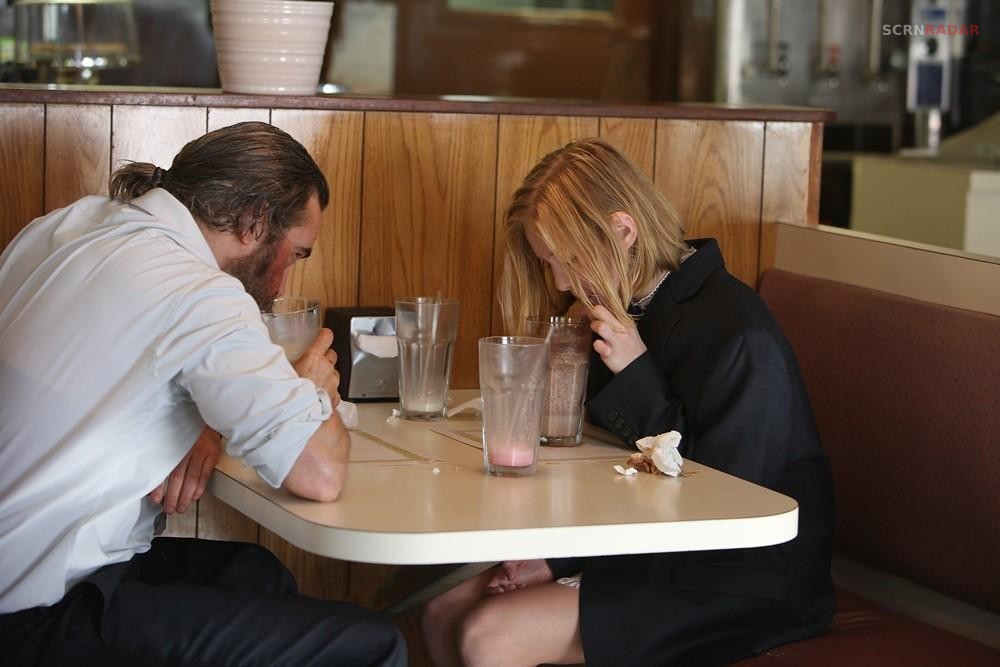
Joe eventually tracks Governor Williams to his home, expecting to confront the man responsible for Nina’s trafficking. Instead, Williams is already dead, with Nina nearby holding a bloody razor. The implication is that Nina killed Williams herself, meaning Joe’s final rescue is different from what he originally imagined because Nina has already taken control of her own fate.
The pair then go to a diner, where Nina asks Joe what they should do next. Joe appears to shoot himself in the head while Nina is away, but the sequence is revealed to be another suicidal fantasy rather than something that actually happened. Nobody in the diner reacts to the supposed gunshot, and Nina returns to find Joe alive.
Nina tells Joe that it is a beautiful day, and he agrees before they leave the diner together. The moment is deliberately understated, but its emotional meaning is significant: Joe chooses to remain alive. Rather than promising that everything will suddenly become normal, the ending gives Joe and Nina the possibility of building a future after surviving experiences that nearly destroyed them.
The film’s ambiguity is therefore less about whether Joe literally dies and more about whether he can escape the emotional death he has been living through. Nina becomes the person who pulls him back toward reality, reversing the traditional rescuer-and-victim dynamic established earlier in the story. The final image leaves their future uncertain, but the empty diner booth suggests they have chosen to leave the darkness behind, at least for now.