

The U.S. film and television industry has lost a substantial portion of its domestic production business over the past quarter-century, according to a new study prepared by EY for a coalition of major Hollywood labor organizations. The report found that the share of major studio film production spending taking place in the United States fell from 74% in 1999 to 42% in 2024.
Television production has experienced a similarly significant shift. The domestic share of spending on major studio television episodes declined from 94% to 64% over the same period. The findings arrive as Congress considers a federal film and television incentive intended to make the U.S. more competitive with countries offering lucrative production subsidies.
The study was commissioned by organizations including the Directors Guild of America, IATSE, SAG-AFTRA, LIUNA, the Teamsters and the Writers Guild of America. According to IATSE, the research examined production trends from 1999 through 2024.
U.S. Share of Major Film Production Has Fallen
The report shows that the decline is not limited to spending. The percentage of major studio movies filmed partially or primarily in the U.S. fell from 66% to 54%, while the share of cast and crew working on those productions domestically dropped from 72% to 43%.
The shift becomes even more pronounced among Hollywood’s biggest productions. The U.S. share of production spending among the 25 highest-budget films made by major U.S. studios declined by 40% between 1999 and 2024.
At the same time, the overall amount studios spend on production has grown considerably. Film production spending examined by the study increased from approximately $3 billion to $7 billion, while television spending rose from $933 million to $8.4 billion.
That means the issue is not simply that Hollywood is producing less. Rather, a growing portion of the industry’s production economy is taking place outside the United States.
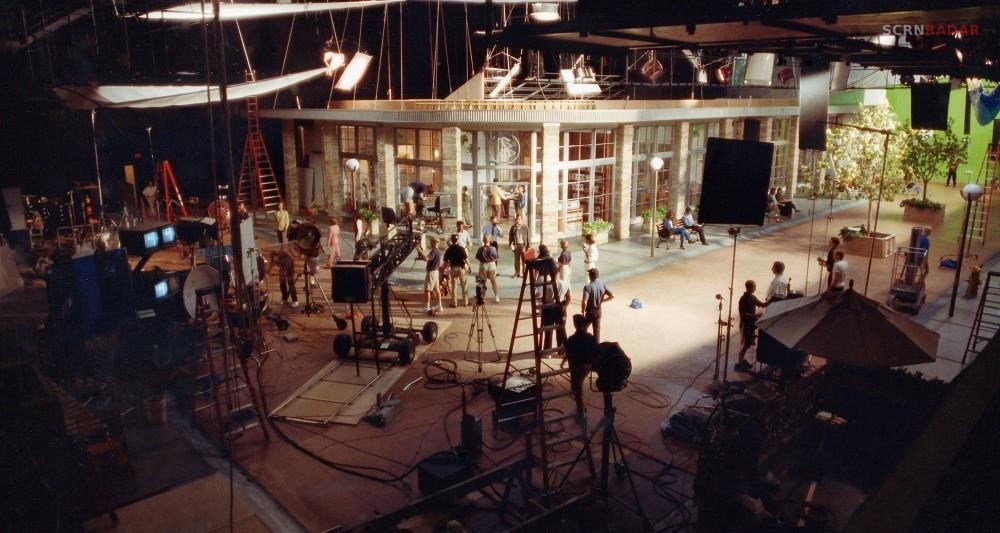
Television Production Has Also Moved Overseas
Television experienced an even larger decline in domestic production share. The portion of major studio television spending occurring in the U.S. dropped from 94% to 64%, while the percentage of episodes filmed partially or primarily in America declined from 96% to 70%.
The share of television cast and crew working domestically also fell from 86% to 58%.
The researchers acknowledged that comparing today’s television industry directly with the early 2000s is complicated by the rise of streaming. The report noted that streaming
“fundamentally altered production scale, budgets, season lengths, and release models,”
making some comparisons between different eras difficult.
The analysis focused on larger productions where location decisions can have significant economic consequences. It examined films costing at least $5 million and television episodes meeting minimum production budgets of $1 million for shorter episodes or $1.7 million for longer episodes.
Congress Considers a Federal Production Incentive
The findings come as lawmakers debate whether a nationwide production incentive could bring more projects back to American locations. A bipartisan bill introduced in September would establish a federal film and television tax credit ranging from 20% to 30%, subject to qualifying conditions.
The Directors Guild of America has backed the proposal, arguing that foreign incentives have made overseas production increasingly competitive. The guild said the decline in domestic production affects not only filmmakers but also thousands of workers and businesses dependent on the entertainment industry.
The unions’ EY study estimates that if the U.S. had maintained its 25-year-ago share of production, an additional $4 billion per year could be spent domestically on film and television.
The debate therefore extends beyond Hollywood studios. For production workers, local businesses and communities that depend on filming activity, the report suggests that where major movies and television shows are made has become an increasingly important economic issue.