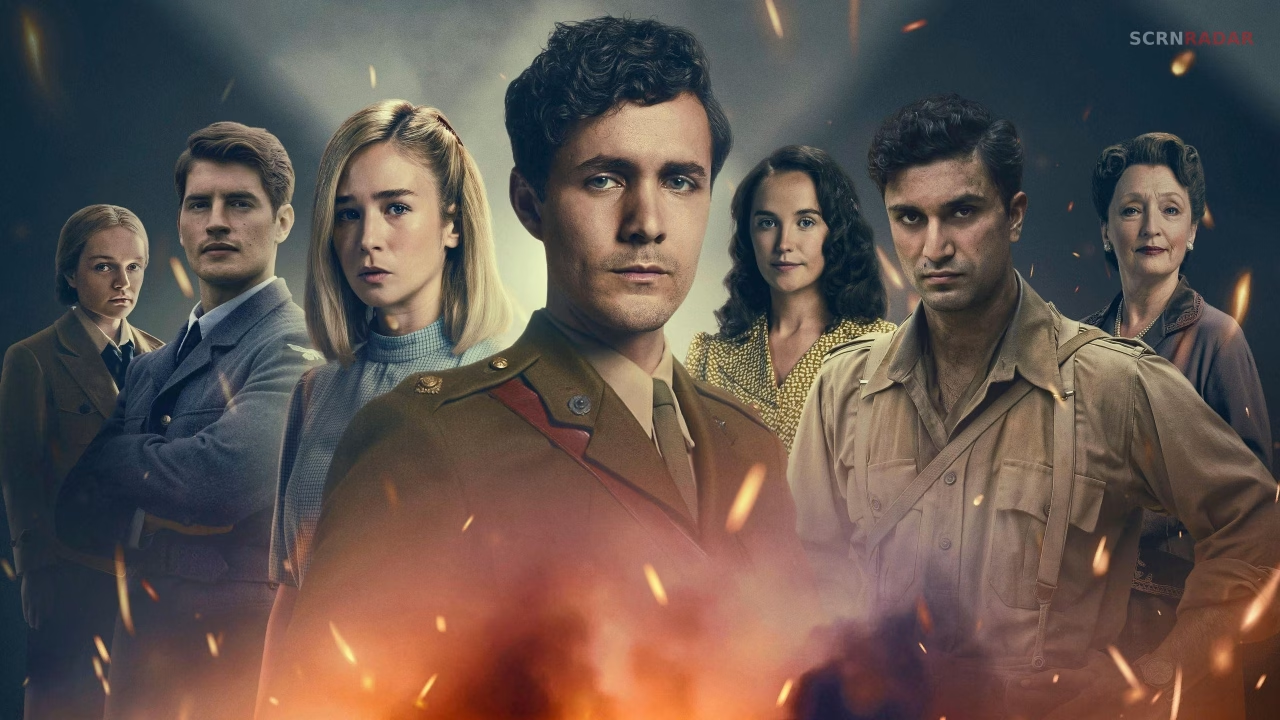
World on Fire offers a unique take on World War II by telling the story through ordinary people spread across different countries. Instead of focusing solely on battles or political leaders, the series tracks how the war reshapes lives in Britain, Poland, France, Germany, and North Africa. This multi-perspective storytelling makes the timeline more complex, especially as events unfold simultaneously across continents.
The show moves between timelines and locations, often overlapping key historical moments with personal narratives. Characters like Harry Chase, Lois Bennett, and Kasia Tomaszeski experience the war differently, yet their stories intersect in meaningful ways. Season 2 expands the scope further, shifting focus to North Africa while continuing unresolved arcs.
To fully understand World on Fire, it’s essential to break down its timeline chronologically. Let’s trace how the war story unfolds across seasons and how each storyline connects within the larger historical context.
The Timeline Structure: How World on Fire Tells Its Story
One of the defining aspects of World on Fire is its non-linear and multi-location narrative. The show does not follow a single protagonist or a strictly chronological format. Instead, it presents parallel storylines happening across different countries at the same time.
Season 1 primarily focuses on the early years of World War II, beginning around 1939 and moving into 1940. The narrative shifts between Manchester, Warsaw, Paris, and Berlin, showing how the war impacts civilians and soldiers differently. This structure allows viewers to see both the immediate and long-term consequences of major events.
Season 2 continues this approach but expands geographically. The timeline moves forward into 1941 and 1942, with a strong emphasis on the North African campaign. The storytelling becomes more interconnected as characters’ paths begin to overlap more directly.
Season 1 Timeline Explained: From Peace to War
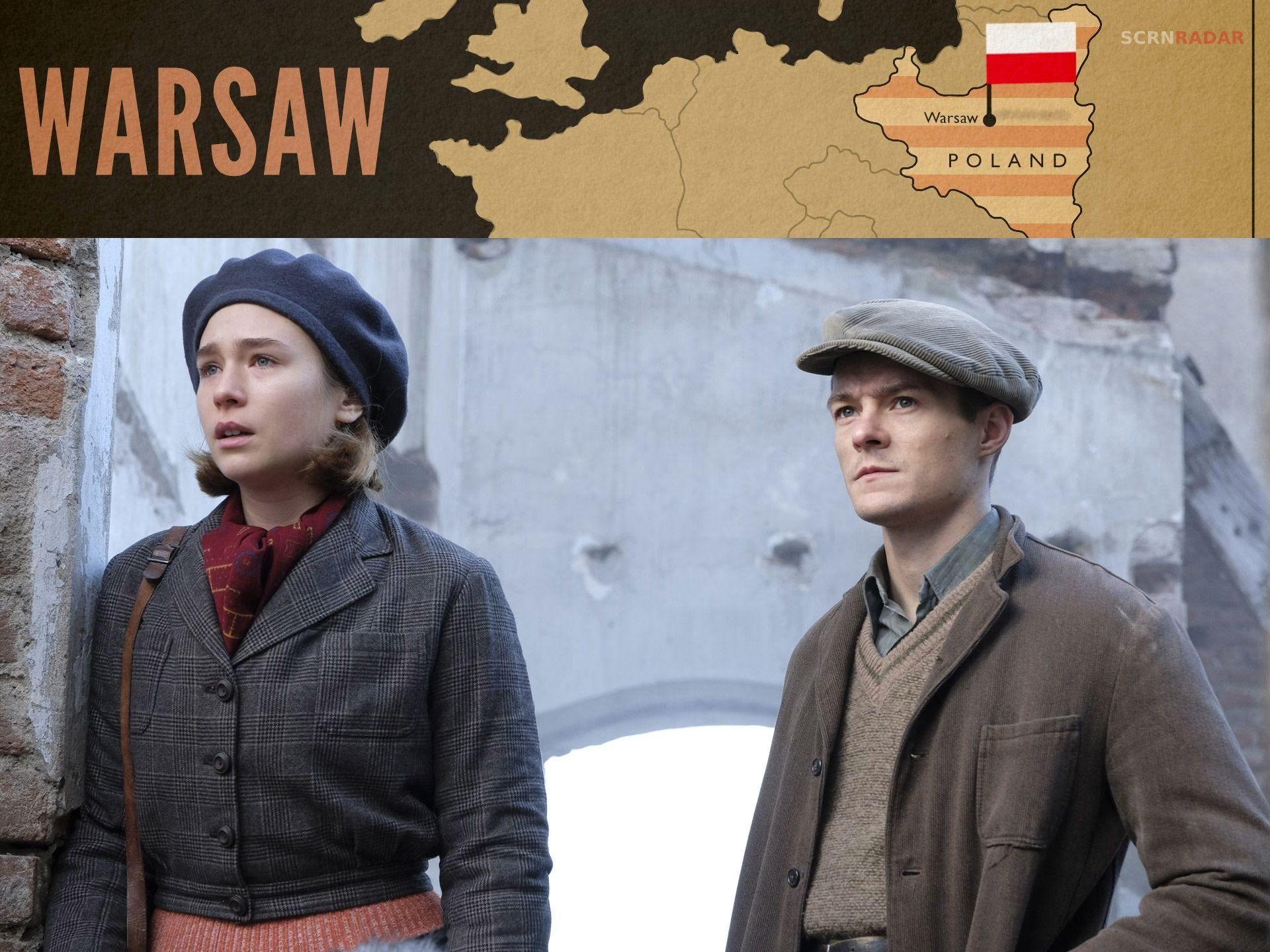
Season 1 begins just before the outbreak of war, establishing the lives of key characters in relatively peaceful settings. Harry Chase is working as a translator in Poland, where he forms a relationship with Kasia. Meanwhile, Lois Bennett lives a quiet life in Manchester, unaware of how drastically her future will change.
The invasion of Poland in 1939 marks the first major turning point in the timeline. This event is depicted through Kasia’s perspective, showing the immediate chaos and danger faced by civilians. At the same time, Harry is forced to flee, highlighting how quickly normal life collapses.
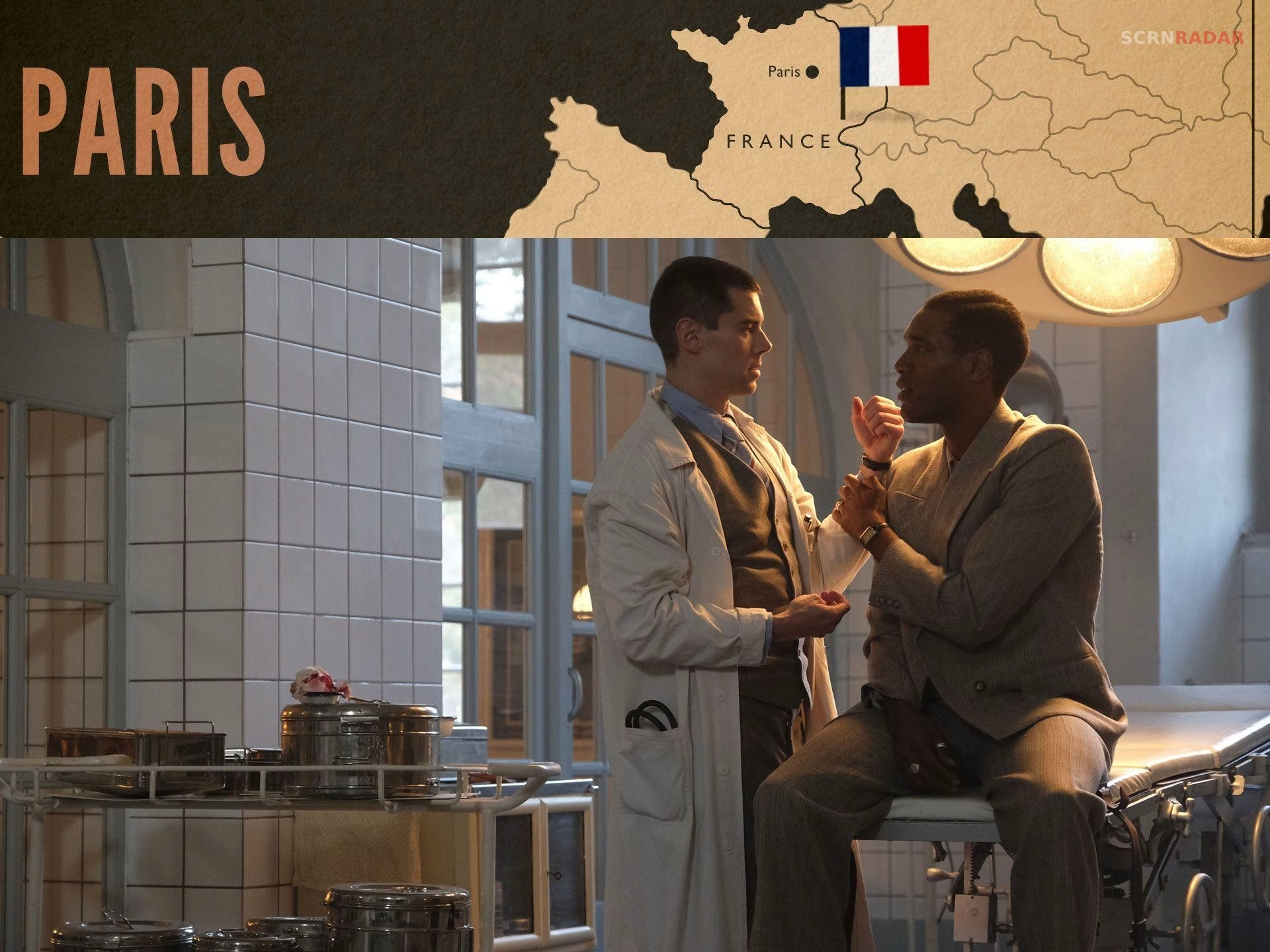
As the timeline progresses into 1940, the war spreads across Europe. The fall of France becomes another key event, affecting characters like Henriette and Webster. The show captures the fear and uncertainty of this period, emphasizing how rapidly the conflict escalates.
Kasia’s Storyline: Resistance and Survival in Occupied Poland
Kasia’s arc is one of the most intense and historically grounded parts of Season 1. After the German occupation of Poland, she becomes involved in the resistance movement. Her storyline reflects the brutal realities faced by those living under occupation.
The timeline of her story follows the early resistance efforts, which were often disorganized but driven by desperation. Kasia’s transformation from a hopeful young woman into a hardened resistance fighter is central to understanding the human cost of war.
Her eventual capture and imprisonment mark a darker phase in the timeline. These moments highlight the risks taken by resistance members and the harsh consequences imposed by the occupying forces. Her story continues into Season 2, showing the long-term impact of these experiences.
Harry Chase’s Timeline: Duty, Love, and Consequences
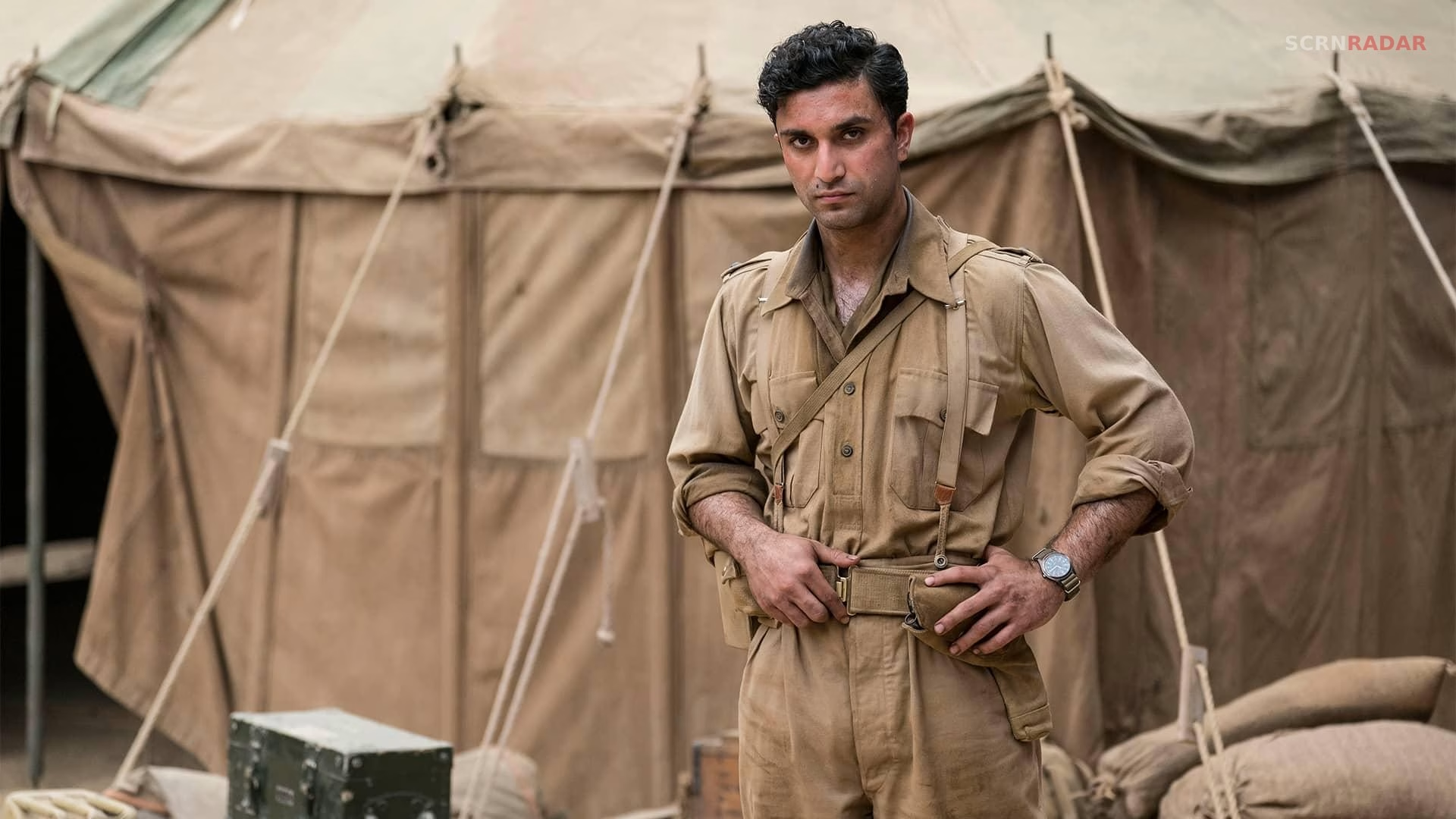
Harry Chase’s journey spans multiple locations, making his timeline one of the most complex in the series. After escaping Poland, he returns to Britain but struggles with the emotional weight of leaving Kasia behind.
His storyline intersects with Lois Bennett, whom he eventually marries. This creates a personal conflict that mirrors the broader chaos of the war. Harry’s choices often place him in morally difficult situations, reflecting the ambiguity of wartime decisions.
As the timeline moves forward, Harry becomes involved in military intelligence. His role highlights the less visible aspects of the war, such as translation, espionage, and coordination. By the end of Season 1, his actions have lasting consequences for both himself and those around him.
Lois Bennett’s Timeline: The Civilian Experience in Britain
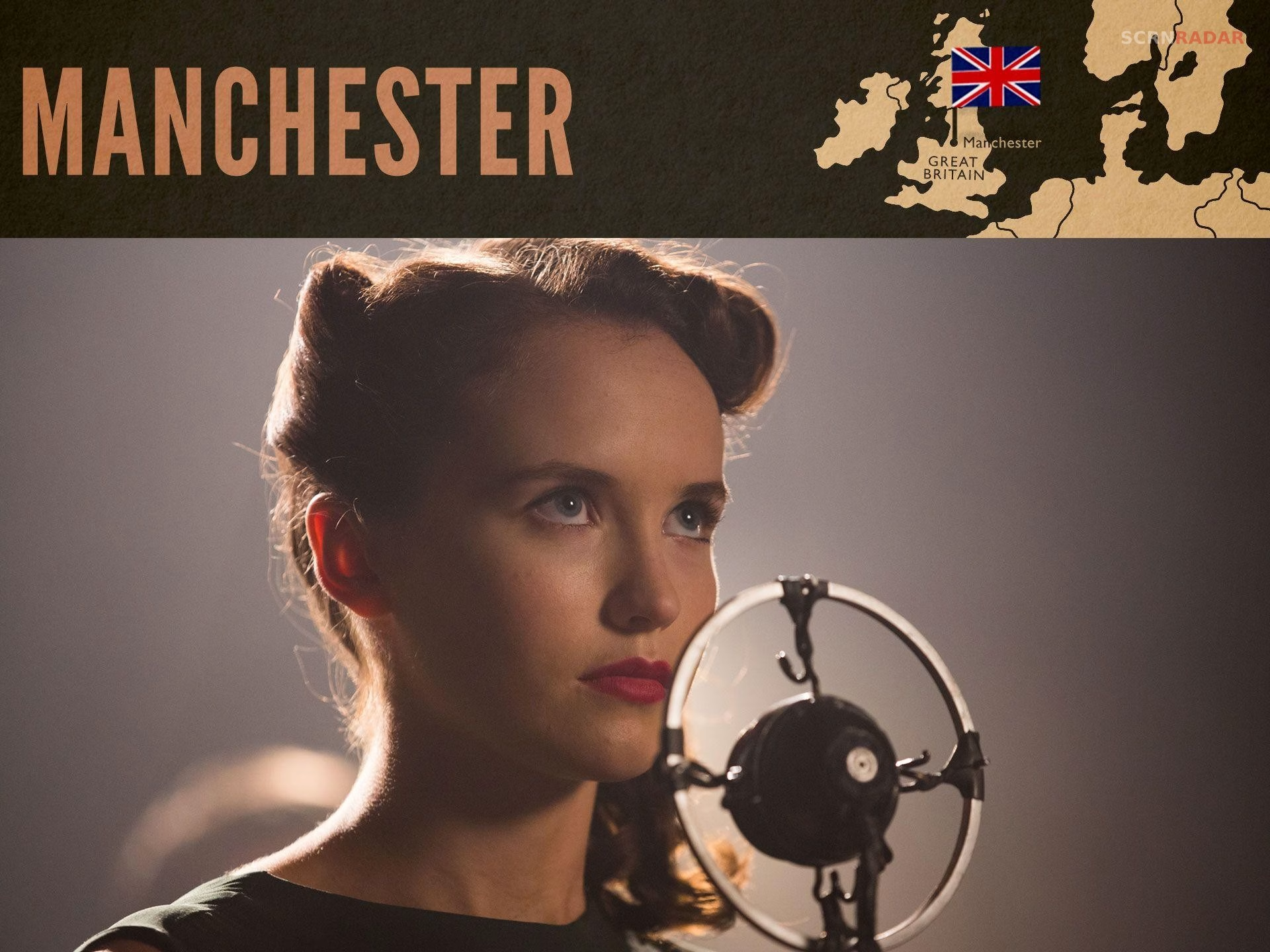
Lois represents the home front perspective, offering insight into how the war affects civilians in Britain. Her storyline begins with relative normalcy but quickly shifts as the war intensifies.
The timeline of Lois’s story includes events like air raids and rationing, which become part of daily life. Her relationship with Harry adds emotional complexity, especially as secrets and uncertainties emerge.
By the end of Season 1, Lois’s life has been irrevocably changed. Her experiences reflect the resilience of civilians who must adapt to constant fear and disruption. Her arc continues into Season 2, where she faces new challenges shaped by the ongoing conflict.
The Fall of France and European Collapse
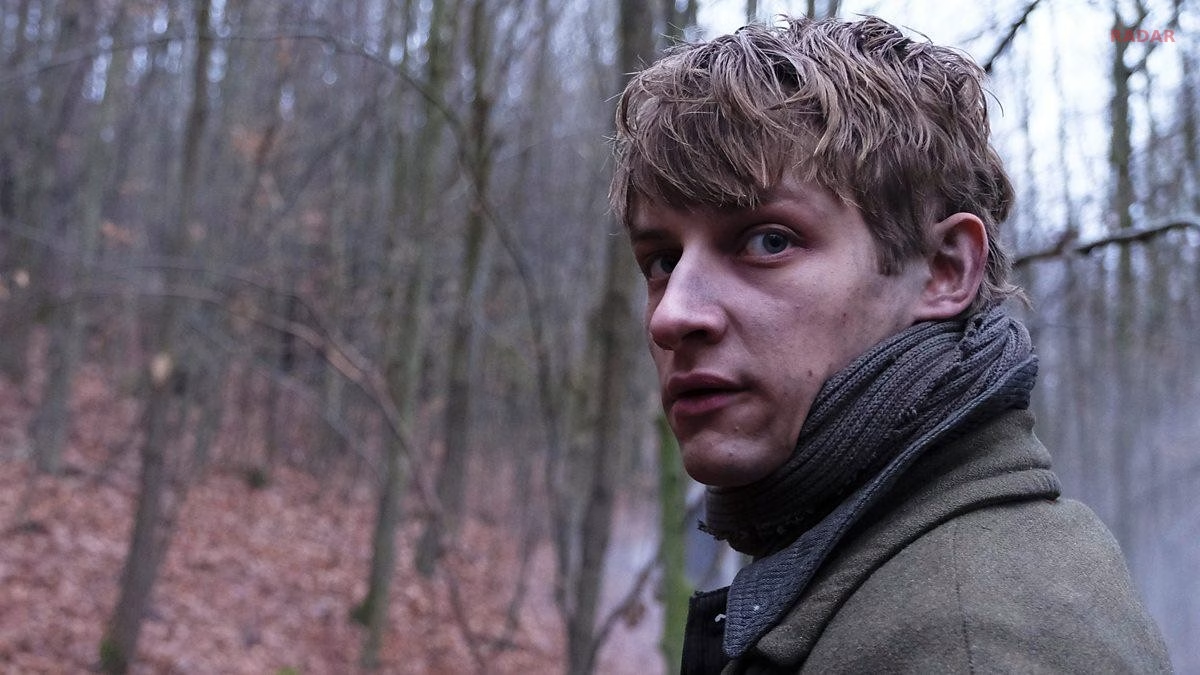
One of the most significant timeline events in Season 1 is the fall of France in 1940. This moment represents a turning point in the war, as Nazi Germany gains control over much of Western Europe.
The show depicts this event through multiple perspectives, including French civilians and British soldiers. The rapid collapse of French defenses creates a sense of urgency and inevitability. Characters are forced to flee, hide, or adapt to occupation.
This event also connects several storylines, showing how a single historical moment can impact people across different countries. It reinforces the show’s theme of interconnected experiences during the war.
Season 2 Timeline Explained: Expanding the War to North Africa
Season 2 shifts the timeline forward into 1941 and 1942, introducing new settings and characters while continuing existing arcs. The focus moves to North Africa, where British and Allied forces are engaged in a different kind of warfare.
This change in location brings a new perspective to the series. The desert campaigns contrast sharply with the urban and occupied settings of Season 1. The timeline now includes large-scale military operations alongside personal stories.
Despite the shift, the show maintains its character-driven approach. The experiences of soldiers and civilians remain central, ensuring continuity with the themes established in the first season.
The North African Campaign: A New Phase of War
The North African campaign represents a crucial phase in the World War II timeline. It involves battles between Allied forces and Axis powers in challenging desert conditions.
In the series, this timeline is explored through new characters as well as returning ones. The harsh environment and constant danger create a different kind of tension compared to the European storylines.
This setting also highlights the global nature of the war. By moving beyond Europe, the show emphasizes that World War II was not confined to a single region. The North African storyline broadens the scope of the narrative.
How the Timelines Interconnect Across Seasons
One of the strengths of World on Fire is how it weaves together multiple timelines into a cohesive story. Characters who start in different locations eventually influence each other’s journeys.
The connection between Harry, Kasia, and Lois is a key example. Their individual timelines intersect through relationships and shared experiences. This creates a sense of continuity despite the shifting settings.
Season 2 builds on these connections by bringing characters closer together. The overlapping timelines reinforce the idea that the war is a shared experience, even when it unfolds in different places.
The Historical Accuracy Behind the Timeline
The series is grounded in real historical events, which adds depth to its timeline. Major moments like the invasion of Poland and the fall of France are depicted with attention to detail.
While the characters are fictional, their experiences are inspired by real accounts. This approach allows the show to explore the emotional and human aspects of history.
The timeline aligns closely with actual events, making it easier for viewers to understand the broader context. This balance between fiction and history is one of the show’s defining features.
The Deeper Meaning of the Timeline Structure
The timeline in World on Fire is not just a storytelling device. It reflects the fragmented and chaotic nature of war itself.
By showing events from multiple perspectives, the series emphasizes that there is no single narrative of World War II. Each character’s experience is valid and significant.
This approach also highlights the unpredictability of war. Lives change suddenly, and connections form in unexpected ways. The timeline structure reinforces these themes, making the story more immersive and impactful.
Another important aspect of the timeline in World on Fire is how it captures the passage of time not just through major battles but through emotional and psychological change. As the war progresses from 1939 into the early 1940s, characters begin to lose their sense of normalcy, and survival becomes their primary focus.
Relationships that once felt stable are tested under pressure, and moral boundaries start to blur. This gradual shift reinforces the idea that war is not defined only by historical events, but by the lasting impact it leaves on individuals over time.
The timeline of World on Fire is a carefully constructed narrative that spans continents and years. By following multiple characters across different locations, the series provides a comprehensive view of World War II.
Season 1 focuses on the outbreak and early escalation of the war, while Season 2 expands the story into new territories and conflicts. Together, they create a layered and interconnected timeline.
Understanding this structure enhances the viewing experience, allowing audiences to see how individual stories fit into the larger historical picture. Ultimately, the show’s timeline is a reminder that war is not just about events, but about the people who live through them.