The gripping teen thriller Cruel Summer stands out not just for its layered storytelling but also for its immersive setting. Created by Bert V. Royal and executive produced by Jessica Biel, the show unfolds across three timelines in the fictional town of Skylin, Texas. However, the real magic lies in how actual locations were used to bring this fictional town to life.
Set between 1993 and 1995, Cruel Summer captures the essence of small-town America in the 90s with remarkable authenticity. The production team carefully selected filming locations that naturally reflect the era, avoiding heavy reliance on CGI or artificial sets. Most of the series was filmed in and around Dallas, with additional scenes shot in parts of Vancouver and Richmond.
If you are curious about where Cruel Summer was filmed or planning a filming location tour, here is a detailed guide to the most important real-life spots featured in the show.
Where Was Cruel Summer Filmed? Dallas Takes Center Stage
Although Skylin, Texas, is fictional, the show’s primary filming location is Dallas. The city’s mix of older neighborhoods, retro-style buildings, and long-standing establishments made it an ideal choice for recreating a 1990s setting.
Many residential streets in Dallas were used to depict suburban life, especially those that have not undergone major modernization. These areas provide a natural backdrop for the show’s shifting timelines, helping viewers visually distinguish between the years without excessive production design.
Studio work for the series was carried out at South Side Studios, located near the Cedars neighborhood. Interior scenes and controlled setups were filmed here, allowing the production team to maintain consistency across different timelines.
The choice of Dallas also adds authenticity to the show’s tone. Its warm climate, laid-back suburban vibe, and recognizable Texan culture all contribute to the grounded storytelling that defines Cruel Summer.
Key Cruel Summer Filming Locations in Dallas
Turner Family Residence: Jeanette’s House
5
One of the most important locations in the series is the Turner family home, where Jeanette’s transformation unfolds over the three timelines. This house is located at 13735 Sprucewood Circle in Dallas.
The home becomes especially significant in the 1995 timeline, where Jeanette isolates herself from the outside world. Its quiet suburban setting reflects the emotional tension and isolation that defines her character arc.
While it is a private residence, fans often visit the exterior to get a glimpse of one of the show’s most recognizable settings. Visitors are advised to respect the privacy of the homeowners when exploring the area.
Martin Harris’s House: The Show’s Dark Center
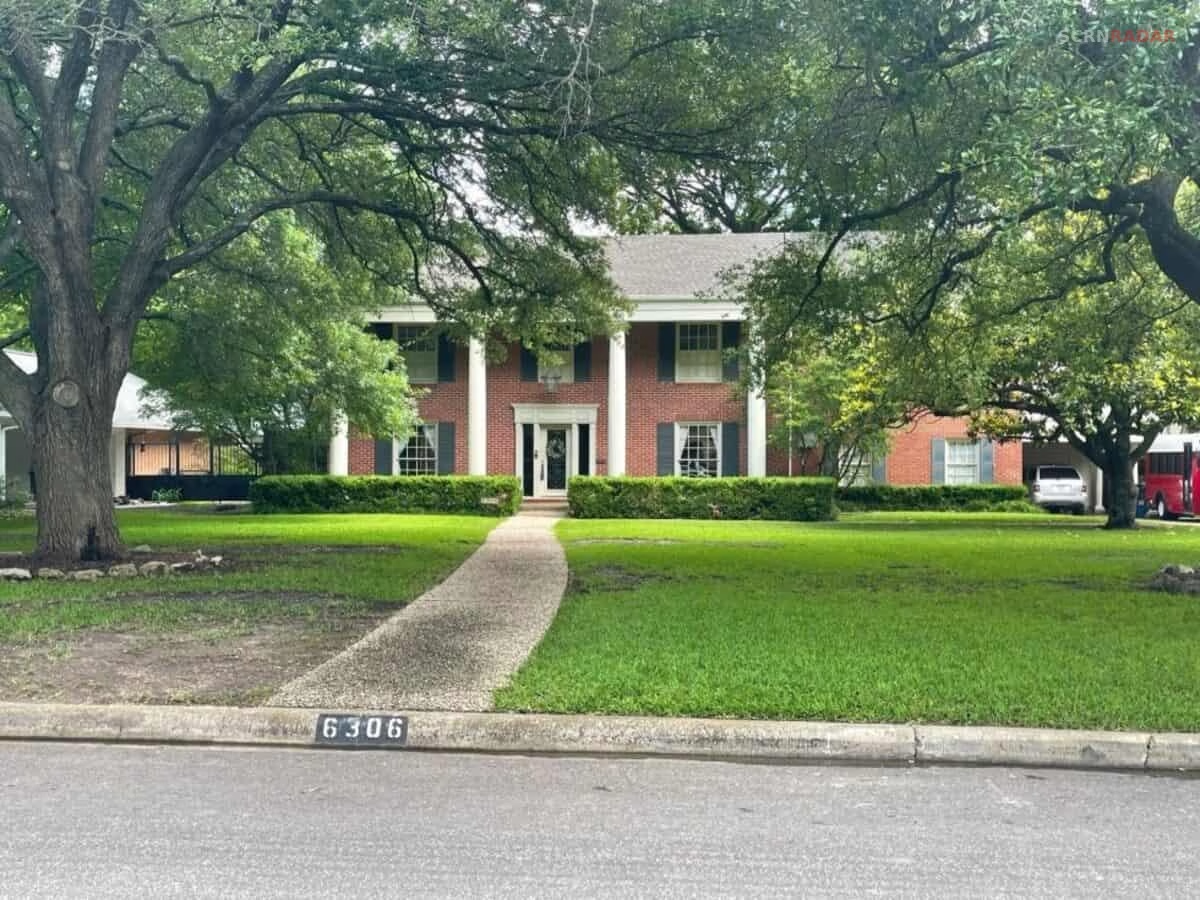
Another central location is Martin Harris’s house, located at 6306 Deloache Avenue. This house plays a crucial role in the series’ mystery and tension.
Over the course of the show, the house evolves from an intriguing setting into something far more unsettling. Its repeated appearance across all timelines gives it an almost character-like presence in the story.
The production team uses lighting and framing to transform the same location into dramatically different emotional spaces, which adds to the show’s layered storytelling.
One Nostalgia Tavern: Angela’s Bar
Scenes set in Angela’s bar were filmed at One Nostalgia Tavern, a real-life dive bar filled with 80s and 90s memorabilia.
This location required minimal set design due to its naturally retro aesthetic. The bar’s decor, lighting, and atmosphere perfectly align with the show’s timeline, making it one of the most authentic-feeling locations in the series.
It also serves as a social hub within the story, where characters interact and relationships evolve.
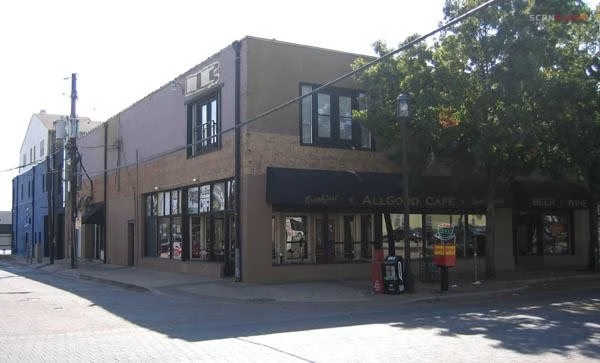
Located in the vibrant Deep Ellum district, AllGood Cafe appears in a pivotal scene involving Jeanette and her mother.
The cafe’s cozy, lived-in atmosphere contrasts with the emotional tension of the scene, making it particularly memorable. Deep Ellum itself is known for its music and cultural scene, which adds depth to the show’s urban backdrop.
For visitors, this location offers both cinematic significance and a chance to experience one of Dallas’s most iconic neighborhoods.
Notable Locations Outside Dallas
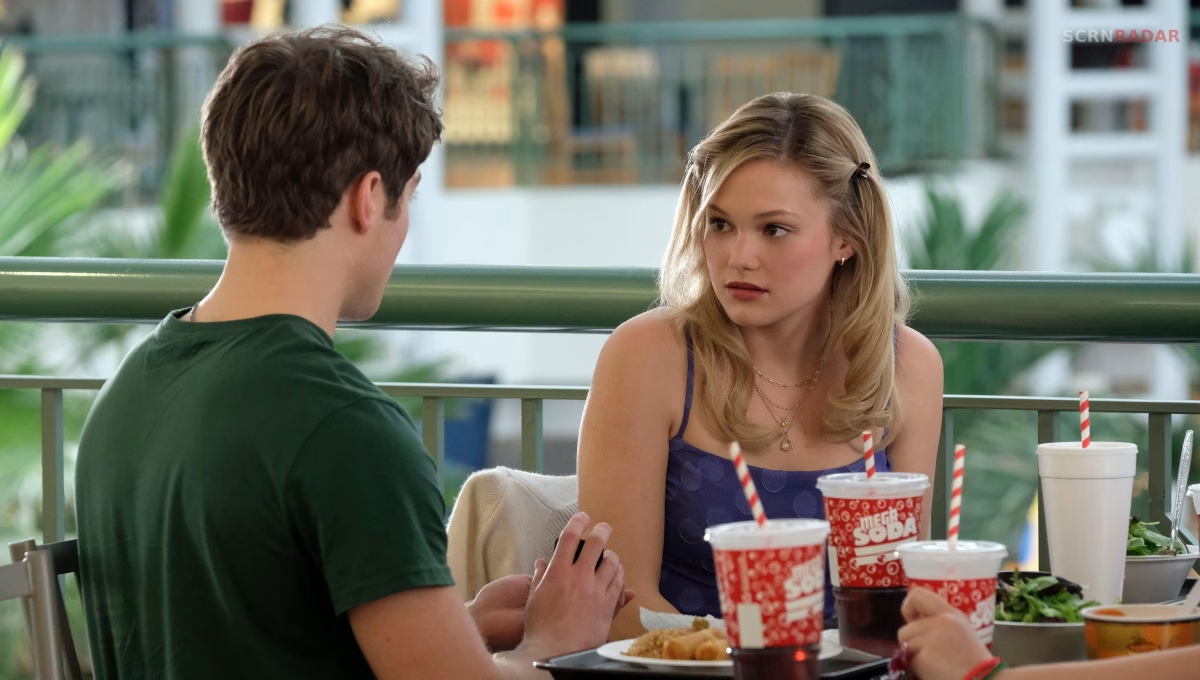
The Music City Mall is one of the first locations seen in the series. It plays a key role in establishing the relationship between Jeanette and Kate.
Formerly known as Vista Ridge Mall, the location still retains a nostalgic shopping mall vibe, making it perfect for a show set in the 90s. Fans visiting today can explore the same corridors where key moments unfolded.
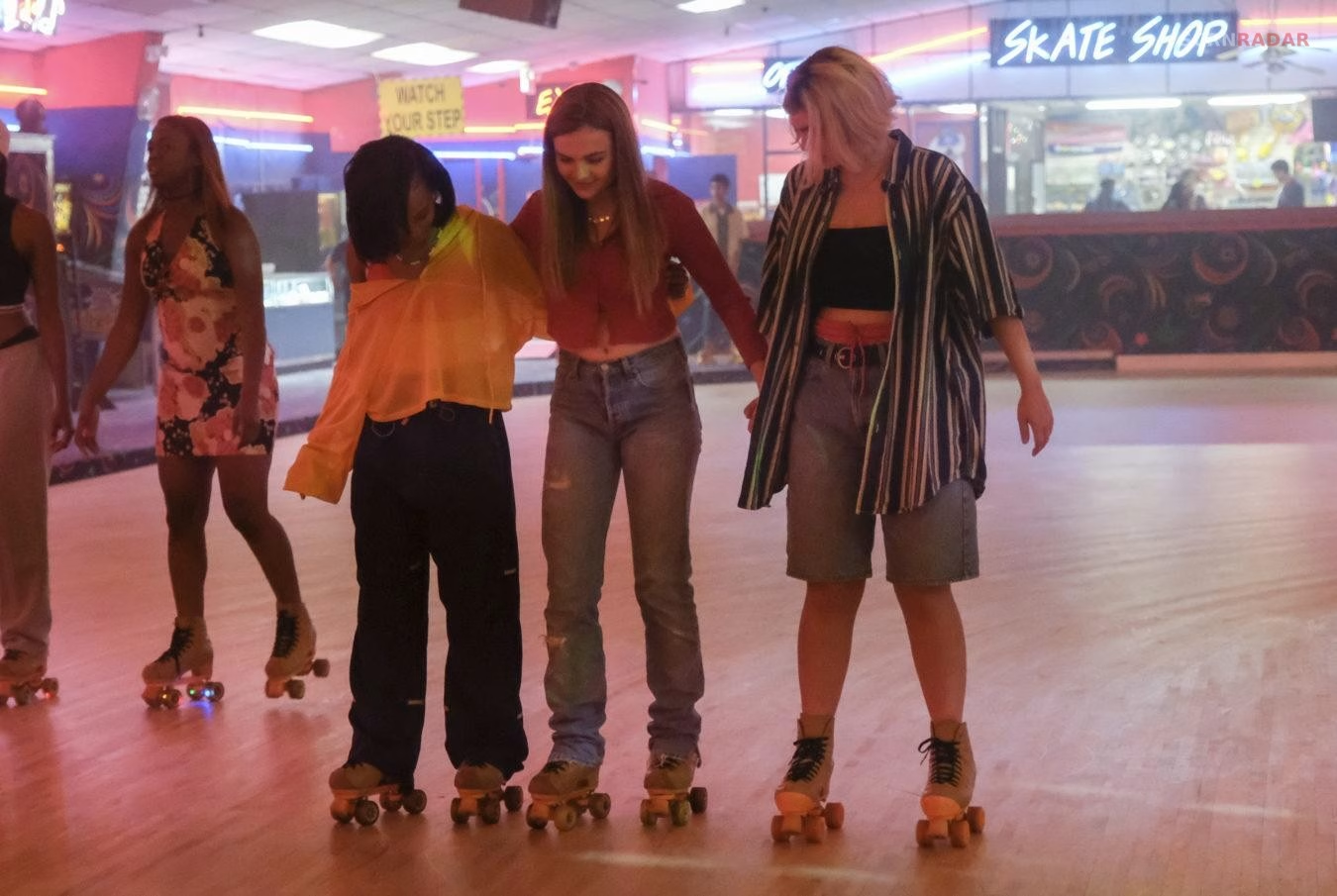
The birthday party scene was filmed at Interskate Rollerrink, a classic skating rink that feels frozen in time.
This location captures the fun and carefree spirit of the earlier timeline, contrasting sharply with the darker tone of later episodes. Its retro lighting and decor make it one of the most visually distinctive settings in the show.
The carnival episode features Traders Village Grand Prairie, a large flea market and amusement park.
This location introduces a shift in the narrative, blending vibrant visuals with underlying tension. The funhouse and rides provide a visually dynamic setting that contrasts with the show’s otherwise grounded locations.
While Dallas serves as the primary filming hub, additional scenes were shot in Vancouver and Richmond.
These locations are known for their versatility and have hosted numerous Hollywood productions. Vancouver, often called “Hollywood North,” offers a wide range of urban and natural settings that can double for various locations.
Richmond, with its coastal landscapes and modern infrastructure, provides additional visual variety. Together, these locations help expand the show’s visual scope without disrupting its grounded tone.
Why Cruel Summer’s Filming Locations Stand Out
What makes Cruel Summer unique is how seamlessly its locations support the storytelling. Instead of relying on elaborate sets, the series uses real-world environments to reflect emotional shifts and timeline changes.
Dallas, in particular, plays a crucial role in establishing authenticity. Its neighborhoods, cafes, and public spaces feel lived-in, which enhances the realism of the narrative.
Another standout aspect is how the same locations are used differently across timelines. Changes in lighting, color grading, and camera angles transform familiar places into entirely new emotional landscapes.
This approach not only adds depth to the storytelling but also keeps viewers engaged as they piece together the mystery.