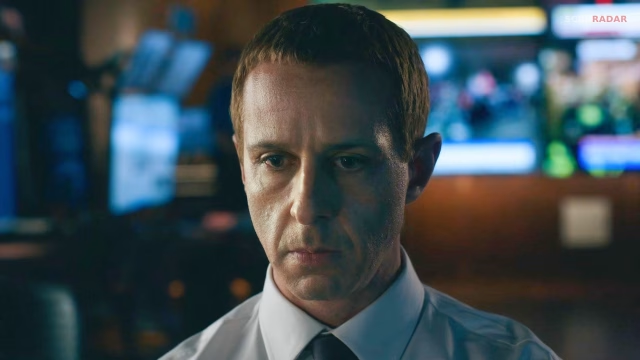
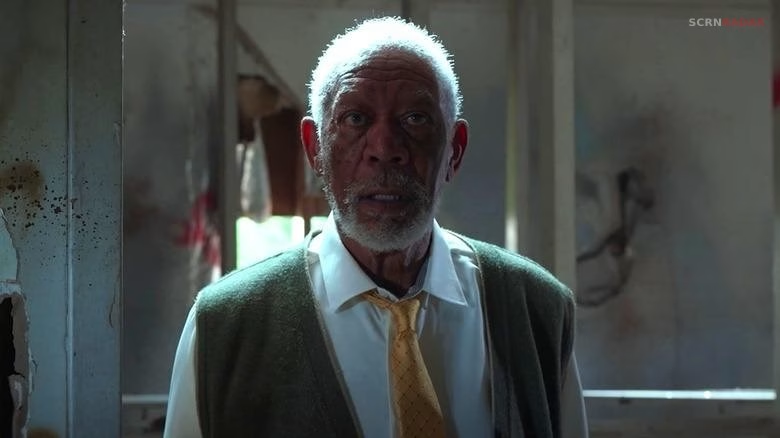
The Ritual Killer is a crime thriller that leans heavily on atmosphere, cultural backdrop, and location-driven storytelling. Starring Morgan Freeman and Cole Hauser, the film blends a police investigation narrative with themes tied to ritualistic practices and Southern Gothic tension. Given its gritty tone and grounded storytelling, many viewers have asked a simple but important question: where exactly was The Ritual Killer shot?
The answer lies primarily in the American South, with filming taking place in Mississippi and surrounding regions that match the film’s setting. While the story unfolds in a fictionalized version of a Southern town, the production used real locations to create authenticity. From small-town streets to dense wooded areas, the film’s visual identity is closely tied to its filming locations. Understanding where The Ritual Killer was shot helps explain how the movie achieves its immersive and eerie atmosphere.
Where Was The Ritual Killer Filmed?
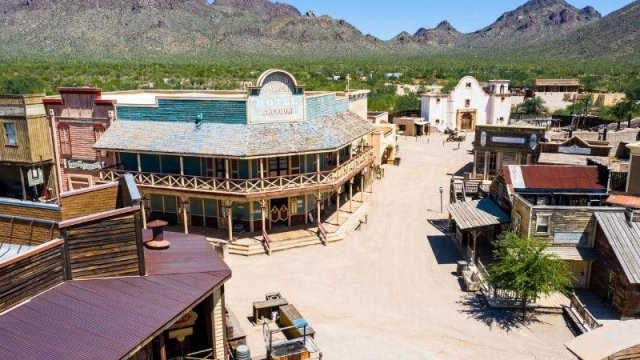
The Ritual Killer was primarily filmed in the U.S. state of Mississippi. The production made use of multiple locations across the state to recreate the film’s Southern setting, which plays a key role in its narrative tone. Mississippi is known for its diverse landscapes, including rural towns, forests, and historic architecture, all of which contribute to the film’s visual depth.
The choice of Mississippi was intentional. The story revolves around ritualistic crimes influenced by African traditions, and the filmmakers wanted a setting that felt grounded, atmospheric, and culturally layered. Mississippi’s blend of urban and rural environments allowed the production team to capture that balance effectively.
Several scenes were also filmed in nearby areas that visually matched the tone required for the story. Even when exact locations were not publicly disclosed, production reports and regional coverage confirmed that the Southern United States served as the primary filming base.
Why Mississippi Was Chosen as the Main Location
Mississippi has become an increasingly popular filming destination in recent years. The state offers tax incentives for filmmakers, making it financially attractive for productions like The Ritual Killer. Beyond cost benefits, Mississippi provides a distinct visual identity that is difficult to replicate elsewhere.
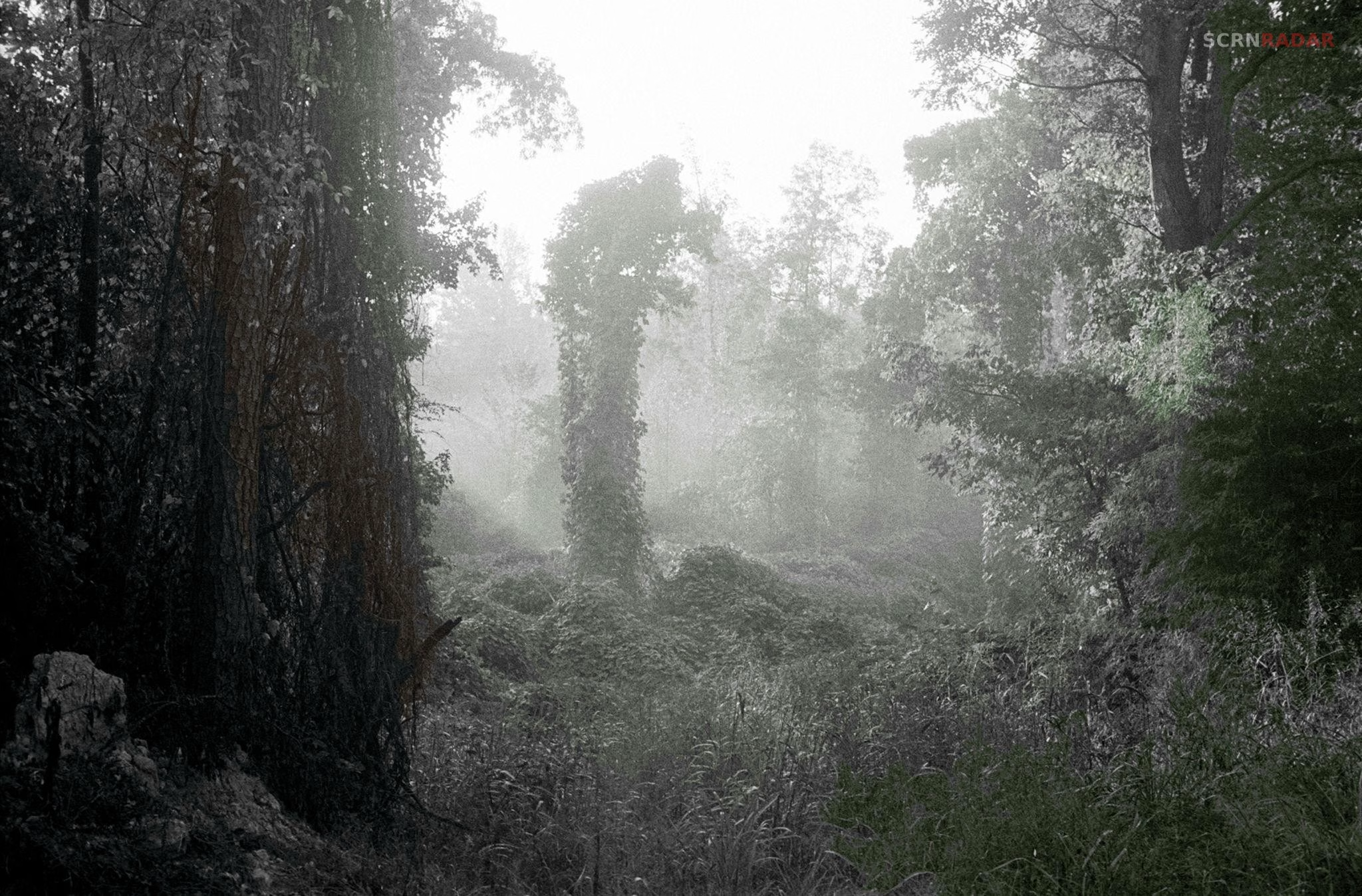
The film required a setting that felt both realistic and slightly unsettling. Mississippi’s rural roads, dense forests, and older buildings naturally create that mood. These elements help reinforce the film’s themes of mystery, tradition, and hidden danger.
Another reason for choosing Mississippi was its ability to double as multiple locations within the same production. Filmmakers can shoot urban scenes in one area and quickly move to remote countryside settings without leaving the state. This flexibility makes it easier to maintain visual continuity while keeping production efficient.
How the Filming Locations Shape the Story
The locations used in The Ritual Killer are not just background elements. They actively shape how the story unfolds and how audiences experience the narrative. The film’s dark tone is amplified by its use of shadowy woods, isolated buildings, and quiet streets.
These environments create a sense of unease that supports the film’s central mystery. Instead of relying heavily on visual effects, the movie uses real-world locations to build tension. This approach makes the story feel more grounded and believable.
The Southern setting also plays into the cultural themes explored in the film. The story references ritual practices and traditions, and the environment helps frame those elements in a way that feels authentic rather than exaggerated.
Did The Ritual Killer Film in Other Locations?
While Mississippi served as the primary filming location, it is common for productions like The Ritual Killer to use additional locations for specific scenes. These may include nearby states or controlled studio environments for interior shots.
Some indoor sequences, particularly those requiring controlled lighting or sound conditions, may have been filmed on sound stages. However, the majority of the film’s outdoor scenes were captured on location to preserve authenticity.
In many cases, filmmakers choose not to publicly disclose every filming location. This is often done for logistical or security reasons. Despite that, available information strongly indicates that the Southern United States remained the central hub for production.