
Episode 8 of Watchmen, titled “A God Walks Into Abar,” stands as a defining chapter in the series and arguably its emotional peak. Created by Damon Lindelof*, the HBO adaptation had already established itself as a bold continuation of the original graphic novel. However, this episode shifts the focus almost entirely to the relationship between Angela Abar and Doctor Manhattan, delivering a deeply personal story wrapped in complex science fiction.
The episode received widespread critical acclaim for its innovative structure and emotional resonance. By revealing Doctor Manhattan’s hidden life on Earth and his connection to Angela, the narrative recontextualizes everything that came before it. This review and recap breaks down the episode’s story, themes, and execution, while explaining why it remains one of the most memorable hours of television in recent years.
What Happens in Watchmen Episode 8?
The episode opens with Angela Abar experiencing fragmented memories after overdosing on Nostalgia, the drug that allows users to relive past experiences. Instead of a straightforward narrative, the episode unfolds through Doctor Manhattan’s perception of time, where past, present, and future occur simultaneously.
We learn that Angela first meets Doctor Manhattan in a bar in Vietnam, years before the main events of the series. Unlike a typical introduction, Manhattan already knows how their relationship will unfold, including how it will end. This creates an unusual dynamic where Angela is living through moments for the first time, while Manhattan experiences them as part of an unchanging timeline.
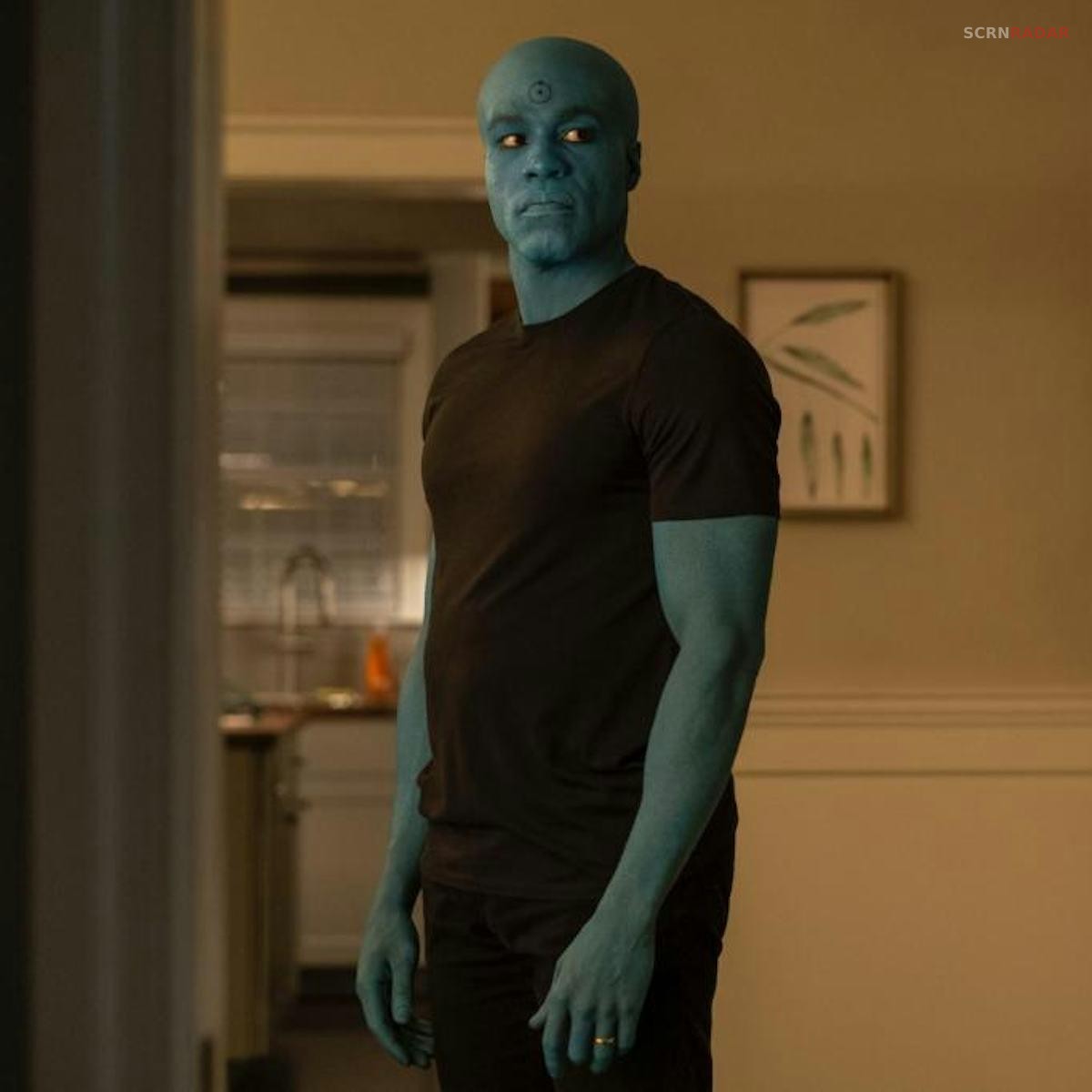
The episode gradually reveals that Doctor Manhattan has been living on Earth disguised as Angela’s husband, Cal Abar. Through advanced technology, he suppressed his powers and memories to live a normal life. This revelation reframes Cal’s character and adds emotional weight to his relationship with Angela.
As the story progresses, Manhattan’s true identity is exposed, setting the stage for the events leading into the finale. The episode ends with a sense of inevitability, as Manhattan accepts his fate while continuing to guide Angela through their shared timeline.
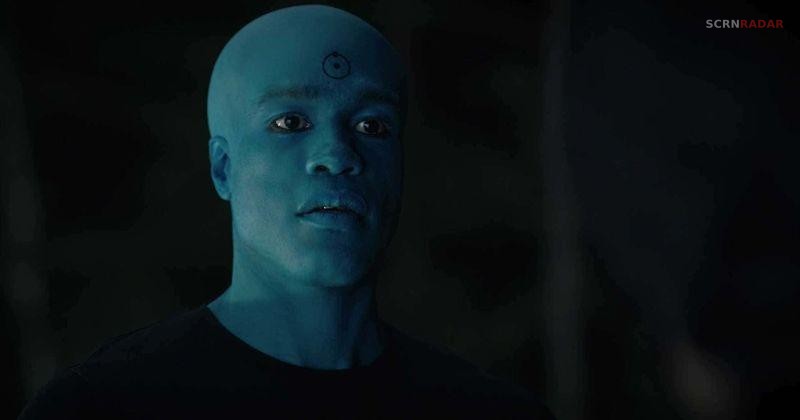
Doctor Manhattan’s Unique Perception of Time
One of the most fascinating aspects of Episode 8 is its exploration of time through Doctor Manhattan’s perspective. Unlike humans, Manhattan experiences all moments simultaneously, meaning his past, present, and future are always connected.
This concept is not entirely new to fans of the original Watchmen story, but the episode visualizes it in a way that feels fresh and emotionally impactful. Scenes transition seamlessly between different points in time, often connected through dialogue rather than chronology.
For example, a question asked in the present may be answered in the past, creating a narrative flow that reflects Manhattan’s experience. This storytelling technique challenges viewers but also rewards attention, making the episode deeply engaging.
The nonlinear structure is not just a stylistic choice but a reflection of the character’s reality. It allows the audience to understand how Manhattan perceives existence, making his emotional detachment and decisions more comprehensible.
Angela and Manhattan: A Love Story Reimagined
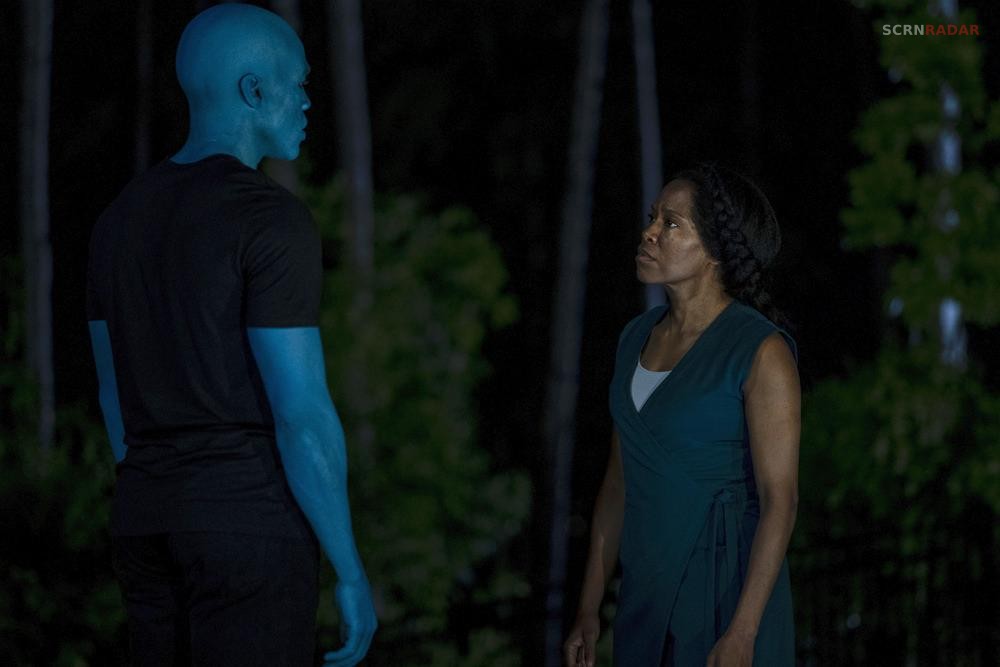
At its core, Episode 8 is a love story between Angela Abar and Doctor Manhattan. Their relationship is unconventional, shaped by the fact that one partner already knows how everything will unfold.
Angela, played by Regina King, brings emotional depth and authenticity to the story. Her performance anchors the episode, making the complex narrative feel grounded and relatable.
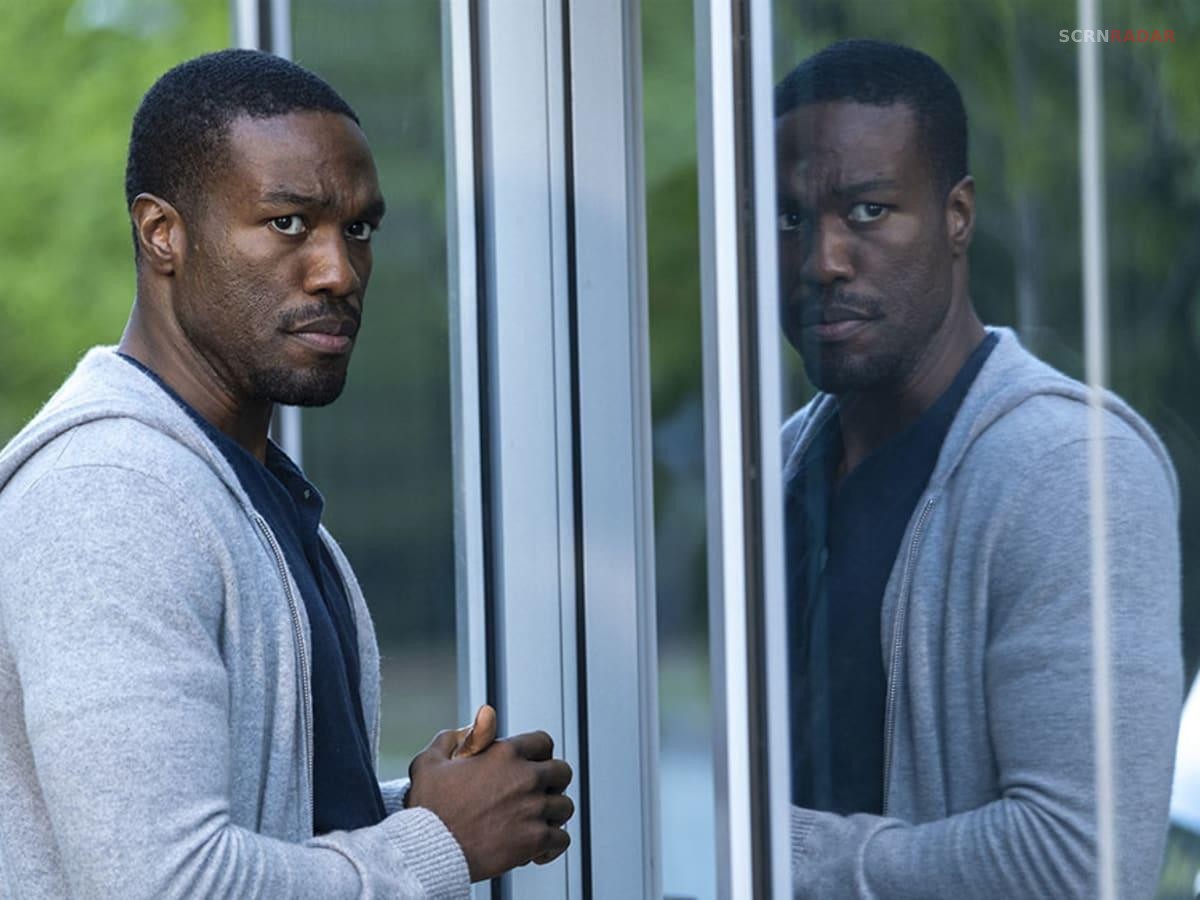
Doctor Manhattan, portrayed by Yahya Abdul-Mateen II, is depicted in a more human light than in previous iterations. While he retains his god-like abilities, his desire to experience love and connection becomes central to his character.
The relationship is both beautiful and tragic. Manhattan’s knowledge of their future does not diminish his feelings, but it does create a sense of inevitability that permeates every moment they share.
This emotional core elevates the episode beyond its science fiction elements, making it resonate on a deeply human level.
The Cal Abar Twist Explained
The revelation that Cal Abar is actually Doctor Manhattan is one of the most significant twists in the series. Throughout the earlier episodes, Cal is portrayed as a supportive and caring husband, with no indication of his true identity.
Episode 8 recontextualizes his character by showing how Manhattan chose to live as a human. By suppressing his powers, he was able to experience life in a way that would otherwise be impossible for him.
This decision reflects a key theme of the episode: the desire for connection. Despite his god-like abilities, Manhattan seeks a sense of normalcy and emotional intimacy, which he finds in his relationship with Angela.
The twist also adds layers to previous episodes, encouraging viewers to revisit earlier scenes with a new perspective. It is a testament to the show’s storytelling that such a major reveal feels both surprising and inevitable.
Themes of Fate, Choice, and Inevitability
Episode 8 explores complex themes related to fate and free will. If the future is already known, can individuals truly make choices, or are they simply following a predetermined path?
Doctor Manhattan embodies this dilemma. He understands what will happen but continues to act within that framework, suggesting that knowledge of the future does not necessarily grant control over it.
Angela’s perspective provides a counterpoint, as she experiences events in a linear and uncertain way. This contrast highlights the tension between determinism and human agency.
The episode does not provide clear answers but instead invites viewers to reflect on these questions. This thematic depth is one of the reasons why the episode resonates so strongly.
Direction, Writing, and Performances
The direction and writing in Episode 8 are exceptional, blending complex ideas with emotional storytelling. Damon Lindelof and his team manage to balance exposition with character development, ensuring that the narrative remains engaging.

The visual presentation plays a crucial role in conveying the nonlinear structure. Transitions between timelines are handled seamlessly, often using visual cues and dialogue to connect scenes.
Performances are a major highlight, particularly from Regina King and Yahya Abdul-Mateen II. Their chemistry and emotional range bring authenticity to a relationship that could easily feel abstract.
The episode’s pacing is deliberate, allowing moments to breathe while maintaining a sense of momentum. This balance ensures that the story remains accessible despite its complexity.
Where Episode 8 Excels
Episode 8 excels in its ability to combine high-concept science fiction with deeply personal storytelling. The integration of Doctor Manhattan’s perspective into the narrative is both innovative and effective.
The emotional impact of the episode is another standout feature. By focusing on Angela and Manhattan’s relationship, the story creates a connection with the audience that goes beyond plot mechanics.
The episode also succeeds in advancing the narrative of the series. Key revelations and developments set the stage for the finale, ensuring that the story continues to build momentum.
Additionally, the episode’s ambition sets it apart. It takes risks with its structure and themes, resulting in a unique viewing experience.
Where It Falls Short
While Episode 8 is widely praised, it may not appeal to all viewers. The nonlinear storytelling can be challenging to follow, particularly for those unfamiliar with the concept of Doctor Manhattan’s perception of time.
Some viewers may also find the heavy focus on exposition overwhelming. The episode introduces complex ideas that require attention and engagement, which may not suit everyone’s preferences.
Additionally, the emotional focus on Angela and Manhattan means that other characters receive less attention. While this is a deliberate choice, it may feel limiting for viewers invested in the broader ensemble.
Despite these minor drawbacks, the episode’s strengths far outweigh its weaknesses.
Understanding the Science
The concepts explored in Episode 8, particularly regarding time and perception, are rooted in theoretical ideas rather than scientific reality. Doctor Manhattan’s experience of time as a simultaneous continuum is a fictional construct designed for storytelling.
However, the episode draws inspiration from real-world discussions about time, determinism, and consciousness. These ideas have been explored in physics and philosophy, adding a layer of intellectual depth to the narrative.
It is important to view these concepts as narrative tools rather than accurate representations of science. The show prioritizes emotional and thematic impact over realism, which ultimately enhances its storytelling.
Episode 8 of Watchmen is a masterclass in storytelling, combining complex ideas with emotional depth to create a truly memorable experience. Its innovative structure and powerful performances make it a standout not just within the series but in television as a whole.
The episode’s exploration of love, fate, and time resonates on multiple levels, offering both intellectual and emotional engagement. While its complexity may be challenging for some viewers, it is precisely this ambition that makes it so impactful.
For fans of the series, Episode 8 is essential viewing that redefines the narrative and deepens the characters. It is a testament to the creative vision behind Watchmen and a reminder of what television can achieve at its best.
Another reason Episode 8 of Watchmen stands out is how effectively it rewards attentive viewers by tying together subtle narrative threads introduced earlier in the season. Small details, including Angela’s past experiences and Cal’s seemingly ordinary behavior, gain entirely new meaning after the reveal.
This level of narrative cohesion strengthens the storytelling and highlights the careful planning behind the series. It also encourages rewatch value, as many moments carry deeper significance once the full picture is understood. This layered approach is a key factor in why the episode continues to be widely discussed.
The Good
- Innovative nonlinear storytelling
- Powerful emotional core
- Outstanding performances
- Deep thematic exploration
The Bad
- Complex structure may confuse some viewers
- Heavy exposition
- Limited focus on supporting characters