
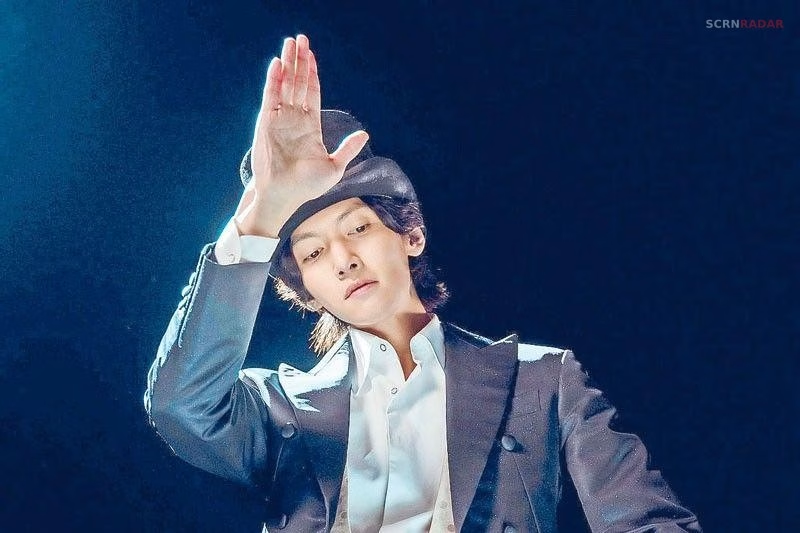
The Sound of Magic opens with a simple yet haunting question: “Do you believe in magic?” That question becomes the emotional core of this unique K-drama, guiding viewers through a story that feels both whimsical and deeply unsettling. Unlike traditional Korean dramas, this series blends fantasy, musical storytelling, and psychological themes to create something truly distinctive.
At first glance, the show appears to be a lighthearted tale about a mysterious magician. However, it quickly reveals a darker, more thought-provoking narrative beneath its colorful surface. The story follows a struggling high school student whose life changes after meeting an enigmatic magician who may or may not be real. As the story unfolds, the line between illusion and reality becomes increasingly blurred.
This review breaks down what makes The Sound of Magic stand out, from its storytelling and themes to its performances and visual style.
Story and Narrative: A Journey Between Illusion and Reality
At the heart of the story is Yoon Ah Yi, a high school student burdened by financial struggles and abandonment. After her parents disappear from her life, she is left to survive on her own while trying to keep up with school. Her harsh reality creates a strong emotional foundation for the series.
Her life takes a turn when she encounters Ri Eul, a mysterious magician living in an abandoned theme park. Ri-Eul invites her into a wonder world, offering her a temporary escape from her struggles. However, his true nature remains unclear, leaving both Ah-Yi and the audience questioning whether his magic is real or simply a metaphor.
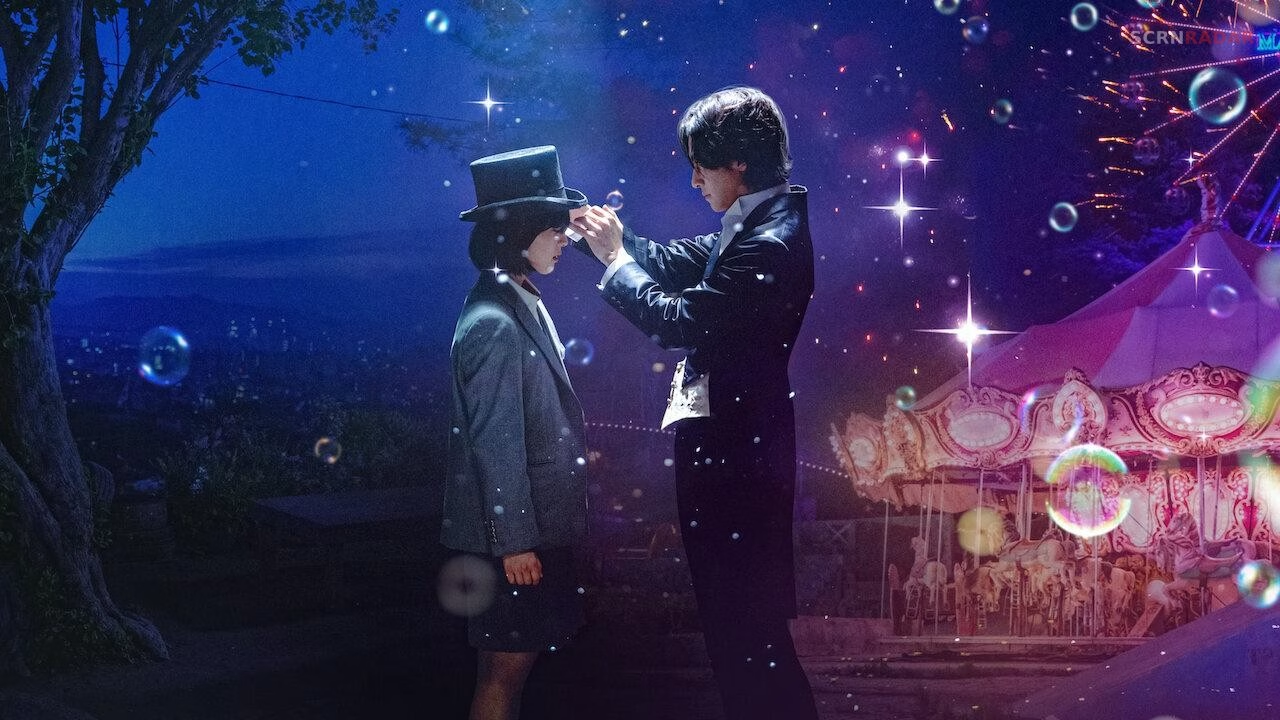
The narrative avoids clear answers, which adds to its intrigue. Instead of explaining everything, the series uses subtle hints and foreshadowing to keep viewers engaged. This ambiguity becomes one of its strongest storytelling tools, encouraging interpretation rather than providing straightforward conclusions.
One of the most compelling aspects of The Sound of Magic is its thematic depth. Beneath the magical surface lies a powerful exploration of societal pressure and the loss of childhood innocence. The series examines how young people are forced to grow up too quickly, often sacrificing their dreams in the process.
Through Ah-Yi’s struggles, the show highlights the harsh realities of financial instability and academic pressure. It also explores what it means to be “normal” in a society that values conformity. Characters who step outside societal expectations are often viewed with suspicion or fear.
Ri-Eul represents the opposite of this rigid structure. He embodies freedom, imagination, and the refusal to conform. His presence challenges the other characters to question their beliefs and priorities. This contrast between reality and fantasy gives the series its emotional weight and makes it resonate beyond its genre.
Visual Style and Musical Elements
What truly sets The Sound of Magic apart is its presentation. The series is structured like a stage musical, featuring original songs, choreographed performances, and dreamlike sequences. These musical elements are not just decorative but serve as an extension of the characters’ emotions.
The use of an abandoned theme park as a central setting adds to the show’s surreal atmosphere. Combined with vibrant cinematography and creative transitions, the visuals create a sense of wonder that contrasts with the darker themes.
Dream sequences and symbolic imagery are used effectively to blur the line between fantasy and reality. This approach enhances the storytelling, making the audience feel as uncertain as the characters themselves.
The performances in The Sound of Magic play a crucial role in bringing its complex story to life. The actors deliver emotionally grounded portrayals that make even the most fantastical moments feel believable.
Yoon Ah-Yi’s character arc is particularly compelling, as she transitions from a hardened survivor to someone willing to embrace hope again. Ri-Eul, on the other hand, remains an mystery throughout the series, which adds to his charm and mystique.
Supporting characters also contribute to the narrative, offering different perspectives on ambition, fear, and societal expectations. Each character feels purposeful, adding depth to the story without unnecessary distractions.