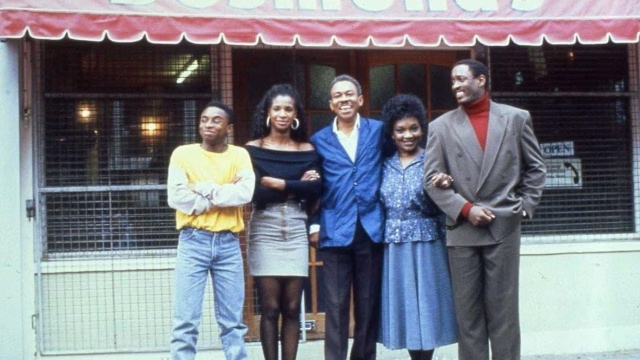

The Outlaws Season 1 builds its tension around a deceptively simple premise: a group of strangers on community service accidentally get mixed up in organized crime after discovering a bag of drug money. Created by Stephen Merchant, the show blends humor with real stakes, slowly turning its mismatched characters into a tightly connected group.
By the time the finale arrives, the stakes are no longer small. What started as a moral dilemma about keeping or returning money evolves into a life-threatening situation involving a dangerous drug gang. Rani becomes the central figure, the group is forced into a risky plan, and the consequences of their choices come crashing down.
Let’s break down exactly what happens in the ending, including the truth about the money, the gang, and how each character’s arc pays off.
What Actually Happens in The Outlaws Season 1 Finale
The finale revolves around the group’s desperate attempt to fix the mess they created after Rani steals a bag of money from a local drug operation. That money belongs to a violent gang led by a dangerous dealer, and returning it becomes the group’s only chance at survival.
However, by the time they try to resolve things, the situation has escalated far beyond a simple handover. The gang is no longer interested in just getting their money back. They want control, intimidation, and punishment, especially targeting Rani.
The group ultimately decides to stand together and confront the problem head-on. Instead of abandoning Rani, they create a plan to outmaneuver the gang. This moment defines the finale, because it shifts the story from survival to loyalty.

The Truth About the Money and Why It Matters
The bag of cash is not just a plot device but the core trigger for every major event in Season 1. It represents opportunity at first, especially for characters dealing with financial struggles, but quickly becomes a symbol of danger.
Rani steals the money impulsively, thinking it could solve her problems and help her family. However, she does not fully understand the consequences of taking money from a drug operation. This decision puts everyone at risk.
By the finale, the group realizes the money cannot be kept or used. It must be returned or neutralized in some way to end the threat. The resolution of the money storyline reinforces a key idea that some shortcuts come with irreversible consequences.
Why Rani Is the Key to the Ending
Rani is undeniably the center of the Season 1 ending because her actions drive the main conflict. Unlike the others, she is directly tied to the crime, which makes her the primary target of the gang.
Throughout the series, Rani struggles with fear and denial. She tries to avoid responsibility, hoping the situation will resolve itself. However, the finale forces her to face reality.
Her arc reaches its peak when she stops running and accepts the consequences of her actions. This moment is crucial because it transforms her from a reckless teenager into someone who understands accountability. The ending works because Rani changes in a meaningful way.
How the Group Outsmarts the Criminals

One of the most important elements of the finale is how the group uses teamwork to survive. Individually, they are not equipped to deal with hardened criminals, but together, they become resourceful.
The plan involves deception, timing, and exploiting the gang’s expectations. Instead of relying on brute force, they rely on coordination and quick thinking. This reflects the show’s grounded tone, where ordinary people must rely on intelligence rather than heroics.
Their success is not clean or easy, but it is enough to neutralize the immediate threat. This moment highlights how far the group has come since the beginning, when they barely trusted each other.
What Happens to the Gang and the Immediate Threat
The gang’s presence looms over the entire season, and the finale finally brings that conflict to a head. While the group manages to survive the confrontation, the threat is not completely erased.
The criminals are dangerous, but they are also operating within a larger system. This means the group’s victory is temporary rather than absolute. They escape immediate harm, but they are now aware of how close they came to disaster.
This outcome keeps the story realistic. Instead of a neat resolution, the finale shows that dealing with crime has lasting consequences. The danger may be reduced, but it is never entirely gone.
Ben’s Arc and His Role in the Finale

Ben, played by Stephen Merchant, represents one of the most grounded character arcs in the show. He starts as a law-abiding but emotionally disconnected lawyer who struggles with his personal life.
Throughout the season, Ben is forced to step outside his comfort zone. The events surrounding the money and the gang push him into situations he would normally avoid.
By the finale, Ben plays a key role in helping the group navigate the crisis. His growth is subtle but important, showing that even the most cautious individuals can rise to the occasion when it matters. His arc reinforces the theme of personal change.
Why the Ending Feels Realistic Instead of Clean
One of the defining aspects of the Season 1 ending is that it avoids a perfectly clean resolution. While the group survives and the immediate crisis is addressed, there is no sense that everything is back to normal.
Each character carries the weight of what happened. Their lives have been disrupted, and their perspectives have changed. This makes the ending feel grounded rather than overly dramatic.
The show deliberately avoids tying up every loose end. This choice reflects real-life consequences, where actions often have lingering effects. It also makes the story more compelling, as it leaves room for further exploration.
The Deeper Meaning Behind The Outlaws Season 1 Ending
At its core, the ending is about accountability and connection. Every character begins the series isolated in their own problems, but the shared crisis forces them to rely on each other.
The money represents temptation and poor decision-making, but it also becomes the catalyst for growth. Without it, the group would never have formed the bond that ultimately saves them.
The finale suggests that redemption is not about avoiding consequences but facing them together. This message is reinforced through Rani’s arc and the group’s collective decision to stand by her.