

Episode 9 of Law & Order: Special Victims Unit Season 23, titled “People vs. Richard Wheatley,” delivers one of the most intense crossover courtroom episodes in recent memory. Centered on the long-awaited trial of Richard Wheatley, the man accused of orchestrating Kathy Stabler’s murder, the episode blends emotional confrontations, legal strategy, and personal betrayals. With Olivia Benson and Elliot Stabler deeply involved, the stakes feel far more personal than a typical case.
What makes this episode stand out is how it shifts from a standard procedural format into a layered courtroom drama. The return of Rafael Barba as Wheatley’s defense attorney adds a major emotional conflict, placing Benson at odds with a trusted ally. As testimonies unfold and tensions rise, the episode builds toward a verdict that shocks both the characters and viewers. Let’s break down the case, the key moments, and what the final verdict really means.
The episode begins with grief and unresolved tension
The episode opens on an emotional note at Kathy Stabler’s gravesite, where Elliot Stabler and his family gather alongside Olivia Benson. This quiet moment establishes the personal stakes behind the trial, reminding viewers that the case is not just another investigation. For Stabler, this is about justice for his wife, while for Benson, it is about supporting someone she deeply cares about.
The scene also highlights how Stabler continues to struggle with grief and control. His decision to monitor his son closely shows that the trauma of Kathy’s death still affects his behavior. Benson observes these changes, creating subtle tension between the two characters.
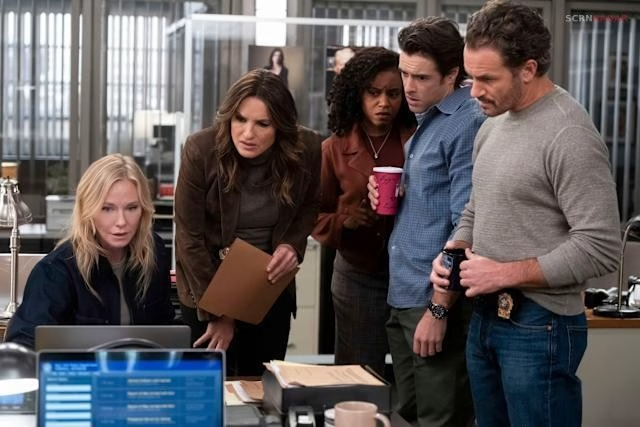
This opening works as a grounding moment before the courtroom drama begins. It reinforces the emotional weight behind the case and sets up the conflicts that will unfold throughout the episode. The trial is not just about facts but about deeply personal consequences.
Rafael Barba’s return changes everything
One of the biggest twists in the episode comes when Rafael Barba returns, not as a prosecutor but as Wheatley’s defense attorney. This decision immediately creates tension, especially with Benson, who struggles to understand why her former colleague would defend someone she believes is guilty.
Barba justifies his actions by emphasizing the importance of due process and the possibility that Wheatley is being unfairly targeted. However, his argument does little to convince Benson, who views his involvement as a betrayal. Their interactions throughout the episode are charged with frustration and emotional conflict.
Stabler’s reaction is even more direct. He confronts Barba and questions his motives, making it clear that he sees the decision as deeply personal. This dynamic adds another layer to the episode, turning the trial into a clash not only between prosecution and defense but also between former allies.
Barba’s presence raises important questions about justice and loyalty. The episode explores whether defending the legal process can sometimes come at the cost of personal relationships, making his role one of the most complex elements of the story.
The prosecution builds its case against Wheatley
The prosecution, led by Dominick Carisi, enters the trial with strong confidence. Their goal is to prove that Richard Wheatley orchestrated the car bombing that killed Kathy Stabler. Key evidence and testimonies are presented to establish a clear link between Wheatley and the crime.

Benson takes the stand early in the trial, where she faces intense cross-examination from Barba. He questions her decision to involve Stabler in the investigation, suggesting that his emotional connection may have compromised the case. This line of questioning introduces doubt about the integrity of the investigation.
Sergeant Ayanna Bell also testifies, reinforcing the prosecution’s claims about Wheatley’s criminal activities. However, Barba counters by suggesting that evidence may have been manipulated or planted. This argument begins to weaken the prosecution’s position, creating uncertainty within the courtroom.
The prosecution’s case is strong on paper, but the defense’s strategy focuses on creating doubt rather than disproving every detail. This shift becomes a key factor in how the trial unfolds.
Angela Wheatley’s testimony shifts the narrative
Angela Wheatley’s testimony becomes one of the most dramatic moments of the episode. As a central figure connected to the case, her statements carry significant weight. She confirms that Richard Wheatley manipulated her and was involved in criminal activity, strengthening the prosecution’s argument.
However, Barba’s cross-examination introduces a major twist. He reveals that Angela had romantic feelings for Stabler, which complicates her credibility as a witness. This revelation shocks the courtroom and adds a personal dimension to the case.
Angela’s admission creates tension between Stabler and Benson as well. Benson begins to question what she does not know about Stabler’s actions, leading to a confrontation outside the courtroom. This moment highlights the emotional strain the trial places on their relationship.
The testimony ultimately weakens the prosecution’s case by introducing doubt about Angela’s motivations. While her statements support the charges, her personal connection to Stabler complicates how the jury may interpret her credibility.
Richie Wheatley’s testimony undermines the case
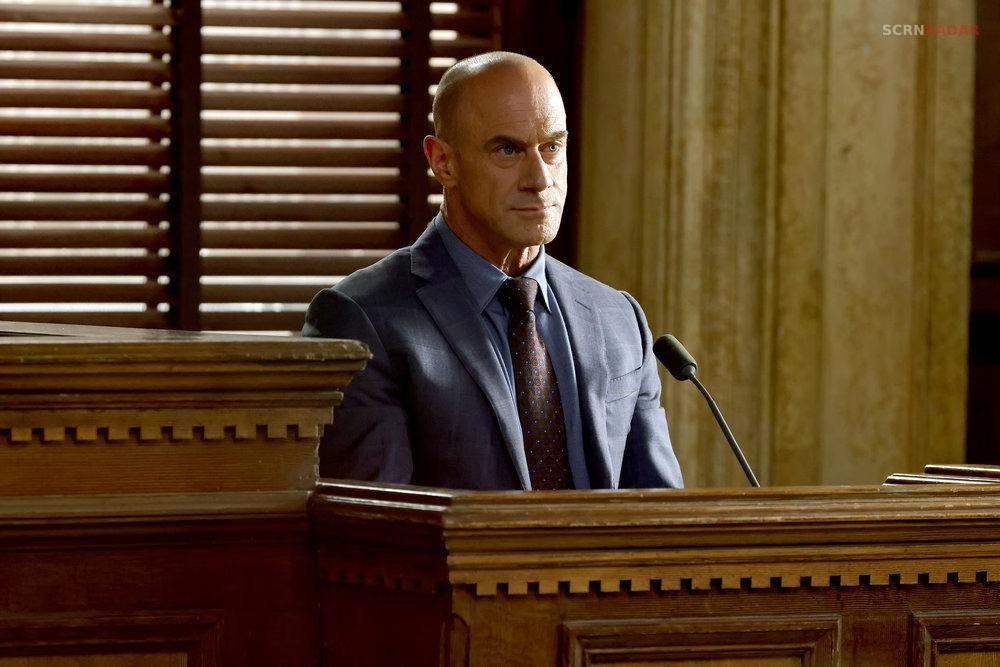
Another critical turning point occurs when Richie Wheatley takes the stand via video. Initially, his testimony is expected to support the prosecution by confirming incriminating statements made by his father. However, the situation quickly changes.
During questioning, Richie suddenly retracts his earlier statements and claims he does not remember key details. This unexpected shift creates a major setback for the prosecution. It also suggests possible interference or pressure from Wheatley, though this is not proven directly.
The change in Richie’s testimony highlights the challenges of relying on witness statements in high-profile cases. It also reinforces the defense’s strategy of creating doubt rather than presenting an alternative narrative.
For the jury, this moment introduces significant uncertainty. A key witness becoming unreliable can have a major impact on how the case is perceived, making it harder to reach a definitive conclusion.
Stabler’s testimony and courtroom outburst
Elliot Stabler’s testimony is one of the most emotionally charged moments in the episode. As both a detective and a victim’s husband, his role in the trial is uniquely complicated. The prosecution relies on his testimony to connect the investigation’s findings to Wheatley.
At first, Stabler remains composed, presenting his account clearly and professionally. However, Barba’s cross-examination pushes him to his limits. Questions about his past behavior, emotional state, and investigative methods begin to affect his composure.
Eventually, Stabler loses control and lashes out in court, accusing the judge and expressing his belief in Wheatley’s guilt. This outburst leads to him being held in contempt, damaging the prosecution’s credibility in front of the jury.
This moment is crucial because it reinforces the defense’s argument that Stabler’s involvement compromised the investigation. It also shows how personal emotions can interfere with legal proceedings, even when the intentions are justified.
Wheatley’s testimony adds chaos to the trial
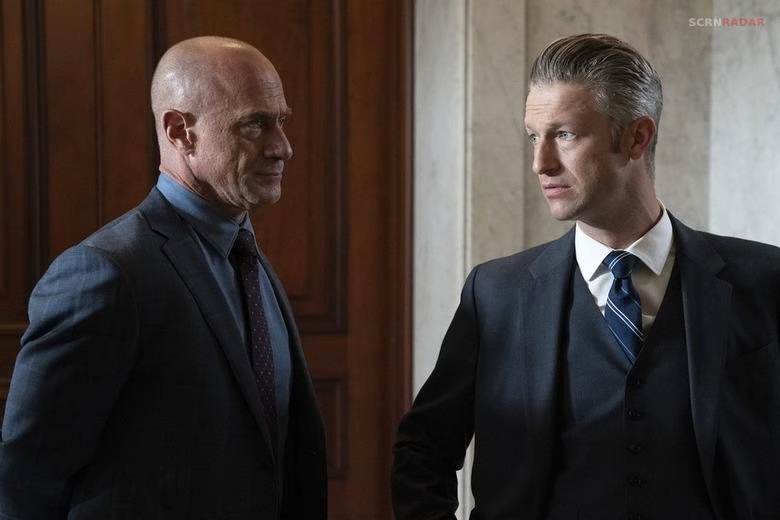
In a surprising move, Richard Wheatley decides to testify in his own defense. Despite advice against it, he takes the stand to present his version of events. His testimony is theatrical and calculated, aiming to create doubt about the prosecution’s case.
Wheatley denies involvement in Kathy Stabler’s murder and shifts the blame onto another individual. He portrays himself as a victim of a flawed investigation, reinforcing the defense’s narrative. His confidence and composure initially work in his favor.
However, under cross-examination, Wheatley’s demeanor begins to crack. He makes aggressive statements and even threatens Carisi, which undermines his credibility. These moments reveal glimpses of his true nature, but it is unclear how the jury interprets them.
Wheatley’s decision to testify adds unpredictability to the trial. While it creates dramatic tension, it also complicates the jury’s perception, contributing to the uncertainty that defines the verdict.
The verdict: Why the jury reaches a deadlock
After all testimonies are presented, the jury begins deliberation. Despite the extensive evidence and emotional arguments, they are unable to reach a unanimous decision. The case becomes increasingly divided, with jurors holding conflicting views.
The judge ultimately declares a mistrial due to the deadlock. This outcome means that no final verdict is reached, leaving the case unresolved. For Stabler and Benson, this is a devastating result, as it denies them the closure they were seeking.
The deadlock reflects the effectiveness of the defense’s strategy. By introducing doubt at key moments, Barba creates enough uncertainty to prevent a conviction. At the same time, the prosecution’s challenges weaken their ability to secure a unanimous decision.
This verdict highlights the complexity of the legal system. Even in cases with strong evidence, uncertainty and doubt can prevent a clear outcome.
What the mistrial means for the characters
The mistrial has significant emotional and narrative consequences for the main characters. For Stabler, it represents a failure to achieve justice for his wife. His frustration is compounded by personal struggles, including concerns about his son.
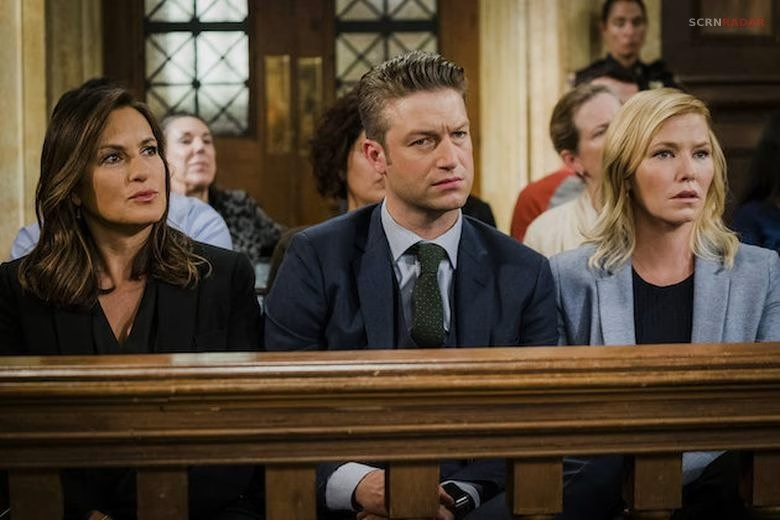
Benson also faces emotional fallout, particularly in her relationship with Barba. She expresses a deep sense of betrayal, making it clear that his decision to defend Wheatley has damaged their bond. This conflict adds a lasting impact beyond the courtroom.
For Barba, the outcome reinforces his commitment to the legal process, even at the cost of personal relationships. His role in the case raises questions about the balance between professional duty and personal loyalty.
The episode leaves these relationships in a state of tension, suggesting that the consequences of the trial will continue to affect future storylines.
Final thoughts on the case and episode impact
Law & Order: SVU Season 23 Episode 9 delivers a compelling blend of courtroom drama and character-driven storytelling. The episode stands out for its emotional intensity, particularly in how it explores the personal stakes behind the case.
The trial of Richard Wheatley serves as more than just a legal battle. It becomes a test of relationships, ethics, and the limits of the justice system. The mistrial may feel unsatisfying, but it reflects the reality that not all cases have clear resolutions.
By focusing on both the legal proceedings and the emotional consequences, the episode creates a layered narrative that resonates beyond its runtime. It challenges viewers to consider the complexities of justice and the human cost behind every case.
Ultimately, Episode 9 succeeds because it balances suspense, drama, and character development. While the verdict leaves the story unresolved, it sets the stage for future developments and ensures that the impact of the case will continue to shape the series.