Released in 2016, Rogue One: A Star Wars Story remains one of the most emotional and consequential entries in the Star Wars franchise. Unlike most Star Wars movies, the film does not end with a triumphant celebration or the survival of its heroes. Instead, it concludes with nearly every major character sacrificing their lives to secure a single victory for the Rebel Alliance.
For many viewers, the ending raises important questions. Why did Jyn Erso and Cassian Andor have to die? What was the significance of the Death Star plans? How does Darth Vader’s terrifying final appearance connect to the original 1977 Star Wars film? And why is Rogue One often considered one of the most impactful Star Wars stories ever told?
The answer lies in the film’s central theme: rebellion is built on sacrifice. Every death during the Battle of Scarif contributes to a victory that ultimately allows the Rebels to destroy the Death Star in A New Hope. By the end of Rogue One, the audience understands that the heroes who save the galaxy are not always the ones remembered in history. Their mission succeeds, but they never live to see the result.
What Happens at the End of Rogue One?
The final act begins when Jyn Erso realizes that the Rebel Alliance leadership is unwilling to launch a direct attack on the Empire. Despite the council’s hesitation, she convinces a group of volunteers to join her mission to steal the Death Star schematics from the Imperial archive on Scarif.
Using a stolen Imperial shuttle, Jyn, Cassian Andor, K-2SO, Bodhi Rook, Chirrut Îmwe, Baze Malbus, and a team of Rebel soldiers infiltrate Scarif. Their objective is simple but nearly impossible: retrieve the plans that prove Galen Erso secretly built a weakness into the Death Star.
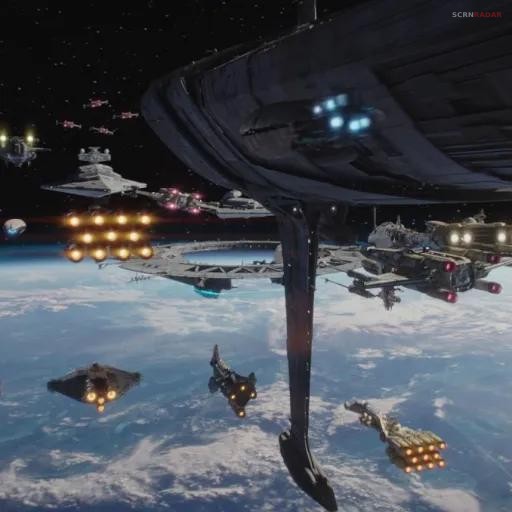
Once the mission begins, the situation quickly escalates into a massive battle. Rebel forces arrive in orbit to support the ground team, leading to one of the largest space battles in Star Wars history. Every member of the Rogue One team plays a crucial role in ensuring the plans reach the Rebel fleet.
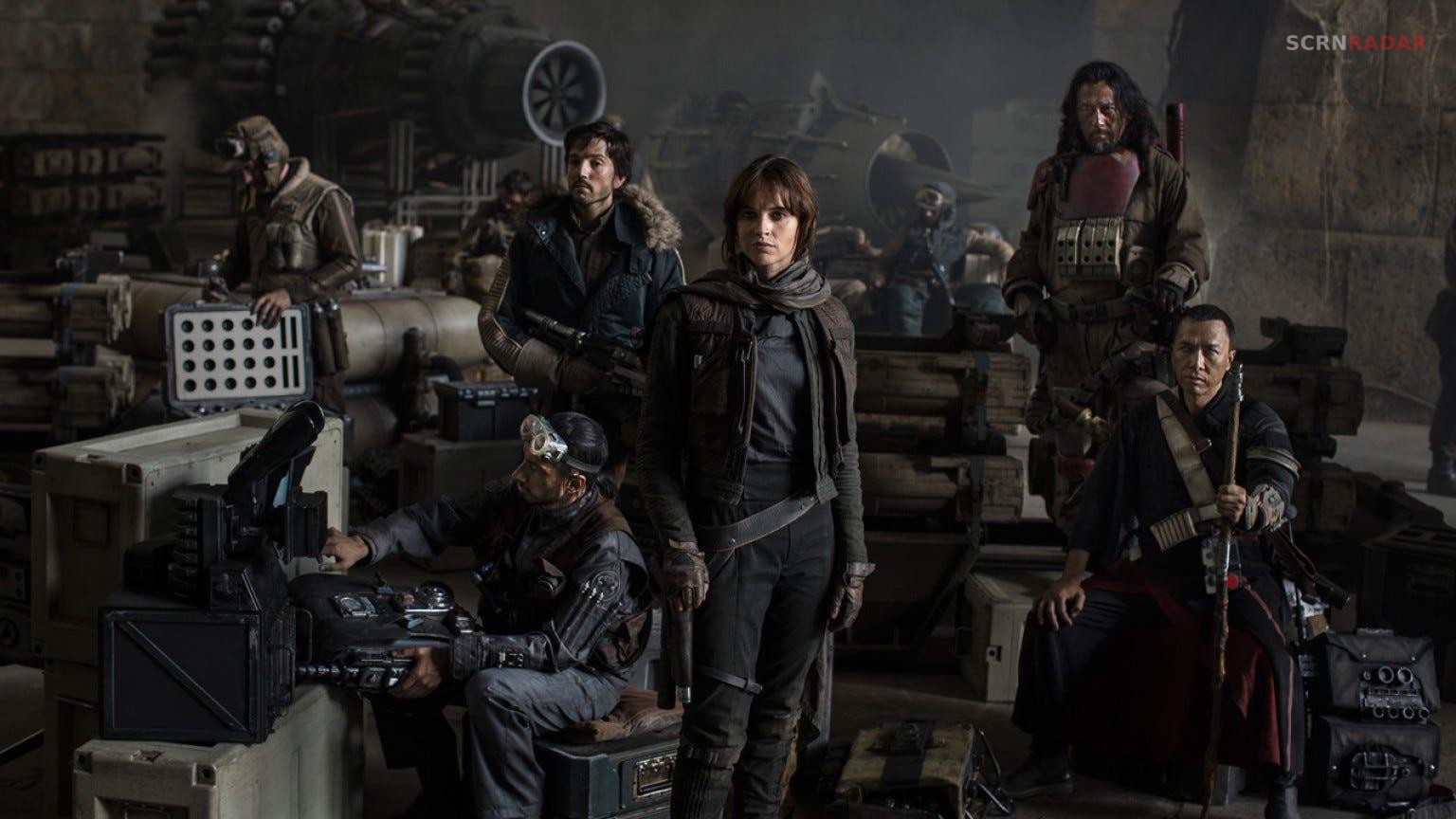
The ending unfolds as a chain of sacrifices. One by one, the heroes give their lives so the next step of the mission can succeed. Their deaths are tragic, but they ensure the Rebel Alliance gains the information needed to defeat the Empire.
Why Is the Death Star Plan So Important?
The entire plot of Rogue One revolves around the Death Star’s technical schematics. Earlier in the film, Galen Erso reveals that he secretly embedded a flaw into the battle station’s design while being forced to work for the Empire.
At first glance, the Death Star appears unstoppable. It can destroy entire planets with a single blast, as demonstrated on Jedha and later Alderaan in A New Hope. Without knowledge of its vulnerability, the Rebel Alliance would have no realistic way to defeat it.
The plans reveal a small thermal exhaust port connected to the station’s reactor core. While the weakness seems minor, it creates a path to catastrophic destruction if targeted precisely. This information becomes the foundation of the Rebels’ strategy during the Battle of Yavin.
The significance of the plans extends beyond military intelligence. They represent proof that Galen Erso never truly served the Empire willingly. Even while trapped within the Imperial system, he found a way to undermine it from within. His final act becomes the key to the Death Star’s eventual destruction.
Without the success of the Scarif mission, Luke Skywalker would never have had the opportunity to destroy the Death Star in A New Hope. In many ways, Rogue One explains why the original Star Wars victory was even possible.
Why Does Every Member of Rogue One Die?
One of the boldest choices in Rogue One is its willingness to kill nearly all of its main characters. While many blockbuster films protect their heroes, Rogue One embraces the reality of war.
K-2SO dies while defending the archive tower, buying precious time for Jyn and Cassian to reach the data vault. His sacrifice ensures they can access the Death Star plans before Imperial forces overwhelm them.
Chirrut Îmwe sacrifices himself to activate the communications switch that allows the plans to be transmitted. Despite being surrounded by enemy fire, he completes the mission and keeps repeating his faith in the Force until his final moments. His death demonstrates the film’s recurring theme that hope often requires courage in the face of impossible odds.
Baze Malbus, devastated by Chirrut’s death, continues fighting until he too is killed. Bodhi Rook also dies after helping coordinate the transmission of the plans to the Rebel fleet. Each character’s sacrifice directly contributes to the success of the operation.
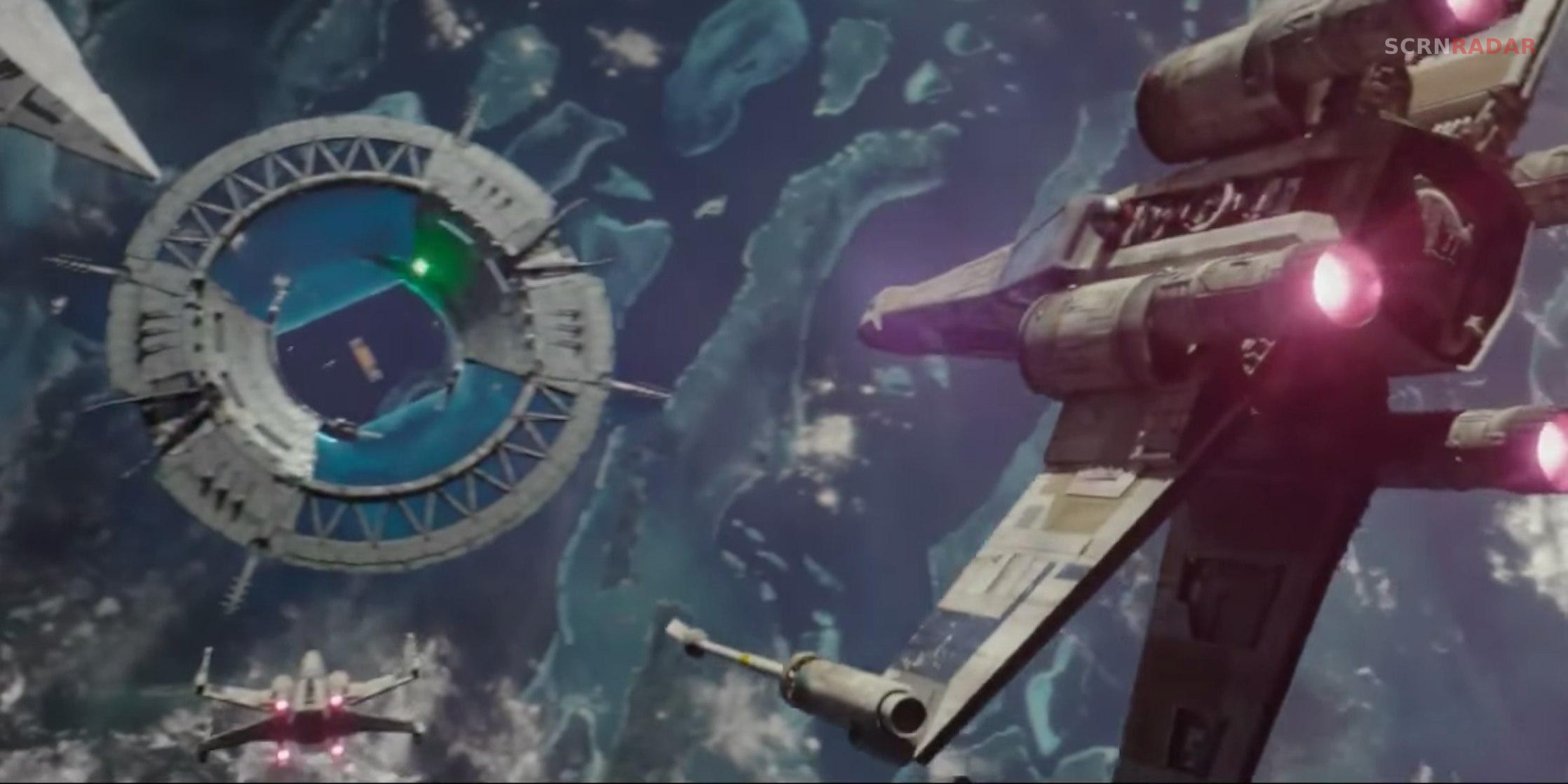
The film deliberately avoids meaningless deaths. Every loss advances the mission. This structure reinforces the idea that the Rebel victory was achieved through collective sacrifice rather than the actions of a single hero.
That approach helps distinguish Rogue One from other Star Wars films. The story is not about destiny, prophecy, or chosen ones. It is about ordinary individuals making extraordinary sacrifices for a cause larger than themselves.
What Happens Between Jyn Erso and Cassian Andor?
As the battle reaches its climax, Jyn successfully retrieves the Death Star plans. However, Director Orson Krennic intercepts her before she can transmit them.
Cassian arrives in time to save Jyn, shooting Krennic and allowing the transmission to proceed. Together, they manage to send the plans to the Rebel fleet moments before the Empire launches a devastating response.
Once their mission succeeds, Jyn and Cassian realize there is no escape. The Death Star arrives above Scarif, and Grand Moff Tarkin orders a destructive blast against the Imperial facility below. With no ships available and no way off the planet, the pair accepts their fate.
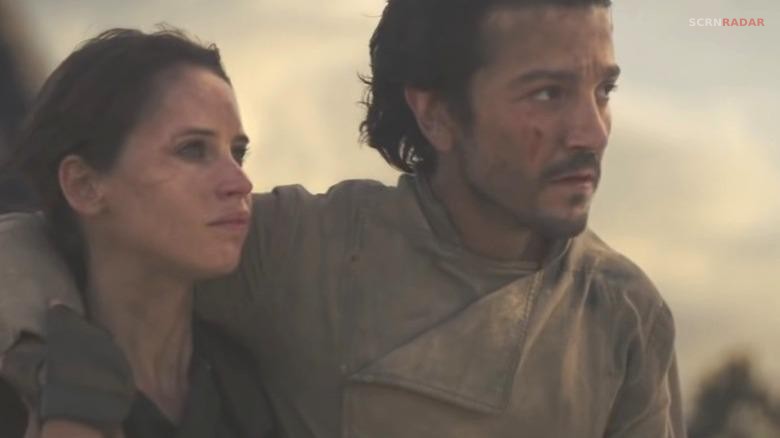
In their final moments, they stand together on a beach as the expanding explosion approaches. Rather than attempting a futile escape, they embrace and watch the end arrive.
Importantly, the scene is not presented as a conventional romance. Throughout the film, Jyn and Cassian develop trust, respect, and understanding through shared hardship. Their final embrace represents human connection, acceptance, and solidarity rather than a traditional love story.
Their deaths are heartbreaking because they occur immediately after success. They accomplish the mission but never live to witness its impact. That bittersweet outcome is precisely what gives the ending its emotional power.
What Does the Scarif Explosion Symbolize?
The explosion on Scarif is more than a dramatic visual spectacle. Symbolically, it represents both destruction and rebirth.
On one level, it marks the end of Jyn and Cassian’s journey. Their lives conclude at the exact moment their mission succeeds. The explosion erases them physically, but their actions survive.
On another level, the blast serves as the birth of hope for the Rebellion. The Death Star plans escape Scarif just before the weapon destroys the facility. While the Empire believes it has eliminated the threat, the information has already reached Rebel hands.
This dual meaning is reflected visually. Jyn and Cassian watch what resembles a sunrise approaching across the ocean, even though it is actually the weapon that will kill them. The image blends death and hope into a single moment. Many fans have interpreted the scene as representing the dawn of a new future for the galaxy.
The sequence perfectly captures Rogue One’s central message: victories often come at tremendous cost.
Darth Vader’s Hallway Scene Explained
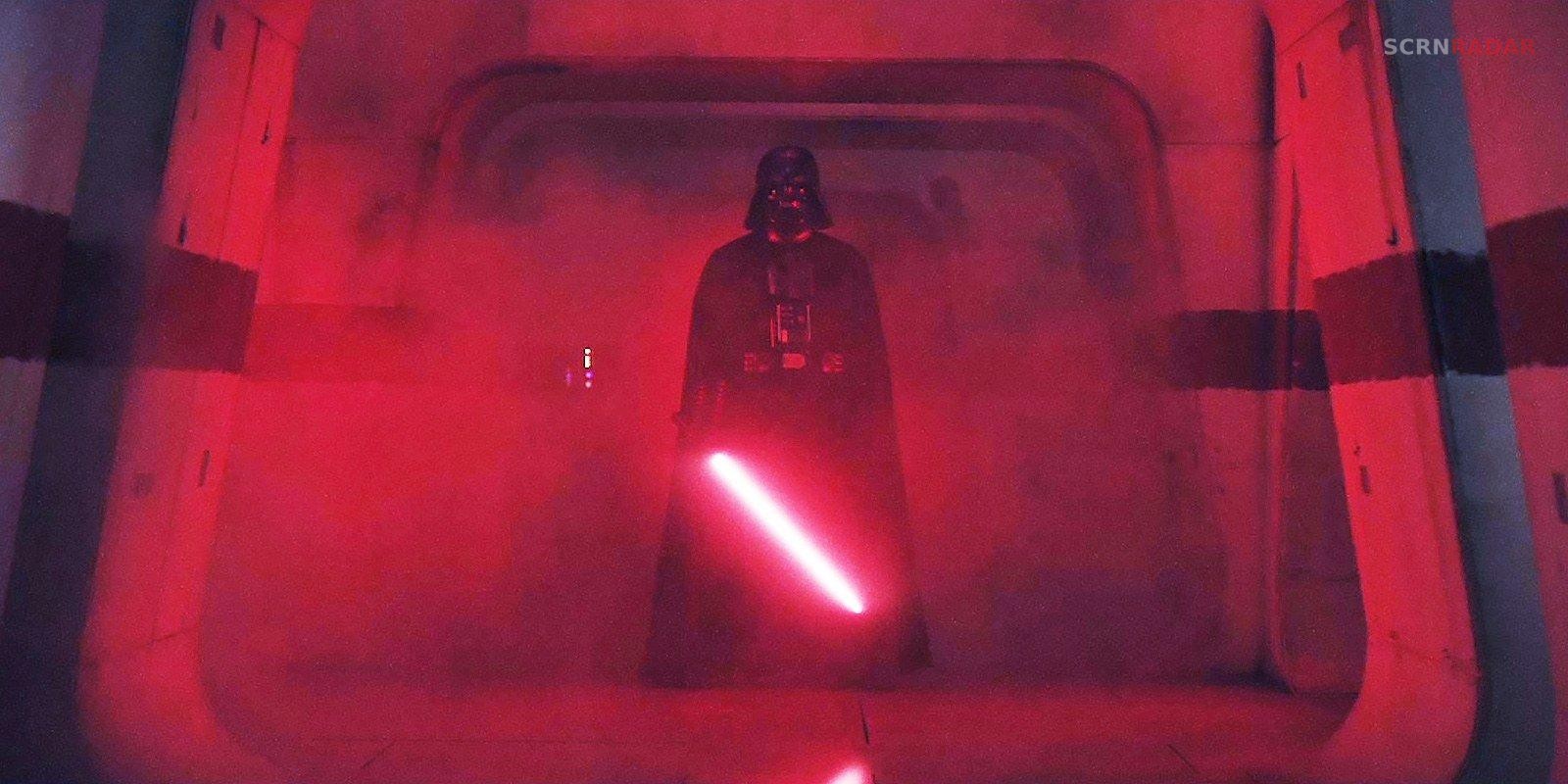
Immediately after the plans are transmitted, the film shifts attention to the Rebel fleet attempting to escape Scarif. At this point, Darth Vader arrives aboard his Star Destroyer and launches a final effort to recover the stolen data.
What follows is one of the most famous scenes in modern Star Wars.
Vader boards a Rebel ship carrying the plans and proceeds through a narrow corridor filled with terrified soldiers. Using both his lightsaber and the Force, he cuts through anyone standing between him and the stolen information.
The scene is memorable because it portrays Vader at the peak of his power. Earlier films often focused on him as a commanding presence, but Rogue One fully showcases the terrifying force of nature he represents. The Rebels are not fighting a man. They are facing an unstoppable weapon.
From a storytelling perspective, the sequence also increases tension. Even after the heroes complete their mission, the audience is forced to wonder whether the plans will ultimately be lost.
The answer arrives at the last possible moment when a Rebel soldier passes the data card to Princess Leia’s ship before Vader can retrieve it.
How Rogue One Connects Directly to A New Hope
One of Rogue One’s greatest achievements is how seamlessly it connects to the opening moments of Star Wars: Episode IV – A New Hope.
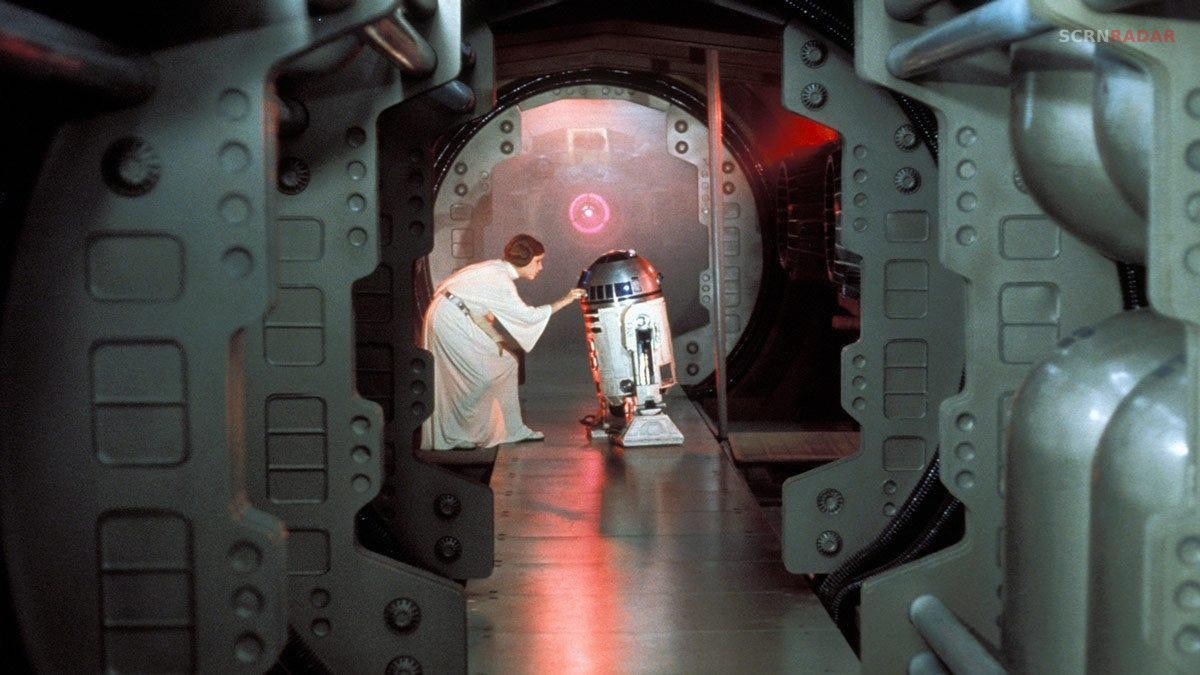
The original Star Wars begins with Darth Vader pursuing Princess Leia’s ship. For decades, viewers knew the Rebels possessed Death Star plans, but they never knew exactly how those plans were obtained.
Rogue One provides that missing chapter. The film ends only minutes before A New Hope begins. The plans transmitted from Scarif are the same plans Leia carries aboard the Tantive IV.
When Leia receives the data, she delivers the film’s final word: “Hope.” That single line summarizes everything the Rogue One team fought and died for.
The connection also transforms the original film. What once appeared to be a straightforward military objective now carries enormous emotional weight because audiences understand the sacrifices behind it.
Every time Luke Skywalker uses the plans during the Battle of Yavin, viewers can remember the people who made that victory possible.
The Real Meaning Behind Rogue One’s Ending
The ending of Rogue One is fundamentally about unsung heroes.
Unlike Luke Skywalker, Han Solo, or Princess Leia, the members of Rogue One do not become legendary figures within the galaxy. Most citizens never learn their names. History remembers the destruction of the Death Star, but not necessarily the individuals who made it possible.
This idea reflects real-world stories of resistance movements and wartime sacrifices. Success often depends on countless people whose contributions remain largely invisible.
The film repeatedly emphasizes this theme through Cassian Andor. He tells Jyn that he has done terrible things for the Rebellion and that many others have sacrificed just as much. By the end of the story, he becomes one of those forgotten heroes himself.
The ending also rejects the notion that heroism guarantees survival. The characters succeed not because they are protected by destiny but because they remain committed to their mission despite overwhelming odds.
Their willingness to act, even when victory seems impossible, ultimately changes the fate of the galaxy.
Why the Ending Still Resonates With Fans
Nearly a decade after its release, Rogue One’s ending remains one of the most discussed moments in Star Wars. Much of its impact comes from its emotional honesty.
The film allows actions to have consequences. Characters die, sacrifices matter, and victories feel earned. Rather than diminishing hope, the tragic ending strengthens it because the audience understands what it cost to achieve.
Recent stories like Andor have added even more depth to Cassian’s sacrifice by exploring the years leading up to Rogue One. The series highlights the personal relationships, struggles, and choices that shaped him into the man willing to give everything for the Rebellion.
As a result, modern viewers often experience Rogue One differently than audiences did in 2016. The ending now carries additional emotional weight because fans know even more about what Cassian left behind.
That evolving perspective has helped keep the film relevant and respected within the franchise.
The ending of Rogue One explains one of the most important events in Star Wars history: how the Rebel Alliance obtained the Death Star plans. Through the sacrifices of Jyn Erso, Cassian Andor, K-2SO, Chirrut Îmwe, Baze Malbus, Bodhi Rook, and countless Rebel soldiers, the information reaches Princess Leia and ultimately allows Luke Skywalker to destroy the Empire’s ultimate weapon.
Jyn and Cassian’s deaths are tragic, but they are also meaningful. Their mission succeeds, proving that ordinary people can change history even if they never receive recognition. The final battle on Scarif, Darth Vader’s terrifying pursuit, and Leia’s hopeful message all combine to create one of the most powerful conclusions in the Star Wars saga.
In the end, Rogue One is not just a story about stealing plans. It is a story about sacrifice, courage, and the idea that hope survives because people are willing to fight for it, even