
Mama The Idol became one of the most unique K-pop survival programs in recent years because its concept focused less on discovering new stars and more on reviving forgotten dreams. Unlike traditional idol competition shows centered around trainees, Mama The Idol followed former female idols and entertainers who had stepped away from the industry after marriage, childbirth, and motherhood. The show explored whether these women could return to the demanding world of K-pop performance after years away from the stage.
The emotional appeal of the series came from its realism. Rather than framing the contestants as nostalgic celebrities simply revisiting old fame, the show highlighted the physical, emotional, and mental challenges of returning to idol life while balancing motherhood and family responsibilities. Throughout the competition, the contestants underwent vocal training, dance evaluations, social media missions, and live performances to prove they still belonged in the industry.
By the finale, the contestants did not just complete a reality show journey. They formed a new project group called M.M.D, proving that age and motherhood do not erase artistic identity. Let’s break down the contestants, their journeys, standout performances, and how Mama The Idol became one of the most emotionally resonant K-pop comeback programs.
What made Mama The Idol different from other survival shows
Most K-pop competition programs focus on young trainees trying to debut for the first time. Mama The Idol completely reversed that formula. Instead of teenagers chasing their dreams, the contestants were experienced entertainers trying to reclaim a part of themselves they had left behind years earlier.
The show introduced six mothers who had previously worked as idols, singers, or actresses before stepping away from the spotlight. To earn their comeback, they had to complete demanding missions while proving they could still perform at a modern fourth-generation idol standard.
Another major challenge involved rebuilding public interest. The contestants needed to gain over 20,000 Instagram followers and more than 2,000 fan cafe members within a month. This requirement reflected the realities of modern K-pop culture, where online engagement often determines commercial success.
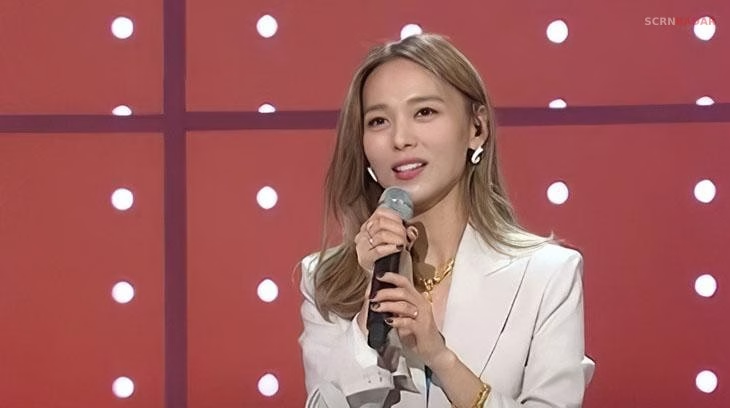
The emotional core of the show came from seeing experienced women confront insecurities about aging, motherhood, and performance pressure. Unlike traditional survival programs built mostly around rivalry, Mama The Idol emphasized support, rediscovery, and personal growth.
Sunye’s return became the show’s biggest storyline
One of the most talked-about contestants was Sunye, the former leader of Wonder Girls. As one of the most iconic second-generation K-pop idols, Sunye’s return carried enormous attention from longtime fans and the media.
After marrying in 2013 and moving to Canada, Sunye largely stepped away from idol activities to focus on family life. Mama The Idol marked her major return to the stage after nearly eight years away from active promotions.
Throughout the series, Sunye consistently demonstrated strong vocal stability and stage presence despite her long hiatus. Her performances often felt the most polished because of her extensive experience as a former top-tier idol. At the same time, the show also highlighted her nervousness about whether audiences would still accept her return.
One of Sunye’s biggest strengths was emotional expression. Rather than trying to compete directly with younger idols through pure intensity, she focused on confidence, professionalism, and emotional delivery. This approach helped her become one of the emotional anchors of the show.
Her journey symbolized the larger message of Mama The Idol. Even after leaving the industry for family life, the identity of being an artist never fully disappeared.
Kahi proved why she remained one of K-pop’s strongest performers
Kahi entered the show with perhaps the strongest performance reputation among the contestants. Known for her charisma and dance ability during her time in After School, Kahi immediately stood out during choreography evaluations.
Even after years away from full idol promotions, Kahi’s stage control remained exceptional. Many contestants struggled initially with stamina and synchronization, but Kahi consistently performed at a level close to active idols.
The show frequently emphasized how difficult it was for mothers to return to physically demanding idol choreography. Kahi’s ability to adapt quickly became inspirational both for the contestants and viewers. Her experience also helped guide other members during team practices.
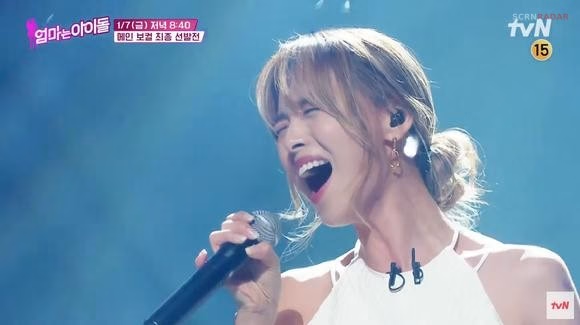
However, Mama The Idol did not portray Kahi as flawless. The series explored her pressure to maintain her image as a powerful performer while balancing motherhood and aging. These moments made her storyline feel more human rather than simply nostalgic.
Kahi’s performances ultimately reinforced why she had been respected so highly during the second-generation K-pop era. Her comeback journey became one of the clearest examples of professional skill surviving despite years away from the spotlight.
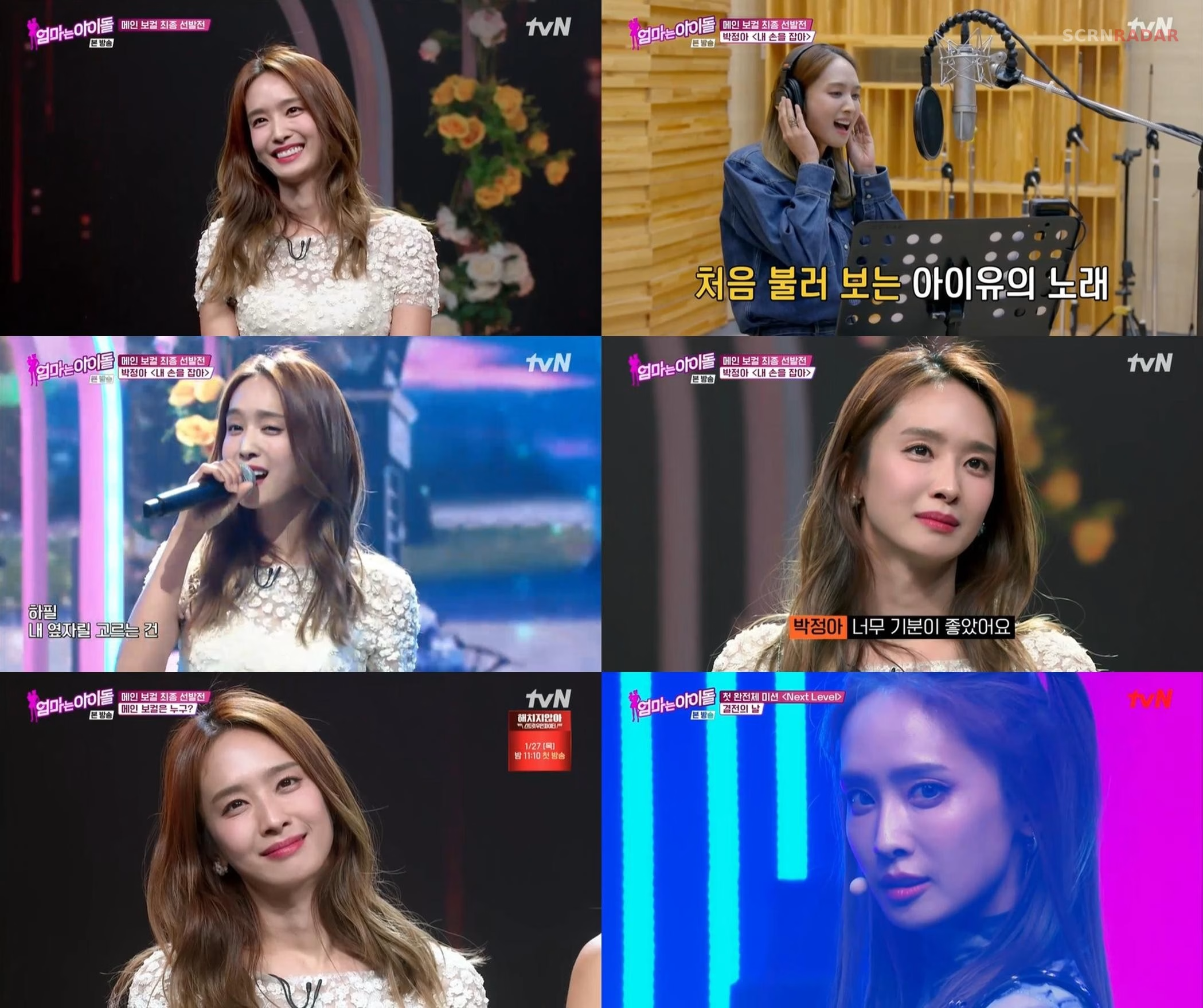
Park Jung-ah focused on vocal consistency and leadership
Park Jung-ah brought stability and maturity to the competition. As a former member of Jewelry, she already understood the pressures of idol teamwork and live performance.
Unlike contestants who focused heavily on dance improvement, Park Jung-ah’s strength came mainly from her vocals and leadership qualities. The show often portrayed her as someone helping maintain morale during difficult training periods.
One of the key challenges for her involved rebuilding physical stamina for choreography-heavy performances. Mama The Idol repeatedly showed how difficult modern K-pop routines can be even for experienced entertainers returning after long breaks.
Her emotional moments often revolved around balancing motherhood with career ambition. The show highlighted how many women in entertainment feel pressured to choose between family and professional identity.
Park Jung-ah’s performances may not have been the flashiest, but her consistency and emotional honesty made her one of the program’s most relatable contestants.
Byul’s journey emphasized emotional vulnerability
Byul entered the competition primarily known as a ballad singer rather than a dance-focused idol performer. Because of this, her storyline centered heavily on self-doubt and adaptation.

Compared to contestants with stronger idol training backgrounds, Byul initially struggled with confidence during choreography missions. The show frequently captured her worries about whether she could realistically compete at a modern idol standard after years away from active performance promotions.
However, these struggles also made her progression one of the most satisfying parts of the series. As episodes continued, Byul gradually became more comfortable with group choreography and performance energy.
Her vocal ability remained one of her biggest strengths throughout the competition. During emotional performance stages, she often delivered some of the most stable and expressive singing among the contestants.
Mama The Idol used Byul’s journey to highlight how returning performers must often rebuild confidence step by step rather than immediately reclaiming past success.
Yang Eun-ji represented the forgotten second-generation era
Yang Eun-ji brought attention to a lesser-discussed part of K-pop history. As a member of Baby V.O.X Re.V, she represented idols whose careers were relatively short-lived compared to larger groups.
The show emphasized how quickly many female idols disappear from public attention after marriage or motherhood. For Yang Eun-ji, Mama The Idol became an opportunity not only to perform again but also to reintroduce herself to younger audiences unfamiliar with her earlier career.
Her performances improved steadily across the series, especially in group stages where synchronization and chemistry became increasingly important. The training process highlighted how difficult it is to rebuild muscle memory and endurance after years away from idol schedules.
Yang Eun-ji’s storyline also reflected the emotional fear of returning to an industry that had moved forward without her. The pressure of competing alongside younger generations created some of the show’s most vulnerable conversations.
Her participation reinforced the program’s central message that artistic passion does not disappear simply because public attention fades.
Hyun Jyu-ni brought rock energy and versatility
Hyun Jyu-ni added a different flavor to the lineup because of her background in acting and rock music rather than traditional idol pop.
Her unique performance style helped diversify the group dynamic. While some contestants focused on polished idol precision, Hyun Jyu-ni often brought rawer stage energy and emotional intensity.
The show also highlighted her versatility. Because she had experience across multiple entertainment fields, she adapted relatively quickly to different concepts and performance styles.
One of her biggest challenges involved synchronization within idol choreography. As someone coming from a less idol-focused performance background, she occasionally struggled matching the precision expected in K-pop group stages.
Still, her individuality became one of her strengths. Mama The Idol benefited from having contestants with different entertainment experiences rather than presenting a completely uniform lineup.
The performances became the emotional center of the series
Mama The Idol succeeded largely because of its performances. Rather than relying entirely on behind-the-scenes drama, the show consistently focused on the emotional impact of returning to the stage after years away.
The early performances often emphasized nervousness and rust. Many contestants openly admitted they feared disappointing audiences or failing to meet modern standards. These insecurities made the gradual improvements feel rewarding.
As the competition progressed, the performances became noticeably more polished. Dance synchronization improved, vocal confidence strengthened, and the contestants gradually regained their stage instincts.
The “Main Dancer Selection” and “Main Vocalist Selection” episodes became particularly important because they forced contestants to confront direct evaluations of their abilities.

The final debut performances worked emotionally because viewers had already witnessed the contestants struggle through physical exhaustion, self-doubt, and public pressure. The performances represented personal rediscovery as much as entertainment.
The formation of M.M.D completed the comeback story
By the finale, the contestants officially debuted together as the project group M.M.D, also known as Mamadol. This final stage symbolized the completion of their comeback journey.
Unlike many survival shows that end with competition-driven victories, Mama The Idol framed the debut more as collective validation. The contestants had already succeeded simply by proving they could return to the stage.
The debut preparations also reflected how demanding idol production remains. Even experienced performers had to relearn choreography intensity, media schedules, and constant evaluations.
Importantly, the formation of M.M.D did not feel like a temporary gimmick within the narrative of the show. The emotional investment from audiences came from seeing women reclaim ambitions that had been interrupted rather than abandoned.
The finale performances carried emotional weight precisely because the contestants were not fictional underdogs. Their fears, insecurities, and sacrifices reflected real industry realities faced by women balancing career and family life.