

Future Man Season 3 delivers a wild, emotional, and surprisingly thoughtful conclusion to one of the most chaotic time travel comedies in recent years. Known for its outrageous humor and unpredictable storytelling, the show consistently pushed the limits of sci-fi while satirizing pop culture and human behavior. By the time the final season begins, the stakes are higher than ever, with time itself on the brink of collapse.
This final chapter shifts the focus from simply fixing timelines to confronting the consequences of repeatedly breaking them. Josh, Tiger, and Wolf are no longer just trying to save the future. They are forced to face their own identities, regrets, and the reality that not every mistake can be undone. The ending of Future Man Season 3 ties together its absurd premise with a grounded emotional payoff. Let’s break down the finale, The Big Suck, and what it all truly means.
The Big Suck Explained: The Ultimate Time Collapse
At the heart of the Future Man Season 3 ending is a catastrophic event known as “The Big Suck.” This phenomenon represents the complete breakdown of time, where the past and present collide into a singular destructive force. Unlike traditional sci-fi finales that rely on a clear villain, The Big Suck is caused by something far more mundane and human.

The trigger for this universe-ending event is a simple mistake. A young hacker downloads a corrupted file and, in an attempt to fix it, unknowingly sets off a chain reaction that threatens existence itself. This idea perfectly captures the show’s core philosophy, where small, relatable actions spiral into massive consequences.
What makes The Big Suck particularly compelling is how it subverts expectations. Instead of requiring a grand battle or complex scientific solution, the resolution comes down to a conversation. Josh intervenes and convinces the hacker to accept responsibility rather than trying to undo the mistake. This moment highlights a major thematic shift in the series, emphasizing growth over control.
Given the scale of The Big Suck, the finale sets up the possibility of total annihilation. For a moment, it seems like the show might embrace a bleak ending where time collapses entirely. However, Future Man takes a more optimistic route that aligns with its underlying message.
The universe does not end because the core problem is resolved at its source. By stopping the hacker from making things worse, Josh prevents the catastrophic chain reaction. This approach reinforces the idea that not all problems require drastic measures. Sometimes, the simplest solution is the most effective.
The resolution also reflects the show’s long-running critique of time travel. Throughout the series, attempts to “fix” the past only create more chaos. The finale flips this idea by showing that acceptance, rather than intervention, is the key to stability. It is a subtle but powerful conclusion that brings the story full circle.
Character Endings: Where Josh, Tiger, and Wolf End Up
The ending of Future Man Season 3 is not just about saving the universe. It is about giving each character a meaningful resolution that reflects their journey across the series. After years of jumping through timelines, Josh, Tiger, and Wolf finally find clarity in who they are.

Josh chooses to stay in 1999 after preventing The Big Suck. He watches his younger self and his family from a distance, resisting the urge to interfere. This decision marks a major turning point for his character. Instead of relying on time travel to fix his life, he embraces independence and moves forward on his own terms.
Tiger undergoes one of the most surprising transformations. Once a relentless warrior, she finds peace in a quieter life. She becomes a pacifistic figure, choosing stability over constant conflict. Her ending reflects growth and a rejection of the violent identity she once embraced.
Wolf’s conclusion is equally fitting but more eccentric. He channels his energy into philanthropy, essentially becoming a superhero figure who helps others. His journey from chaotic rebel to someone who actively improves lives adds a satisfying layer of redemption to his arc.
Together, these endings show how far the trio has come. They no longer need time travel to define their purpose. Instead, they create their own paths.
A significant portion of Season 3 takes place in Haven, a mysterious domain outside of time. This location is more than just a narrative device. It serves as a psychological testing ground for the characters, forcing them to confront their deepest fears and desires.
In Haven, Josh, Tiger, and Wolf experience identity crises that challenge their sense of self. They are stripped of their usual roles and must figure out who they are without the constant chaos of time travel. This introspection plays a crucial role in their eventual growth.
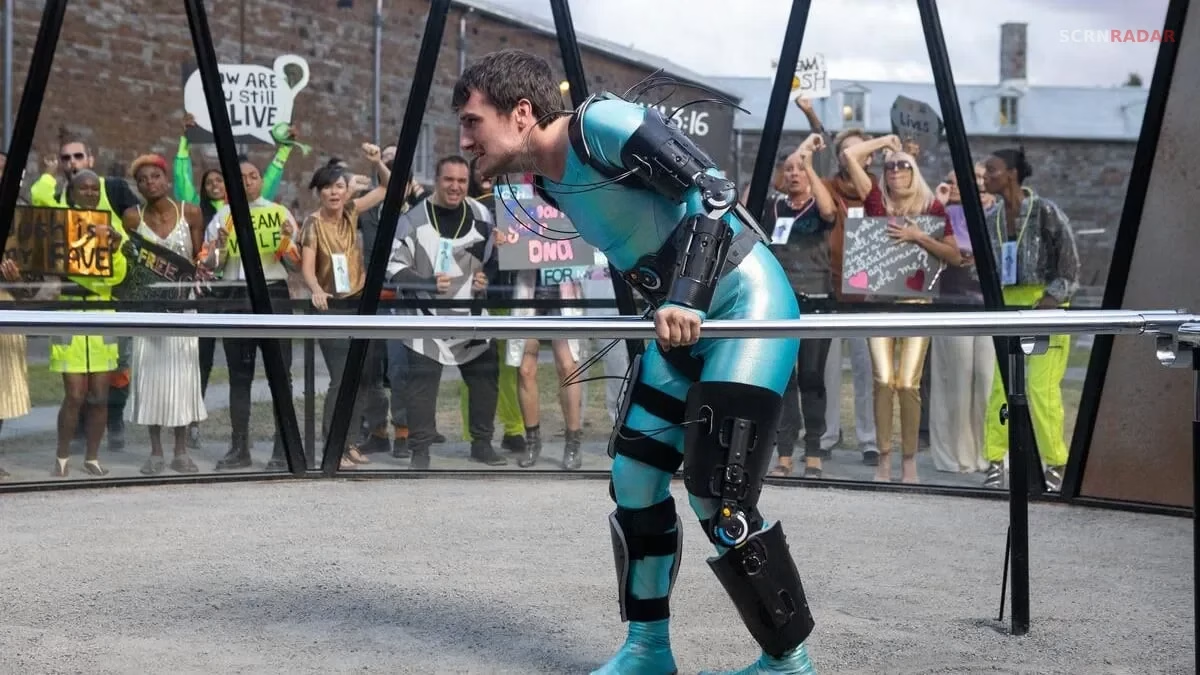
The time spent in Haven also emphasizes the cost of their adventures. Years of jumping across timelines have taken a toll on their mental and emotional well-being. By the time they leave, they are fundamentally changed individuals, ready to move forward without relying on the past.
The “Based on a True Story” Joke: A Perfect Meta Ending
Future Man has always embraced meta humor, and the series finale delivers one of its boldest jokes yet. After wrapping up the main story, the show presents itself as being based on a true story. It even introduces “real” versions of the characters, creating a parody of biographical films.
This gag works on multiple levels. On the surface, it is a hilarious and absurd twist that fits the show’s tone. On a deeper level, it serves as a commentary on how media often distorts reality for entertainment. By exaggerating this concept, Future Man highlights the absurdity of trying to present fiction as truth.
The joke also reinforces the show’s identity as a self-aware comedy. Even in its final moments, it refuses to take itself too seriously. This balance between humor and meaning is what makes the ending so memorable.
While the finale revolves around saving the universe, the true message of Future Man Season 3 is much more personal. At its core, the show is about growth, responsibility, and the acceptance of mistakes.
Josh’s journey encapsulates this theme perfectly. At the start of the series, he is a directionless slacker who constantly looks for shortcuts. Over time, he learns that trying to fix everything only creates more problems. By the end, he understands the importance of accountability and moving forward.
The concept of time travel becomes a metaphor for regret. The desire to go back and change the past is something everyone can relate to. Future Man ultimately argues that this mindset is unhealthy. Instead of dwelling on mistakes, it is better to learn from them and build a better future.
Tiger and Wolf’s arcs support this idea. Both characters let go of their past identities and embrace new roles that bring them fulfillment. Their endings highlight the possibility of change, even after a lifetime of chaos.