
When Emily in Paris first premiered on Netflix, the series became a global phenomenon despite receiving mixed reviews from critics. Some viewers loved its escapist fantasy, glamorous Paris setting, and chaotic romantic drama, while others criticized its shallow storytelling and repetitive character arcs. By the time Season 3 arrived, the biggest question surrounding the show was whether it could finally mature beyond its familiar formula or continue relying on the same romantic confusion and social-media-driven storytelling.
Season 3 attempts to answer that question by placing Emily Cooper at multiple crossroads in her personal and professional life. The season introduces higher emotional stakes, workplace conflicts, and shifting relationships while still maintaining the glossy tone that defines the series. However, despite moments of improvement, the show often falls back into the same narrative loops that have defined it since the beginning. The result is a season that remains entertaining and visually addictive but struggles to fully evolve beyond its comfort zone.
Emily in Paris Season 3 focuses heavily on indecision
The core theme of Season 3 is indecision. Emily spends most of the season torn between multiple choices, including her career path, romantic relationships, and long-term future in Paris. After the Season 2 finale, she must choose whether to stay loyal to her American boss Madeline or join Sylvie’s new French marketing agency.
This setup initially gives the series a stronger dramatic foundation than previous seasons. Emily is finally forced to face consequences instead of effortlessly succeeding at everything. Her attempt to secretly work for both companies creates tension that affects her friendships and professional reputation.

However, the season repeatedly stretches these conflicts longer than necessary. Emily’s inability to make clear decisions becomes a recurring narrative device, and while it creates drama, it also makes her character feel emotionally stagnant at times. The show wants viewers to see Emily as ambitious and passionate, but her constant hesitation often turns into frustration rather than compelling complexity.
Even so, the workplace storyline is one of the season’s stronger elements because it gives supporting characters more room to shine. Sylvie, Julien, and Luc become increasingly important to the show’s identity, helping Season 3 feel slightly less centered solely around Emily herself.
The love triangle problem continues to dominate the story
One of the biggest criticisms surrounding Emily in Paris has always been its repetitive romantic structure, and Season 3 unfortunately continues that trend. The emotional tension between Emily, Gabriel, and Camille remains the central focus, even after multiple seasons of misunderstandings, secret feelings, and emotional complications.
At the beginning of the season, Emily attempts to move forward with Alfie, whose relationship with her feels more emotionally grounded than her chemistry with Gabriel. Alfie brings stability and maturity that the series often lacks, making him one of the more refreshing additions to the cast. Lucien Laviscount’s performance also gives Alfie enough charm to feel like a genuine romantic alternative rather than a temporary filler.
Despite this, the series continuously pulls Emily back toward Gabriel. The problem is not necessarily the romance itself but the repetitive way the show handles it. The audience is repeatedly placed into the same emotional cycle where Emily and Gabriel clearly have unresolved feelings, yet external circumstances always delay resolution.
By Season 3, this formula begins to feel overly familiar. The show introduces new complications rather than meaningful emotional progression, which creates the impression that the narrative is intentionally stalling. While romantic tension remains entertaining, the lack of substantial development weakens the emotional impact of the storyline.
Still, the season finale succeeds in generating genuine shock value. Camille’s public revelation during the wedding sequence dramatically changes the dynamics between all four characters and gives the ending far more emotional weight than earlier episodes.

Lily Collins continues to carry the series
No matter how divisive Emily in Paris becomes, Lily Collins remains one of the biggest reasons the show continues working. Collins brings enough warmth and charisma to Emily that even the character’s frustrating decisions remain watchable. Her performance balances awkward comedy, romantic vulnerability, and relentless optimism in a way that fits the show’s heightened reality.
Season 3 especially benefits from Collins leaning into Emily’s emotional exhaustion. Unlike earlier seasons, where Emily often felt unrealistically perfect despite cultural mistakes, this season allows her to appear more overwhelmed and uncertain. That vulnerability helps humanize her character slightly more than before.
Collins also continues to excel in scenes involving emotional conflict rather than comedy alone. Her interactions with Sylvie, Alfie, and Gabriel often feel more grounded than the show’s broader storytelling style. Even when the script falls into repetitive territory, Collins manages to maintain viewer investment.
As both the lead actress and producer, Collins has also helped shape the evolving tone of the series. Interviews around the show suggested the team was aware of earlier criticisms and wanted to make later seasons feel more self-aware and character-driven. While Season 3 does not completely solve those issues, there are visible attempts to deepen the emotional storytelling.
Sylvie becomes the season’s standout character
If Season 3 truly improves in one area, it is the expanded role of Sylvie. Philippine Leroy-Beaulieu’s character evolves far beyond the intimidating French boss archetype introduced in Season 1. This season explores her professional ambitions, romantic history, and emotional vulnerabilities in more detail.
Sylvie’s independent marketing agency storyline gives the season stronger momentum because it introduces actual professional stakes. Unlike Emily, who often escapes consequences, Sylvie’s challenges feel rooted in reality. Her struggles with business pressure, loyalty, and identity provide some of the series’ most mature storytelling.
The dynamic between Sylvie and Emily also becomes more balanced. Earlier seasons frequently framed Sylvie as an obstacle to Emily’s success, but Season 3 allows their relationship to develop mutual respect. This shift helps the workplace storyline feel more layered and less cartoonish.
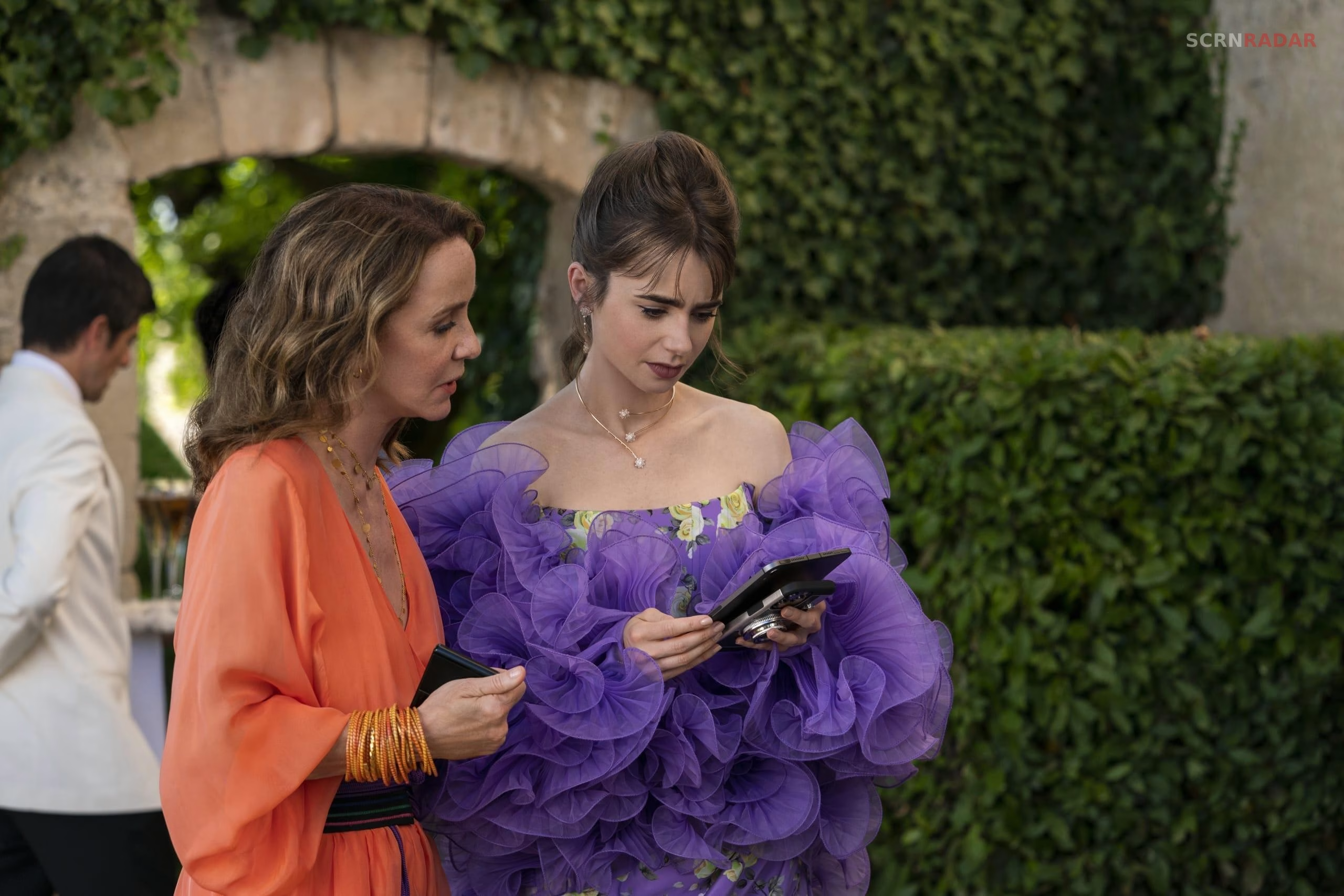
Many critics noted that the supporting cast increasingly outshines Emily herself, and Sylvie is the clearest example of that evolution. Her scenes often carry more emotional nuance than the central romance, giving the season moments of genuine depth beneath its glamorous exterior.
The show still thrives on escapist fantasy
Despite attempts at emotional growth, Emily in Paris remains fundamentally an escapist fantasy. The series continues presenting Paris through an idealized lens filled with luxury fashion, romantic coincidences, beautiful restaurants, and impossibly stylish lifestyles. For many viewers, this fantasy is exactly the point.
Season 3 fully embraces its identity as comfort television. The pacing is fast, the drama is heightened, and the visual presentation remains polished throughout. Even critics who dislike the show often admit that its addictive energy makes it difficult to stop watching.
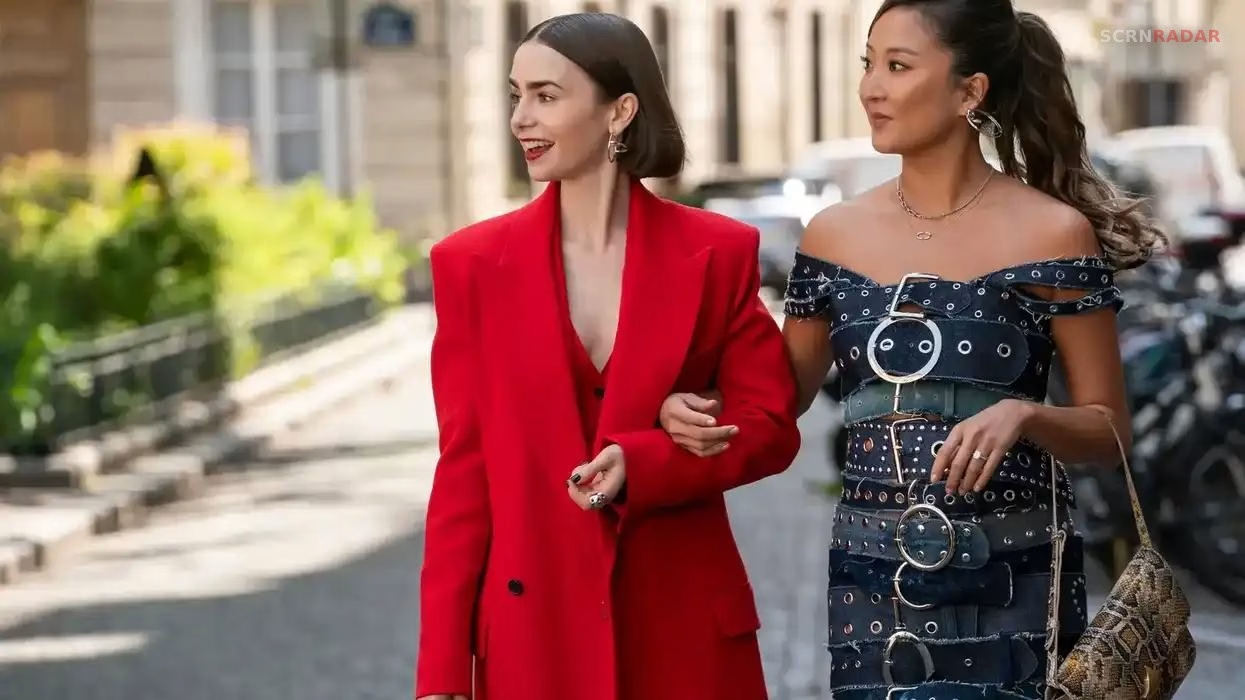
The fashion once again plays a major role in the viewing experience. Emily’s bold outfits remain intentionally exaggerated, while the rest of the cast reflects different aspects of Parisian style. Costume design continues functioning almost like visual storytelling, emphasizing personality and emotional mood through clothing choices.
However, the fantasy-driven approach also limits the show emotionally. Serious conflicts rarely carry long-term consequences, and emotional resolutions are often delayed to preserve future romantic tension. This creates entertaining television but sometimes prevents the story from reaching deeper emotional territory.
Does Season 3 repeat the same mistakes?
The biggest issue with Emily in Paris Season 3 is not that it lacks entertainment value. The show remains charming, visually appealing, and easy to binge-watch. The problem is that many of its core storytelling patterns remain unchanged.

Emily still finds herself caught between multiple romantic interests. Gabriel remains emotionally unavailable for most of the season. Miscommunication continues driving major conflicts. Characters repeatedly avoid honest conversations until dramatic public confrontations force emotional revelations.
The show occasionally acknowledges these repetitive patterns through self-aware humor, but awareness alone does not fully fix the issue. Several episodes feel like variations of conflicts viewers have already seen in previous seasons.
At the same time, there are clear improvements compared to earlier installments. Supporting characters receive more development, workplace conflicts feel more substantial, and the emotional tension in the finale is genuinely effective. The writing is not necessarily deeper, but it is slightly more focused.
Season 3 essentially exists in a middle ground. It is more emotionally ambitious than earlier seasons but still unwilling to fully break away from the formula that made the series popular in the first place.
The Season 3 ending finally changes the dynamic
The finale is arguably the strongest episode of the season because it finally disrupts the long-running romantic status quo. Gabriel and Camille’s sudden wedding becomes one of the most chaotic scenes in the series, culminating in Camille publicly exposing the emotional truth connecting Gabriel and Emily.
This moment works because it forces every major character to confront reality simultaneously. Alfie realizes Emily still has unresolved feelings for Gabriel, while Gabriel himself becomes trapped between obligation and genuine emotion. The sequence transforms years of romantic tension into open emotional collapse.
The final reveal involving Camille’s pregnancy adds another layer of complexity that completely reshapes the direction of future seasons. Darren Star later explained in interviews that the finale was intentionally designed to create major emotional consequences moving forward.
Importantly, the finale succeeds because it finally allows actions to have visible fallout. Earlier seasons often reset conflicts too quickly, but this ending creates emotional fractures that cannot easily be ignored. Whether future seasons fully capitalize on this momentum is another question, but Season 3 at least ends with genuine dramatic impact.
Critics and audience reactions remain divided
Critical reception for Emily in Paris Season 3 remained mixed, though slightly more positive than some earlier responses. Rotten Tomatoes reported a higher approval score for the third season compared to Season 2, but many reviews still criticized the repetitive storytelling and shallow emotional structure.
Some critics argued that the series had become more self-aware and better at balancing its absurdity with emotional sincerity. Others believed the show remained trapped in the same formula despite attempts at character growth. The Guardian notably described the series as “nonsense” while still admitting its strangely addictive charm.
Audience reactions were similarly divided. Fans who primarily watch for escapism, fashion, and romantic drama generally embraced the season, while viewers hoping for significant character evolution often felt disappointed. This split reflects the central identity crisis of the series itself.
Emily in Paris wants to be emotionally engaging without sacrificing its fantasy-driven appeal. Sometimes those goals work together, and other times they directly conflict with each other.
Does Emily in Paris Season 3 improve the show?
The answer ultimately depends on what viewers expect from the series. If the goal is sophisticated romantic drama with deep emotional realism, Season 3 still falls short. The storytelling remains overly dependent on repetitive romantic tension and delayed emotional resolution.
However, if viewers want stylish escapism with entertaining characters and addictive melodrama, Season 3 delivers exactly what the franchise promises. The season improves several supporting characters, raises emotional stakes slightly, and ends with one of the show’s strongest cliffhangers.
The series’s greatest strength remains its understanding of binge-watchable comfort television. Emily in Paris knows how to maintain momentum through romance, fashion, humor, and visual fantasy, even when the writing becomes predictable.

Season 3 does not completely reinvent the show, but it does reveal small signs of growth beneath the glossy surface. It is still messy, exaggerated, and emotionally repetitive at times, yet it also feels more aware of its own limitations.
In many ways, Emily in Paris Season 3 succeeds for the same reason the series became popular in the first place. It offers escapism that is easy to criticize but even easier to keep watching.
Ultimately, Emily in Paris Season 3 sits in a curious position where it both evolves and resists change at the same time. The series clearly attempts to deepen its characters and raise the emotional stakes, especially through Sylvie’s arc and the dramatic finale, yet it still clings to the familiar structure that made it popular.
This balancing act can feel frustrating for viewers expecting meaningful progression, but it also explains why the show continues to perform strongly on streaming platforms like Netflix. The predictability becomes part of its appeal, creating a comfort-watch experience rather than a transformative one. In the end, Season 3 does not fully fix the show’s long-standing issues, but it does enough to keep audiences invested, particularly by setting up consequences that future seasons cannot easily ignore.