The Brutalist is not a film that offers easy answers. Directed by Brady Corbet, this ambitious epic follows László Tóth, a Hungarian Jewish architect played by Adrien Brody, as he rebuilds his life in post-war America. What begins as a grounded immigrant story gradually transforms into something more abstract, emotional, and symbolic.
By the time the film reaches its final act and the controversial Venice epilogue, many viewers are left questioning what it all means. The ending does not resolve every storyline in a traditional sense. Instead, it reframes everything that came before it, forcing the audience to interpret László’s life, his art, and his suffering in a new light.
Let’s break down The Brutalist ending explained, including the fate of its characters, the meaning of the Venice sequence, and why the film chooses ambiguity over closure.
What Happens at the End of The Brutalist?
The final stretch of The Brutalist becomes increasingly surreal and emotionally intense. After years of struggle, László’s architectural project reaches a symbolic climax, but his personal life begins to unravel.
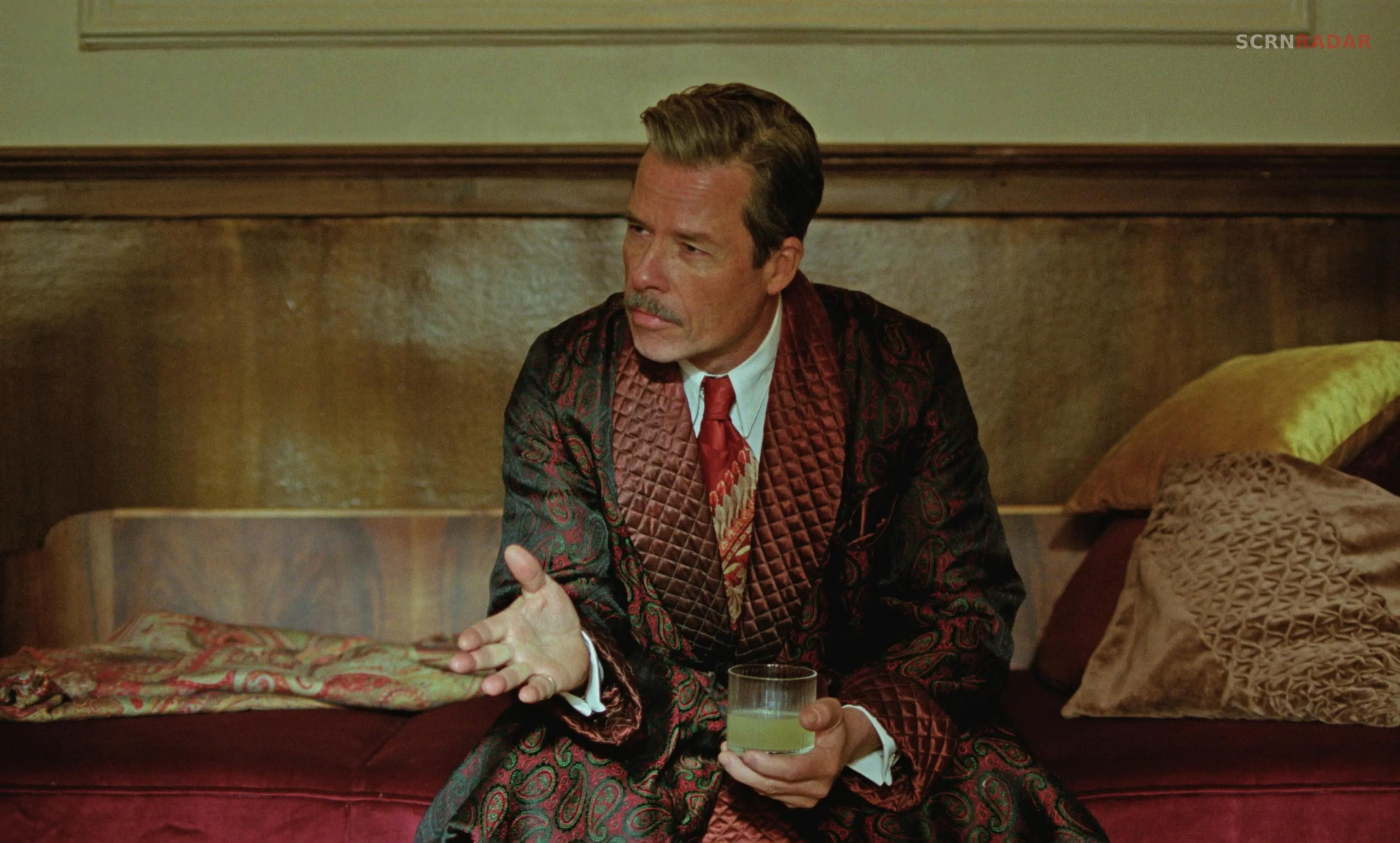
One of the most surprising moments involves Harrison Van Buren, the powerful industrialist played by startling moments involves Harrison Van Buren, the powerful industrialist Guy Pearce. After being exposed for his abusive behavior, Van Buren mysteriously disappears during a search at the unfinished building. The film deliberately avoids showing his fate, leaving viewers without closure.
This narrative choice is crucial. Rather than delivering a clear resolution, the film removes Van Buren from the story almost abruptly. It denies him a dramatic downfall, which may be intentional. The character, who thrives on control and dominance, is ultimately stripped of narrative importance.
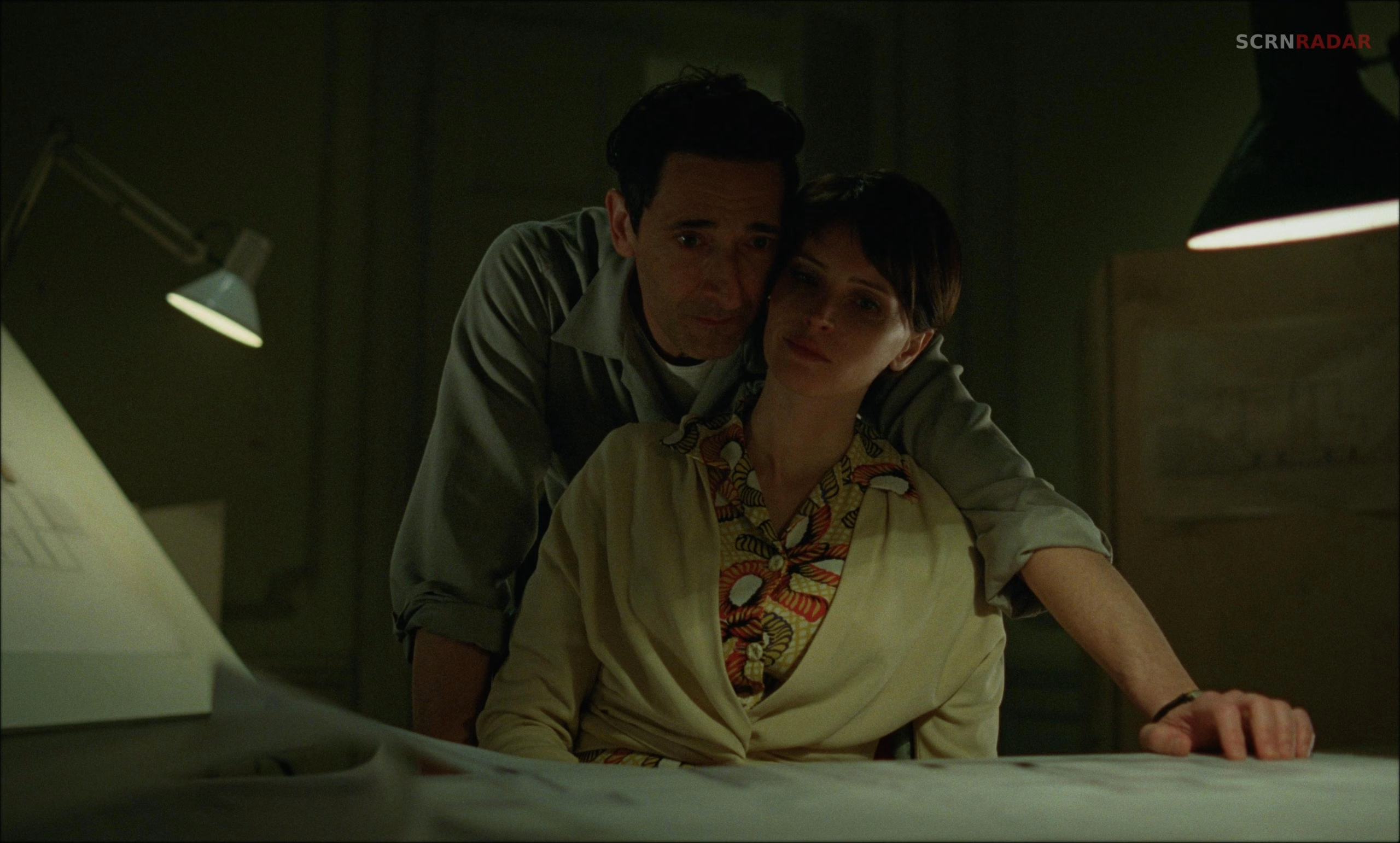
Meanwhile, László’s life reaches a fragile state. His relationship with Erzsébet, played by Felicity Jones, becomes emotionally and physically strained. Her overdose and sudden recovery, followed by her decision to leave for Israel, signal a turning point.
Just before the epilogue, the film leaves László at a moment of uncertainty. His work continues, but his personal life is fractured. This unresolved tension carries into the final sequence.
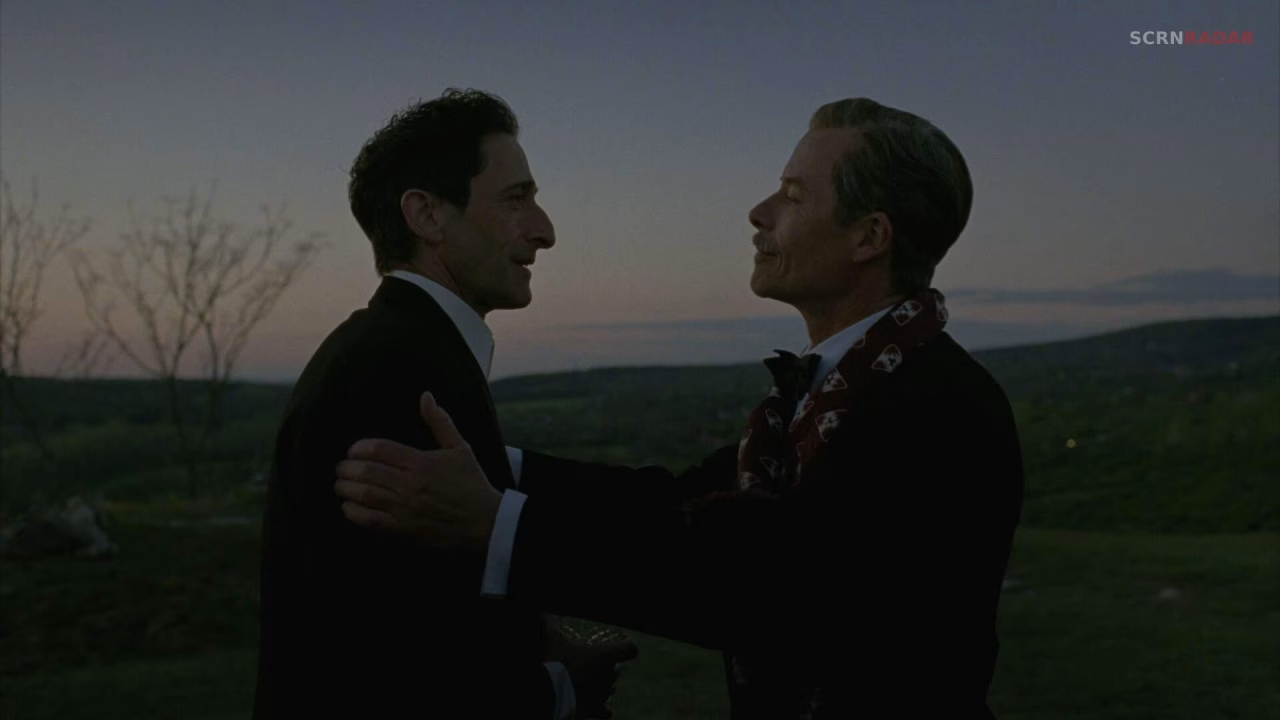
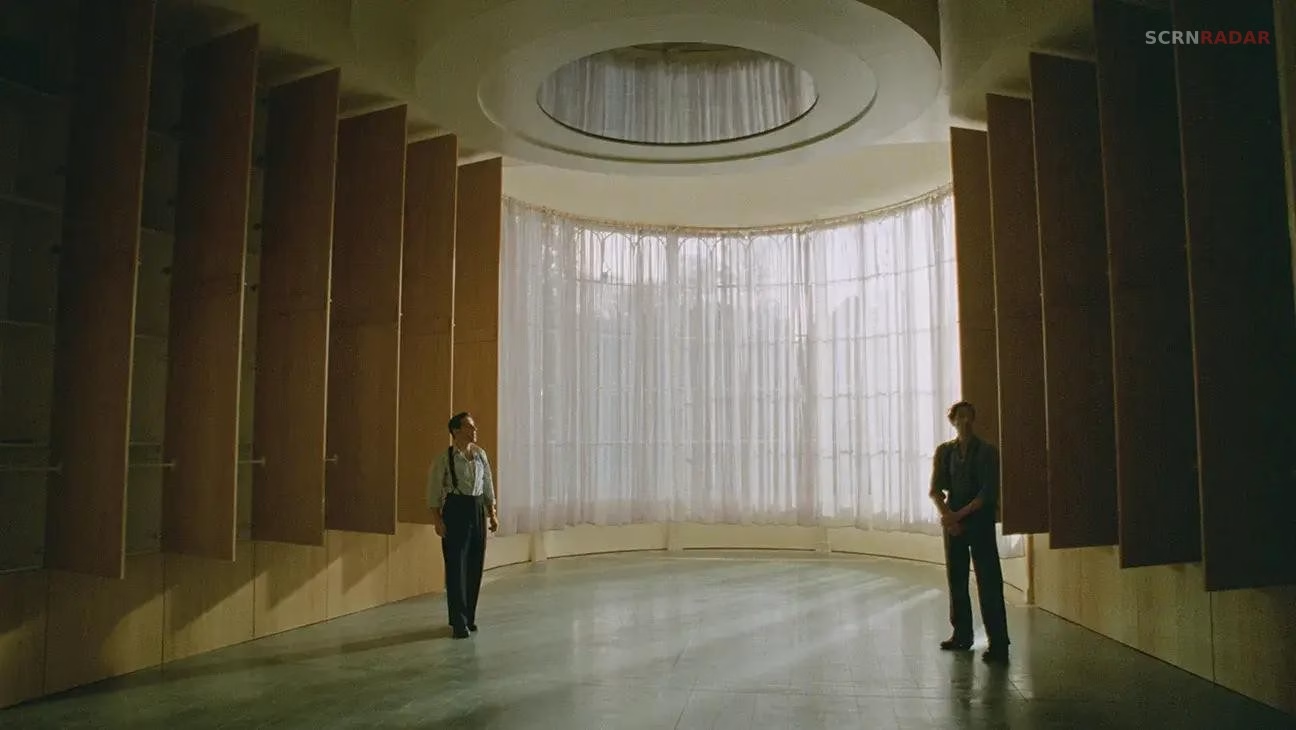
The most debated part of The Brutalist ending explained is the Venice epilogue, set during the 1980 Biennale. The film suddenly jumps decades into the future, presenting a radically different tone and style.
We see an older László, now physically weakened and unable to speak, being honored for his architectural work. Erzsébet is no longer alive, and the story is now told through his niece Zsófia, who delivers a speech about his legacy.
The shift in visual style, from grand cinematic imagery to something resembling archival or home video footage, creates a sense of distance. It feels less like a continuation of the story and more like a reinterpretation of it.
Zsófia explains the deeper meaning behind László’s work, connecting his architecture to his experiences during the Holocaust. She reveals that both he and his family endured concentration camps, adding a layer of historical trauma that was only hinted at earlier.
However, this explanation raises questions rather than answering them. Is Zsófia’s interpretation accurate, or is it her attempt to give meaning to a life that remains fundamentally unknowable?
What Happened to László Tóth?
László’s fate is deliberately ambiguous. By the time of the Venice epilogue, he appears to have achieved professional success, with his work being celebrated on an আন্তর্জাতিক stage. However, this success comes at a cost.
He is physically diminished, emotionally distant, and unable to express himself. This transformation suggests that his journey, while externally successful, may have been internally destructive.
The film leaves open several interpretations. One possibility is that László sacrificed everything for his art, including his relationships and well-being. Another is that his trauma, both from the war and his struggles in America, gradually consumed him.
His inability to speak in the final scenes is particularly symbolic. It contrasts sharply with Zsófia’s confident narration, highlighting the gap between lived experience and external interpretation.
The Meaning of Van Buren’s Disappearance
Van Buren’s unexplained disappearance is one of the film’s most puzzling elements. In a traditional narrative, such a character would face a clear resolution, either through punishment or redemption.
Instead, The Brutalist removes him from the story without explanation. This choice can be seen as a rejection of conventional storytelling. It shifts the focus away from justice and toward the broader themes of power and exploitation.
Van Buren represents the forces that shape and control artists like László. His disappearance does not erase his impact. Instead, it reinforces the idea that such power structures often persist without accountability.
By refusing to resolve his storyline, the film emphasizes that the true conflict is not between individuals, but between art and the systems that constrain it.
Themes Behind The Brutalist Ending
The Brutalist explores several complex themes through its ending, each contributing to its ambiguous nature.
One of the central themes is the relationship between art and suffering. László’s work is deeply tied to his personal trauma, suggesting that his creativity is both a source of expression and a form of burden.
Another key theme is the illusion of the American Dream. The first half of the film presents a familiar narrative of immigrant success. However, the ending challenges this idea, showing that success does not guarantee fulfillment.
Memory and interpretation also play a crucial role. The Venice epilogue highlights how stories are shaped by those who tell them. Zsófia’s speech offers a version of László’s life, but it may not fully capture his reality.
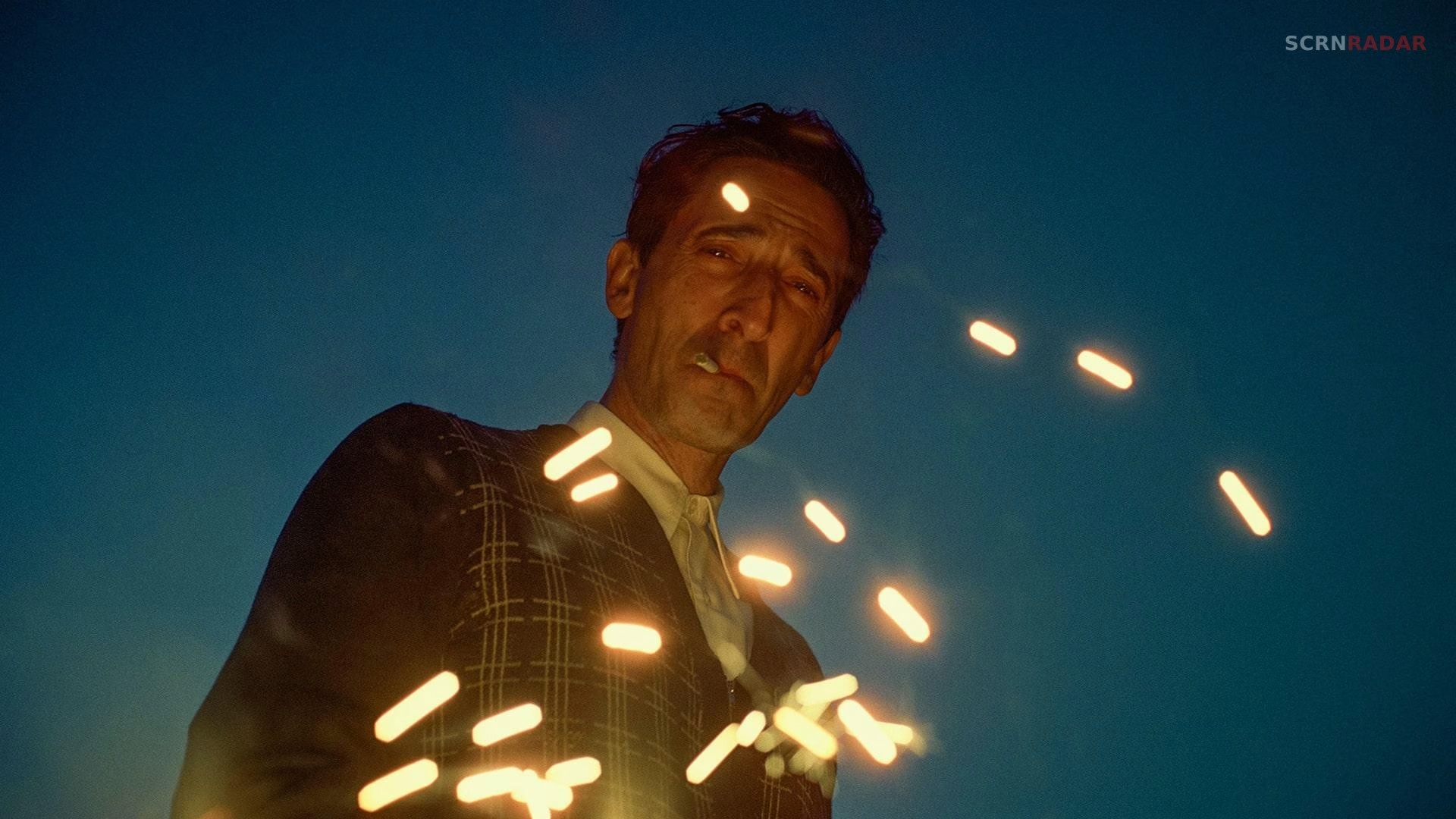
Finally, the film explores the idea of legacy. László’s work survives and is celebrated, but his personal experiences remain largely inaccessible. This contrast raises questions about what it truly means to leave something behind.
Why the Ending Feels So Ambiguous
The ambiguity of The Brutalist ending is intentional. Director Brady Corbet avoids providing clear answers, instead encouraging viewers to engage with the film on a deeper level.
This approach reflects the complexity of the themes being explored. Issues like trauma, identity, and artistic expression cannot be easily resolved. By leaving certain elements unexplained, the film mirrors the uncertainty of real life.
The Venice epilogue, in particular, disrupts traditional storytelling expectations. It shifts the perspective away from László and toward an external interpretation of his life. This creates a sense of distance that can feel frustrating, but also thought-provoking.
The Brutalist delivers an ending that is as challenging as it is compelling. Rather than offering closure, it invites reflection and interpretation.
The film’s final moments suggest that László’s journey cannot be fully understood through a single perspective. His life is a mixture of success and loss, creation and destruction. This complexity is what makes the ending so powerful.
While the ambiguity may not satisfy every viewer, it reinforces the film’s central message. Some stories are not meant to be neatly resolved. Instead, they are meant to be experienced, questioned, and remembered.
Ultimately, The Brutalist leaves us with a haunting question. Is a life defined by its achievements, or by the experiences that shaped them? The film does not answer this directly, but it ensures that the question lingers long after the credits roll.