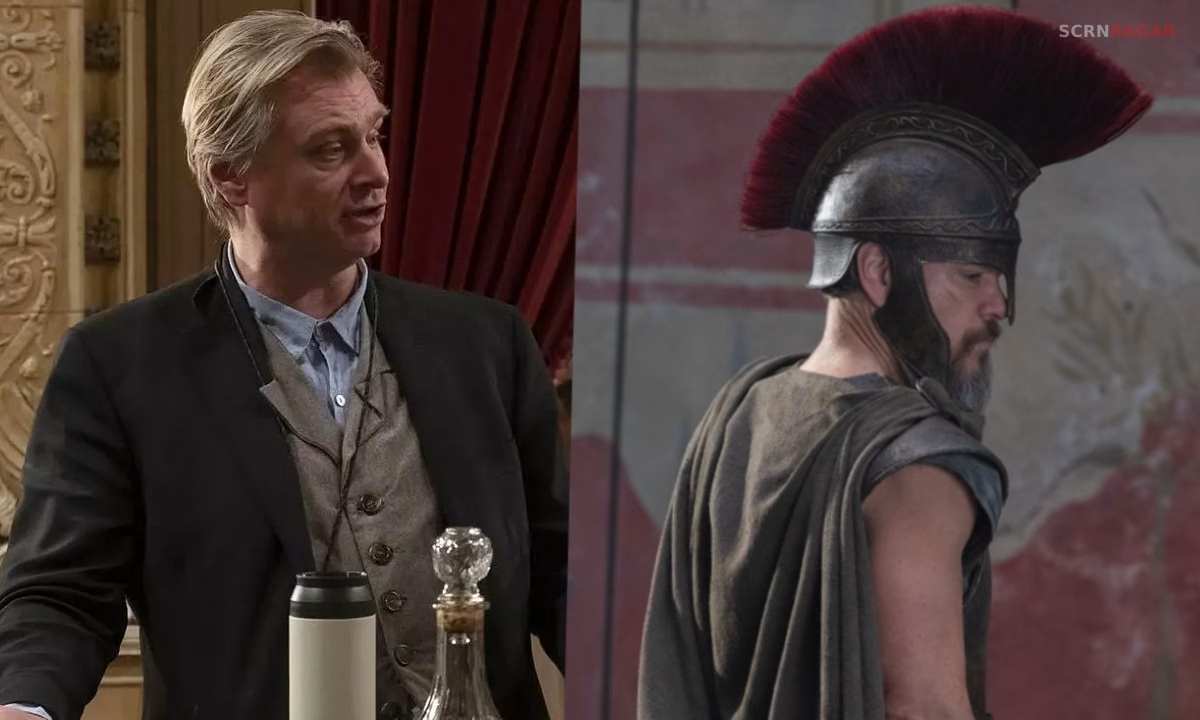
The latest trailer for The Odyssey has generated strong reactions, but not just for its scale or star-studded cast. Directed by Christopher Nolan, the film promises an ambitious retelling of Homer’s legendary epic. However, one creative decision has quickly become the center of discussion: the use of modern American accents and contemporary dialogue.
While early reactions praise the film’s visual ambition and performances from actors like Matt Damon, many viewers are questioning whether the dialogue style fits a story rooted in ancient Greece. The debate highlights a larger tension in historical filmmaking between authenticity and accessibility.
A Break From Hollywood Tradition
For decades, historical epics have relied on a familiar convention. Characters from ancient civilizations often speak with British accents, regardless of their actual cultural origins. Films like Gladiator and Ben-Hur helped establish this approach as an industry norm.
The reasoning has always been practical. A British accent is perceived as neutral, slightly formal, and detached enough from modern settings to feel “historical” without confusing audiences. Over time, this became less of a choice and more of an unwritten rule across epic storytelling.
Nolan’s version of The Odyssey deliberately moves away from that tradition. Instead of leaning on a stylized accent, the film adopts a more contemporary vocal style that prioritizes clarity and immediacy.
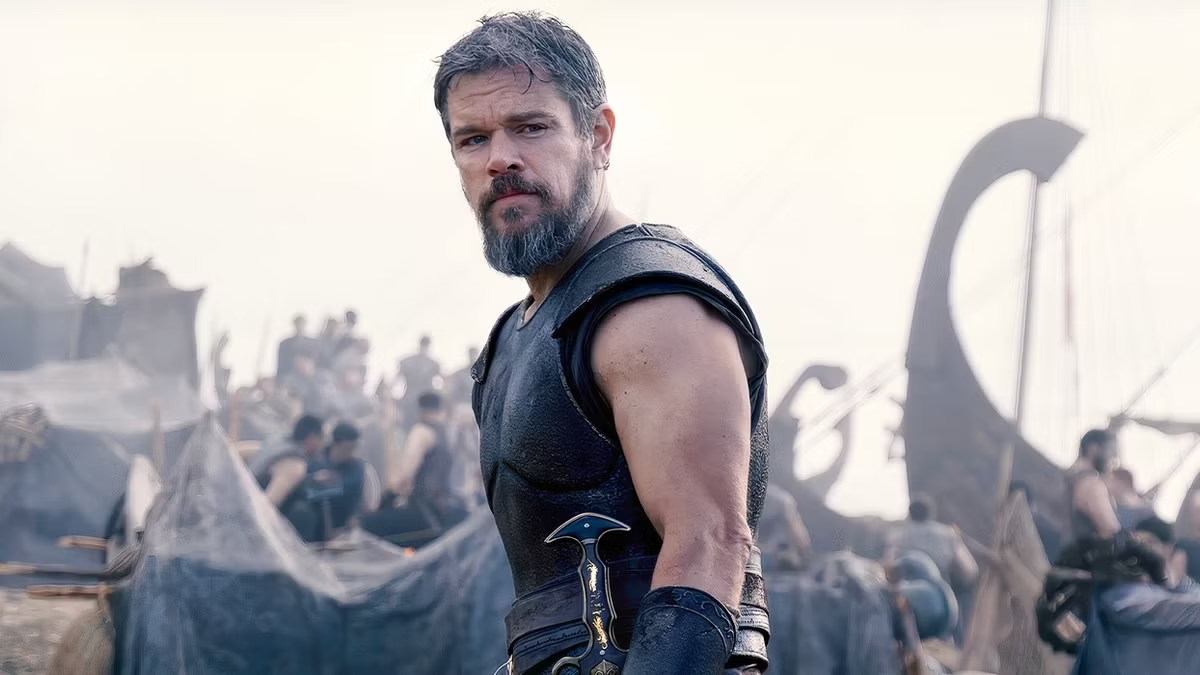
The decision becomes especially noticeable because of the film’s tone. The Odyssey is positioned as a grand, mythological story filled with gods, warriors, and long journeys home. Hearing characters deliver lines in a distinctly modern cadence creates a contrast that some viewers find jarring.
Moments like Odysseus rallying troops with casual phrasing have drawn attention online. The issue is not just the accent itself but how it shapes the emotional weight of key scenes. For some audiences, modern speech patterns reduce the sense of timelessness that epic narratives usually aim to create.
At the same time, others argue that the change makes the story more relatable. By removing the “historical filter” of traditional accents, the film may allow viewers to connect more directly with the characters and their motivations.
Accessibility Versus Authenticity
The debate ultimately comes down to a familiar filmmaking dilemma. Should historical stories aim for authenticity, or should they prioritize audience engagement?
True linguistic accuracy would mean using ancient Greek dialects, which would require subtitles and limit mainstream appeal. That approach has been attempted before in films like The Passion of the Christ, directed by Mel Gibson, which used Aramaic and Latin. While critically notable, such choices can narrow accessibility for global audiences.
Nolan’s approach sits on the opposite end of the spectrum. By using familiar language and accents, he ensures that dialogue is immediately understandable. This aligns with his broader filmmaking style, which often emphasizes immersive storytelling over strict historical reconstruction.
The response to the trailer shows how audience expectations have evolved. Viewers are more aware of filmmaking conventions and quicker to question them. What once felt natural, like British accents in Roman or Greek settings, is now seen as a stylistic choice rather than a necessity.
Some fans appreciate the break from cliché, arguing that the traditional approach never made historical sense in the first place. Others feel that abandoning it removes a layer of cinematic identity that defines the genre.
This split reaction suggests that there is no single “correct” way to present historical dialogue. Instead, each choice carries trade-offs between immersion, realism, and accessibility.