
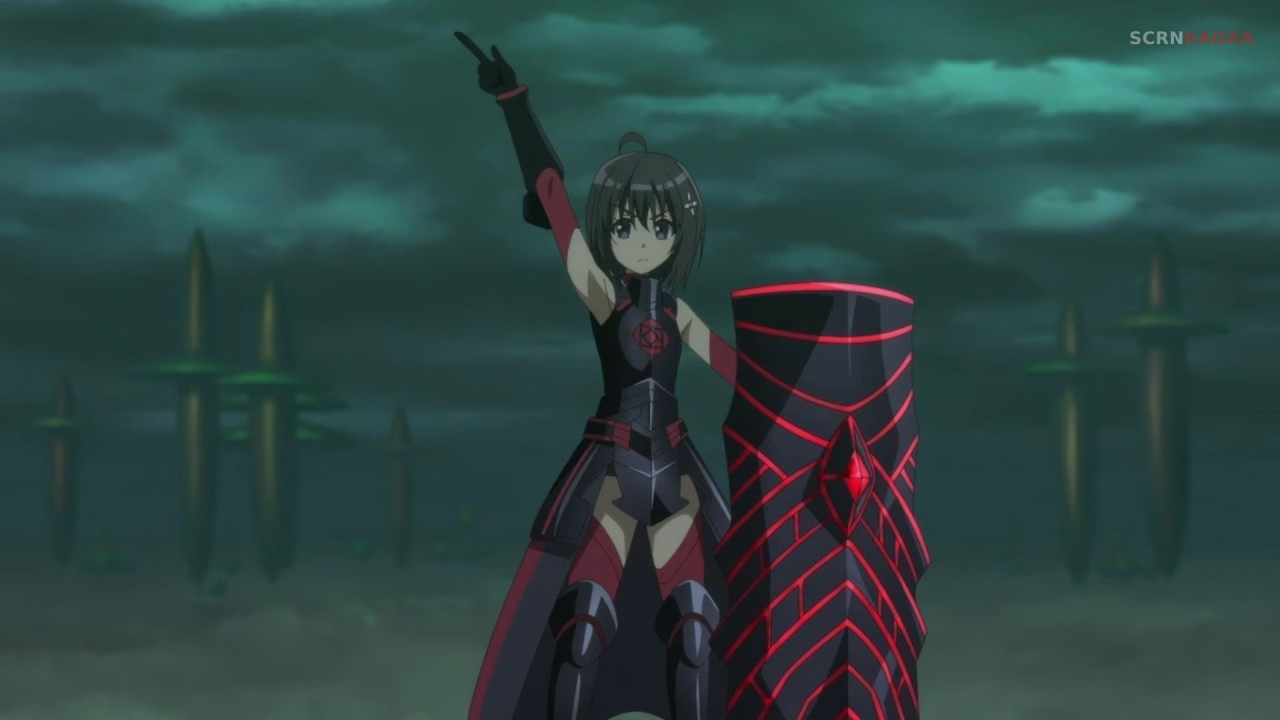
Bofuri: I Don’t Want to Get Hurt, so I’ll Max Out My Defense, often shortened to BOFURI, stands out in the crowded isekai and VRMMO anime space for one simple reason: it refuses to take itself too seriously. Based on the light novel series written by Yuumikan and illustrated by Koin, the anime adaptation debuted in 2020 and quickly built a strong fanbase. At a time when many isekai stories leaned into dark fantasy or high-stakes narratives, BOFURI chose a lighter, more comedic path.
The series follows Kaede Honjo, a complete gaming beginner who creates her in-game avatar Maple and invests all her stat points into defense. What starts as a cautious decision quickly spirals into something absurdly entertaining, as Maple becomes an unintentionally overpowered character capable of breaking the game itself. This review breaks down how BOFURI balances humor, gameplay mechanics, character dynamics, and storytelling to deliver a uniquely enjoyable experience.
What Is BOFURI About?
At its core, BOFURI is set within a virtual reality MMORPG called NewWorld Online. Unlike traditional isekai narratives where characters are trapped or transported to another world, this series focuses purely on gaming as a hobby. This distinction immediately sets the tone, emphasizing fun and exploration over survival or existential stakes.
Maple’s journey begins with a simple goal: avoid getting hurt. By maxing out her defense stat, she becomes nearly invincible, but at the cost of speed and attack power. However, through a series of unexpected events and creative gameplay choices, she gains abilities that make her one of the most powerful players in the game.
The story progresses through events, quests, and guild battles, offering a slice-of-life approach within a game environment. Rather than focusing on a central villain or overarching conflict, the series thrives on episodic adventures and character interactions.
Maple: The Most Wholesome Overpowered Protagonist
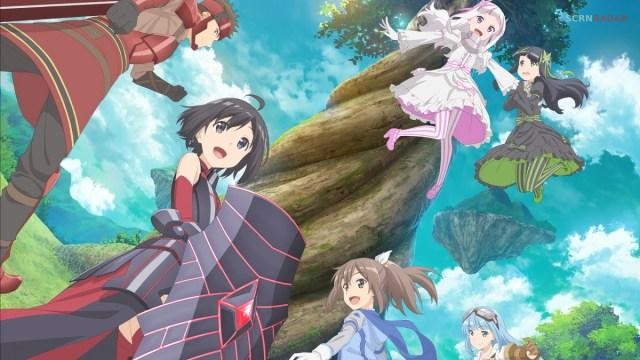
Maple, voiced by Kaede Hondo, is the heart of BOFURI. Unlike many overpowered protagonists who seek dominance or revenge, Maple is driven purely by curiosity and enjoyment. Her innocence and lack of gaming knowledge often lead to hilarious outcomes, as she unintentionally discovers game-breaking mechanics.
What makes Maple compelling is her unpredictability. She does not follow conventional gaming strategies, which allows her to stumble upon abilities that seasoned players would never consider. This unpredictability keeps the series fresh, as viewers never know what absurd power she will acquire next.
Despite her overwhelming strength, Maple never feels overbearing or unrelatable. Her cheerful personality and genuine friendships make her easy to root for, transforming her from a typical “overpowered character” into a source of charm and humor.
A Unique Take on the Isekai and Gaming Genre
While BOFURI shares similarities with other VR-based anime like Sword Art Online, it deliberately avoids high-stakes drama. There is no life-or-death scenario, no trapped players, and no looming apocalypse. Instead, the series focuses on the joy of gaming and the creativity it inspires.
This approach allows the anime to explore game mechanics in a fun and accessible way. Skills, stats, and abilities are central to the narrative, but they are presented through Maple’s unconventional playstyle. The result is a show that feels both familiar and refreshingly different.
The lack of serious stakes may be a drawback for some viewers, but it is also one of the show’s greatest strengths. By prioritizing fun over tension, BOFURI creates a relaxed viewing experience that stands out in a genre often defined by intensity.
Humor That Drives the Narrative
Comedy is a core component of BOFURI, and it is executed with remarkable consistency. Much of the humor comes from the contrast between Maple’s intentions and the results of her actions. She often stumbles into powerful abilities while simply trying to avoid danger, leading to absurd and entertaining scenarios.

The reactions of other players also contribute to the comedy. As Maple’s reputation grows, she becomes a legend within the game, with other players both fearing and admiring her. This dynamic creates a running joke throughout the series, as even experienced players struggle to understand how she became so powerful.
Importantly, the humor never feels forced. It emerges naturally from the characters and the game mechanics, making it an integral part of the storytelling rather than a distraction.
Strong Supporting Cast and Guild Dynamics
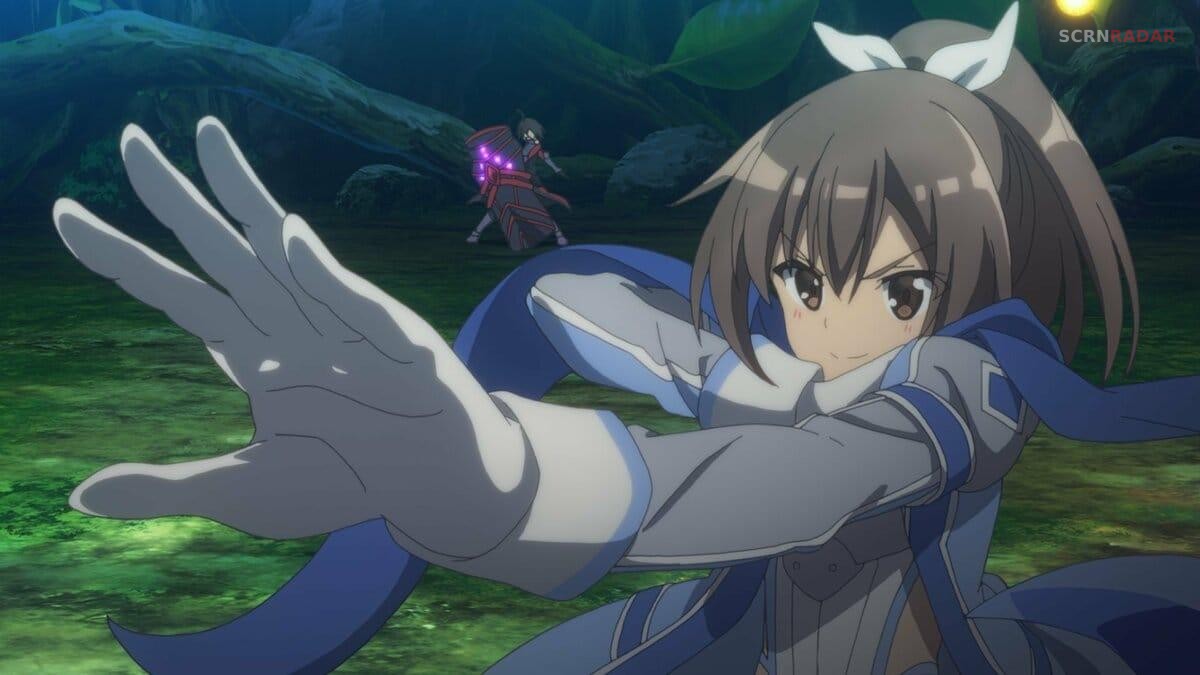
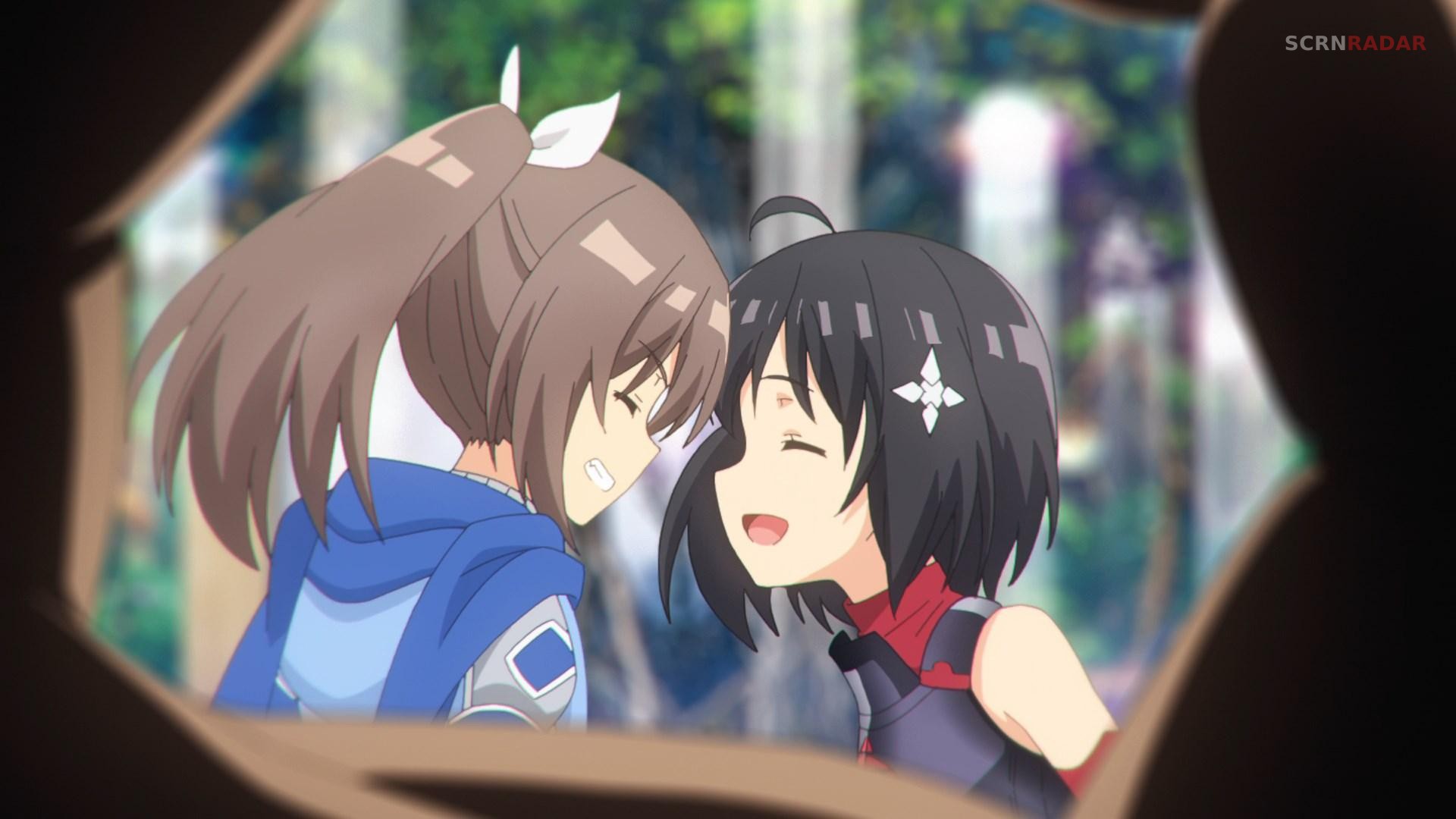
While Maple is the central focus, the supporting cast plays a crucial role in enhancing the series. Her best friend Sally, voiced by Ruriko Noguchi, serves as a perfect complement. Where Maple relies on defense and creativity, Sally brings skill, strategy, and agility.
The formation of the Maple Tree guild introduces additional characters, each with their own unique abilities and personalities. These characters add variety to the story and create opportunities for teamwork and collaboration.
The guild dynamics are one of the show’s highlights. Rather than focusing on conflict within the group, the series emphasizes friendship and cooperation. This creates a wholesome atmosphere that reinforces the show’s tone.
Animation, Action, and Visual Appeal
Produced by Silver Link, BOFURI delivers solid animation quality that enhances both its comedic and action elements. The character designs are colorful and expressive, reflecting the game-like setting.
Action sequences are handled with energy and creativity, particularly when showcasing Maple’s abilities. From her iconic shield to her increasingly absurd transformations, the visuals play a key role in bringing the game mechanics to life.
While the animation may not reach the cinematic heights of larger productions, it remains consistently engaging. The visual style complements the show’s tone, ensuring that even the most over-the-top moments feel enjoyable rather than overwhelming.
Where BOFURI Excels
One of the series’ biggest strengths is its ability to maintain a sense of fun. Every episode offers new surprises, whether through Maple’s latest ability or the introduction of new characters. This unpredictability keeps the narrative engaging.
The pacing is another positive aspect. The episodic structure allows the story to explore different events and challenges without feeling rushed. This format also makes the series easy to watch, as each episode provides a satisfying experience on its own.
Additionally, the show’s positive tone sets it apart. In a genre often dominated by darker themes, BOFURI offers a refreshing alternative that focuses on enjoyment and creativity.
Where BOFURI Falls Short
Despite its many strengths, BOFURI is not without flaws. The lack of high-stakes conflict may leave some viewers wanting more depth. Without a central antagonist or overarching narrative, the story can sometimes feel directionless.
Maple’s overpowered nature, while entertaining, can also reduce tension. Since she rarely faces real danger, some battles lack suspense. This can make certain moments feel predictable, even if they are still enjoyable.
Additionally, the series occasionally relies too heavily on repetition. The formula of Maple gaining a new ability and surprising other players, while effective, can become somewhat familiar over time.
Understanding BOFURI’s Game Logic
It is important to recognize that BOFURI does not aim for realistic game mechanics. Many of Maple’s abilities and achievements would not be possible in a real MMORPG. Instead, the series exaggerates these elements for comedic and narrative effect.
This approach allows the show to explore creative scenarios without being constrained by realism. While some viewers may find this unrealistic, it is a deliberate choice that aligns with the series’ tone.
The game world itself is more of a playground than a simulation. This distinction is key to understanding why BOFURI prioritizes fun and imagination over accuracy.
BOFURI is a delightful and entertaining anime that embraces its absurd premise to deliver a unique experience. With its charming protagonist, strong humor, and creative gameplay elements, the series offers a refreshing take on the isekai and gaming genres.
While it may lack the depth and intensity of more serious anime, its focus on fun and positivity makes it a standout in its category. Maple’s journey is not about saving the world or overcoming impossible odds, but about enjoying the game and discovering new possibilities.
For viewers looking for a lighthearted and engaging anime, BOFURI is an excellent choice. It may not redefine the genre, but it proves that sometimes, simplicity and creativity are all you need to create something memorable.
Another element that adds to the appeal of Bofuri: I Don’t Want to Get Hurt, so I’ll Max Out My Defense is its strong sense of progression across seasons, particularly with the introduction of new game events and increasingly complex challenges. As Maple and her guild grow stronger, the game itself evolves to match their abilities, introducing tougher opponents and creative scenarios that prevent the story from becoming completely stagnant.
This helps maintain engagement even when the central formula remains familiar. The expansion of the game world also allows for more varied environments and encounters, keeping the visual and narrative experience fresh.
At the same time, the series quietly builds a sense of community that extends beyond Maple Tree. Rival guilds and recurring players develop their own identities, making the world feel more alive and interconnected. Instead of focusing solely on competition, the show often highlights mutual respect between players, even during intense battles.
This approach reinforces the idea that the game is a shared space meant for enjoyment rather than conflict. It also strengthens the series’ wholesome tone, making it stand out as a feel-good anime that values friendship and creativity over dominance.
The Good
- Charming and unique protagonist
- Consistently entertaining humor
- Creative use of game mechanics
- Strong supporting cast and dynamics
The Bad
- Lack of high-stakes conflict
- Overpowered protagonist reduces tension
- Repetitive narrative structure at times