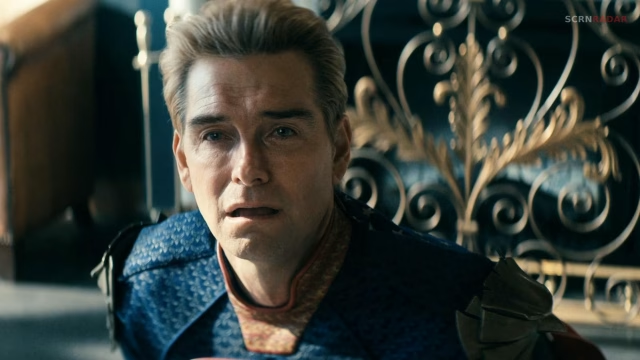
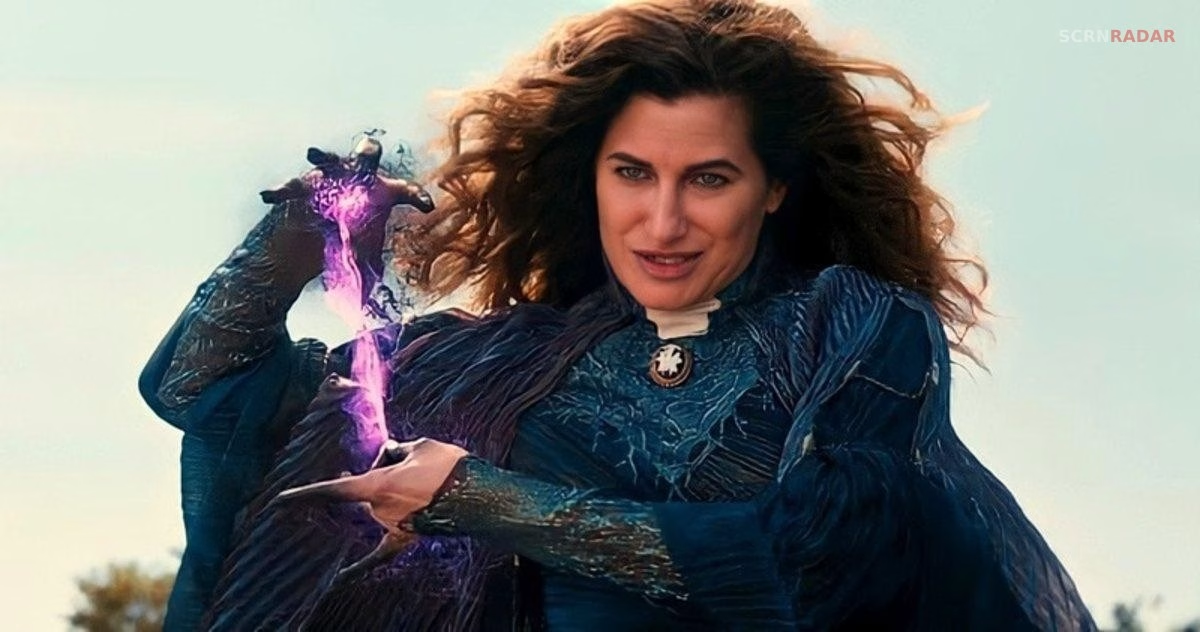
The ending of Agatha All Along delivers exactly what Marvel fans expected and still manages to surprise. As a continuation of WandaVision, the series dives deeper into Agatha Harkness as a character, shifting her from a scene-stealing antagonist to a more layered and unpredictable figure. The finale ties together multiple plot threads involving magic, identity, and power, while also opening doors for the broader Marvel Cinematic Universe.
From the mysterious coven dynamics to the truth behind Agatha’s limitations after Wanda’s spell, the show builds toward a climax that is both character-driven and lore-heavy. Viewers searching for an “Agatha All Along ending explained” breakdown are mostly trying to understand one thing: what changed for Agatha and why it matters for the future of Marvel’s magical side. Let’s break down the ending step by step and explore its biggest implications.
What happens in the Agatha All Along finale?
The finale centers on Agatha confronting the reality of her weakened state after Wanda Maximoff trapped her in Westview. Throughout the series, Agatha has been trying to reclaim her identity and magical abilities, which were suppressed by Wanda’s spell at the end of WandaVision. The final episode reveals that her journey was not just about power but also about self-awareness and control.
Agatha ultimately regains access to her magic, but not in the way she originally intended. Instead of simply overpowering her enemies, she is forced to confront the consequences of her past actions. This moment reframes her character arc, showing that her greatest obstacle is not external enemies but her own nature. The finale uses this realization as a turning point rather than a simple victory.
The climax involves a magical confrontation that brings together multiple factions introduced throughout the series. Rather than ending with a definitive win or loss, the resolution feels deliberately open-ended. This ambiguity allows Marvel to position Agatha as a wildcard character moving forward. It also aligns with the MCU’s trend of setting up future storylines through character-driven conclusions.
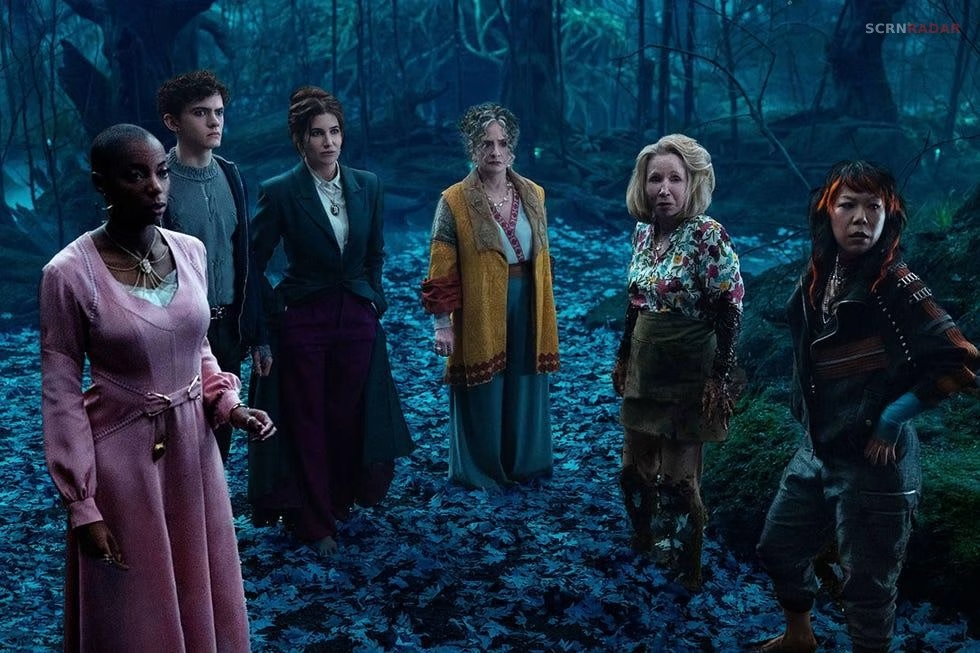
Agatha Harkness’ character arc finally comes full circle
One of the most important aspects of the ending is how it completes Agatha’s emotional journey. In WandaVision, she was portrayed primarily as a manipulative antagonist driven by her hunger for power. However, Agatha All Along expands her backstory and motivations, revealing deeper layers to her personality.
By the finale, Agatha is no longer just chasing power for its own sake. Her actions suggest a more complex relationship with magic and identity. She begins to understand that control and restraint are just as important as raw power. This shift does not turn her into a traditional hero, but it does make her more nuanced.
The ending also hints that Agatha may operate in morally gray territory going forward. She is not fully redeemed, nor is she purely villainous. This ambiguity makes her one of the more interesting characters in the MCU’s current lineup. It also sets her apart from more straightforward heroes and villains.
The role of magic and the MCU’s expanding supernatural side
The finale reinforces how important magic is becoming in the Marvel Cinematic Universe. Since Doctor Strange in the Multiverse of Madness, Marvel has been exploring darker and more complex aspects of magic. Agatha All Along continues this trend by introducing new rules, characters, and consequences tied to magical power.
The ending suggests that magic is not just a tool but a force with its own balance. Agatha’s struggles highlight the dangers of using magic without understanding its limits. This theme connects to broader MCU storylines involving chaos magic, the Darkhold, and other mystical elements. It also hints that future projects may dive even deeper into supernatural conflicts.
Additionally, the finale introduces or teases other magical players who could become important in future stories. While not all threads are resolved, the setup clearly points toward a larger magical narrative within the MCU. This makes Agatha All Along more than just a spin-off and positions it as a key piece of Marvel’s evolving universe.
How the ending connects to Wanda Maximoff’s legacy

Even though Wanda Maximoff does not dominate the series, her presence is felt throughout the finale. Agatha’s entire situation stems from Wanda’s actions in WandaVision, making her influence impossible to ignore. The ending reinforces how powerful Wanda’s magic truly is and how it continues to shape events even in her absence.
Agatha’s attempt to break free from Wanda’s spell serves as a reminder of the Scarlet Witch’s impact. It also raises questions about Wanda’s current status in the MCU. While Doctor Strange in the Multiverse of Madness left her fate ambiguous, the finale of Agatha All Along keeps her legacy alive.
There are also subtle hints that Wanda’s story may not be over. The way the series handles magical lore leaves room for her return, whether directly or through influence on other characters. This connection adds another layer of intrigue to the ending and keeps fans speculating about future developments.
The significance of the finale’s open-ended conclusion
Marvel has increasingly leaned into open-ended finales, and Agatha All Along follows this pattern. Instead of providing complete closure, the ending leaves several questions unanswered. This approach allows the character to evolve in future projects without being confined by a definitive resolution.
Agatha’s final position suggests that she is free but not entirely stable. She has regained agency, but her goals remain unclear. This uncertainty is intentional and aligns with her unpredictable nature. It also makes her a valuable asset for future MCU storylines, where she can be used in multiple ways.
The open-ended nature of the finale also reflects the broader direction of the MCU. Rather than focusing on isolated stories, Marvel is building interconnected narratives that span multiple projects. Agatha All Along fits perfectly into this strategy by setting up future possibilities without locking itself into a single path.
Hidden details and subtle clues in the ending
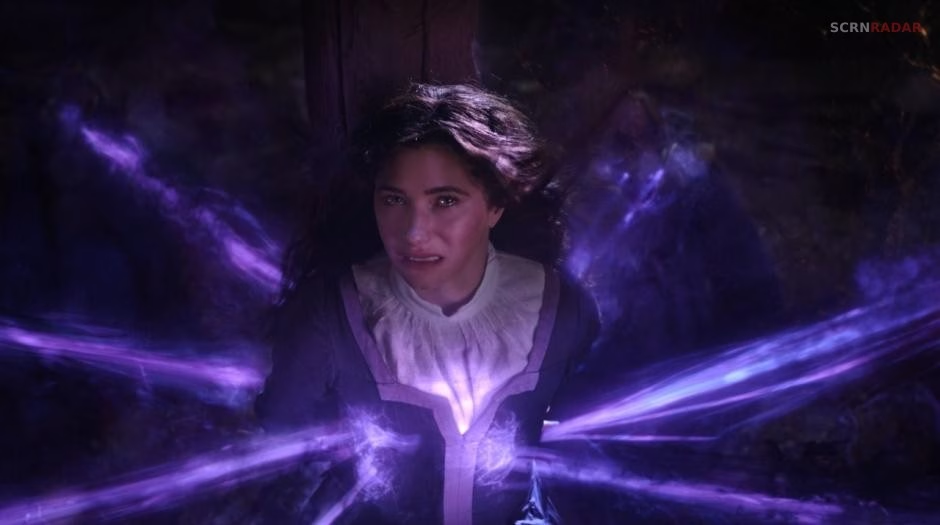
The finale includes several small details that hint at larger implications. From visual symbolism to dialogue references, these elements reward attentive viewers. For example, certain magical symbols and artifacts suggest connections to deeper Marvel lore that has not yet been fully explored.
There are also moments that hint at Agatha’s potential alliances or rivalries. These subtle clues may not have immediate payoffs, but they are likely to become important in future stories. Marvel has a history of planting seeds that only make sense later, and this series continues that tradition.
Another interesting detail is how the ending balances humor with darker themes. Agatha’s personality allows the show to maintain a lighter tone even during serious moments. This balance helps the series stand out within the MCU while still contributing to its narrative.
What the ending means for the future of the MCU
The ending of Agatha All Along positions the series as a stepping stone for future Marvel projects. Expanding the magical side of the MCU, it opens up new storytelling opportunities. Characters like Agatha can now interact with other heroes and villains in ways that were not possible before.
The series also sets up potential crossovers with other supernatural characters. As Marvel continues to explore darker themes, Agatha could play a central role in connecting different storylines. This makes her one of the most versatile characters introduced in recent phases.
Additionally, the ending suggests that magic will play a bigger role in upcoming conflicts. As the MCU moves toward more complex narratives, characters like Agatha will become increasingly important. Her knowledge and experience with magic make her a valuable asset in a world facing growing supernatural threats.
What the ending confirms and what remains speculation
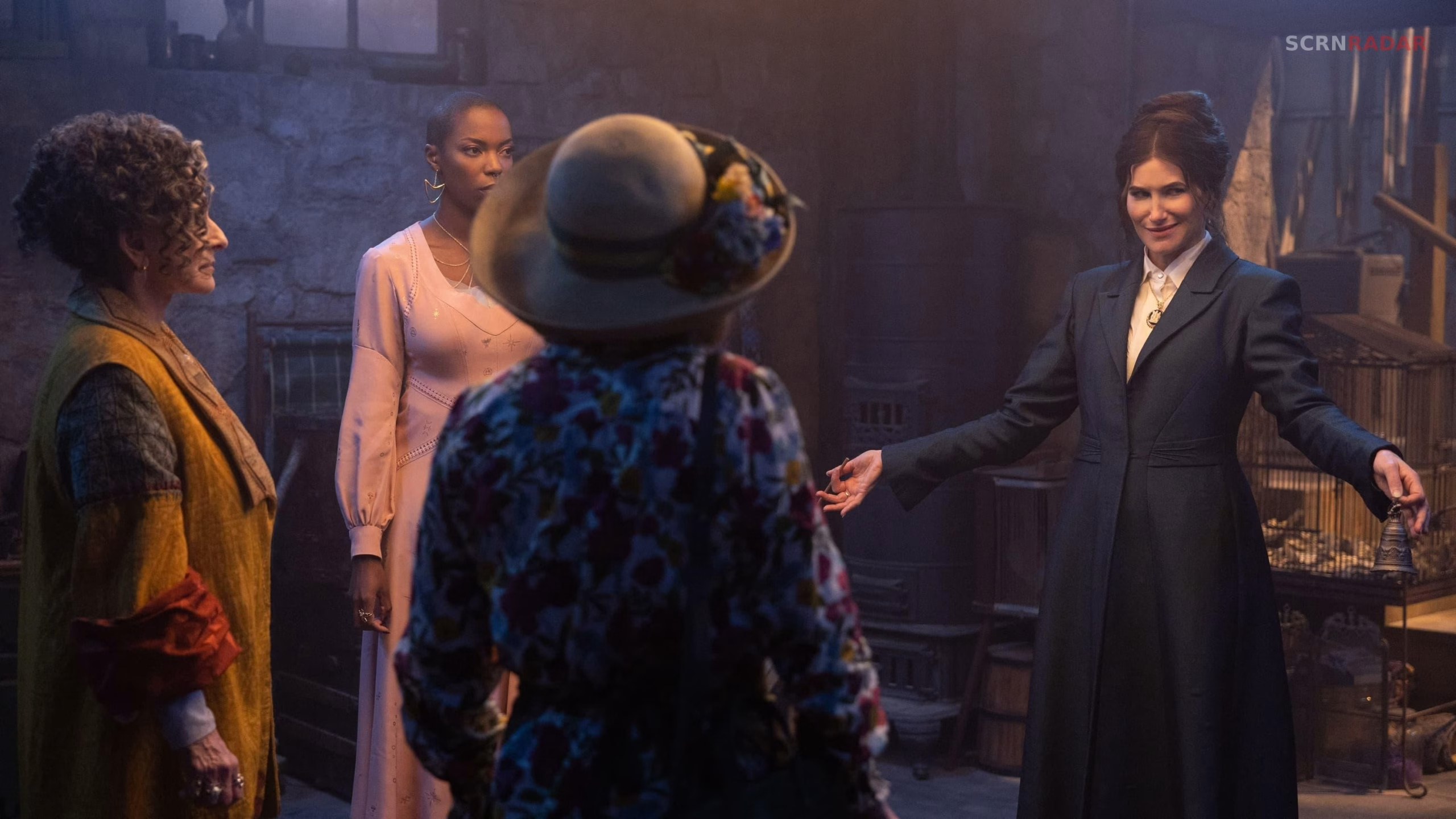
It is important to separate confirmed plot points from fan theories when analyzing the ending. The series clearly establishes that Agatha regains some level of power and independence. It also confirms her continued importance within the MCU’s magical narrative.
However, many aspects remain speculative. The exact extent of her powers, her future alliances, and her long-term goals are not fully defined. Similarly, any connection to Wanda’s potential return remains unconfirmed. These elements are left open for future exploration rather than being explicitly resolved.
Fans should be cautious about interpreting every detail as a definitive setup. Marvel often leaves room for multiple possibilities, and not all hints lead to immediate payoffs. The ending is designed to spark discussion rather than provide all the answers.
The ending of Agatha All Along succeeds because it balances character development with broader MCU implications. It gives Agatha a meaningful arc while also setting up future storylines. The series transforms her from a supporting villain into a central figure in Marvel’s magical world.
By focusing on themes of identity, power, and control, the finale delivers a satisfying yet open-ended conclusion. It respects the character’s complexity without forcing a traditional redemption or downfall. This approach makes the ending feel fresh within the MCU’s evolving storytelling style.
Ultimately, Agatha All Along leaves audiences with more questions than answers, but that is exactly the point. It positions Agatha as a key player in the future of Marvel while maintaining her unpredictable nature. For fans looking for a deeper understanding of the finale, the ending offers plenty to analyze and even more to anticipate.