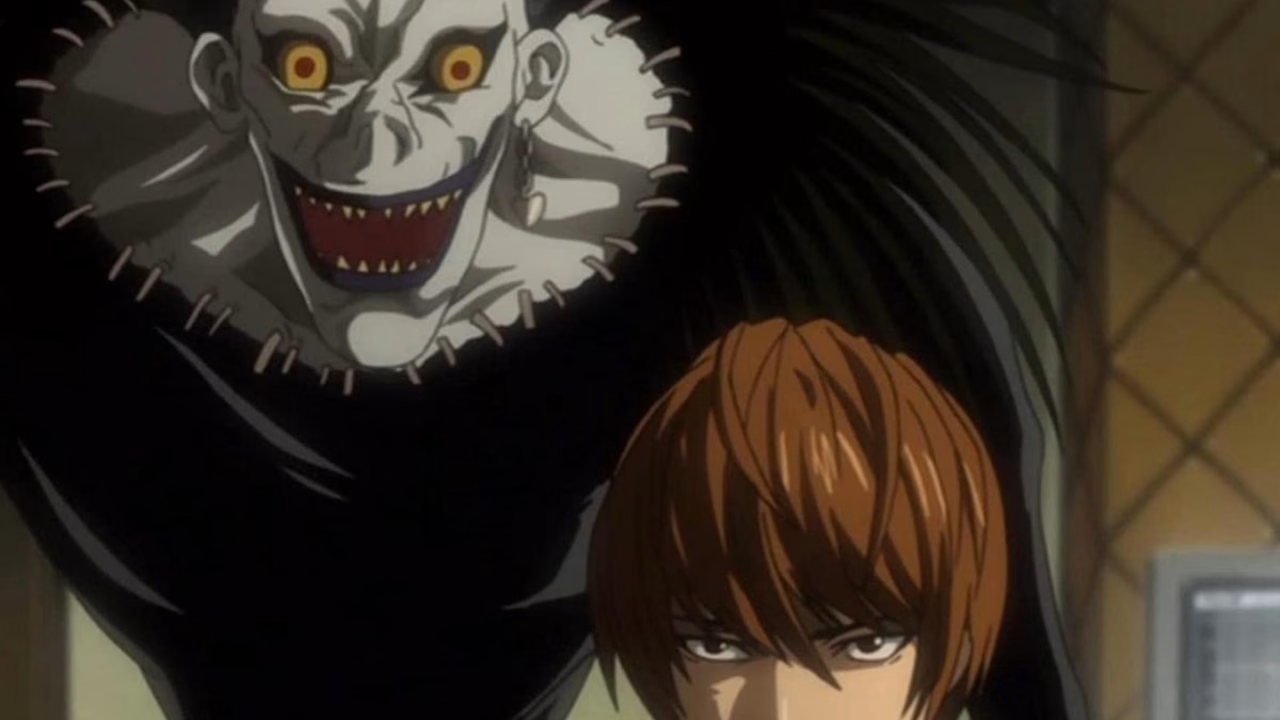
The ending of Death Note remains one of the most debated conclusions in anime history, largely because of the surprising moment when Ryuk writes Light Yagami’s name in his own Death Note. After everything Light accomplishes as Kira, his fate ultimately rests in the hands of the very Shinigami who gave him power in the first place. This raises an important question that continues to intrigue fans: why did Ryuk kill Light?
Understanding this moment requires looking beyond the surface-level betrayal and examining Ryuk’s character, his motivations, and the rules that govern Shinigami. It also involves analyzing Light’s transformation throughout the series and how his downfall was always inevitable. The ending is not just about Light losing, but about the fundamental nature of power, justice, and human arrogance.
Let’s break down exactly why Ryuk kills Light, what it truly means, and how it perfectly concludes the story.
The Simple Answer: Ryuk Always Planned to Kill Light
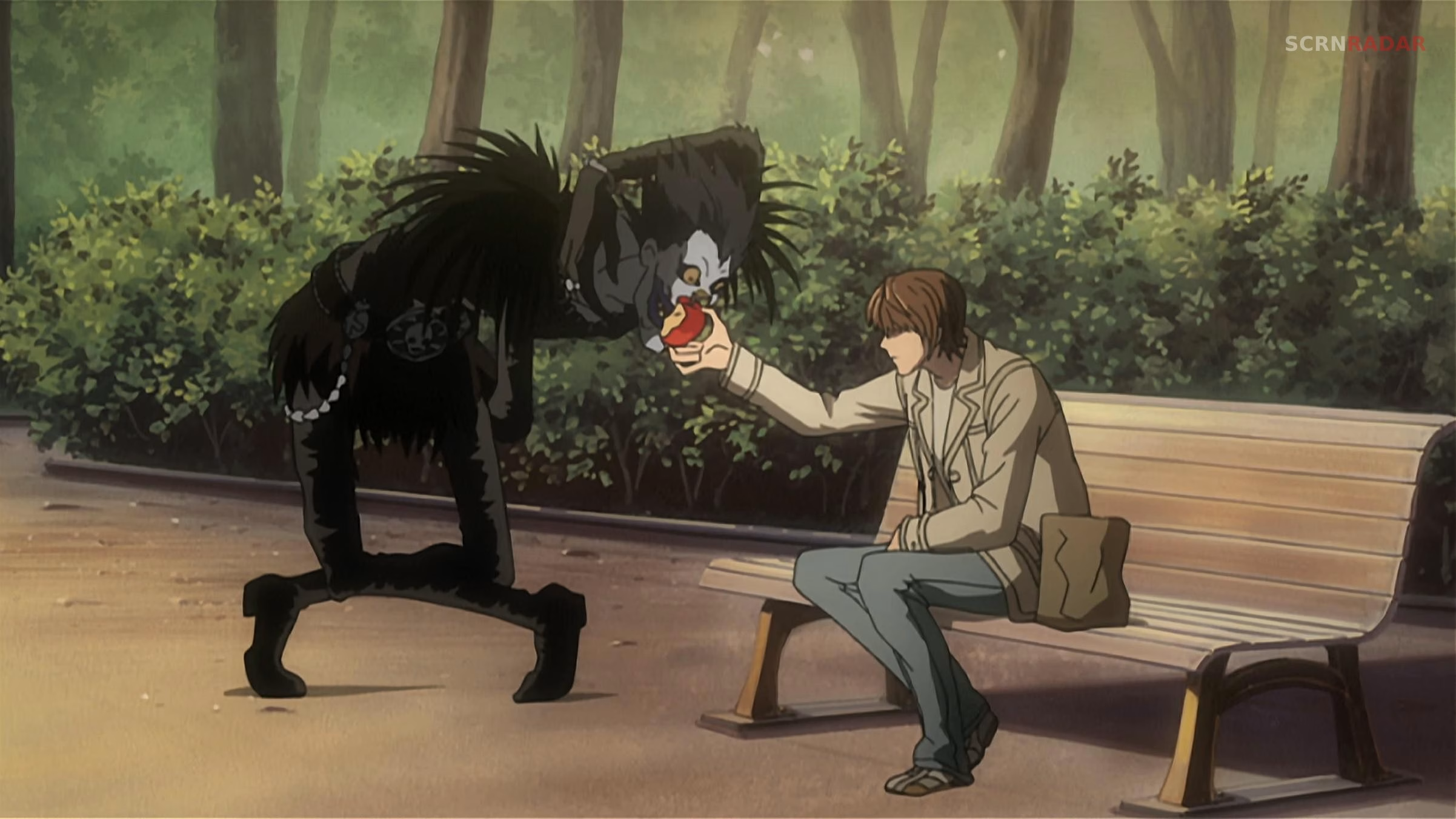
At its core, the answer is straightforward. Ryuk kills Light because he always intended to do so from the very beginning. Early in the story, Ryuk explicitly tells Light that he is not on his side and that he will be the one to write Light’s name in his Death Note when the time comes.
This moment is easy to overlook at first, especially because Ryuk spends most of the series casually observing Light and even helping him in minor ways. However, Ryuk never hides his true nature. He is not Light’s ally, nor is he his enemy. He is simply an observer seeking entertainment.
When Light is cornered near the end and realizes he is about to be captured, Ryuk makes his move. Instead of letting Light suffer imprisonment or execution, Ryuk writes his name, fulfilling the promise he made at the start. From Ryuk’s perspective, this is not betrayal but the natural conclusion of their agreement.
Ryuk’s True Nature: A God of Death, Not a Companion
To fully understand why Ryuk kills Light, it is crucial to examine what kind of being Ryuk actually is. As a Shinigami, Ryuk exists outside human morality. He does not care about justice, good, or evil in the way humans do.
Ryuk drops the Death Note into the human world out of boredom. His primary motivation throughout the series is entertainment, not loyalty. Watching Light use the notebook to reshape society gives Ryuk something interesting to observe, but he never becomes emotionally invested in Light’s success.
This detachment is what makes Ryuk so dangerous. Unlike characters such as L or Near, who are deeply invested in stopping Kira, Ryuk remains neutral. He is fascinated by human behavior, but he does not interfere unless it benefits his own amusement or follows Shinigami rules.
When Light’s story reaches its end, Ryuk simply moves on. Killing Light is not a moral judgment. It is just the conclusion of a game that has stopped being entertaining.
The Rules of the Death Note: Why Ryuk Had to Act
Another key reason behind Ryuk’s decision lies in the rules governing the Death Note itself. Shinigami are bound by certain limitations, and one of them is related to how they interact with humans who possess their notebooks.
If Light were to be captured, he would likely face imprisonment, interrogation, or execution by human authorities. This outcome would drag out the conclusion in a way that offers no entertainment value to Ryuk. More importantly, it would leave Light alive but powerless, which goes against Ryuk’s sense of closure.
By writing Light’s name himself, Ryuk ensures a definitive ending. He avoids the complications of human justice and resolves the situation in the simplest way possible. In a sense, Ryuk is maintaining control over the narrative.
This also reinforces an important theme in the series. No matter how powerful a human becomes with the Death Note, they are still subject to forces beyond their control. Light may have acted like a god, but in the end, he was just a pawn in a larger system.
Light’s Downfall: The Moment He Lost Everything
Light’s death is not just about Ryuk’s decision. It is also the culmination of Light’s own mistakes. Over time, Light transforms from a highly intelligent student with a sense of justice into a tyrant obsessed with maintaining power.
One of the biggest turning points comes after the death of L. Once Light eliminates his greatest rival, he begins to grow overconfident. Without a worthy opponent, he starts making riskier decisions and underestimating those around him.
This arrogance ultimately leads to his downfall. Near and the SPK exploit Light’s overconfidence, setting a trap that exposes him as Kira. When Light is finally confronted, his composed persona breaks apart, revealing his desperation and fear.
At that moment, Light is no longer the god he believed himself to be. He is just a human facing the consequences of his actions. Ryuk’s decision to kill him simply accelerates an outcome that was already inevitable.
Why Ryuk Didn’t Save Light
Some fans wonder why Ryuk did not intervene to save Light, especially since he had the power to do so. The answer once again comes back to Ryuk’s personality and motivations.
Ryuk never had any reason to protect Light. He was never invested in Light’s success beyond the entertainment it provided. Saving Light would have meant prolonging a story that had already reached its conclusion.
Additionally, helping Light escape would have broken the balance of the situation. Ryuk does not interfere in ways that drastically alter the natural progression of events unless it serves his own interests. At that point, there was nothing left to gain.
In fact, saving Light would have gone against Ryuk’s character. It would imply a level of emotional attachment that he simply does not possess. Ryuk’s neutrality is what defines him, and his final action is consistent with that trait.
The Symbolism of Ryuk Writing Light’s Name
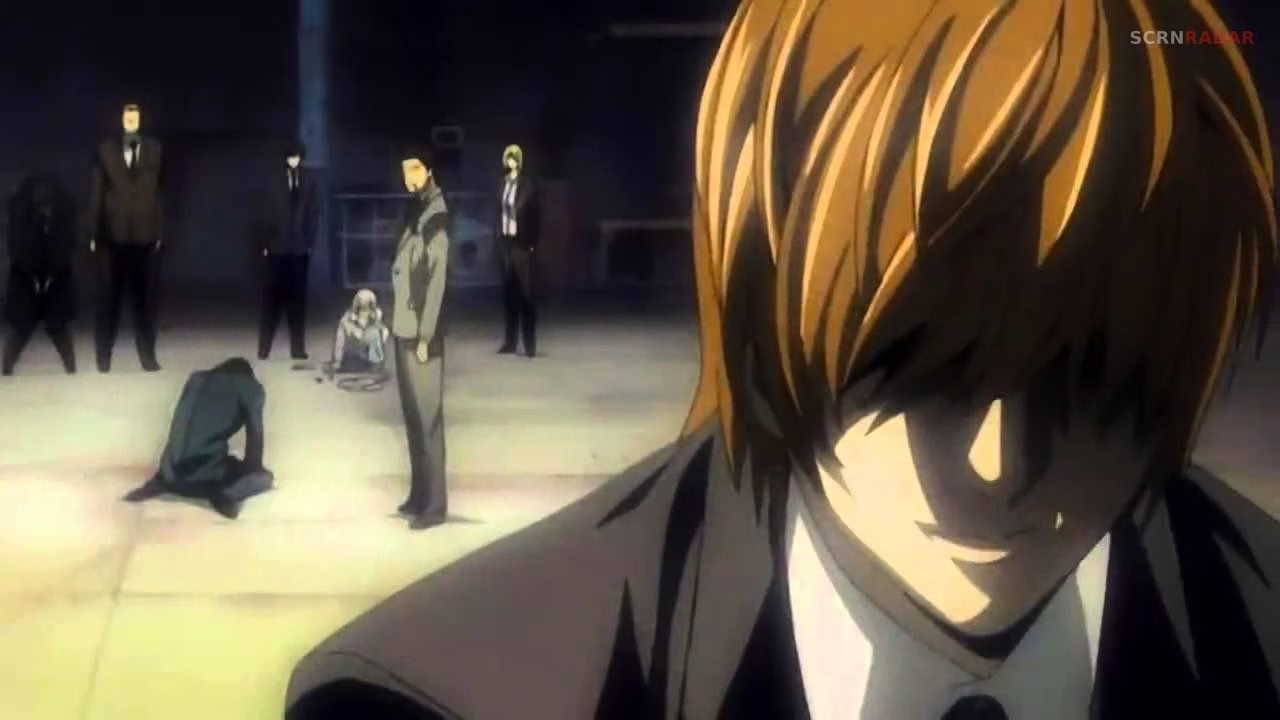
The act of Ryuk writing Light’s name carries deep symbolic meaning. Throughout the series, Light uses the Death Note to control the fate of others, deciding who lives and who dies.
By the end, this power dynamic is reversed. Light becomes the one whose fate is written by someone else. This reversal highlights the central theme of the series: absolute power does not make someone invincible.
It also emphasizes the illusion of control. Light believed he was shaping the world according to his will, but he was always operating within a system he did not fully understand. Ryuk represents that higher level of control.
This moment serves as a reminder that even those who act like gods are still subject to forces beyond their comprehension. Light’s death is not just an ending. It is a statement about the limits of human ambition.
The Philosophical Meaning: Justice vs Power
The ending of Death Note is deeply tied to its exploration of justice. Light begins his journey with the belief that he can create a better world by eliminating criminals.
However, as the series progresses, it becomes clear that Light’s version of justice is flawed. He starts killing not just criminals, but anyone who opposes him. His goal shifts from creating a better world to maintaining his own authority.
Ryuk’s final act reinforces this theme. By killing Light without hesitation, Ryuk demonstrates that power alone does not justify one’s actions. Light may have seen himself as a god, but in the end, he was judged by a being who does not care about human notions of justice.
This highlights the central conflict of the series. Is it possible to create a perfect world through absolute control? The answer, as shown by Light’s downfall, is no.
How the Ending Completes Light’s Character Arc
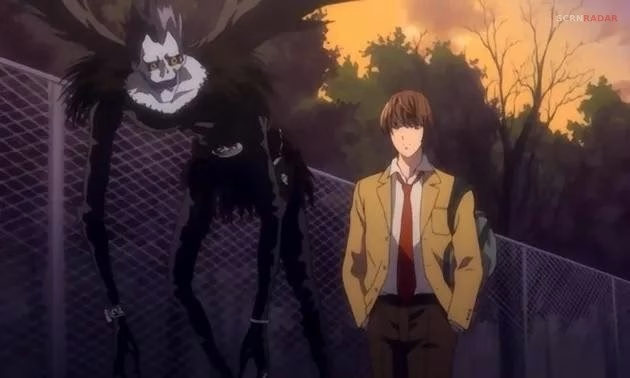
Light’s journey is one of transformation, and his death is the final step in that arc. At the beginning of the series, he is a brilliant but disillusioned student who wants to change the world.
As he gains power, he becomes increasingly detached from humanity. He justifies his actions by convincing himself that he is creating a utopia, but in reality, he is becoming the very thing he sought to eliminate.
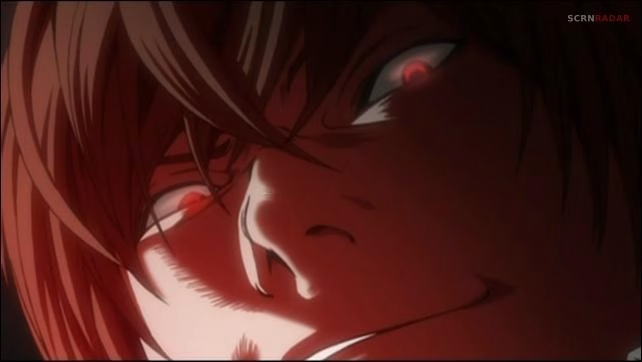
By the end, Light is no longer the idealistic figure he once was. He is a desperate man trying to cling to power. His final moments, filled with fear and denial, reveal the truth about his character.
Ryuk’s decision to kill him brings this arc to a close. It strips away the illusion of godhood and exposes Light as a flawed human being. This makes the ending both tragic and fitting.
Ryuk as the Ultimate Observer
Throughout the series, Ryuk serves as a constant observer of human behavior. He does not take sides or impose his own moral judgment. Instead, he watches events unfold with curiosity.
This role is crucial to understanding the ending. Ryuk represents an outside perspective, one that is not influenced by human emotions or biases. His decision to kill Light is not driven by anger, justice, or revenge.
Instead, it is a logical conclusion based on his role as an observer. Once the story reaches its end, Ryuk simply closes the book. This reinforces the idea that the events of the series are part of a larger cycle.
In this sense, Ryuk’s final act is not just about Light. It is about the nature of the world itself. Humans struggle for power and control, but from a higher perspective, their actions are just part of an ongoing pattern.