
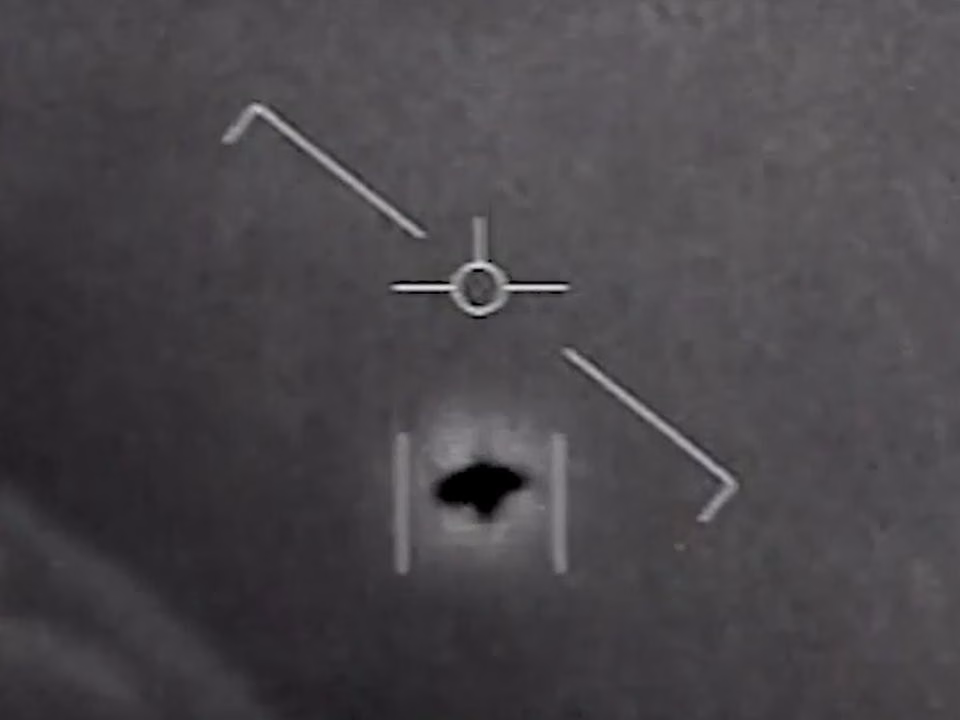
The mystery surrounding UFOs has fascinated the public for decades, but recent documentaries like UFO Declassified have brought renewed attention to the subject. Instead of relying purely on speculation or sensational storytelling, these documentaries attempt to analyze real-world data, government disclosures, and eyewitness testimonies to uncover the truth behind unidentified flying objects. With growing interest in what are now officially termed UAPs, or Unidentified Aerial Phenomena, the conversation has shifted from fringe conspiracy theories to mainstream scientific and political discussion.
What makes UFO Declassified stand out is its focus on verified information, including declassified government reports and military encounters. Coverage from major outlets like BBC and The New York Times has highlighted how governments, especially the United States, have begun acknowledging unexplained aerial sightings. This documentary builds on that momentum, attempting to separate fact from fiction while exploring whether alien encounters could have a real basis.
Understanding what UFO Declassified reveals requires a closer look at its key themes, evidence, and conclusions. The documentary does not claim to prove extraterrestrial life definitively, but it raises critical questions about what governments know, what pilots have seen, and what science can currently explain.
What Is UFO Declassified About?
UFO Declassified is a documentary-style exploration of UFO sightings, government secrecy, and the evolving understanding of unexplained aerial phenomena. It combines archival footage, expert interviews, and analysis of official reports to provide a grounded perspective on a topic often dominated by speculation.
The documentary focuses heavily on recent developments, particularly the U.S. government’s acknowledgment of UAP sightings. According to reporting by The New York Times, the Pentagon confirmed the existence of a secret program called the Advanced Aerospace Threat Identification Program, which investigated UFO encounters reported by military personnel. This revelation marked a turning point in how UFOs are perceived globally.
Rather than presenting UFOs as purely extraterrestrial, UFO Declassified explores multiple possibilities. These include advanced human technology, natural atmospheric phenomena, and, in some cases, unexplained objects that defy current scientific understanding. This balanced approach helps the documentary maintain credibility while still engaging with the mystery.
By grounding its narrative in real reports and expert commentary, the documentary positions itself as an informational piece rather than a sensational one. This makes it particularly appealing to viewers looking for facts rather than conspiracy-driven content.
The Pentagon’s UAP Reports and What They Reveal
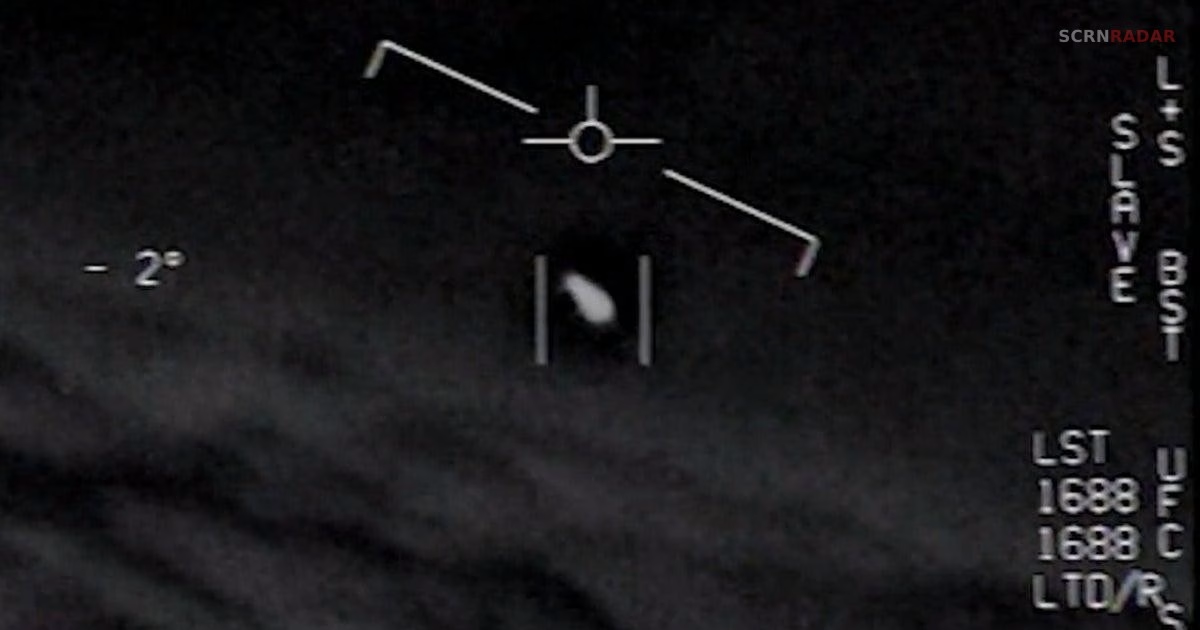
One of the most significant elements explored in UFO Declassified is the role of the Pentagon and its official UAP reports. These reports, released in recent years, acknowledge that military personnel have encountered objects they cannot fully explain.
According to BBC coverage of the Pentagon’s findings, many UAP sightings involve objects that move at extreme speeds, change direction abruptly, and lack visible propulsion systems. These characteristics challenge current understanding of aerodynamics and technology. The documentary highlights several such cases, including encounters involving U.S. Navy pilots.
The Pentagon’s reports do not confirm extraterrestrial origins, but they also do not rule them out. Instead, they categorize most sightings as “unidentified,” meaning there is insufficient data to determine their nature. This ambiguity is a central theme in UFO Declassified, which emphasizes how much remains unknown.
The documentary also examines how governments handle such information. Historically, UFO-related data was often classified, leading to widespread speculation. The recent shift toward transparency suggests a growing willingness to address the phenomenon openly, even if definitive answers are still lacking.
Eyewitness Testimonies and Pilot Encounters
A major focus of UFO Declassified is firsthand accounts from military pilots and trained observers. These testimonies are crucial because they come from individuals with experience in identifying aircraft and atmospheric conditions.
One of the most well-known cases discussed in the documentary involves U.S. Navy pilots who encountered a “Tic Tac”-shaped object during training exercises. This incident, widely reported by The New York Times, described an object moving in ways that defied known physics. Pilots reported sudden acceleration, hovering capabilities, and movements that exceeded the limits of current aircraft technology.
The documentary presents these accounts as credible due to the expertise of the witnesses. Unlike civilian sightings, which can be influenced by misinterpretation or lack of context, military pilots are trained to recognize known objects and anomalies. This adds weight to their testimonies and makes the incidents harder to dismiss.
However, UFO Declassified also acknowledges the limitations of eyewitness accounts. Human perception can be flawed, and even trained observers can misinterpret unfamiliar phenomena. This balanced perspective helps the documentary maintain credibility while still highlighting the significance of these encounters.
Scientific Explanations vs Alien Theories
One of the key strengths of UFO Declassified is its attempt to bridge the gap between scientific skepticism and popular belief in extraterrestrial life. The documentary explores various explanations for UFO sightings, ranging from advanced human technology to natural phenomena.
Scientists interviewed in the documentary often emphasize the importance of evidence-based conclusions. Many UAP sightings, they argue, can be explained through optical illusions, sensor errors, or atmospheric conditions. BBC reporting has also noted that some unexplained sightings may result from classified military technology being tested without public knowledge.
At the same time, the documentary does not dismiss the possibility of extraterrestrial involvement entirely. Instead, it presents it as one of several hypotheses that require further investigation. This approach reflects the current scientific consensus, which remains open but cautious about claims of alien encounters.
By presenting both sides of the argument, UFO Declassified avoids the extremes of blind belief and outright dismissal. This balanced approach makes it a valuable resource for viewers seeking a nuanced understanding of the topic.
Government Secrecy and Public Disclosure
Another major theme in UFO Declassified is the role of government secrecy in shaping public perception of UFOs. For decades, UFO-related information was often classified, leading to widespread mistrust and speculation.
The documentary highlights how recent disclosures have begun to change this narrative. According to The New York Times, the U.S. government has taken steps to declassify certain UFO-related materials, including videos and reports. These releases have provided a look into how seriously the phenomenon is being taken at official levels.
However, the documentary also raises questions about what remains hidden. Governments may still withhold information for national security reasons, particularly if UFO sightings are linked to advanced technology. This uncertainty fuels ongoing debates about transparency and accountability.
By examining both disclosure and secrecy, UFO Declassified underscores the complexity of the issue. It suggests that while progress has been made, the full picture is still far from clear.
Cultural Impact and Public Fascination
The fascination with UFOs extends beyond science and government into popular culture. UFO Declassified explores how decades of movies, books, and conspiracy theories have shaped public perception of alien encounters.
From classic films to modern television shows, UFOs have been portrayed in countless ways, often emphasizing extraterrestrial origins. This cultural influence has made it difficult to separate fact from fiction, as fictional narratives often blur with real-world reports.
The documentary also examines how public interest has evolved over time. What was once considered a fringe topic is now part of mainstream discussion, thanks in part to official disclosures and credible reporting. This shift reflects a growing curiosity about the unknown and a willingness to question established assumptions.
By addressing the cultural dimension, UFO Declassified provides context for why the topic continues to delight audiences worldwide. It shows that UFOs are not just a scientific mystery but also a cultural phenomenon.
What the Documentary Ultimately Concludes
UFO Declassified does not provide definitive answers about alien encounters, but it does offer valuable insights into the current state of knowledge. The documentary concludes that while many UFO sightings can be explained, a significant number remain unresolved.
This uncertainty is perhaps the most important takeaway. The existence of unexplained phenomena does not automatically confirm extraterrestrial life, but it does highlight gaps in our understanding of the world. The documentary encourages further research and open-minded investigation rather than jumping to conclusions.
It also emphasizes the importance of credible sources and verified information. By focusing on declassified reports and expert analysis, UFO Declassified sets a standard for how UFO-related content should be approached. This emphasis on evidence distinguishes it from more sensational documentaries.

Ultimately, the documentary suggests that the truth about UFOs lies somewhere between skepticism and belief. It acknowledges the mystery while advocating for a scientific approach to uncovering answers.
UFO Declassified represents a significant step forward in how UFOs and alien encounters are discussed in mainstream media. By grounding its narrative in real-world reports from sources like The New York Times and BBC, it moves the conversation away from speculation and toward evidence-based analysis.
The documentary does not claim to prove the existence of extraterrestrial life, but it raises important questions about what governments know and what science has yet to explain. Its balanced approach makes it both informative and thought-provoking, appealing to viewers who want more than sensational claims.
As interest in UAPs continues to grow, documentaries like this play a crucial role in shaping public understanding. They remind audiences that while the mystery of UFOs remains unsolved, the search for answers is grounded in real evidence and ongoing investigation.