

The ending of The One and Only delivers a deeply emotional conclusion that combines romance, mystery, grief, and redemption. Throughout the series, the story balances two very different tones: a murder investigation involving a mysterious hitman and a touching exploration of terminal illness, loneliness, and human connection. By the finale, these threads come together in a way that reshapes the meaning of the entire drama.
At its core, The One and Only is not simply a romance or crime thriller. It is a story about people who believe they are running out of time and must finally decide how they want to live. The final episodes reveal the truth behind the murder case, expose the real villain manipulating events, and bring emotional closure to the journeys of In-sook, Woo-cheon, Mi-do, and Se-yeon.
The ending also leaves viewers with one major emotional question: can people facing death still find happiness and purpose? Let’s break down the killer reveal, the emotional ending, and what the finale really means.
What The One and Only is really about
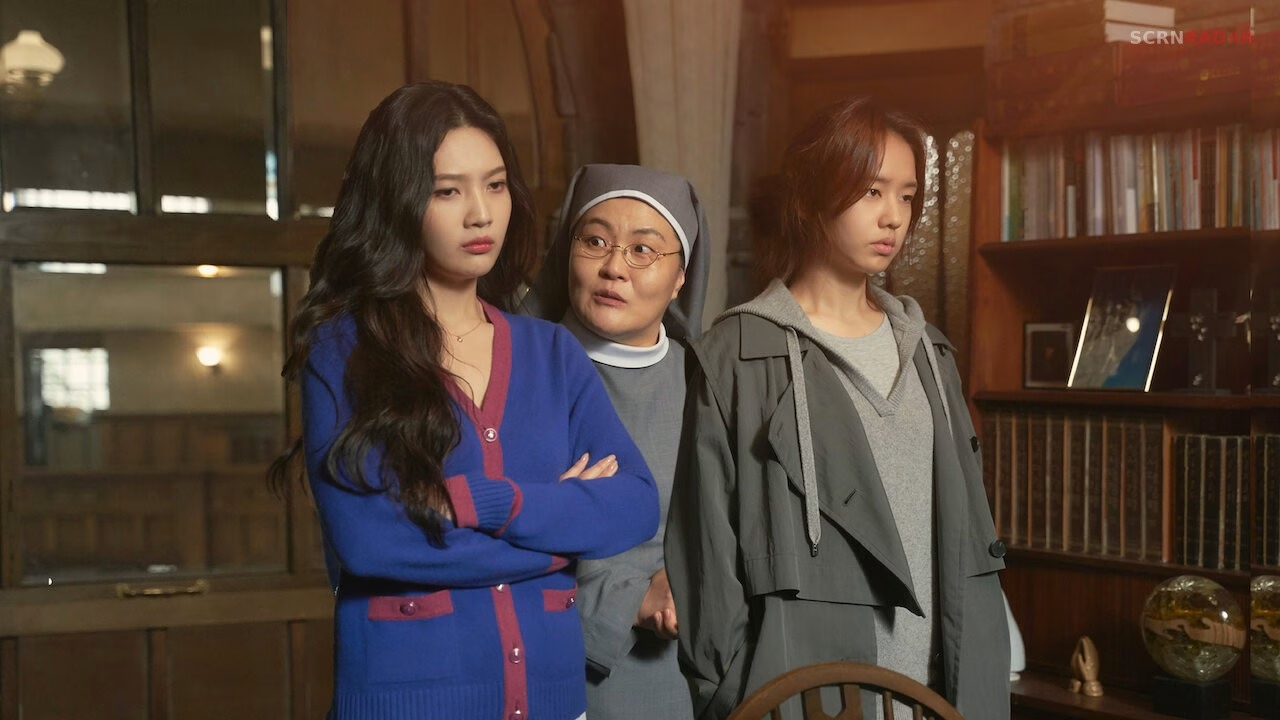
The series begins with three women meeting at a hospice after being diagnosed with terminal illnesses. Pyo In-sook is emotionally detached and isolated, Kang Se-yeon is a housewife who feels invisible in her own life, and Seong Mi-do is a glamorous influencer hiding deep loneliness behind her online image.
Their lives change after becoming involved in a murder case connected to an abusive man. During this chaos, In-sook meets Min Woo-cheon, a mysterious hitman who gradually becomes emotionally attached to her. As the story progresses, romance develops between them while police investigate multiple murders connected to the case.

However, beneath the crime story, the drama focuses primarily on emotional survival. The characters are not simply fighting death physically. They are struggling against regret, abandonment, trauma, and fear of being forgotten.
This emotional foundation becomes crucial for understanding the ending because the finale ultimately prioritizes emotional closure over traditional thriller-style twists.
The real killer and murder mystery explained
One of the biggest mysteries throughout the series involves the death of the abusive father connected to the murder investigation. Initially, suspicion falls heavily on Woo-cheon because of his background as a hitman and because evidence seems to point toward him.
The police also suspect In-sook due to her direct involvement in the violent confrontation. Since she believes she does not have long to live anyway, she becomes willing to sacrifice herself to protect others connected to the case.
However, the finale reveals that the abusive father was not actually killed by either Woo-cheon or In-sook. After surviving the initial attack, he was later strangled to death by his wife after regaining consciousness. This revelation changes the moral dynamics of the story significantly.
The truth behind the murder reflects one of the show’s central themes: abuse destroys entire families emotionally long before physical violence ends them. The wife’s actions are portrayed not as a triumphant revenge moment but as the tragic result of years of suffering and fear.
The investigation becomes even more complicated when additional murders occur later in the story. These deaths initially make Woo-cheon appear to be a serial killer, but the truth is far more manipulative and politically motivated.
Gu Ji-pyo is the true mastermind behind the crimes
The biggest twist in the finale is the reveal that Gu Ji-pyo orchestrated much of the violence behind the scenes. While he initially appears charming and supportive, especially in his relationship with Mi-do, the truth gradually exposes him as deeply manipulative and dangerous.
Ji-pyo hired Woo-cheon to eliminate the abusive father because the man possessed evidence connected to Ji-pyo’s criminal activities. Later, Ji-pyo arranges additional murders in order to frame Woo-cheon and In-sook as serial killers, hoping to erase all connections to himself.
This reveal completely changes how viewers interpret his earlier behavior. His romantic relationship with Mi-do was never entirely genuine, and much of his kindness was rooted in control and image management.
The drama uses Ji-pyo to represent the emptiness hidden beneath wealth and status. Unlike the hospice patients, who are forced to confront mortality honestly, Ji-pyo hides behind power and manipulation. Ironically, the terminally ill characters often display more emotional honesty than the healthy people around them.
The reveal also gives the finale a stronger emotional payoff because the central conflict shifts away from misunderstanding and toward exposing deliberate exploitation.
In-sook and Woo-cheon’s relationship becomes the emotional heart of the ending
The romance between In-sook and Woo-cheon becomes the emotional center of the finale. Both characters begin the series emotionally disconnected from life itself. In-sook struggles to feel attached to anyone, while Woo-cheon lives with emotional numbness caused by years of violence and isolation.
Their relationship develops slowly through shared pain and understanding. Unlike many K-drama romances built around fantasy or idealization, their connection feels rooted in emotional recognition. They see each other honestly because both have already experienced hopelessness.
The finale strengthens this relationship further by revealing their childhood connection. In-sook had unknowingly helped Woo-cheon during a traumatic event years earlier involving his father’s suicide attempt. This revelation reinforces the idea that their lives were emotionally linked long before they met again as adults.
One of the most important aspects of the ending is that the romance does not magically erase suffering. Woo-cheon still faces legal consequences, and In-sook’s illness continues worsening. However, the relationship gives both characters a reason to continue living emotionally rather than simply waiting for death. The series suggests that love cannot stop mortality, but it can transform how people face it.

Mi-do’s ending is one of the saddest parts of the finale
Seong Mi-do’s storyline becomes especially heartbreaking in the final episodes. Throughout the series, she presents herself as glamorous and confident online, but privately she struggles with crushing loneliness and unresolved trauma.
The drama reveals that Mi-do has carried guilt since childhood because of her brother’s death. Her parents emotionally abandoned her afterward, treating her existence almost as a painful reminder of their loss. Even after learning she is terminally ill, her mother continues prioritizing resentment over compassion.
One of the most devastating scenes in the finale occurs when Mi-do’s mother visits her not to reconcile emotionally but to ask for money. This interaction forces Mi-do to finally accept that she cannot keep hoping for emotional validation from her family.
Rather than creating reconciliation artificially, the series allows Mi-do to achieve closure through emotional acceptance. She realizes she no longer needs to chase love from people unwilling to give it.
Her eventual death during the seaside trip with the other women becomes one of the most emotional moments in the drama. The scene is quiet and peaceful rather than melodramatic, reinforcing the show’s focus on emotional realism.
Mi-do’s ending represents both tragedy and release. She dies loved by the people who truly saw her, even if her biological family never fully did.
Se-yeon’s journey highlights rediscovering self-worth
Kang Se-yeon’s storyline focuses heavily on identity and invisibility. Before entering the hospice, she spent most of her life prioritizing other people’s expectations while neglecting her own happiness.
Her illness forces her to confront how emotionally empty her marriage and daily existence had become. Unlike Mi-do, whose pain is loud and emotionally expressive, Se-yeon’s suffering is quieter and rooted in years of self-erasure.

The ending allows Se-yeon to reclaim some control over her life emotionally. Through her friendships with In-sook and Mi-do, she begins experiencing genuine emotional support for perhaps the first time in years.
Her storyline reinforces one of the drama’s most important messages: people often begin truly living only after confronting mortality directly.
While her journey contains sadness, it also contains liberation. The hospice becomes less a place of death and more a place where forgotten emotional truths finally surface.
Why the hospice setting matters to the ending
The hospice setting is one of the drama’s most important symbolic elements. At first glance, it appears to represent finality and despair. However, as the series progresses, the hospice increasingly becomes a space for emotional honesty and human connection.
The characters enter the hospice believing their lives are essentially over. Yet ironically, it is there that they form their deepest relationships and begin confronting emotional wounds they previously ignored.
The finale reinforces this symbolic role strongly. Death remains unavoidable for several characters, but the drama argues that emotional awakening matters more than physical longevity.
This perspective separates The One and Only from more conventional melodramas focused purely on tragic suffering. The show consistently emphasizes emotional rebirth even within physical decline.

The hospice therefore represents transition rather than defeat. It is where characters stop pretending and begin facing themselves honestly.
The meaning behind the title “The One and Only”
The title itself carries multiple meanings throughout the series. Initially, it refers partly to the idea of taking down “just one person,” connected to the early murder plot involving the abusive father.
However, by the finale, the meaning evolves into something much more emotional. “The One and Only” ultimately refers to the single person who becomes truly precious and emotionally irreplaceable in someone’s life.
For In-sook, Woo-cheon becomes that person. For Mi-do and Se-yeon, their friendships become emotionally transformative because they finally feel seen and valued honestly.
The title also reflects the drama’s larger message about human connection. Even in a world filled with suffering and mortality, one genuine emotional connection can completely change how life feels.
This emotional reinterpretation of the title is why the ending resonates so strongly with many viewers.