
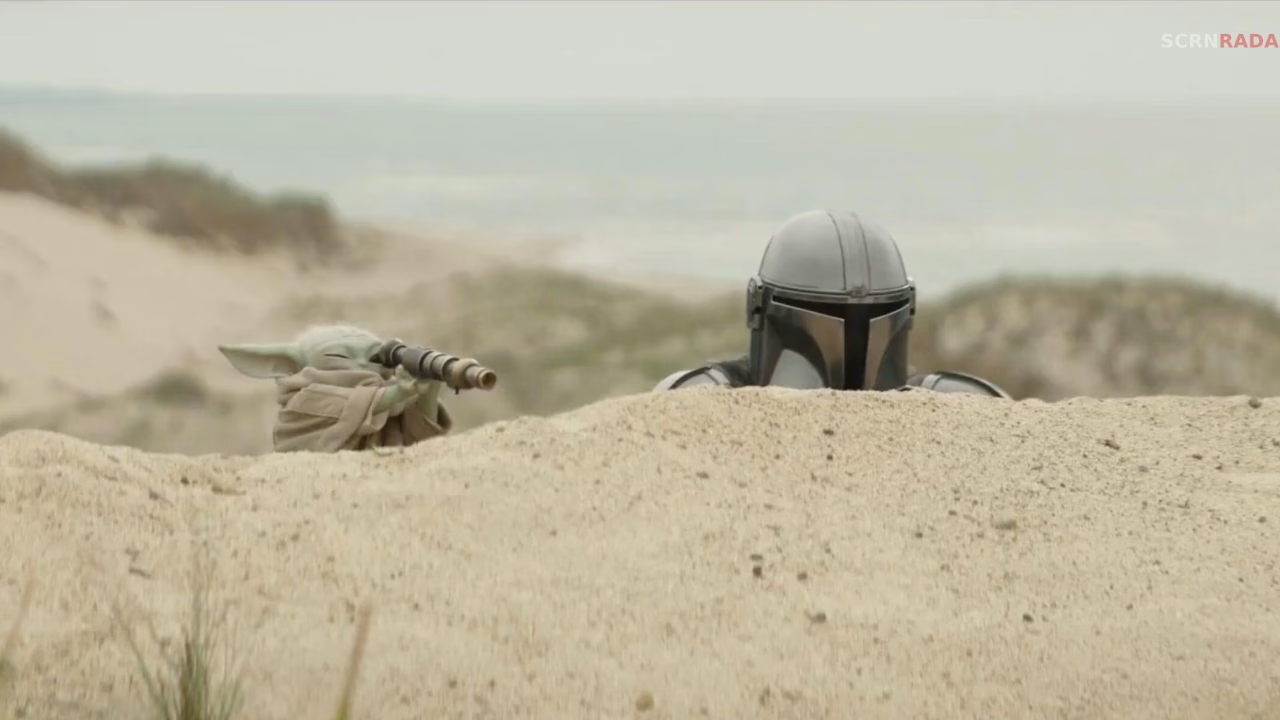
The latest entry in the Star Wars universe, The Mandalorian and Grogu, has opened to a softer-than-expected box office debut, reigniting discussion about the franchise’s current trajectory. While the film is far from an outright failure, its opening weekend performance suggests that the once-dominant brand may be facing challenges in maintaining its theatrical appeal.
The film earned approximately $81.9 million in its initial three-day domestic opening, a figure that appears solid on the surface but becomes less impressive when compared to past releases, especially after adjusting for inflation.
Opening Weekend Signals a Shift in Audience Response
Compared to earlier Star Wars films, the debut of The Mandalorian and Grogu reflects a noticeable decline in opening momentum. For context, Solo: A Star Wars Story, widely considered one of the franchise’s weakest theatrical performers, opened to $84.4 million in 2018. When adjusted for inflation, that figure would exceed $110 million today, placing the new film significantly behind.
Even the extended Memorial Day weekend totals highlight the gap. While The Mandalorian and Grogu is projected to reach around $102 million over four days, inflation-adjusted comparisons suggest that Solo’s equivalent performance would be closer to $139 million.
These comparisons indicate that audience turnout, while still substantial, is not reaching the levels once expected from a Star Wars release.

International Performance Adds to Concerns
The global box office numbers tell a similar story. The Mandalorian and Grogu earned roughly $63 million internationally during its opening weekend, bringing its worldwide total to around $145 million.
Again, comparisons to Solo reveal a gap. The 2018 film brought in approximately $149 million globally in its opening weekend, which would translate to nearly $200 million in today’s market. This suggests a weaker international response for the latest release.
While international markets remain crucial for profitability, the current numbers indicate that the film may face an uphill battle in reaching the levels needed for strong financial returns.
High Costs Raise the Stakes
The film’s financial performance becomes more significant when considering its production and marketing costs. Reports estimate a production budget of around $166 million, with marketing expenses potentially adding another $100 million.
With total costs nearing $266 million, industry standards suggest that the film would need to approach $500 million globally to break even, due to the revenue split between studios and theaters.
These figures mean that while the opening weekend is not disastrous, it may not be strong enough to guarantee profitability without sustained performance in the weeks ahead.
From Streaming Success to Theatrical Test
The Mandalorian began as a flagship series on Disney+, quickly becoming one of the platform’s most popular shows. Its success, driven in part by the popularity of Grogu, led to the decision to expand the story into a feature film.
However, the transition from streaming to theaters presents a different challenge. While the series initially drew strong viewership, later seasons saw a decline in momentum, which may have impacted audience enthusiasm for the film adaptation.
This shift highlights the difficulty of converting streaming popularity into box office success, even for a globally recognized franchise.
A Franchise at a Crossroads
The broader Star Wars franchise has experienced mixed results in recent years. While films like Star Wars: The Force Awakens achieved massive success, later entries saw diminishing returns both critically and commercially.
At the same time, projects like Rogue One and the series Andor have demonstrated that strong storytelling can still resonate with audiences. This contrast suggests that the franchise’s performance may depend heavily on creative direction rather than brand recognition alone.
With Dave Filoni now playing a larger role in shaping future projects, the direction of the franchise remains a key point of interest.