
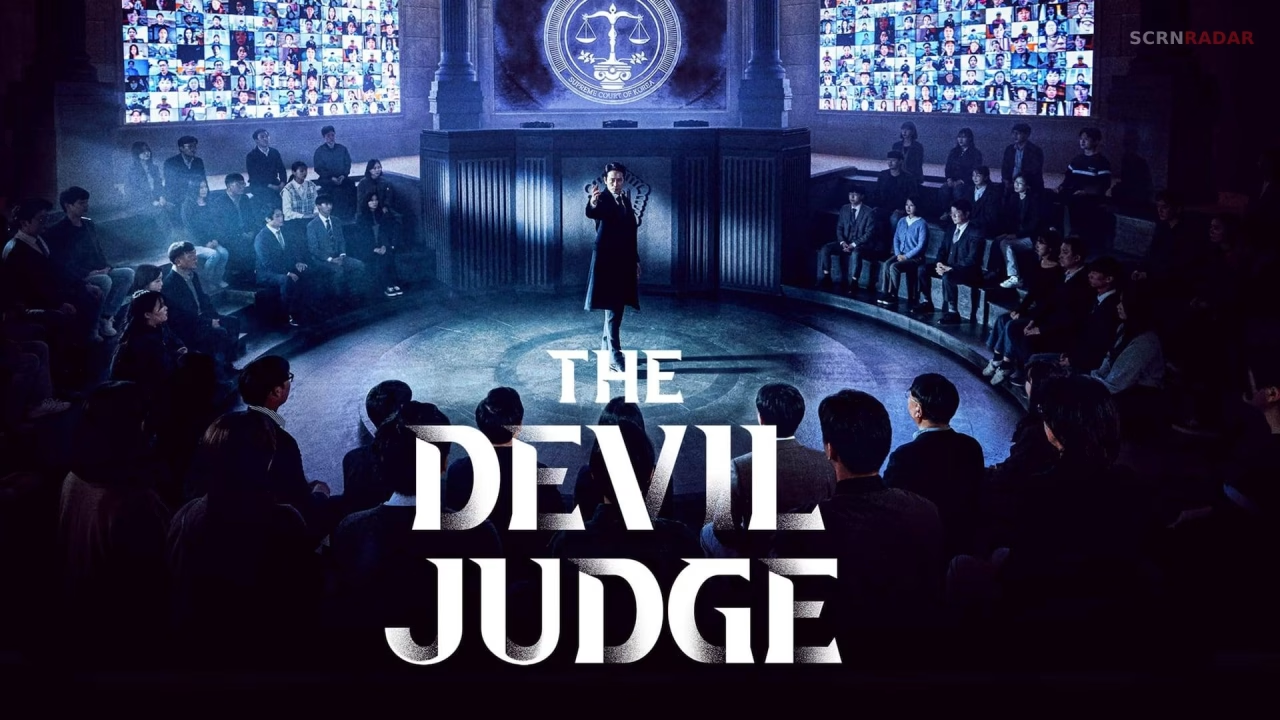
The Devil Judge is not your typical legal drama. Released in 2021 and aired on tvN, the series blends courtroom tension with dystopian storytelling to create a world where justice is broadcast as entertainment. Starring Ji Sung as the enigmatic judge Kang Yo-han, the show quickly gained attention for its bold premise and morally complex narrative. Set in a near-future Korea plagued by inequality and corruption, the drama imagines a society where trials are livestreamed and the public votes on verdicts.
The show sparked conversations among viewers and critics alike, with praise directed toward its performances and thematic ambition. At the same time, its heavy-handed messaging and uneven pacing divided opinion. This review breaks down what works, what does not, and whether The Devil Judge lives up to its compelling concept.
What Is The Devil Judge About?
At its core, The Devil Judge follows Kang Yo-han, a chief judge who presides over a controversial courtroom system known as the Live Court. In this system, citizens watch trials in real time and vote on the outcomes, turning justice into a form of reality television. The show raises immediate questions about morality, accountability, and the dangers of mob rule.
Opposite Yo-han is Kim Ga-on, played by Jinyoung, a young associate judge who initially believes in the integrity of the law. As Ga-on becomes entangled in Yo-han’s world, he begins to question whether justice can exist in a system driven by spectacle. Their dynamic forms the emotional and philosophical backbone of the series.
The story expands beyond the courtroom to explore political corruption, media manipulation, and social inequality. By blending legal drama with dystopian fiction, the show attempts to reflect real-world concerns through an exaggerated yet recognizable lens.
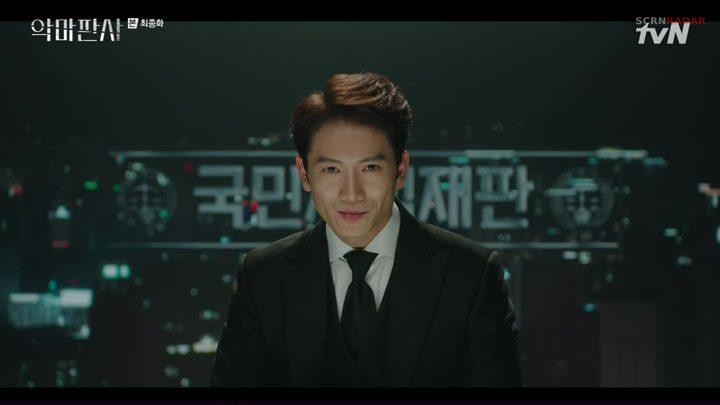
Ji Sung’s Performance Defines the Series
Ji Sung delivers one of the most compelling performances in recent K-drama history. His portrayal of Kang Yo-han is layered, charismatic, and deeply unsettling, making it difficult to determine whether he is a hero or a villain. This ambiguity is crucial to the show’s success, as it keeps viewers constantly questioning his motives.
Yo-han’s presence dominates every scene, whether he is delivering a verdict or manipulating events behind the scenes. Ji Sung brings intensity and precision to the role, ensuring that even the most dramatic moments feel grounded in character rather than spectacle. His performance elevates the material, especially when the writing occasionally falters.
Supporting performances also add depth to the narrative. Kim Min-jung stands out as Jung Sun-ah, a powerful antagonist whose ambitions rival Yo-han’s. Meanwhile, Park Gyu-young provides emotional grounding as Yoon Soo-hyun, balancing the show’s darker elements with moments of humanity.
A Unique Blend of Legal Drama and Dystopia
One of the most distinctive aspects of The Devil Judge is its genre-blending approach. While many legal dramas focus on realism and procedural detail, this series leans into stylization and exaggeration. The courtroom becomes a stage, and justice becomes a performance designed to charm audiences.
The dystopian setting allows the show to explore themes that might feel too direct in a realistic context. By exaggerating societal issues, the drama highlights concerns about inequality, corruption, and the influence of media. The Live Court concept, in particular, serves as a critique of how easily public opinion can be manipulated.
Visually, the show reinforces its themes through striking production design. The courtroom itself is grand and theatrical, reflecting the idea that justice has become a form of entertainment. This visual style helps distinguish the series from more conventional legal dramas.
Themes of Justice, Power, and Manipulation
The central theme of The Devil Judge revolves around the nature of justice. Is justice about following the law, or is it about delivering outcomes that feel right to the public? The show does not provide easy answers, instead presenting multiple perspectives through its characters.
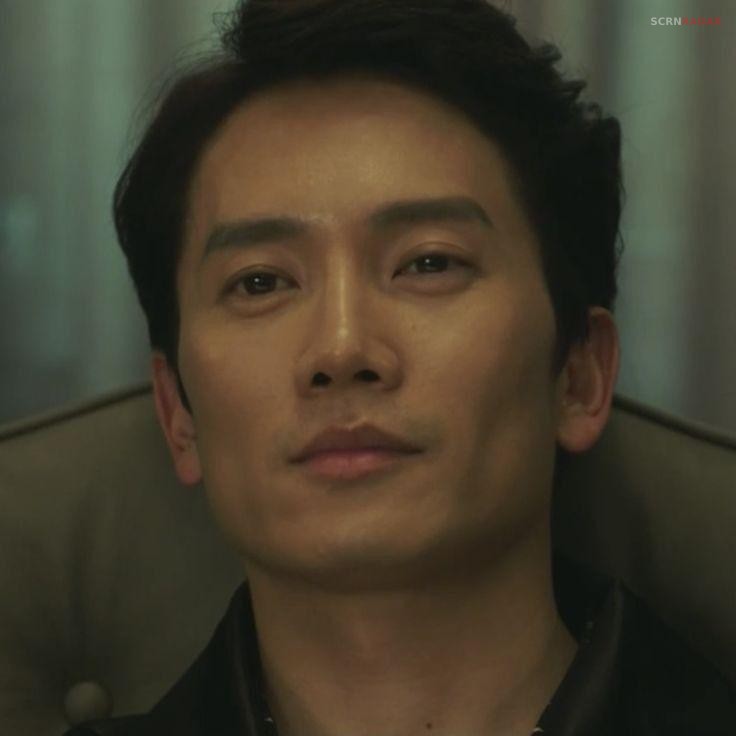
Kang Yo-han represents a form of justice that prioritizes results over process. His methods are often extreme, but they expose the flaws in a system that allows corruption to thrive. In contrast, Kim Ga-on initially believes in traditional legal principles, creating a moral conflict that drives the narrative forward.
The series also examines the role of power in shaping justice. Political leaders, corporate elites, and media figures all influence the outcomes of cases, suggesting that the legal system is far from impartial. This theme resonates strongly in a world where trust in institutions is increasingly questioned.
Another key theme is the manipulation of public opinion. The Live Court system turns citizens into participants, but their decisions are often influenced by incomplete information and emotional reactions. This reflects real-world concerns about misinformation and the impact of media on public perception.
Where The Devil Judge Excels
One of the show’s greatest strengths is its ability to maintain tension. Each case presented in the Live Court carries significant stakes, and the outcomes often have far-reaching consequences. This keeps viewers engaged, even when the overarching plot slows down.
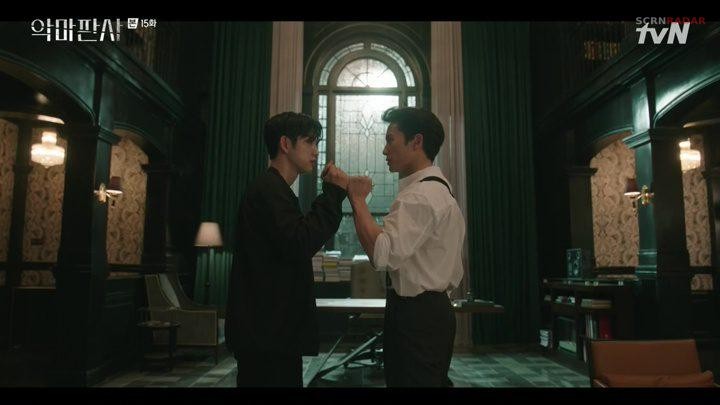
The character dynamics are another highlight. The relationship between Yo-han and Ga-on evolves in complex and unpredictable ways, adding emotional depth to the narrative. Their interactions provide some of the show’s most compelling moments, as they challenge each other’s beliefs and motivations.
The series also succeeds in creating memorable villains. Jung Sun-ah is not just an antagonist but a fully realized character with her own ambitions and vulnerabilities. Her presence adds another layer of intrigue, making the conflict more dynamic and engaging.
Additionally, the show’s willingness to take risks sets it apart. Its bold premise and unapologetic tone make it stand out in a crowded field of K-dramas. Even when it does not fully succeed, its ambition is undeniable.
Where the Series Falls Short
Despite its strengths, The Devil Judge is not without flaws. One of the most common criticisms is its pacing. The series occasionally struggles to balance its episodic courtroom cases with its larger narrative, leading to moments that feel either rushed or overly drawn out.
The writing can also be inconsistent. While some episodes are tightly constructed and emotionally impactful, others rely on heavy-handed dialogue and predictable plot developments. This inconsistency prevents the show from reaching its full potential.
Another issue is the occasional lack of subtlety in its messaging. The show’s themes are important, but they are sometimes presented in a way that feels overly direct. This can reduce the impact of its social commentary, making certain moments feel more like statements than storytelling.
Some viewers may also find the dystopian elements exaggerated. While this stylization is part of the show’s identity, it may not resonate with those looking for a more grounded legal drama. The heightened reality can sometimes make it difficult to fully invest in the story.
How Realistic Is The Devil Judge?
While The Devil Judge is rooted in real-world concerns, it is important to recognize that it is not a realistic portrayal of the legal system. The concept of a public voting system determining verdicts is purely fictional and serves as a narrative device rather than a prediction of future developments.
However, the show’s themes are grounded in reality. Issues such as corruption, inequality, and media influence are very real, and the series uses its exaggerated setting to highlight these problems. This blend of fiction and reality is what makes the show both engaging and thought-provoking.
The drama also reflects broader trends in entertainment and media. The idea of turning serious matters into spectacle is not entirely new, and the show exaggerates this concept to explore its potential consequences. In this sense, The Devil Judge functions as both entertainment and social commentary.
The Devil Judge is a bold and ambitious series that stands out for its unique premise and strong performances. Ji Sung’s portrayal of Kang Yo-han is the driving force behind the show, delivering a character that is as fascinating as he is unsettling. The series succeeds in creating tension, exploring complex themes, and offering a fresh take on the legal drama genre.

At the same time, uneven pacing and occasional narrative inconsistency prevent it from achieving true greatness. The show’s heavy-handed messaging and exaggerated setting may not appeal to everyone, particularly those seeking a more realistic courtroom drama.
Despite these flaws, The Devil Judge remains a compelling watch. Its willingness to challenge viewers and explore difficult questions about justice and power makes it a standout entry in the K-drama terrain. For those willing to engage with its darker themes and stylized storytelling, it offers a rewarding and thought-provoking experience.
Another element that strengthens The Devil Judge is its ability to stay relevant even after its release, largely due to how closely its themes mirror evolving global conversations about justice and media influence. The idea of public participation in decision-making, while fictional in the series, echoes real-world debates around social media trials and cancel culture.
This makes the show feel less like distant dystopia and more like an exaggerated reflection of current society. At the same time, its emotional core, driven by personal loss, revenge, and moral conflict, ensures that it never becomes purely conceptual. This balance between timely themes and character-driven storytelling helps the series leave a lasting impression.
The Good
- Ji Sung’s standout performance
- Unique and ambitious premise
- Strong character dynamics
- Engaging themes and social commentary
The Bad
- Inconsistent pacing
- Occasional heavy-handed writing
- Exaggerated dystopian elements may not appeal to all
- Some predictable plot developments