
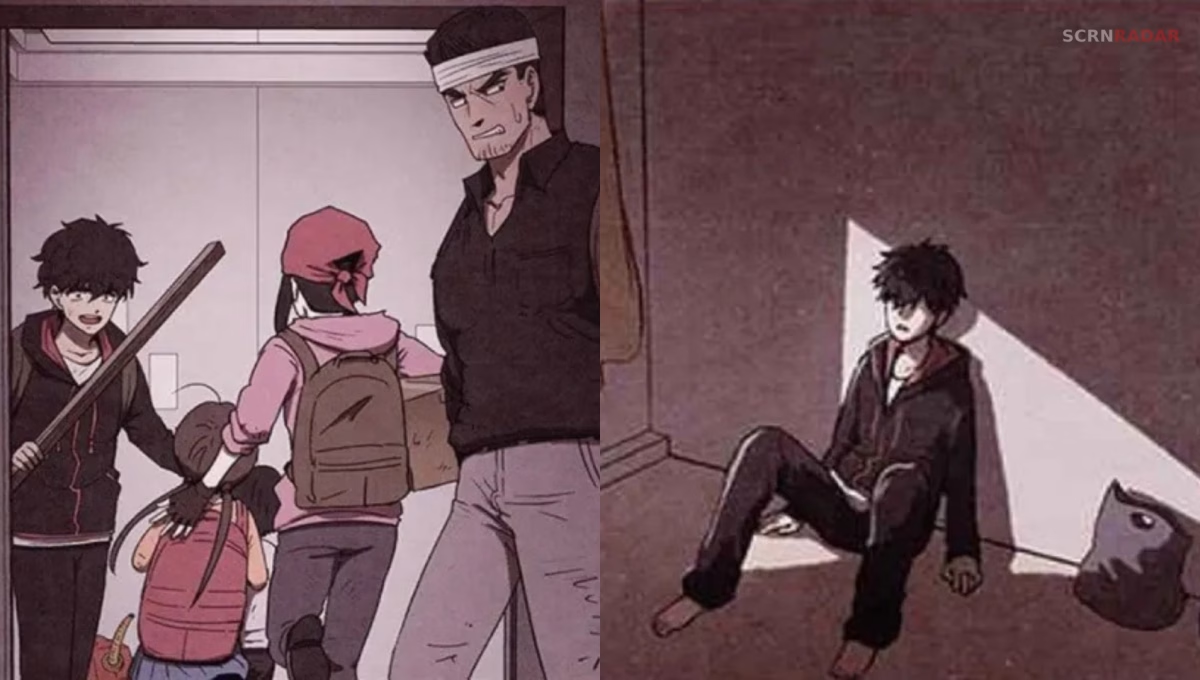
Sweet Home stands out as one of the most impactful entries in the horror-thriller webtoon space. First released in 2017, the series quickly gained a massive following for its unsettling premise, intense character drama, and disturbing visual style. Its global success eventually led to a live-action adaptation on Netflix, further expanding its audience.
At its core, Sweet Home is not just about monsters; it’s about desire, trauma, and survival. The story explores what happens when human beings are pushed to their limits and forced to confront the darkest parts of themselves. With over 140 chapters, the webtoon builds a dense, character-driven narrative that blends psychological horror with action and emotional storytelling.
This breakdown focuses on the full story and ending of Sweet Home, highlighting key events, character arcs, and the deeper meaning behind its conclusion.
The Core Premise: Survival Inside Green Home
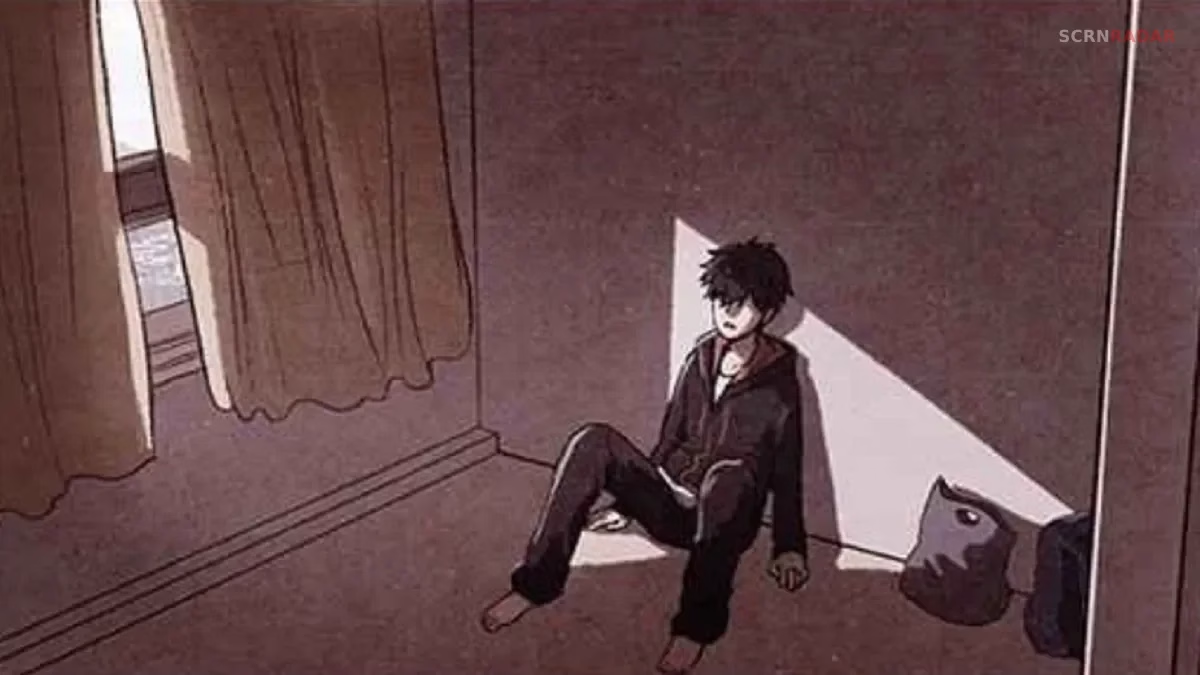
The story begins with Cha Hyun Soo, a withdrawn teenager who loses his entire family in a car accident. Left alone, he moves into a rundown apartment complex called Green Home. Emotionally detached and planning to end his life, Hyun Soo isolates himself from the world.
Before he can act on those thoughts, society collapses. People begin transforming into monsters in a phenomenon later referred to as “monsterization.” These transformations are not random, they are tied to a person’s deepest desires, turning them into grotesque reflections of their inner urges.
The outbreak quickly reaches Green Home, trapping residents inside. What starts as individual survival soon becomes a collective struggle as the building turns into a battleground between humans and monsters.
Monsterization: The Rules Behind the Horror
The concept of monsterization is central to the narrative. Unlike traditional zombie or infection-based apocalypses, this transformation is psychological in origin.
Individuals who harbor intense desires, whether it’s revenge, vanity, hunger, or obsession, begin to lose control. Their bodies mutate to reflect those desires, creating unique and often disturbing monsters.
Hyun Soo himself becomes a key anomaly. While he begins to experience symptoms of monsterization, he manages to resist full transformation. This places him in a dangerous middle ground, feared by other survivors, yet essential in fighting off threats.
This internal conflict becomes one of the driving forces of the story, as Hyun Soo constantly battles both external enemies and his own impulses.
Building Alliances: The Residents of Green Home
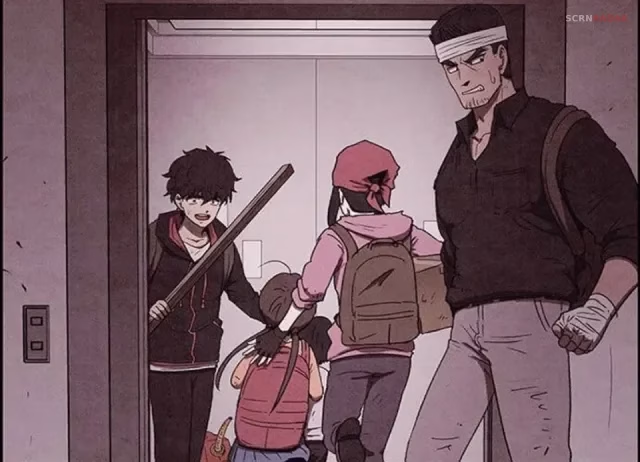
As the situation worsens, Hyun Soo is forced to interact with other residents. These include Yoo Ji Soo, a strong-willed musician; Pyeon Sang Wook, a physically intimidating but reliable fighter; and Lee Eun Hyuk, a strategic thinker who naturally assumes leadership.
The group forms a fragile alliance, each member contributing based on their strengths. Han Du Sik, a technically skilled resident, plays a crucial role by creating tools and modifying equipment to help them survive.
The early chapters focus on securing resources, defending against monsters, and establishing a sense of order within chaos. However, trust remains limited. The presence of monsterization creates constant tension, as anyone could turn at any moment.
Conflict Escalates: Internal Threats and New Arrivals
As supplies begin to run low, the group is forced to consider leaving the building. A scouting mission leads to disaster, attracting monsters and resulting in casualties.
Soon after, a new group enters the building, outsiders with their own agenda. Unlike the original residents, these individuals are more aggressive and willing to seize control. They bring with them a dangerous element: another half-monster like Hyun Soo.
This shifts the power dynamics significantly. The building is no longer just a refuge; it becomes contested territory. Tensions between the two groups escalate, leading to confrontations that are just as dangerous as the monsters outside.
At the same time, the threat within continues to grow. Residents begin to show signs of monsterization, reinforcing the idea that the real danger isn’t just external.
The Turning Point: Escape and Sacrifice
With conditions deteriorating, the survivors plan an escape. Using a rope system from the rooftop, they attempt to reach a nearby mountain. The escape sequence is chaotic. Monsters swarm the building, forcing characters to make quick decisions under pressure. Several members sacrifice themselves to ensure others can flee.
Han Du Sik stays behind to buy time, using his skills one last time to aid the group. His death marks a major emotional turning point, highlighting the cost of survival. Meanwhile, Hyun Soo’s internal struggle intensifies. His hallucinations grow stronger, tempting him to give in to his desires and fully transform.
Hyun Soo’s Transformation: Power vs Humanity
As the situation reaches its peak, a powerful monster, Jeong Seop, returns, overwhelming the remaining survivors. Faced with certain defeat, Hyun Soo makes a critical decision.
Instead of resisting, he embraces his transformation. By giving in to his desire, he becomes a fully realized monster, one far more powerful than the others. He defeats Jeong Seop effortlessly, shifting the balance of power in an instant.
However, this transformation comes at a cost. Hyun Soo loses control of his humanity, becoming something the others no longer recognize. Ji Soo attempts to reach him emotionally, but her efforts fail. The gap between human and monster becomes too wide.
Eun Hyuk’s Choice and the Final Collapse
Recognizing the danger Hyun Soo now poses, Eun Hyuk makes a final decision. He allows himself to undergo monsterization, hoping to counter Hyun Soo’s power.
Instead of becoming a traditional monster, Eun Hyuk transforms into a massive, unstable entity that consumes Hyun Soo. This moment marks the collapse of the remaining resistance. With both characters seemingly gone, the battle ends, not with victory, but with silence.
The Cocoon and Rebirth
After the destruction, the environment shifts. Rain falls, and two cocoons form where Hyun Soo and Eun Hyuk last stood. Time passes, and one of the cocoons opens. Hyun Soo emerges, alive, but changed.
He retains his human form, suggesting that his transformation has evolved beyond the original rules of monsterization. Unlike others, he has crossed the boundary and returned. This rebirth symbolizes a new phase in the story, where the line between human and monster is no longer clearly defined.
Epilogue: A Changed World and a New Beginning
The final scenes take place in a frozen, post-apocalyptic version of South Korea. Survivors have gathered in military camps, attempting to rebuild some form of order. Ji Soo, now among the refugees, steps outside and sees Hyun Soo approaching from a distance. He is alone, barefoot, and visibly altered, but human.
This moment resolves his character arc. He began as someone who wanted to die, disconnected from the world. Now, he returns with a purpose, having survived both external threats and his own internal struggle. The reunion with Ji Soo and the other survivors suggests that, despite everything, connection and belonging are still possible.
What the Ending Means for Hyun Soo’s Character
Hyun Soo’s journey is central to Sweet Home. His transformation is not just physical; it represents a shift in identity.
At the start, he is passive and disconnected. Monsterization forces him to confront his desires, pushing him toward action. By the end, he achieves a balance, neither fully human nor fully monster.
This positions him as something new: a bridge between two states. His survival suggests that monsterization is not purely destructive. It can also lead to change, depending on how it is confronted.
Why Sweet Home’s Story Stands Out
What makes Sweet Home unique among horror webtoons is its focus on internal conflict. The monsters are not just threats; they are extensions of human emotion.
Each transformation reflects something personal, making every encounter more than just a fight for survival. This adds depth to the narrative, turning a standard apocalypse into a psychological exploration.
The story’s structure, combining action, character development, and thematic consistency, ensures that its ending feels earned. Rather than offering a clean resolution, it presents a continuation. The world remains broken, but the characters have changed.