
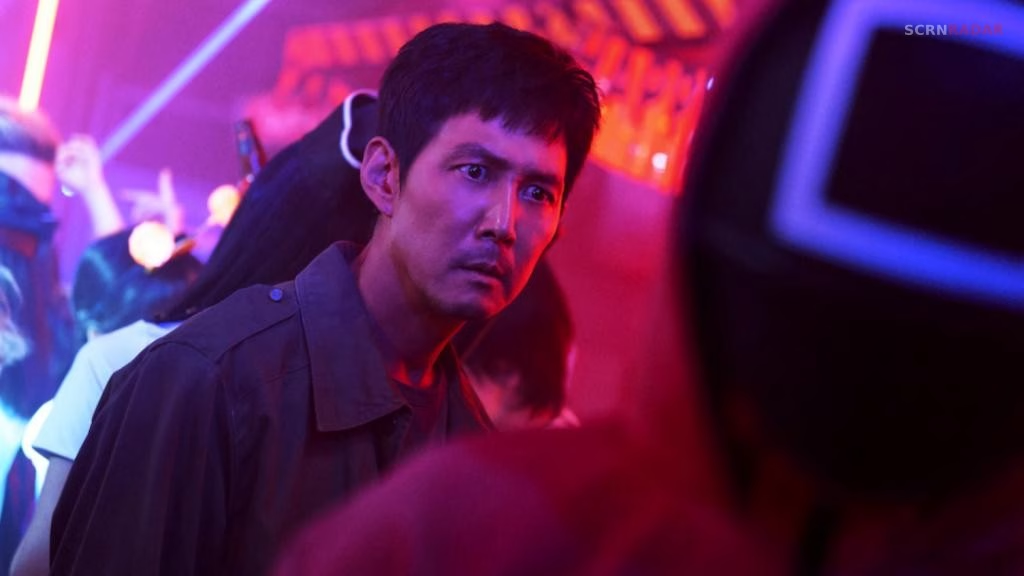
The return of Squid Game has once again left audiences stunned, and the Season 2 ending is no exception. After redefining global television with its brutal survival concept, the series raises the stakes with a darker, more complex narrative that expands beyond the games themselves. This time, the story is not just about survival. It’s about control, rebellion, and the possibility of dismantling the system from within.
At the center of it all is Seong Gi-hun, whose transformation from desperate participant to determined disruptor drives the season’s final moments. The ending doesn’t just resolve key arcs. It opens the door to deeper questions about power, morality, and whether the game can ever truly end.
Let’s break down the Squid Game Season 2 ending, explain the biggest twists, and explore what it all means for the future of the series.
Gi-hun’s Transformation: From Survivor to Challenger
Season 1 ended with Gi-hun refusing to board a plane, hinting that his story was far from over. Season 2 builds on that decision, showing a man no longer driven by survival alone but by purpose.

By the finale, Gi-hun has shifted into a more active role. Instead of being a pawn in the system, he becomes someone trying to understand and ultimately challenge it. This evolution is crucial to understanding the ending.
The final scenes suggest that Gi-hun is no longer content with exposing the games. He wants to dismantle them entirely. His actions indicate a long-term plan rather than a single act of rebellion.
This shift sets up a fundamental change in the series. The focus moves from individual survival to systemic conflict.
One of the biggest revelations in Season 2 is the deeper look into the organization behind the games. While Season 1 introduced the concept of wealthy elites funding the competition, the new season expands on how the system operates globally.
The finale reveals that the games are not isolated events. They are part of a larger network with multiple locations and layers of control. This confirms long-standing fan theories that the operation is far bigger than previously shown.
The role of the Front Man becomes even more complex. He is no longer just an overseer but a key figure in maintaining the structure of the games. His actions in the final episode suggest internal conflict, hinting that he may not fully support the system he enforces.
This ambiguity adds depth to the ending. It raises the possibility that cracks are forming within the organization itself.
The Final Game Twist: More Than Survival
Unlike the straightforward brutality of Season 1, the final game in Season 2 carries symbolic weight. It is not just about physical survival but psychological endurance and moral choice.
Contestants are forced into situations where winning comes at a deeper cost. The game tests loyalty, trust, and identity, pushing players to question what survival actually means.
The ending of the final game reinforces a key theme of the series. The real enemy is not the other players but the system that forces them into these choices.
This realization is central to Gi-hun’s actions in the closing moments. He understands that defeating the system requires more than just winning the game.
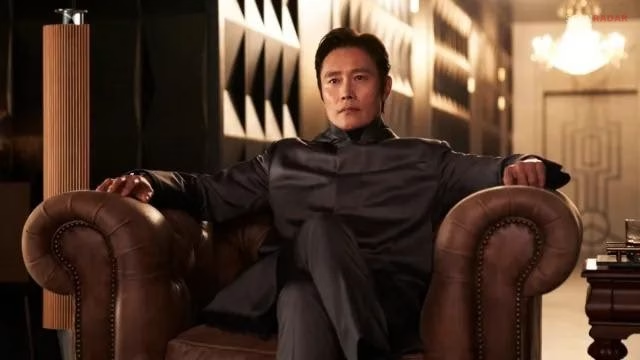
No Squid Game ending would be complete without a surprising loss. Season 2 delivers a major character death that reshapes the narrative.
While the series has always been known for its high stakes, this particular death feels different. It is not just about surprise value. It serves as a turning point for Gi-hun and reinforces the cost of his mission.
The emotional impact of this moment highlights the show’s strength. It reminds viewers that behind the spectacle, the story is ultimately about people and their choices.
This loss becomes a driving force for what comes next, pushing Gi-hun further into his role as a challenger to the system.
The Cliffhanger Ending Explained
The final scenes of Season 2 leave viewers with a clear message. The game is far from over.
Gi-hun’s decision at the end signals a direct confrontation with the organization. Instead of walking away, he steps deeper into the conflict, setting up a larger battle.
The ending also hints at new players entering the story. Whether they are participants, enforcers, or allies remains unclear, but their presence suggests that the scope of the series will continue to expand.
This cliffhanger is designed to shift the narrative direction. Future seasons are likely to focus more on dismantling the system rather than surviving it.
The Squid Game Season 2 ending is not just about plot twists. It is deeply rooted in themes that define the series.

Power remains central. The organization represents unchecked authority, while the players symbolize those trapped within it.
Control is another key theme. The games are designed to manipulate behavior, forcing participants into impossible choices.
Resistance emerges as the defining element of the ending. Gi-hun’s journey represents the possibility of pushing back against a system that seems invincible.
These themes elevate the series beyond a typical survival drama. They turn it into a commentary on societal structures and human behavior.
What the Ending Means for Season 3
The Season 2 finale clearly sets up the next chapter. If a third season follows, it will likely explore the conflict between Gi-hun and the organization in greater detail.
We can expect a shift in perspective, possibly showing more from inside the system. Characters like the Front Man could play a larger role, especially if internal divisions grow.
There is also the possibility of exploring the global network hinted at in the finale. This would expand the scale of the story significantly.
Most importantly, the focus will likely move toward resolution. The question is no longer whether someone can win the game. It is whether the game itself can be stopped.
The Squid Game Season 2 ending successfully builds on the foundation of the first season while pushing the story in a bold new direction. It balances emotional impact with narrative expansion, delivering both closure and anticipation.
By transforming Gi-hun into a central force of resistance, the series sets up a larger conflict that goes beyond survival. The added depth to the organization and its inner workings ensures that the story remains unpredictable.
For viewers, the ending is both satisfying and unsettling. It answers key questions while raising even bigger ones, making it clear that the world of Squid Game still has much more to reveal.