
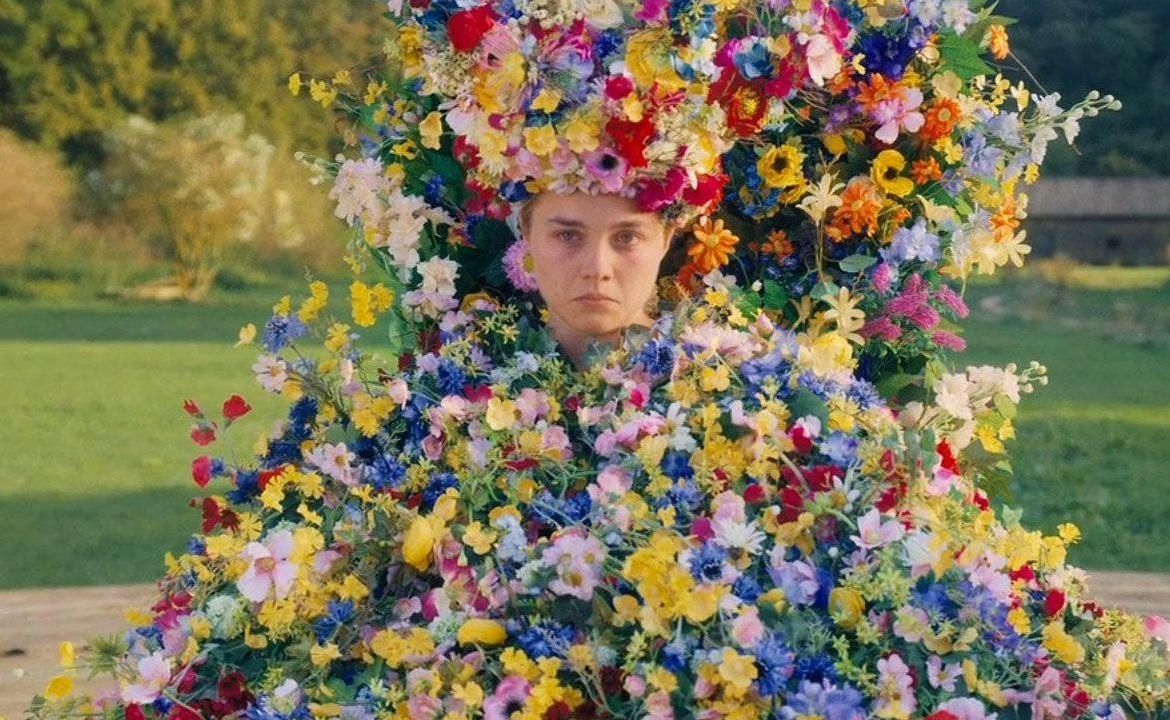
Ari Aster’s Midsommar is one of the most unsettling folk horror films of the modern era, combining beautiful daylight visuals with deeply disturbing rituals. Starring Florence Pugh as Dani, the movie follows a grieving young woman who travels to a remote Swedish commune to attend a once-in-90-years midsummer festival. What begins as a cultural celebration gradually transforms into a nightmare filled with strange ceremonies, psychological manipulation, and ritual sacrifice.
The film’s ending has sparked countless discussions because it blends horror with emotional symbolism. Dani’s final smile, Christian’s fate, and the Harga community’s traditions all carry deeper meanings beyond simple shock value. Rather than relying on supernatural twists, Midsommar uses ritual, grief, and human psychology to tell its story. Here’s a breakdown of the ending and the significance of the rituals that shape the film’s unforgettable conclusion.
Understanding the Harga’s Rituals and Dani’s Final Choice
Throughout Midsommar, the Harga commune follows a carefully structured cycle of life that governs every major ceremony. One of the earliest rituals is the Ättestupa, where elderly members voluntarily leap from a cliff after reaching the age of 72. Although horrifying to the outsiders, the Harga view it as a natural completion of life’s cycle rather than a tragedy. Many of the customs shown in the film draw inspiration from Scandinavian folklore, though Ari Aster combined real traditions with fictional horror elements to create the commune’s unique belief system.
As the festival progresses, Dani unexpectedly wins the May Queen competition after outlasting everyone else in the traditional dance. Becoming May Queen elevates her status within the community and grants her the authority to make the festival’s final and most important decision. By this point, she has begun receiving the emotional acceptance and support she never found in her relationship with Christian, making the Harga feel like a replacement family.
The climax centers on the community’s requirement that nine lives must be sacrificed to complete the ninety-year ritual. Four sacrifices come from outsiders who had already been killed, four are willing Harga volunteers, and the ninth victim must be selected by the May Queen. Dani is forced to choose between a randomly selected commune member and Christian, who has already been drugged, paralyzed, and placed inside the carcass of a bear. She ultimately chooses Christian, sealing his fate as the final sacrifice before the ceremonial temple is burned to the ground.
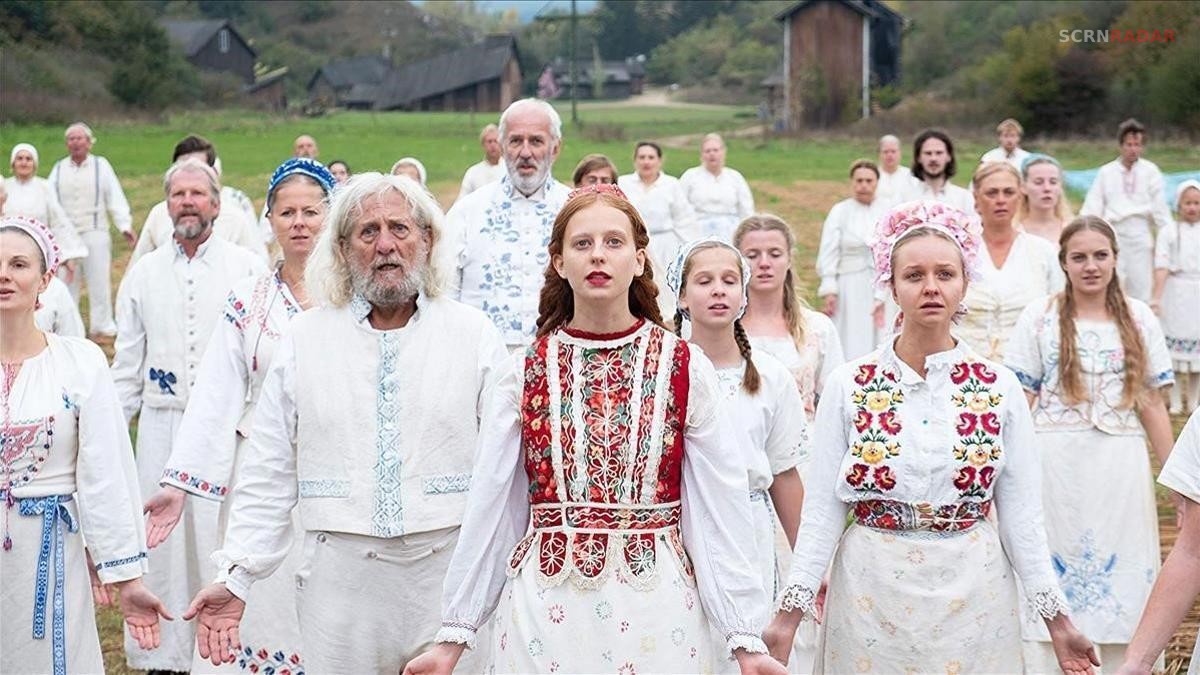
The final scene shows Dani crying as the temple burns before slowly transforming her expression into a smile. That smile remains one of modern horror’s most debated endings. On one level, it represents emotional release after months of grief and a toxic relationship. On another, it suggests she has fully accepted the Harga as her new family, even though they have manipulated her into embracing their violent ideology. Ari Aster has described the ending as intentionally cathartic at first glance while encouraging viewers to question whether Dani has truly healed or simply exchanged one unhealthy dependence for another.
Rather than offering a conventional happy ending, Midsommar leaves viewers with an unsettling emotional contradiction. Dani finally finds belonging and empathy, but only after becoming part of a community sustained through ritual sacrifice and psychological control. The film’s rituals are therefore not just horror set pieces—they symbolize transformation, grief, loss, and the dangerous human desire to find acceptance at any cost.