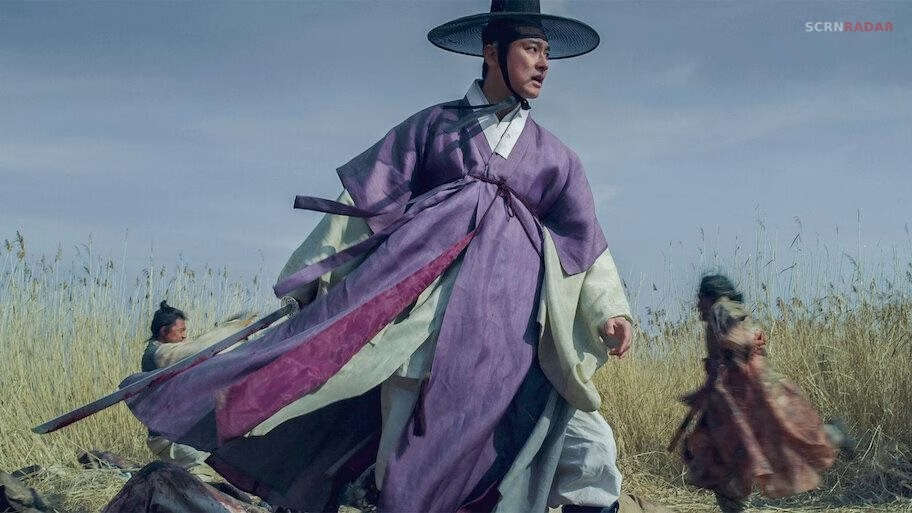
The ending of Kingdom Season 2 stands out as one of the most layered and emotionally resonant conclusions in modern K-drama storytelling. While the series is widely known for its fast-paced zombie horror and political intrigue, the final episode shifts focus toward a deeply personal and philosophical question. What does it truly mean to rule, and who deserves to sit on the throne?
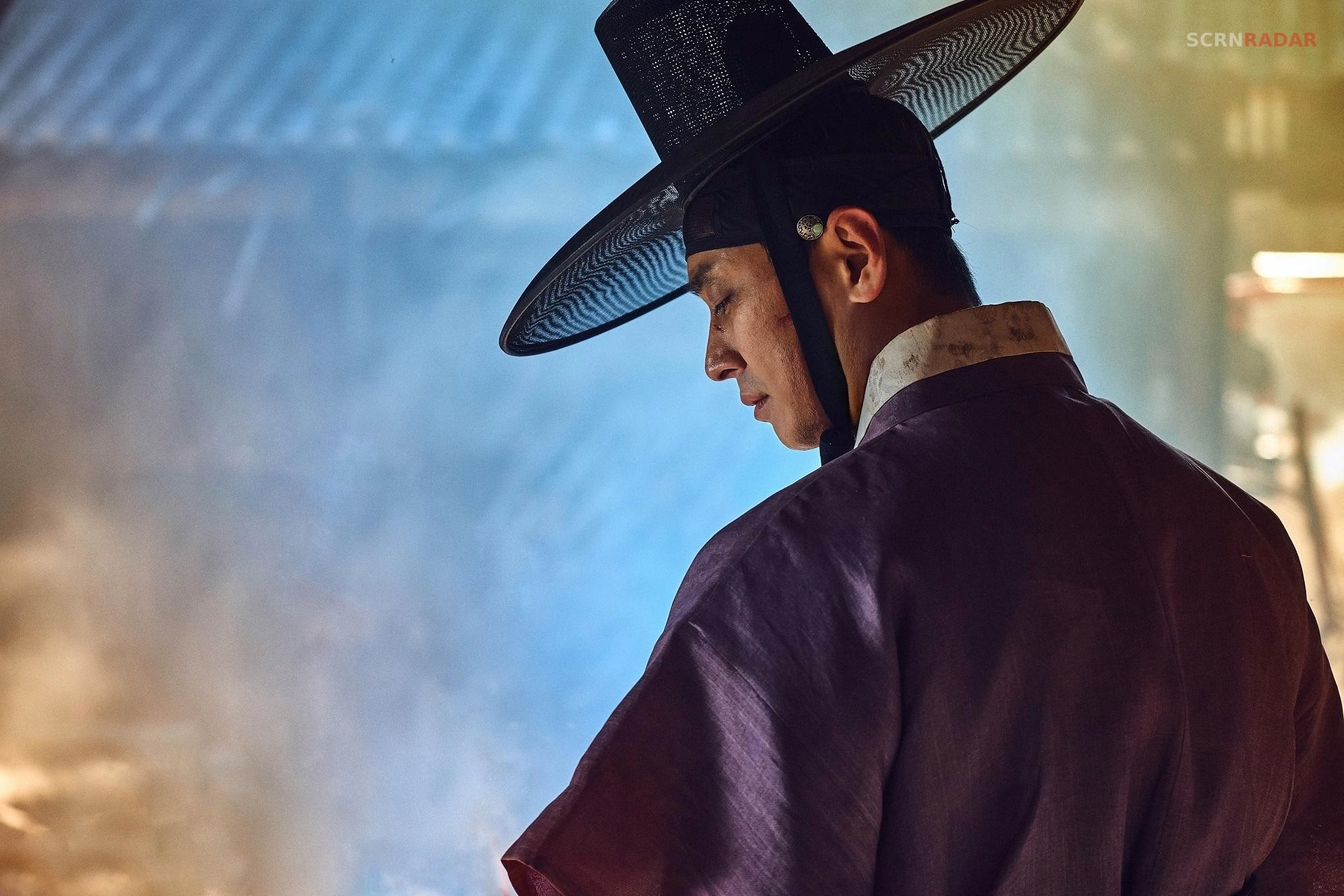
At the center of this decision is Crown Prince Lee Chang, played by Ju Ji-hoon, who has spent two seasons fighting not only the undead plague but also corruption within the Joseon court. By the time the outbreak is contained and the truth about the resurrection plant is revealed, Chang is left with a choice that defines the entire series. His final decision to step away from power surprises many viewers, but it becomes clear that it is rooted in responsibility, guilt, and a deeper understanding of leadership.
Let’s break down how Kingdom Season 2 ends, why the prince gives up the throne, and what the finale really means.
How Kingdom Season 2 resolves the zombie outbreak
The climax of Season 2 focuses on stopping the spread of the resurrection plant infection, which has devastated large parts of the kingdom. The infection’s origin is fully explained, revealing how the resurrection plant was used by the powerful Haewon Cho clan to manipulate the royal succession. This revelation ties the zombie outbreak directly to political greed rather than supernatural coincidence.
In the final battle, Chang and his allies manage to contain the outbreak by luring the infected into a frozen lake. As temperatures drop, the zombies fall into the icy water, effectively neutralizing them. This sequence works as both a literal and symbolic resolution, as nature itself becomes the force that stops human corruption.
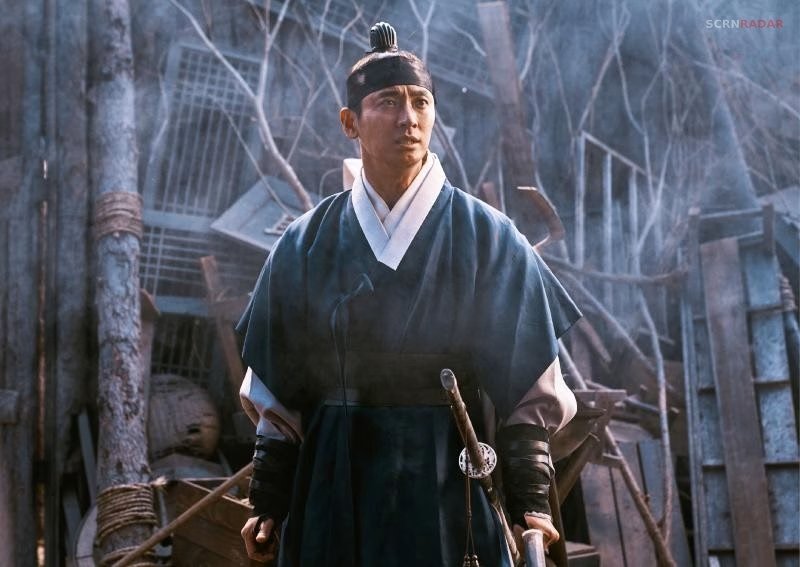
However, the victory comes with heavy consequences. Many lives have been lost, and the kingdom remains unstable even after the immediate threat is removed. The aftermath forces Chang to confront the larger implications of what has happened rather than celebrating a simple triumph.
The series makes it clear that defeating the zombies does not automatically restore order. The political damage caused by the outbreak is just as significant as the physical destruction, setting the stage for Chang’s final decision.
The truth about the royal bloodline
One of the most surprising revelations in the finale involves the royal bloodline itself. The infant heir, believed to be the legitimate successor, is revealed to be born from the same conspiracy that fueled the outbreak. The queen had used the resurrection plant to fake the king’s condition and secure power for her faction.
This discovery creates a major moral dilemma for Chang. While the child is innocent, the circumstances of his birth are tied to corruption, manipulation, and countless deaths. Removing the child from power could destabilize the kingdom further, but accepting him as king would mean continuing a legacy built on lies.
Chang ultimately chooses a path that prioritizes stability over personal ambition. He acknowledges that the people need a symbol of continuity, even if the truth behind that symbol remains hidden. This decision reflects his growing understanding of leadership as a responsibility rather than a privilege.
The show uses this twist to challenge traditional ideas of royal legitimacy. Bloodline alone is not enough to justify power, especially when it is built on deception and violence.
Why Crown Prince Lee Chang gives up the throne
Chang’s decision to step away from the throne is the emotional core of the Kingdom Season 2 ending. On the surface, it may seem like a surprising choice, especially after everything he has fought for. However, the series carefully builds toward this moment through his experiences across both seasons.
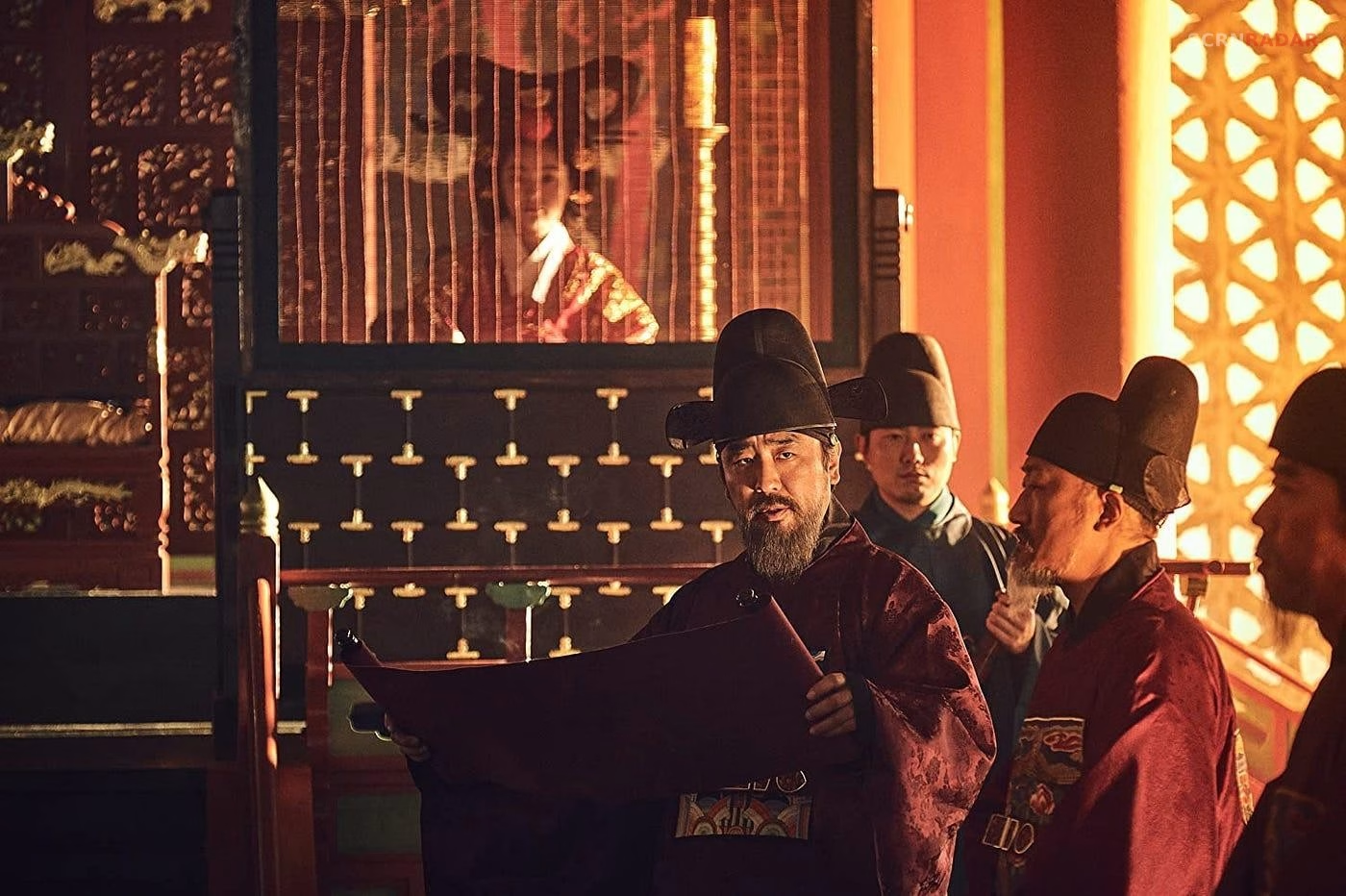
Throughout the story, Chang repeatedly witnesses the consequences of power being abused. From the Haewon Cho clan’s manipulation to the suffering of ordinary citizens, he learns that leadership is not about control but about accountability. By the end of Season 2, he believes that remaining in power could perpetuate the same cycle of corruption he has been trying to destroy.
Another key factor in his decision is guilt. Chang recognizes that his actions, while necessary, have contributed to the chaos in the kingdom. Even though he acted with good intentions, the scale of destruction forces him to question whether he should continue as ruler.
Instead of claiming the throne, Chang chooses to protect the kingdom from the shadows. He allows the child to become king while removing himself from the political center. This decision reflects a selfless approach to leadership, prioritizing the nation’s stability over his own authority.
The meaning behind Chang’s sacrifice
Chang’s final decision is not just a political move but a philosophical statement about leadership. The series suggests that true leaders are those who are willing to give up power when it becomes a source of harm rather than good. This idea contrasts sharply with the behavior of other characters who cling to authority at any cost.
By stepping away, Chang breaks the cycle of ambition that has driven much of the series’ conflict. He refuses to become another ruler defined by fear, control, or manipulation. Instead, he embraces a role that allows him to serve the kingdom without being consumed by it.
The decision also reflects a broader theme of responsibility. Chang understands that leadership involves making difficult choices that may not be personally rewarding. His sacrifice ensures that the kingdom has a chance to rebuild without further political conflict.
In many ways, this moment redefines what victory means in Kingdom. It is not about defeating enemies or claiming power but about making choices that prioritize the greater good.
The resurrection plant and future threats
While Season 2 resolves the immediate outbreak, it leaves the door open for future conflicts through the resurrection plant. The final scenes introduce a new character, played by Jun Ji-hyun, who appears to be studying or experimenting with the plant.
This reveal suggests that the threat of the infection is far from over. The resurrection plant represents a dangerous form of knowledge that can easily be misused. As long as it exists, the possibility of another outbreak remains.
The inclusion of this subplot expands the scope of the series beyond the events of Season 2. It shifts the focus from a single crisis to an ongoing struggle against human greed and scientific misuse. This direction was later explored further in the special episode Kingdom: Ashin of the North.
The ending uses this setup to remind viewers that the real danger is not the zombies themselves but the human desire to control life and death.
Political aftermath and rebuilding the kingdom
After the chaos of the outbreak, the kingdom enters a period of recovery. With the corrupt officials removed and the immediate threat contained, there is an opportunity to rebuild both the government and society. However, the damage caused by the events of the series cannot be undone easily.
The new king represents hope for continuity, but the stability of the court depends heavily on the remaining advisors and officials. Chang’s absence creates both an opportunity and a risk, as his leadership had been a unifying force during the crisis.
The series leaves this part of the story intentionally open-ended. Rather than providing a detailed look at the rebuilding process, it focuses on the idea that recovery is an ongoing effort. The kingdom’s future depends on whether its leaders can learn from the mistakes of the past.
This approach reinforces the show’s realistic tone. Even after a major victory, there are no easy solutions or immediate resolutions.

What the ending really means
The ending of Kingdom Season 2 works because it shifts the focus from spectacle to meaning. While the series delivers intense action and horror throughout, its conclusion emphasizes character growth and moral complexity.
Chang’s decision encapsulates the central message of the show. Power is not inherently good or bad, but it becomes dangerous when driven by ambition rather than responsibility. By walking away from the throne, Chang proves that he understands this distinction.
The series also highlights the idea that true change requires sacrifice. Whether it is giving up power, confronting painful truths, or accepting uncertainty, the characters must make difficult choices to move forward.
Ultimately, the ending suggests that leadership is defined not by authority but by the willingness to act in the best interest of others. This perspective elevates Kingdom beyond a typical zombie drama, turning it into a story about ethics, governance, and human nature.
Kingdom Season 2 delivers a satisfying yet thought-provoking ending that balances action, emotion, and thematic depth. By resolving the immediate crisis while leaving room for future stories, the series creates a conclusion that feels both complete and open-ended.
Crown Prince Lee Chang’s decision to step away from the throne stands as one of the most memorable moments in the show. It reflects a nuanced understanding of leadership and sets the tone for what comes next in the Kingdom universe.
The finale succeeds because it avoids easy answers. Instead of offering a traditional victory, it presents a complex resolution that challenges viewers to think about power, responsibility, and sacrifice.
In the end, Kingdom Season 2 is not just about surviving a zombie outbreak. It is about redefining what it means to lead, and why sometimes the strongest choice is to walk away.