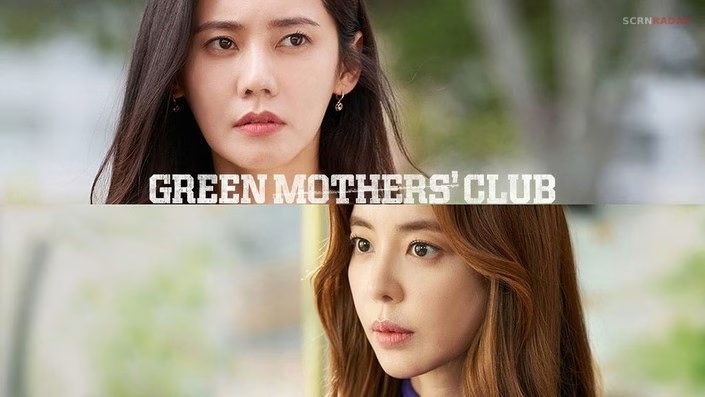
Green Mothers’ Club stands out among modern K-dramas for its grounded yet emotionally intense portrayal of motherhood, competition, and social pressure. Rather than relying on high-concept twists or fantasy elements, the series builds its narrative around realistic conflicts faced by parents sterring elite education culture. With a strong ensemble cast and a character-driven story, the drama offers a compelling but sometimes uneven viewing experience.
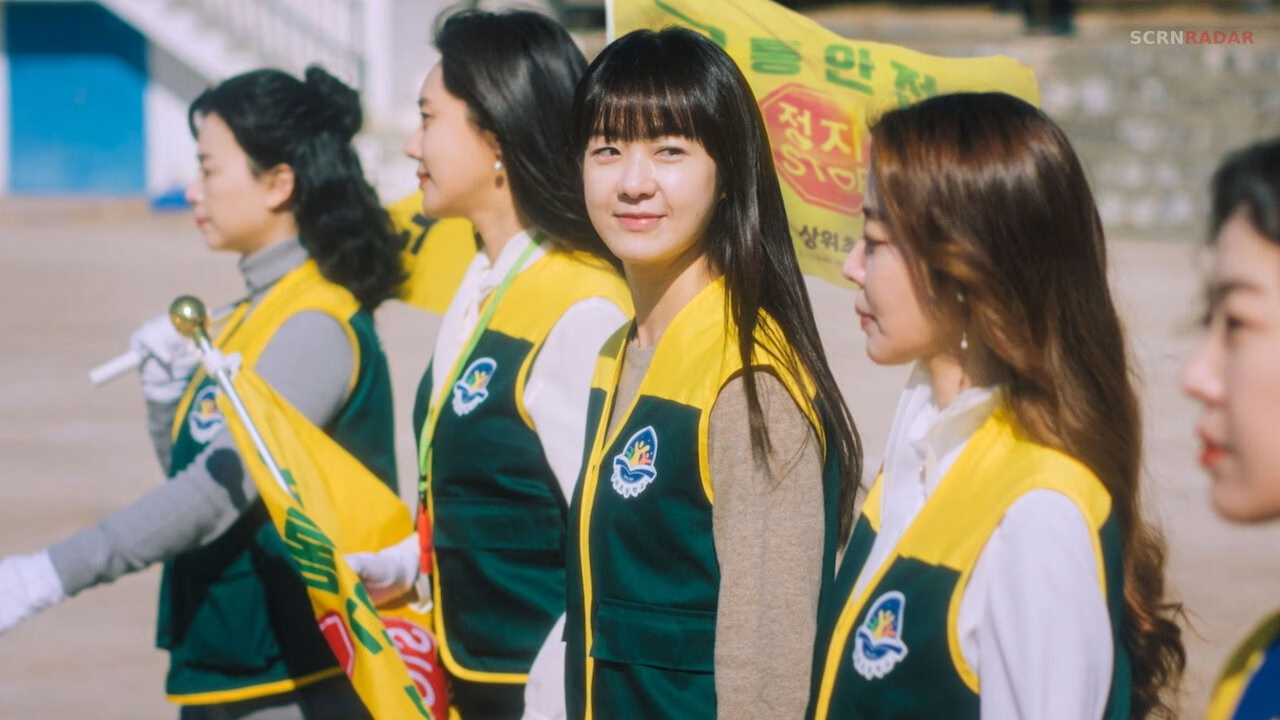
The show gained attention for its focus on “green mothers,” a term used in Korea to describe highly involved parents who actively shape their children’s academic paths. According to coverage and summaries from outlets like Soompi and The Korea Herald, the drama explores how this intense parenting culture creates both solidarity and rivalry among mothers. This central theme gives the series a strong foundation, even when its pacing slows down.
At its core, Green Mothers’ Club is less about mystery and more about human relationships. It uses its central tragedy and layered storytelling to explore emotional wounds, social hierarchy, and the cost of ambition.
Plot Overview: More Than Just a Mystery
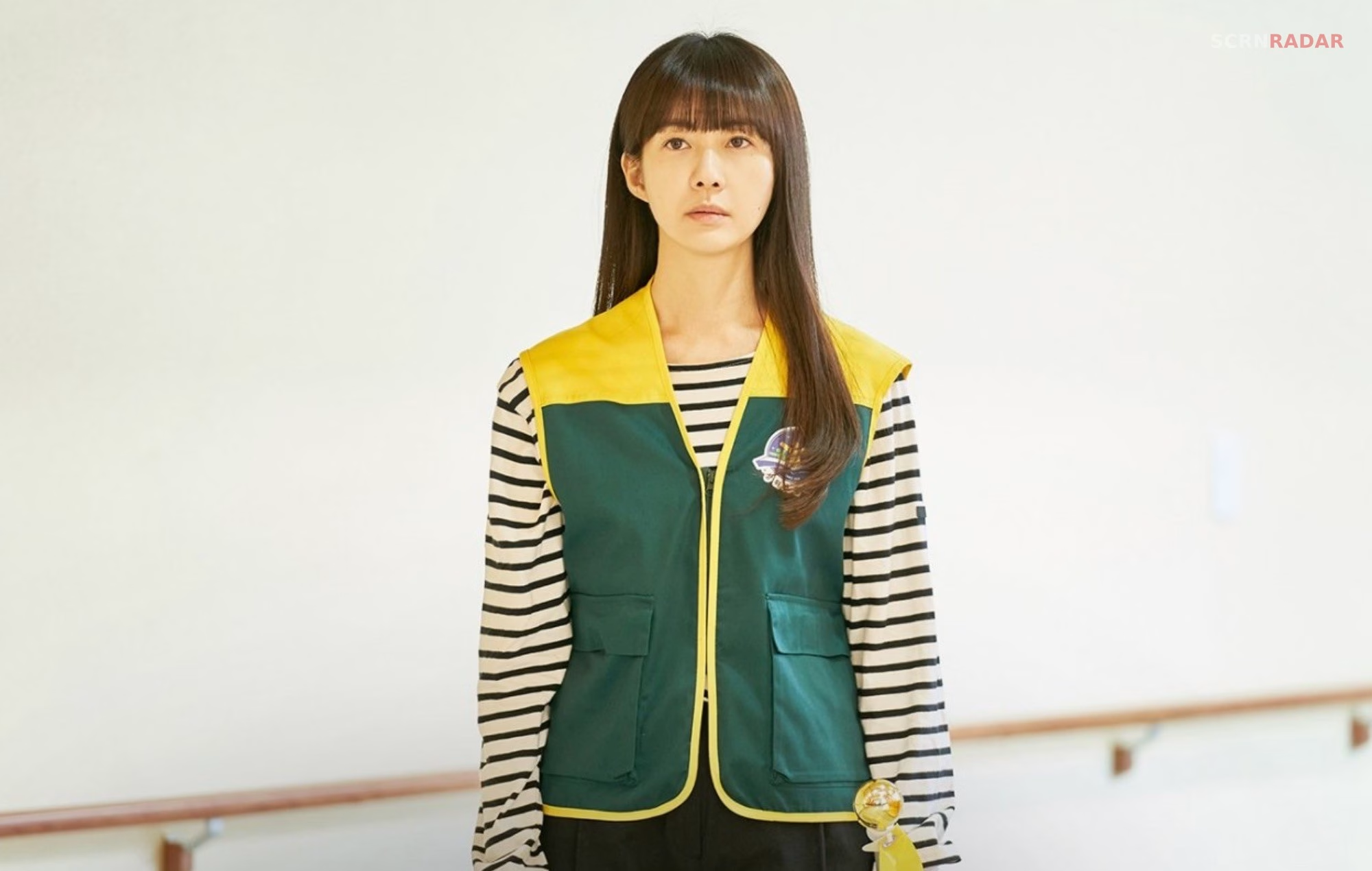
The story follows Lee Eun Pyo, a highly educated mother who returns to a competitive neighborhood filled with parents obsessed with their children’s academic success. Her arrival disrupts the existing social dynamic, particularly due to her past connection with Seo Jin Ha.
While the drama initially presents itself as a mystery following Seo Jin Ha’s death, it gradually shifts focus toward character relationships and psychological depth. Episode recaps and reviews from Soompi highlight that the series prioritizes emotional storytelling over plot-driven suspense. This makes the mystery feel more like a backdrop rather than the central driving force.
Each episode reveals new layers about the characters, particularly their motivations and insecurities. The narrative unfolds slowly, allowing viewers to understand how past experiences shape present behavior. This approach adds depth but can also make the pacing feel uneven at times.
Strength of the Drama: Realistic Character Writing
One of the biggest strengths of Green Mothers’ Club is its character writing. The series does not rely on clear heroes or villains. Instead, it presents morally complex individuals whose actions are shaped by fear, ambition, and societal pressure.
Lee Eun Pyo serves as the audience’s entry point into this world. Her perspective allows viewers to explore the social hierarchy among the mothers, as well as the emotional toll it takes on them. Her character arc, which involves confronting her past and reassessing her values, is central to the story.
Seo Jin Ha, despite her limited screen time, remains one of the most impactful characters. Her presence is felt throughout the series, influencing both the narrative and the emotional journeys of others. This layered characterization is frequently highlighted in K-drama reviews as one of the show’s strongest elements.
Themes: Parenting Pressure and Social Competition
The drama’s most compelling aspect lies in its exploration of parenting culture. It portrays how academic competition affects not just children but also their parents, creating a cycle of stress and comparison.
Reports and analyses from The Korea Herald note that the series reflects real societal concerns in South Korea, where education is often seen as a pathway to success. The show captures this pressure through everyday interactions, such as school meetings and tutoring sessions, making the conflict feel authentic.
Friendship among the mothers is another key theme. While they often support each other, underlying jealousy and rivalry create tension. This duality adds realism to the relationships, showing how social bonds can be both comforting and competitive.
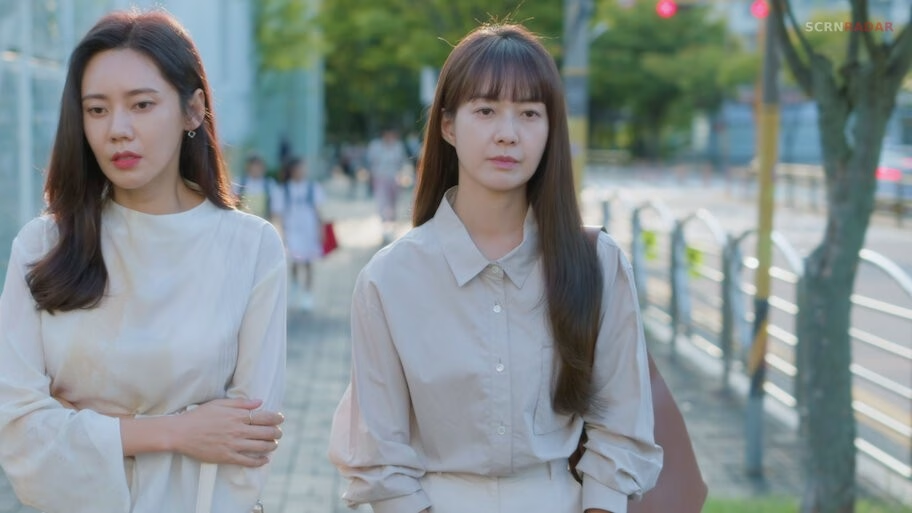
The drama also touches on mental health, particularly the emotional strain caused by societal expectations. This adds depth to the narrative and makes it more than just a story about parenting.
Performances: A Strong Ensemble Cast
The performances in Green Mothers’ Club are a major reason why the series remains engaging. Lee Yo-won delivers a nuanced portrayal of Lee Eun Pyo, balancing intelligence with vulnerability. Her performance anchors the series and gives emotional weight to the story.
Chu Ja-hyun as Seo Jin Ha brings a quiet intensity to her role. Even with limited screen time, she leaves a lasting impression, which is crucial for a character whose influence extends beyond her presence.
The supporting cast also plays a vital role in bringing the story to life. Each character feels distinct, contributing to the layered social dynamics that define the series. Reviews from Soompi frequently highlight the ensemble cast as one of the drama’s strongest points.
Weaknesses: Pacing and Narrative Focus
Despite its strengths, Green Mothers’ Club is not without flaws. The most common criticism is its pacing. As a 16-episode drama, it often stretches certain conflicts longer than necessary. This can make some episodes feel repetitive, especially when the focus remains on emotional tension rather than plot progression.
Another issue is the balance between mystery and character drama. While the show introduces a central mystery early on, it does not always maintain that momentum. Instead, it shifts toward character-driven storytelling, which may not meet the expectations of viewers looking for a fast-paced thriller.
These issues do not necessarily weaken the overall experience, but they can affect viewer engagement. The drama requires patience, and not all audiences may find its slow pace rewarding.
Audience Reception and Impact
Green Mothers’ Club received mixed to positive reviews from audiences. Fans of character-driven dramas appreciated its realistic portrayal of relationships and social pressure. The show’s focus on motherhood and education resonated with viewers who related to these themes.
However, some viewers found the pacing slow and the narrative structure uneven. Online discussions often highlight this divide, with some praising the depth of storytelling while others criticize the lack of consistent momentum.
Despite these mixed reactions, the drama has maintained a strong presence in K-drama discussions. Its themes and character arcs continue to spark conversation, indicating its lasting impact.
Green Mothers’ Club is a drama that prioritizes emotional depth over fast-paced storytelling. It offers a realistic and often uncomfortable look at parenting culture, friendship, and societal expectations. For viewers who enjoy character-driven narratives, it provides a rich and engaging experience.
However, its slow pacing and shifting focus may not appeal to everyone. The drama demands patience and attention, rewarding viewers with nuanced storytelling rather than immediate gratification.
Ultimately, Green Mothers’ Club succeeds as a thoughtful exploration of human relationships, even if it struggles with consistency at times. It is not a perfect drama, but it is one that leaves a lasting impression through its themes and performances.