
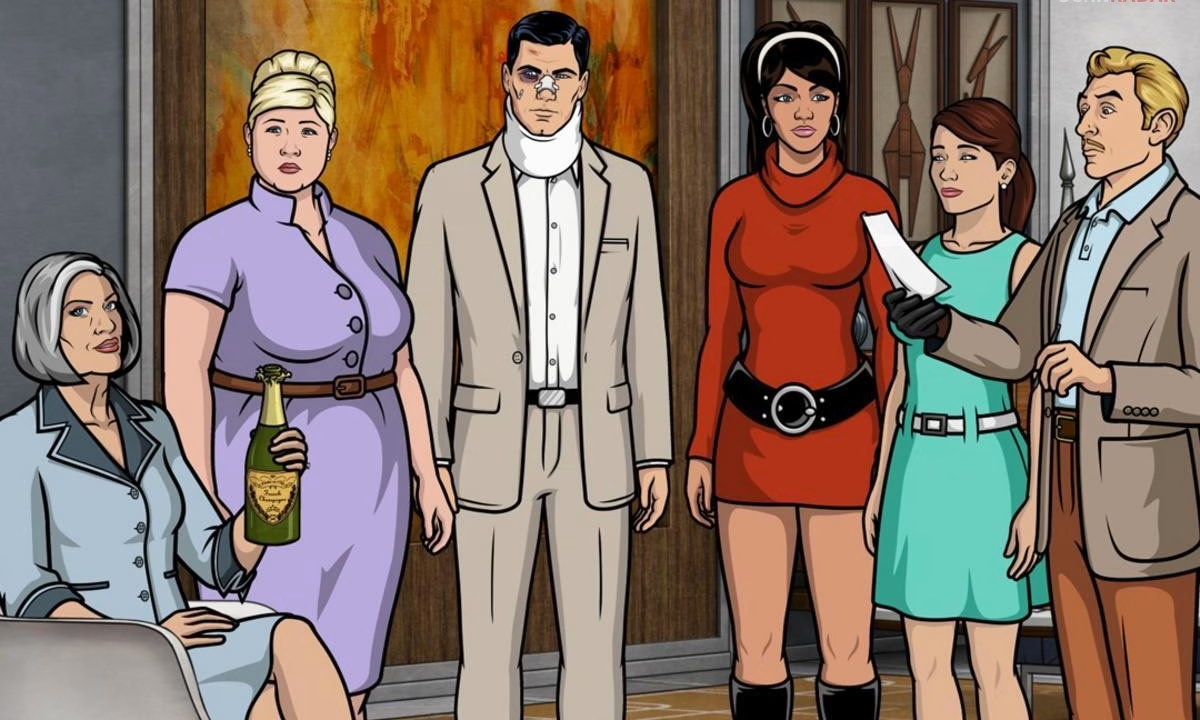
Archer Season 11 marked a major turning point for FX’s long-running animated spy comedy. After three consecutive seasons set inside Sterling Archer’s coma-induced dream worlds, the series finally returned to the real timeline. Fans had spent years watching alternate versions of their favorite characters in settings inspired by noir films, adventure serials, and science fiction. While those seasons had their supporters, many viewers wanted the show to return to its original spy-focused formula.
Season 11 answers that demand by waking Archer from his coma and forcing him to confront a world that has changed without him. The result is a season that balances sharp comedy, workplace dysfunction, action-packed spy missions, and surprisingly emotional character development. Rather than simply resetting everything to the status quo, the season explores what happens when a once-irreplaceable agent discovers he may no longer be needed.
For longtime fans, Archer Season 11 serves as both a return to form and an evolution of the series. Let’s break down the full plot, major storylines, ending, and whether the season succeeds as a revival of classic Archer.
Archer Wakes Up After Three Years
Season 11 begins with a significant change to the series’ status quo. Sterling Archer finally wakes up after spending three years in a coma following the events of Season 7.
Archer expects to return to his old life as the agency’s top operative. Instead, he quickly discovers that the world has moved on without him. The agency, now known as The Agency, has become surprisingly successful during his absence. More importantly, his coworkers have adapted to life without his constant interference.
This realization becomes the emotional core of the season. Archer has always viewed himself as the center of every mission and relationship. For the first time, he is forced to confront the possibility that he is no longer essential.
The season immediately establishes a fresh dynamic that separates it from earlier years. Rather than focusing on Archer’s arrogance as a source of comedy alone, the story explores how that arrogance masks insecurity and fear.

How The Agency Changed During Archer’s Absence
One of the most interesting aspects of Season 11 is how it develops characters who had often been stuck in familiar roles.
Cyril Figgis undergoes perhaps the most dramatic transformation. During Archer’s coma, he becomes physically fit, confident, and highly competent in field operations. The former accountant now appears capable of leading missions and earning the respect of his colleagues.
Lana Kane has also evolved. She has become more independent and focused on her responsibilities, particularly as a mother. Her relationship with Archer remains complicated, but she no longer seems willing to tolerate his reckless behavior.
Pam Poovey continues to be one of the agency’s most reliable operatives. Her friendship with Archer remains intact, although she too has grown during his absence.
These developments create tension throughout the season. Archer expects everything to remain exactly as he left it, while everyone else has spent years building new lives.
The Main Plot of Archer Season 11
Unlike some earlier seasons that focused on a single overarching threat, Season 11 largely follows an episodic structure built around various spy missions.
The Agency takes on assignments involving international criminals, corporate conspiracies, intelligence operations, and dangerous adversaries. Each mission provides opportunities for the show’s trademark action sequences and rapid-fire comedy.
However, the real story occurs beneath the surface. Nearly every episode revolves around Archer attempting to prove that he still belongs. Whether he is competing with Cyril, trying to impress Lana, or inserting himself into missions, his actions are driven by a fear of becoming irrelevant.
The season effectively uses its spy plots as a backdrop for character development. While the missions are entertaining, the emotional stakes come from Archer’s struggle to adapt.
This approach gives the season a stronger narrative focus than many previous installments.
Archer’s Physical and Emotional Challenges

Another important aspect of the season involves Archer’s recovery from his coma.
Although he remains an elite operative, he is not fully restored physically. Several episodes highlight lingering weaknesses and limitations. This represents a significant shift for a character who has traditionally viewed himself as nearly invincible.
The physical challenges parallel his emotional struggles. Archer often responds to vulnerability with sarcasm, self-destructive behavior, or overconfidence.
Season 11 repeatedly places him in situations where those coping mechanisms fail. As a result, viewers see a more human version of the character than in many earlier seasons.
The show does not completely abandon Archer’s outrageous personality. Instead, it adds additional layers that make him more compelling and relatable.
The Archer and Lana Relationship
The relationship between Archer and Lana remains one of the most important storylines in the season.
For years, the pair shared an on-again, off-again romance filled with affection, resentment, and poor decisions. During Archer’s coma, Lana’s life changed dramatically.
When Archer returns, he hopes to reconnect with her and reclaim what he believes he lost. Unfortunately for him, Lana has moved forward emotionally.
This creates several of the season’s strongest dramatic moments. Archer must confront the reality that he cannot simply return to the life he left behind.
Lana’s growth is particularly important because it prevents the story from revolving entirely around Archer’s perspective. Her choices reflect years of personal development and demonstrate how much time has actually passed.
The tension between them helps ground the season’s larger themes of change and acceptance.
The Season’s Best Character Developments

Season 11 succeeds largely because it gives multiple characters meaningful arcs.
Cyril’s evolution from insecure accountant to competent field agent creates an entertaining rivalry with Archer. Watching Archer struggle with the possibility that Cyril might genuinely be better than him provides many of the season’s funniest moments.
Pam continues to deliver some of the show’s strongest comedic material. Her loyalty to Archer remains genuine, but she refuses to treat him as the center of the universe.
Malory Archer remains as manipulative and sharp-tongued as ever. Her interactions with Sterling continue to provide a mixture of comedy and emotional complexity.
Even supporting characters receive opportunities to demonstrate growth. This emphasis on character progression helps the season feel fresh despite returning to the classic formula.
The Humor and Spy Action
One of the biggest questions surrounding Season 11 was whether the show could still capture the energy that made its early years so popular.
The answer is largely yes.
The season restores the blend of espionage, workplace comedy, and absurd dialogue that defined Archer’s peak years. Episodes move quickly, balancing action sequences with character interactions and verbal exchanges.
The writing remains packed with references, running jokes, and rapid-fire insults. At the same time, the humor feels more focused than it did during some of the later dreamland seasons.
The action scenes also benefit from returning to the spy genre. International missions, dangerous enemies, and covert operations fit naturally within the show’s strengths.
Rather than relying on elaborate alternate settings, Season 11 finds entertainment in the personalities of its characters.
Archer Season 11 Ending Explained

As the season approaches its conclusion, Archer gradually begins accepting that the world has changed.
Throughout the season, he repeatedly tries to force everything back to the way it was before his coma. Each failure pushes him closer to recognizing reality.
The finale does not provide a complete transformation. Archer remains arrogant, impulsive, and deeply flawed. However, he shows signs of growth by acknowledging that others have evolved during his absence.
This acceptance represents the season’s biggest victory. Instead of undoing years of character development, the series embraces change while preserving the core personalities that fans enjoy.
The ending also leaves room for future stories. Archer is no longer trying solely to reclaim his former status. Instead, he begins figuring out how he fits into the new version of The Agency.
This creates a more interesting foundation for subsequent seasons.
Archer Season 11 Review: Does the Return to Reality Work?
For many fans, Season 11 represents the strongest Archer season in several years.
The decision to wake Archer from his coma reinvigorates the series. By returning to the real timeline, the show restores relationships and conflicts that had been absent during the dreamland era.
More importantly, the season avoids the temptation to hit a reset button. Characters have genuinely changed, and those changes drive much of the story’s emotional weight.
The humor remains sharp, the action is entertaining, and the character dynamics feel energized. While not every episode reaches the heights of the show’s earliest seasons, the quality is consistently strong.

The season also demonstrates a willingness to evolve. Archer remains recognizable, but he is no longer entirely static as a character.
That balance between familiarity and growth helps Season 11 stand out among the series’s later installments.
Archer Season 11 successfully accomplishes a difficult task. It returns the series to its roots while acknowledging that both the characters and audience have changed over time.
The season’s central premise, Archer waking up to find the world has moved on without him, provides a surprisingly emotional framework for the comedy. His struggle to adapt gives the story depth without sacrificing the irreverent humor that defines the show.
Strong character development, entertaining spy missions, and meaningful relationship dynamics make Season 11 one of the most engaging chapters in Archer’s later run. The season proves that the series still has plenty of life after more than a decade on television.
For viewers who missed the classic spy-comedy version of Archer, Season 11 delivers exactly what they were hoping for while offering enough growth to keep the formula feeling fresh.
The Good
- Excellent return to the real-world timeline
- Strong character growth across the cast
- Sharp humor and entertaining spy missions
- Effective emotional storyline for Archer
- Improved focus compared to the coma seasons
The Bad
- Some episodic plots are more memorable than others
- Certain supporting characters receive limited screen time
- Not every storyline reaches its full potential