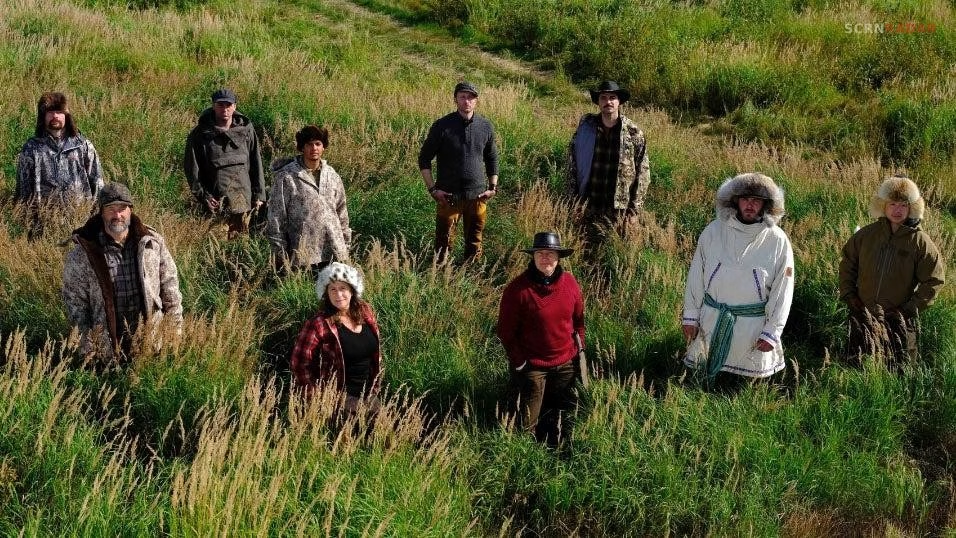
Alone Season 9 takes the survival competition to new extremes, pushing contestants into one of the harshest environments the show has featured. Set in Labrador, Canada, this season challenges participants with unpredictable weather, scarce food sources, and complete isolation. As with previous seasons, contestants must survive entirely on their own, filming their experiences without a crew while relying on limited gear.
Season 9 stands out for its emphasis on long-term survival strategies rather than short-term endurance. The harsh conditions force contestants to think beyond immediate needs, focusing on sustainability, food storage, and mental resilience. Official season summaries and coverage confirm that the winner is determined not by speed or competition, but by who can last the longest in total isolation.
The result is a season that feels both intense and deeply personal, showcasing the physical and psychological toll of survival in the wild.
Survival Strategies That Defined Season 9
One of the most compelling aspects of Season 9 is how different contestants approached survival. The Labrador environment demanded adaptability, as traditional strategies did not always guarantee success. Participants had to adjust quickly to changing conditions.
Food acquisition played a critical role throughout the season. Contestants relied on fishing, trapping, and foraging, but success varied depending on skill and environmental factors. Those who managed to secure consistent food sources gained a significant advantage.
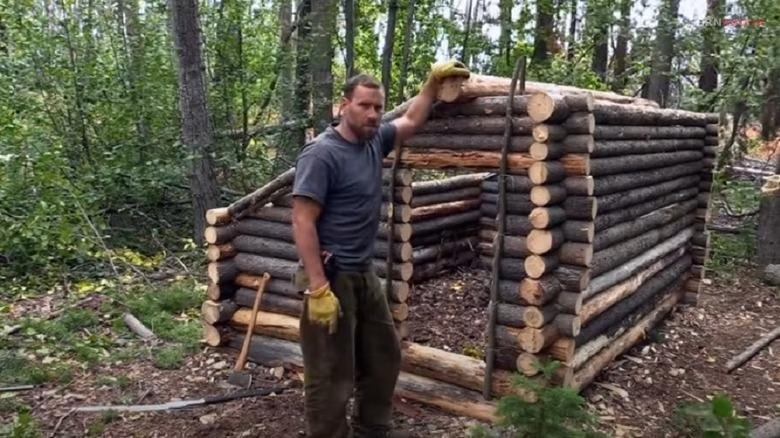
Shelter construction was another key factor. With temperatures dropping and weather conditions worsening, building a durable shelter became essential for long-term survival. Contestants who invested time and effort into their shelters were better equipped to handle the environment.
Mental endurance proved just as important as physical skill. Isolation, hunger, and uncertainty took a toll on participants, leading some to tap out despite having the resources to continue. Season recaps consistently highlight that mindset often determines how long a contestant can last.
The Winner of Alone Season 9
The winner of Alone Season 9 is Juan Pablo Quiñonez, who outlasted all other contestants through a combination of strategy, resilience, and adaptability. His approach to survival set him apart from the competition.
Juan Pablo focused heavily on food sustainability rather than immediate consumption. By rationing his resources and maintaining a steady supply of food, he avoided the extreme starvation that forced other contestants to quit. This long-term thinking became a defining factor in his success.
His mental discipline also played a crucial role. Unlike some contestants who struggled with isolation, Juan Pablo maintained a stable mindset, allowing him to make clear decisions even under pressure. This balance between physical and psychological strength is often cited as the key to winning Alone.
By the end of the season, his strategy proved to be the most effective, securing him the victory and demonstrating the importance of patience and planning.
Key Moments and Turning Points
Season 9 features several moments that highlight the unpredictability of survival. Early in the season, contestants faced immediate challenges as they attempted to establish shelter and secure food. These initial decisions often determined how long they could last.
Mid-season, the competition intensified as resources became scarcer. Contestants who failed to adapt found themselves struggling, leading to multiple tap-outs. These moments underscored the importance of flexibility and problem-solving.
One of the most significant turning points came when contestants began to experience the cumulative effects of isolation and hunger. Even those with strong survival skills faced mental and physical exhaustion. This phase of the season revealed how difficult it is to maintain long-term survival.
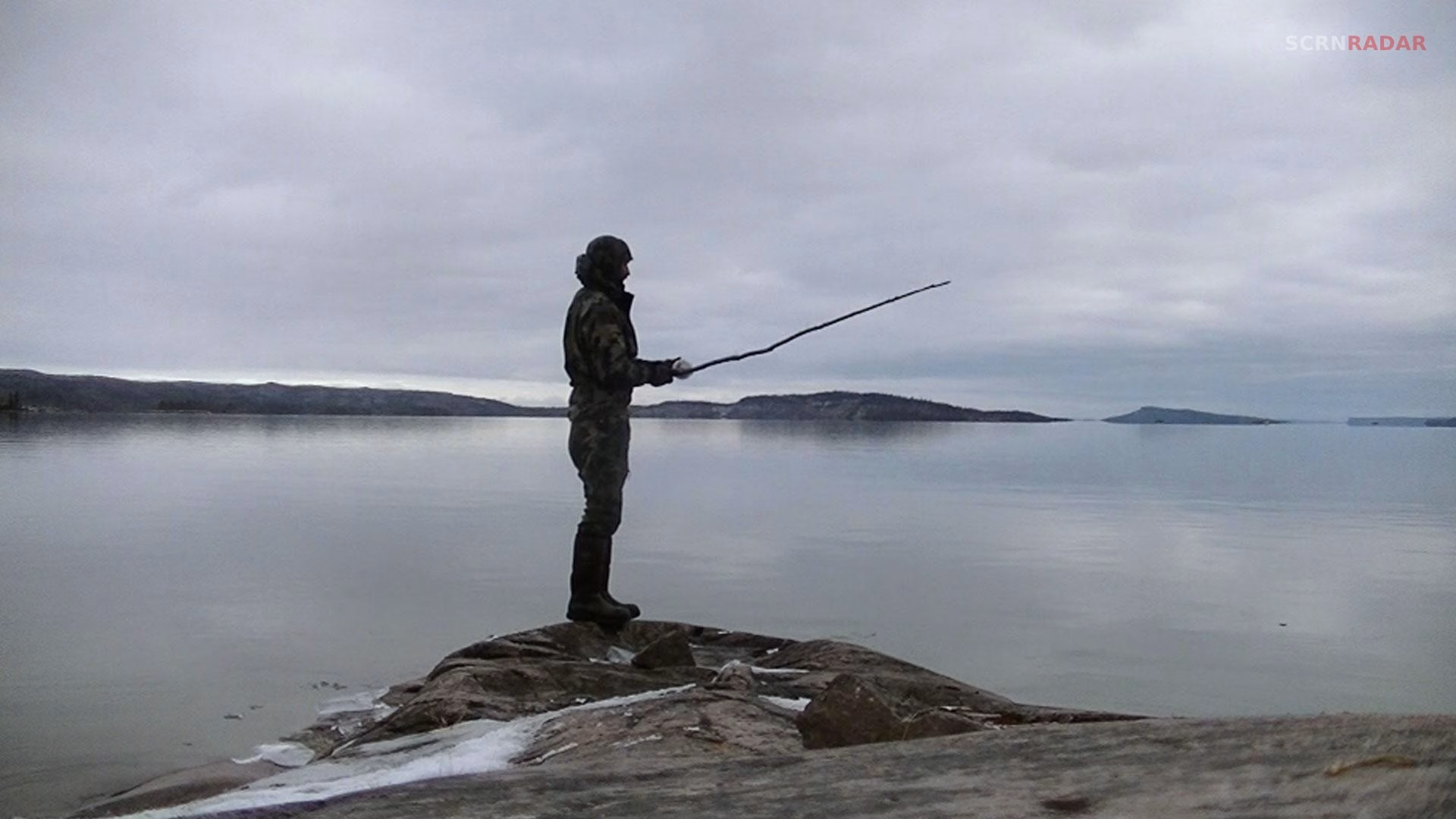
The final episodes focused on endurance and resilience. By this stage, only a few contestants remained, and every decision carried greater weight. The tension built steadily, leading to a satisfying conclusion.
Strengths of Season 9
Season 9 succeeds in delivering an authentic survival experience. The lack of external interference allows viewers to see the raw reality of what contestants endure. This authenticity is one of the show’s defining strengths.
The focus on strategy adds depth to the competition. Rather than relying on dramatic twists, the season emphasizes skill and decision-making. This makes the outcome feel earned rather than forced.
The storytelling is also effective. By highlighting personal struggles and emotional moments, the series creates a connection between viewers and contestants. This human element adds to the impact of the show.
Additionally, the Labrador setting provides a fresh challenge compared to previous seasons. The environment feels unforgiving, raising the stakes for everyone involved.
Weaknesses and Challenges
Despite its strengths, Season 9 is not without flaws. The pacing can feel slow at times, particularly during episodes that focus heavily on daily routines. While this reflects the reality of survival, it may not appeal to all viewers.
Another challenge is the repetitive nature of certain scenes. Activities like fishing and shelter maintenance are essential, but they can become predictable over time. This can reduce the sense of variety in the episodes.
Additionally, the lack of interaction between contestants, while central to the show’s concept, limits opportunities for dynamic storytelling. The focus remains on individual journeys, which may not engage viewers who prefer more interaction. However, these aspects are also part of what makes Alone unique. The series prioritizes realism over entertainment-driven pacing.
Another important aspect of Alone Season 9 is how it highlights the psychological transformation of contestants over time. As the days progress, survival becomes less about physical skill and more about mental endurance, with loneliness and uncertainty affecting decision-making.
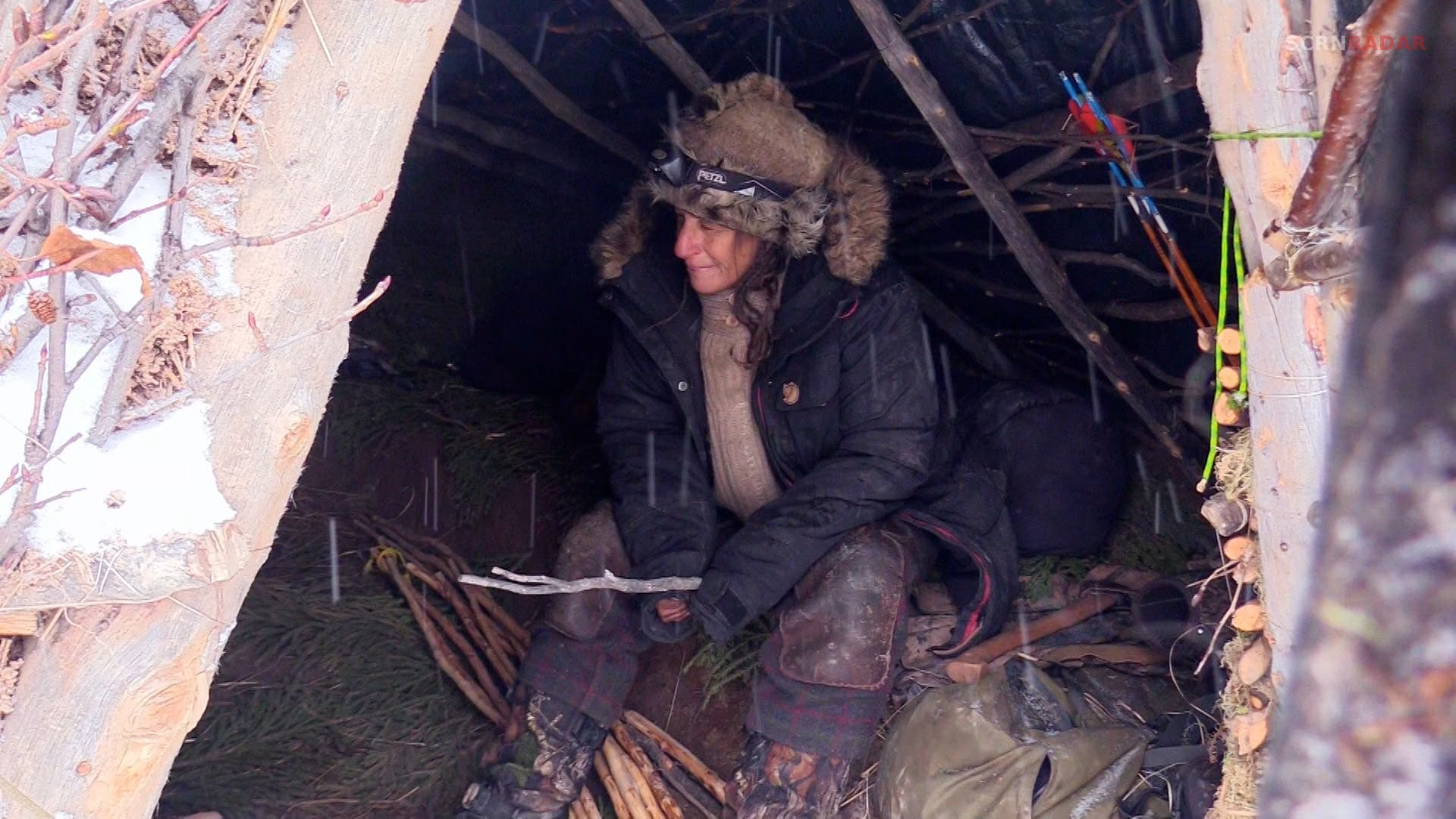
Contestants who initially appear strong often struggle with isolation, while others grow more resilient as they adapt to the environment. This shift adds a deeper layer to the show, turning it into a study of human behavior under extreme conditions. It reinforces the idea that survival is not just about resources, but about maintaining clarity, discipline, and emotional stability when everything else begins to break down.
Alone Season 9 delivers a compelling and realistic survival experience that highlights the importance of strategy, resilience, and mental strength. The harsh Labrador environment pushes contestants to their limits, creating a season filled with tension and emotional depth.
Juan Pablo Quiñonez’s victory stands as a testament to the value of long-term planning and psychological endurance. His approach exemplifies what it takes to succeed in one of the most demanding survival competitions on television.
While the pacing may feel slow at times, the authenticity and character-driven storytelling make Season 9 a worthwhile watch. For fans of survival shows, it offers a detailed and engaging look at what it truly means to survive in the wild.