Zack Snyder is returning to filmmaking in a dramatically different way with The Last Photograph, his long-gestating passion project that allowed him to step away from the enormous productions that have defined much of his recent career. Instead of a major studio or streaming service financing the movie, Snyder made it as an independent production with a significantly smaller crew and budget.
The change extended directly to how the movie was filmed. In an interview with The Hollywood Reporter, Snyder explained that the production gave him a freedom he rarely experienced on his larger movies. “There’s no agenda to the movie,” he said, describing the project as an experience that did not need to sell audiences a sequel, merchandise or another product.
The Last Photograph Took Snyder Back Behind the Camera
The Last Photograph follows a drug-addicted war photographer who survives a massacre in an unnamed South American country. When the brother of a murdered diplomat arrives, the two men venture on a dangerous search for kidnapped children, gradually turning the story from a conventional thriller into something more personal.
Snyder originally developed the project as a spy and war thriller, with stars including Sean Penn and Christian Bale once attached when Warner Bros. was involved. Over the years, however, the filmmaker’s relationship with the material changed, particularly following the 2017 death of his daughter Autumn. Snyder ultimately described the finished movie as “a meditation on death and redemption” and an exploration of how people perceive the world differently.
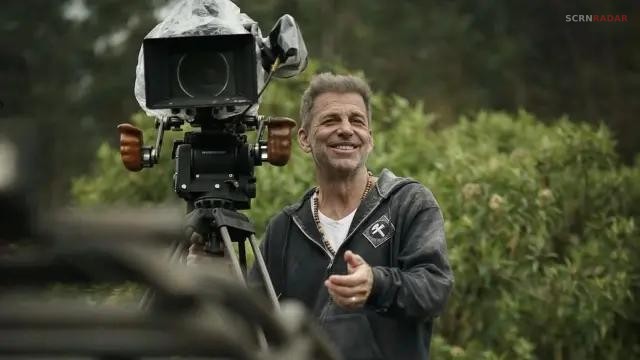
The production itself was remarkably stripped down. Snyder served as cinematographer and shot much of the movie handheld, while the film reportedly contains no green-screen sequences and no slow-motion shots, two techniques closely associated with his larger-scale filmmaking style.
The entire shoot lasted just 32 days, which Snyder described as roughly half the length of his previous productions. On the first day alone, he completed 72 camera setups. By comparison, he recalled days on Justice League when he managed only four setups because of the enormous scale and logistical demands surrounding a major studio production.
The filmmaking process became particularly demanding while the crew was working in Colombia’s Amazon region. Snyder developed a fever of more than 100 degrees while shooting and later learned that he had COVID. Despite his condition, he continued working because of the project’s limited resources and schedule.
His wife and longtime producing partner Deborah Snyder said the smaller production allowed him to reconnect with the way he worked earlier in his career. Rather than having large numbers of departments and equipment between himself and the camera, Snyder was able to move quickly with a compact crew.
The result represents an unusual chapter in Snyder’s career. After directing major studio productions such as 300, Man of Steel, Batman v Superman: Dawn of Justice and Justice League, followed by Netflix’s Army of the Dead and Rebel Moon, The Last Photograph gives him an opportunity to make a film without the commercial expectations attached to a massive franchise.
Snyder’s next major project could once again move him into franchise territory, as he is developing a new version of John Carpenter’s Escape from New York. For now, however, The Last Photograph represents his most stripped-down filmmaking experiment yet.