The departure of Frank Burns from MASH* remains one of the most discussed casting changes in television history. Played by Larry Linville, the character was a central part of the show’s early seasons and a key source of both conflict and comedy. His exaggerated personality, strict adherence to rules, and constant clashes with other characters made him one of the most recognizable figures in the series.
However, at the height of the show’s success, Linville made the surprising decision to leave. This move raised questions among fans and critics, especially since MASH* was still gaining popularity at the time. While some initially speculated about behind-the-scenes conflicts or contract issues, the real reason behind his exit was far more creative and deliberate.
Let’s break down why Larry Linville chose to walk away from one of television’s biggest shows, what it meant for Frank Burns as a character, and how it ultimately reshaped MASH* moving forward.
The Role of Frank Burns in Early MAS*H Seasons
Frank Burns was introduced as a rigid, by-the-book army major who often found himself at odds with the more laid-back and rebellious surgeons of the 4077th. His character served as a foil to Hawkeye Pierce and Trapper John McIntyre, who frequently mocked his incompetence and moral hypocrisy. This dynamic became one of the defining comedic elements of the show’s early seasons.
The humor surrounding Frank Burns often relied on repetition. He was consistently portrayed as self-righteous, overly ambitious, and easily manipulated. While this made him entertaining, it also limited the ways his character could evolve over time. Unlike other characters who developed emotional depth, Frank remained largely static in his behavior and personality.
Despite these limitations, Linville’s performance was widely praised. He managed to make Frank Burns both frustrating and oddly sympathetic at times. This balance helped the character stand out, even when the writing leaned heavily into caricature.
As the show progressed, however, the creative team began exploring more nuanced storytelling. This shift would ultimately play a major role in Linville’s decision to leave the series.
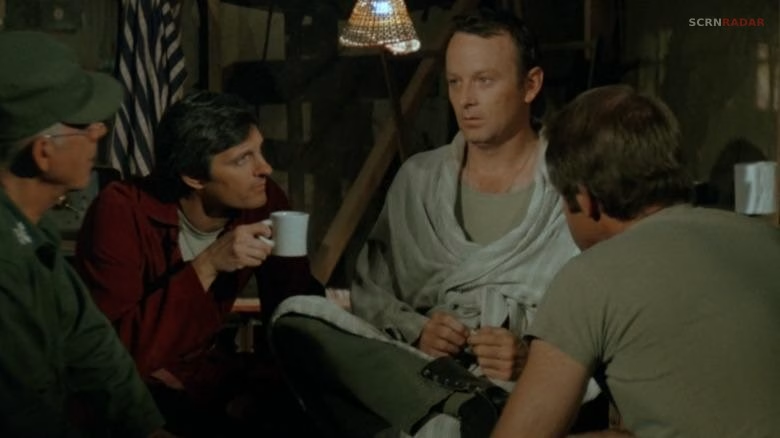
Larry Linville’s Decision to Leave MAS*H
The primary reason Larry Linville left MASH* was his belief that the character of Frank Burns had reached its full potential. In multiple interviews, Linville explained that he felt there was no room left for meaningful development. He reportedly stated that once you have established a character like Frank Burns, there is only so much you can do before the role becomes repetitive.
Linville was concerned about being typecast. Playing the same kind of character for too long could limit his opportunities as an actor. By leaving the show, he hoped to explore a wider range of roles and avoid being permanently associated with one specific personality.
Importantly, his departure was not the result of conflict with the cast or producers. Unlike many television exits, there were no major disputes or controversies behind the scenes. Linville’s decision was professional and forward-looking, reflecting his desire for creative growth.
This kind of decision was relatively rare at the time. Many actors preferred the stability and financial security of a successful television series. Linville’s choice to step away demonstrated a willingness to prioritize long-term career flexibility over short-term success.
Creative Limitations of Frank Burns’ Character
One of the biggest challenges with Frank Burns was that his character was designed as a comedic antagonist. He existed primarily to be ridiculed by other characters, which made it difficult to give him meaningful arcs or emotional growth. Over time, this created a sense of stagnation.
While characters like Hawkeye Pierce began to show deeper emotional layers, Frank remained trapped in a cycle of predictable behavior. This contrast became more noticeable as the show evolved into a blend of comedy and drama. The writers increasingly focused on serious themes such as war trauma, morality, and human relationships.
Linville himself recognized this limitation. He understood that continuing in the role would likely result in diminishing returns, both creatively and professionally. Rather than risk becoming repetitive, he chose to leave while the character was still memorable.
This decision ultimately benefited the show as well. By removing a static character, the writers were able to introduce new dynamics and explore fresh storytelling opportunities.

How Frank Burns Was Written Out of the Show
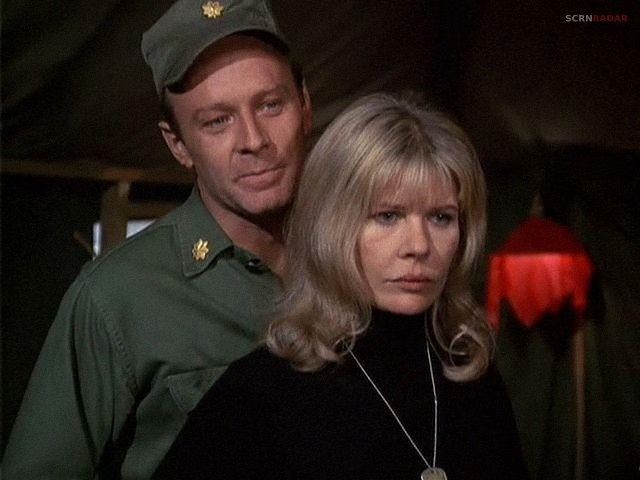
Frank Burns’ exit from MASH* was handled in a way that stayed true to his character. After a series of emotional setbacks, including the departure of Margaret Houlihan’s romantic involvement with him, Frank experiences a mental breakdown. This leads to his eventual discharge from the army.
The storyline allowed the writers to give the character a definitive ending without dramatically altering his personality. It also reflected the cumulative impact of his experiences, providing a sense of closure that felt earned rather than abrupt.
Although Frank’s departure marked the end of an era for the show, it also paved the way for new characters to step in. The transition was carefully managed to maintain continuity while refreshing the tone of the series.
Fans had mixed reactions at the time. Some missed the familiar comedic dynamic, while others appreciated the opportunity for the show to evolve. In retrospect, the decision is often viewed as a turning point that helped MASH* grow into a more sophisticated series.
The Introduction of Charles Winchester
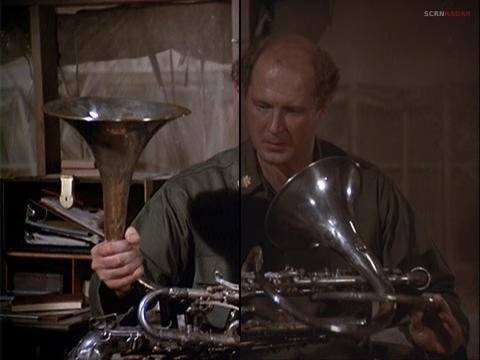
Following Frank Burns’ departure, the show introduced Charles Winchester, played by David Ogden Stiers. Unlike Frank, Charles was not simply a comedic antagonist. He was intelligent, cultured, and highly skilled, which created a different kind of tension with the other characters.
Charles Winchester brought a new level of complexity to the show. While he could be arrogant and condescending, he was also capable of empathy and growth. This made him a better fit for the increasingly dramatic tone of later seasons.
The shift from Frank Burns to Charles Winchester reflects a broader evolution in television storytelling. Audiences were beginning to expect more nuanced characters, and MASH* adapted accordingly. This change helped the show maintain its relevance and critical acclaim throughout its long run.
Linville’s departure, therefore, was not just an ending but also a beginning. It allowed the series to reinvent itself and continue evolving in meaningful ways.
Did Larry Linville Regret Leaving MAS*H?
Over the years, Larry Linville spoke openly about his time on MASH*. While he appreciated the success and recognition the show brought him, he consistently maintained that leaving was the right decision. He did not express regret about stepping away when he did.
Linville went on to appear in various television shows and stage productions, demonstrating his range as an actor. Although he never achieved the same level of fame as he did with MASH*, he built a respectable and diverse career.
His perspective highlights an important aspect of acting as a profession. Success in a single role does not always translate to long-term satisfaction. For Linville, creative fulfillment and avoiding typecasting were more important than staying on a hit show indefinitely.
This mindset has since become more common in the entertainment industry. Many actors now prioritize diverse roles and career longevity over remaining in a single iconic role for too long.
How His Exit Changed MAS*H Forever
The departure of Frank Burns marked a significant shift in MASH*. The show gradually moved away from its earlier slapstick humor and embraced more character-driven storytelling. This transition helped it stand out from other sitcoms of the time.
Without Frank Burns as a constant target of ridicule, the dynamics between characters became more balanced. Conflicts were no longer one-sided, and relationships gained greater depth. This allowed the series to explore more serious themes without losing its comedic edge.
Critics often point to the later seasons of MASH* as some of the strongest in terms of writing and emotional impact. While the show’s success cannot be attributed to a single factor, Linville’s departure played a key role in enabling this evolution.
The series finale remains one of the most-watched television events in history, demonstrating the lasting impact of the show’s creative decisions. Changes like the replacement of Frank Burns were essential in keeping the series fresh and engaging over time.
Why Larry Linville Really Left
There have been various rumors over the years about why Larry Linville left MASH*. Some suggested disagreements with the cast or dissatisfaction with the production. However, these claims are not supported by credible accounts.
The widely accepted explanation, supported by Linville’s own statements, is that he left because the character had reached its limit. He wanted to move on rather than repeat the same performance year after year. This aligns with his professional approach and later career choices.
Understanding this distinction is important for accurately interpreting television history. Not every departure from a popular show is driven by conflict. In this case, it was a thoughtful decision rooted in artistic considerations.
Larry Linville’s exit from MASH* was a defining moment for both the actor and the series. By choosing to leave when he did, he avoided creative stagnation and allowed the show to evolve in new directions. His portrayal of Frank Burns remains iconic, even as the series moved beyond the character.
The transition to more complex storytelling and characters like Charles Winchester helped MASH* maintain its status as one of television’s greatest shows. Linville’s decision, while surprising at the time, ultimately contributed to the long-term success of the series.
For fans revisiting the show today, Frank Burns serves as a reminder of its early comedic roots. At the same time, his departure highlights how change can lead to growth, both for actors and for the stories they help bring to life.