The Music Man remains one of the most iconic movie musicals ever made, blending memorable songs, colorful performances, and nostalgic small-town Americana into a timeless classic. Directed by Morton DaCosta and starring Robert Preston and Shirley Jones, the film adapts Meredith Willson’s hit Broadway musical about fast-talking con artist Harold Hill arriving in fictional River City, Iowa.
Although the story is deeply tied to Iowa culture and Midwestern identity, the movie itself was filmed primarily in California. Warner Bros. transformed its famous Midwest Street backlot in Burbank into the charming world of River City, while additional studio work helped create the film’s polished musical atmosphere. Here’s a complete breakdown of where The Music Man was filmed and how those locations shaped one of Hollywood’s greatest musicals.
Warner Bros. Studios in Burbank Was the Main Filming Location
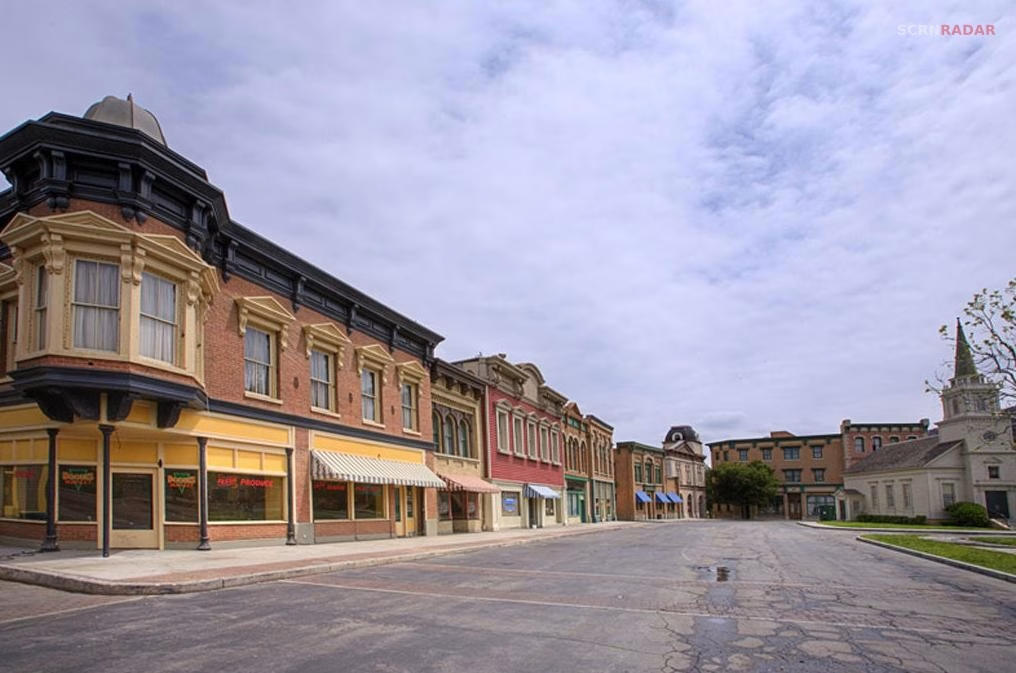
The majority of The Music Man was filmed at Warner Bros. Studios Burbank in California. Nearly all of River City, Iowa was recreated on the studio’s famous Midwest Street backlot, which had already appeared in several Hollywood productions before the musical entered production.
The Midwest Street backlot became the visual centerpiece of the movie. Buildings such as the River City library, city hall, pool hall, fire station, and residential homes were all constructed or modified on the lot. The production used these interconnected streets extensively during musical sequences like “Seventy-Six Trombones” and “Ya Got Trouble.”
One reason the location worked so effectively was its flexibility. Different facades could represent multiple buildings depending on camera angles and set decoration. According to film-location research, some structures on Midwest Street doubled as entirely different locations throughout the movie.
The backlot also gave the filmmakers full control over choreography, crowd movement, and large marching-band scenes. Since The Music Man relied heavily on elaborate musical staging, a controlled studio environment was essential for production efficiency.
Midwest Street Became the Fictional River City, Iowa
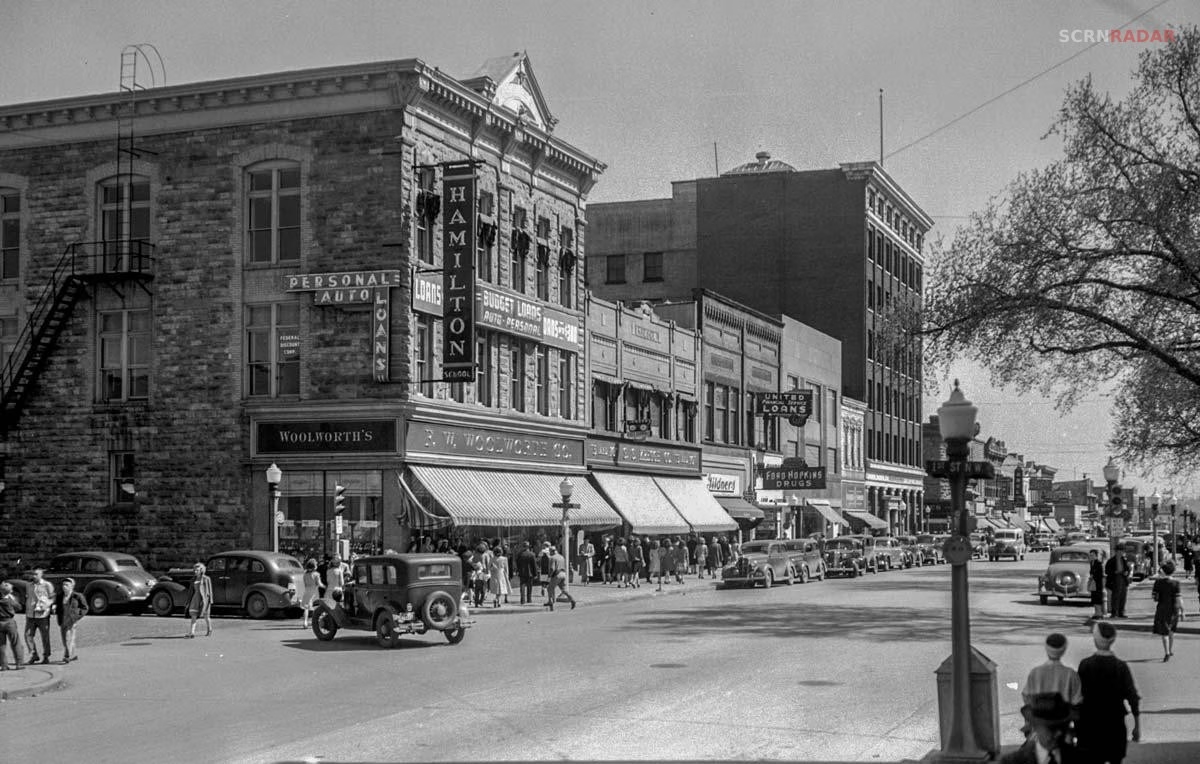
The fictional town of River City was inspired by Mason City, Iowa, the hometown of composer and writer Meredith Willson. However, instead of filming in Iowa, Warner Bros. recreated the town almost entirely on Midwest Street in Burbank.
Midwest Street was originally built in 1939 and became one of Warner Bros.’ most frequently used small-town backlots. By the time The Music Man entered production, the area already had an established Midwestern architectural look that fit the film perfectly.
Several famous scenes were shot there, including Harold Hill leading the marching band through town and the energetic “Shipoopi” dance sequence. The production filled the streets with extras, wagons, storefront decorations, and colorful costumes to make River City feel lively and authentic.
Film historians often point out how effectively the backlot captured idealized small-town America. The carefully designed streets and nostalgic atmosphere became one of the defining visual elements of the movie. Even decades later, fans still recognize Midwest Street as the heart of River City.
Sound Stages Were Used for Interior Musical Sequences
While many outdoor scenes were filmed on the backlot, several interior scenes and musical numbers were shot on sound stages inside Warner Bros. Studios. These included home interiors, library scenes, and carefully controlled performance moments requiring advanced lighting and acoustics.
The use of sound stages allowed the filmmakers to preserve the polished theatrical feel of the Broadway musical while adapting it for cinema. Director Morton DaCosta, who also directed the original stage production, wanted the film to remain faithful to the musical’s theatrical roots.
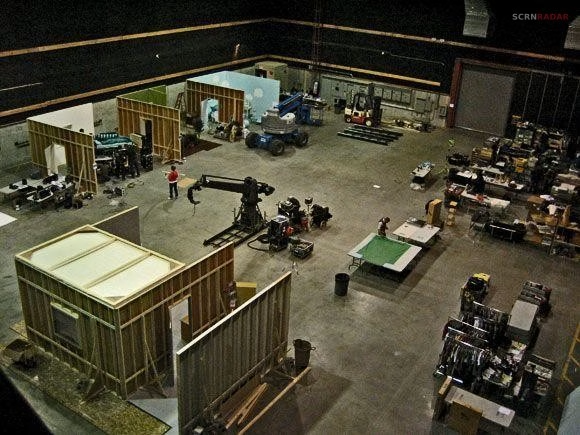
Large-scale songs involving synchronized choreography especially benefited from studio filming. The production needed precise camera placement and lighting setups to capture the elaborate movement of dancers and marching bands.
Warner Bros.’ studio resources also helped create detailed period interiors reflecting 1912 America. Everything from costumes to furniture was carefully designed to reinforce the film’s nostalgic Midwestern setting.
Mason City, Iowa Inspired the Story but Was Not the Main Filming Site
Although the movie was filmed in California, Mason City, Iowa remained deeply connected to the production because it inspired fictional River City. Meredith Willson based many characters, settings, and themes on his experiences growing up there.
The city’s influence can be seen throughout the film, particularly in the focus on marching bands, community gatherings, and small-town traditions. Willson’s affection for his hometown shaped nearly every aspect of the musical’s identity.
Interestingly, The Music Man had its gala premiere in Mason City during the North Iowa Band Festival in 1962. The event celebrated the film’s connection to the region and reinforced the city’s role in the musical’s legacy.
Today, Mason City embraces its connection to the film through attractions like the Meredith Willson Museum and Music Man Square. While these locations were not used for filming, they remain important pilgrimage sites for fans of the movie and Broadway musical.
The Final Parade Scene Required Massive Coordination
One of the movie’s most memorable sequences is the final marching-band parade through River City. According to production records, the scene required approximately two days of filming and involved hundreds of performers.
The production used members of the University of Southern California marching band alongside junior high school students from Southern California to create the massive parade sequence. The scene was filmed directly on the Midwest Street backlot using multiple cameras and elaborate crowd coordination.
The parade sequence also highlighted the advantages of filming on a studio lot rather than on real city streets. Warner Bros. could completely control traffic, camera movement, sound recording, and crowd placement without interruption.
This climactic scene ultimately became one of the movie’s defining images. The colorful uniforms, synchronized marching, and celebratory atmosphere perfectly captured the optimistic spirit of the musical.
The locations also helped preserve the idealized vision of small-town America central to the musical’s appeal. Instead of aiming for strict realism, the film embraced a colorful and theatrical version of the Midwest that matched its optimistic tone.
For fans of classic Hollywood musicals, the Warner Bros. backlot remains closely tied to the legacy of The Music Man. The streets of fictional River City continue to symbolize one of cinema’s most beloved musical worlds.