Mississippi Burning remains one of the most discussed historical crime dramas of the late 1980s, blending FBI investigation thriller elements with the racial tensions of the American civil rights era. Directed by Alan Parker and starring Gene Hackman and Willem Dafoe, the film was loosely inspired by the 1964 murders of civil rights workers James Chaney, Andrew Goodman, and Michael Schwerner in Mississippi. While the story takes place in fictional Jessup County, the production filmed extensively across real locations in Mississippi and Alabama to capture the atmosphere of the Deep South.
The filmmakers specifically wanted authentic southern towns, courthouses, churches, and rural roads rather than studio recreations. Production took place from March to May 1988 and involved more than 60 filming locations spread across Mississippi and Alabama. Here’s a complete breakdown of where Mississippi Burning was filmed and how those locations shaped the film’s gritty realism.
LaFayette, Alabama Became the Fictional Jessup County
One of the most important filming locations in the movie was LaFayette, which doubled as the fictional town of Jessup County, Mississippi. Director Alan Parker struggled to find a southern town that visually matched the atmosphere he wanted before finally selecting LaFayette near the Alabama-Georgia border.
The town square and courthouse area became central to many of the movie’s most recognizable scenes. The historic Chambers County Courthouse appears prominently throughout the film, particularly during sequences involving law enforcement and public gatherings. The production also restored an abandoned movie theater in downtown LaFayette to match the 1960s setting.
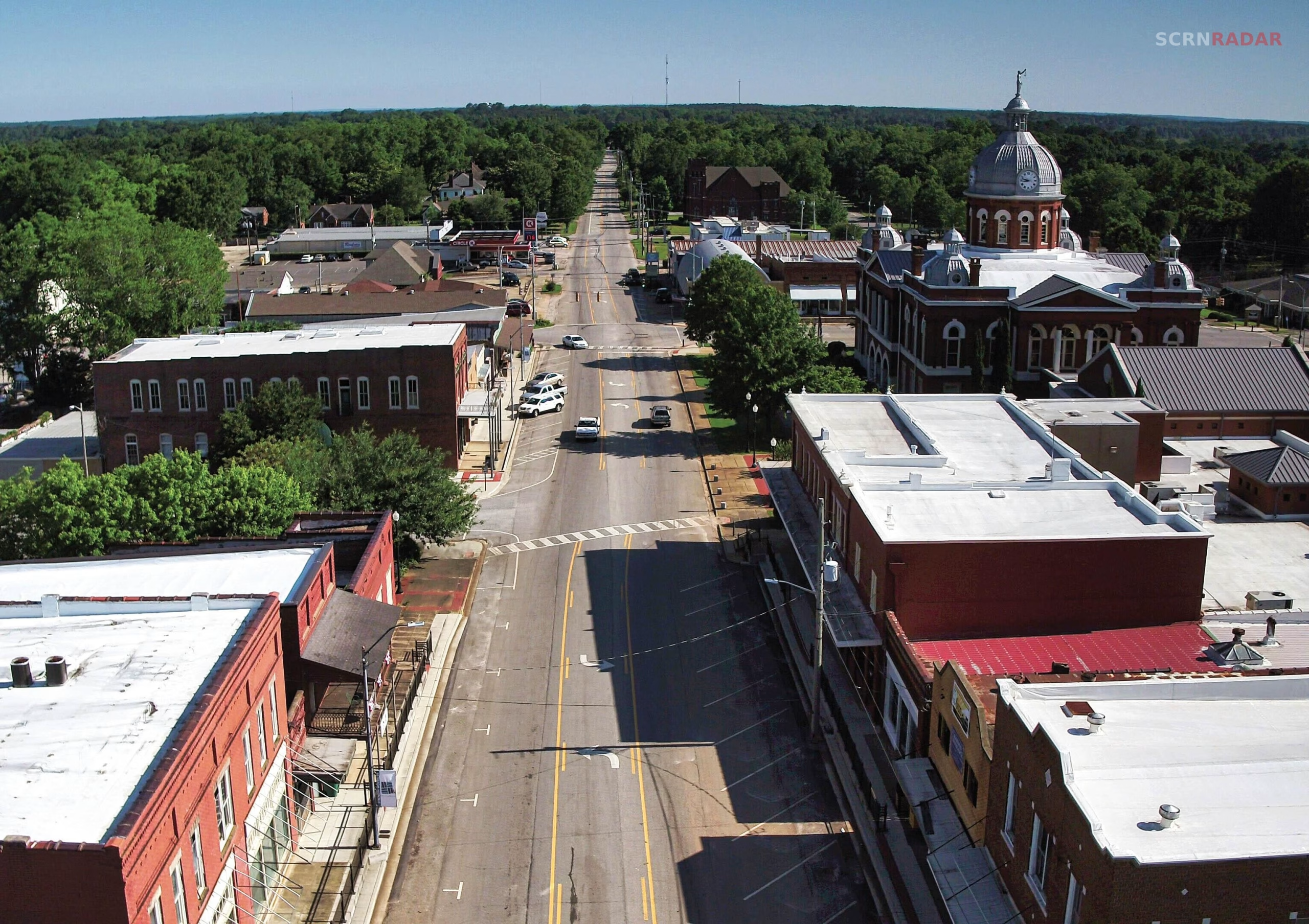
Filming transformed much of downtown LaFayette into a 1960s Mississippi town. Production designers updated storefronts, signage, and streets to create the tense atmosphere associated with the civil rights conflict shown in the film. According to location reports, the filmmakers even spent thousands restoring parts of the downtown theater district for authenticity.
Today, LaFayette remains one of the movie’s most famous surviving filming locations. The courthouse square especially attracts film fans interested in the production history of Mississippi Burning.
Jackson, Mississippi Hosted Major Production Scenes
Much of the production was centered around Jackson, where the filmmakers established production offices and filmed several major scenes. According to Alan Parker’s production notes, many locations were chosen specifically because they were within driving distance of Jackson.
One of the film’s earliest sequences involving the burning of a church was filmed near Jackson using multiple camera setups. Additional scenes involving diners, barbershops, and FBI operations were also filmed in and around the city. The production used local buildings to recreate 1960s Mississippi environments with minimal artificial construction.
The University of Mississippi Medical Center in Jackson also played an important role during filming. The morgue scenes were shot there because the real victims from the 1964 murders had historically been transported to that location. This added another layer of realism to the production.
Jackson became essential to the movie because it offered both urban infrastructure and access to nearby rural filming areas. This allowed the production to move quickly between courthouse scenes, churches, and countryside locations.
Vaiden, Mississippi Supplied the Courthouse Interiors
The town of Vaiden provided some of the movie’s most important government interiors. The old Carroll County Courthouse in Vaiden was used for the sheriff’s office, courtroom scenes, and stairwell interiors seen throughout the film.
The courthouse was reportedly in poor condition during production, with deteriorating brickwork and structural damage creating challenges for the crew. Despite this, the filmmakers considered the building visually perfect for the story’s tense atmosphere.
Many scenes involving local corruption and FBI interrogations were filmed inside the courthouse. Its aging architecture and worn interiors helped reinforce the oppressive tone of the fictional Jessup County government. Unfortunately, the historic courthouse was demolished in the early 1990s after filming concluded.
Although the building no longer exists, Vaiden remains closely tied to the film’s production history because of its contribution to some of the movie’s most memorable sequences.
Vicksburg and Bovina Captured Funeral and Bridge Scenes
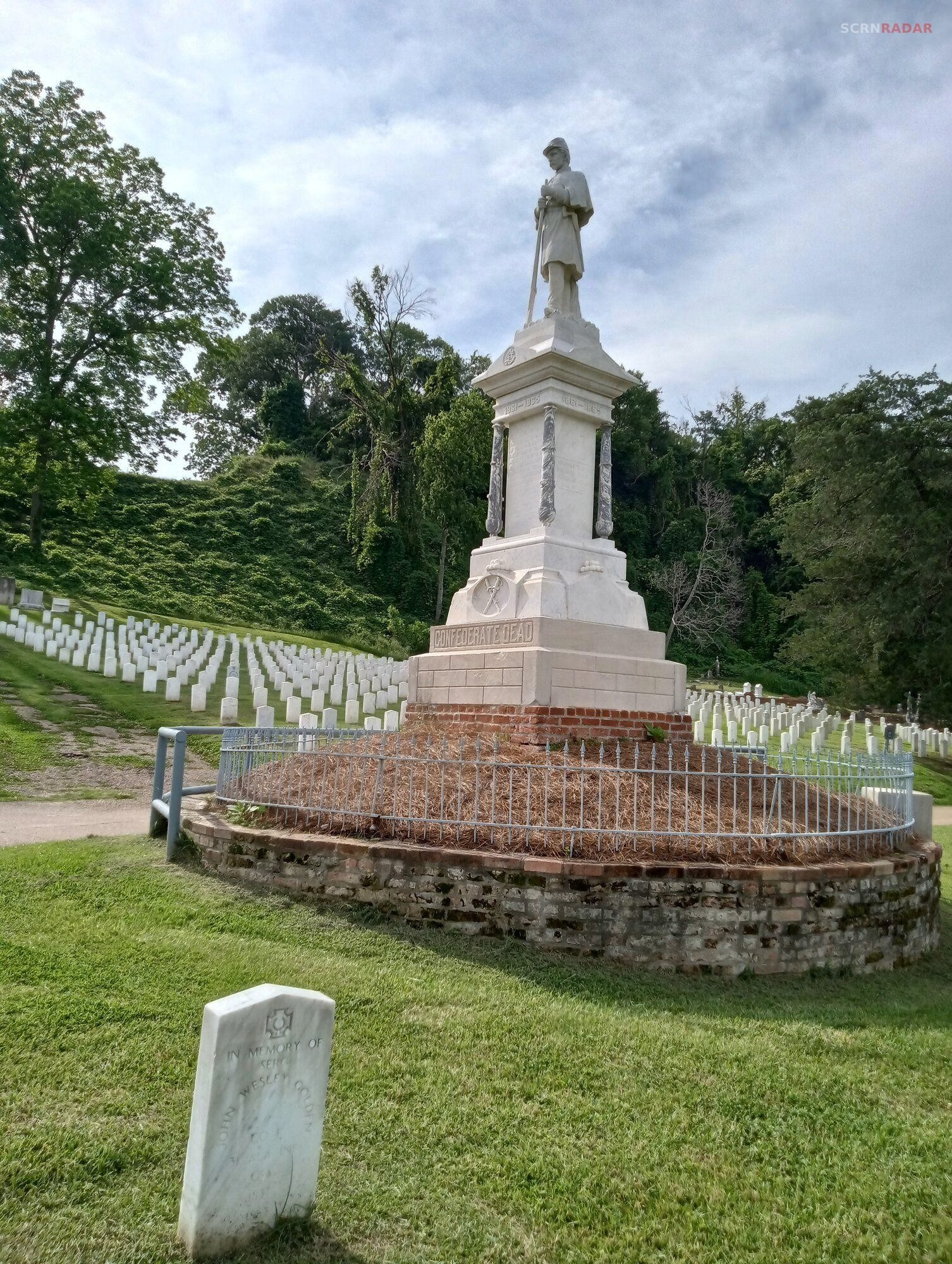
Several emotionally significant scenes were filmed in and around Vicksburg. The funeral procession scenes were shot at Cedar Hill Cemetery, also known locally as City Cemetery. This location was used during sequences connected to the murdered civil rights workers.
Nearby Bovina, Mississippi, was another important filming area. The production used the R.H. Henry Bridge in Bovina for several travel and investigation scenes. The rural environment around Bovina helped reinforce the movie’s sense of isolation and danger.
The filmmakers also used sections of the Mississippi River Valley for search sequences involving the FBI and military personnel. Production designers recreated period-specific environments, including a Choctaw village based on historical references.
These locations helped expand the visual scale of the movie beyond courthouse towns and city streets. The rivers, cemeteries, and bridges contributed heavily to the film’s somber atmosphere.
Ross Barnett Reservoir and Rural Mississippi Added Realism
Additional filming took place around the Ross Barnett Reservoir northeast of Jackson. The reservoir area was used for investigative sequences and atmospheric outdoor shots connected to the FBI search operations.
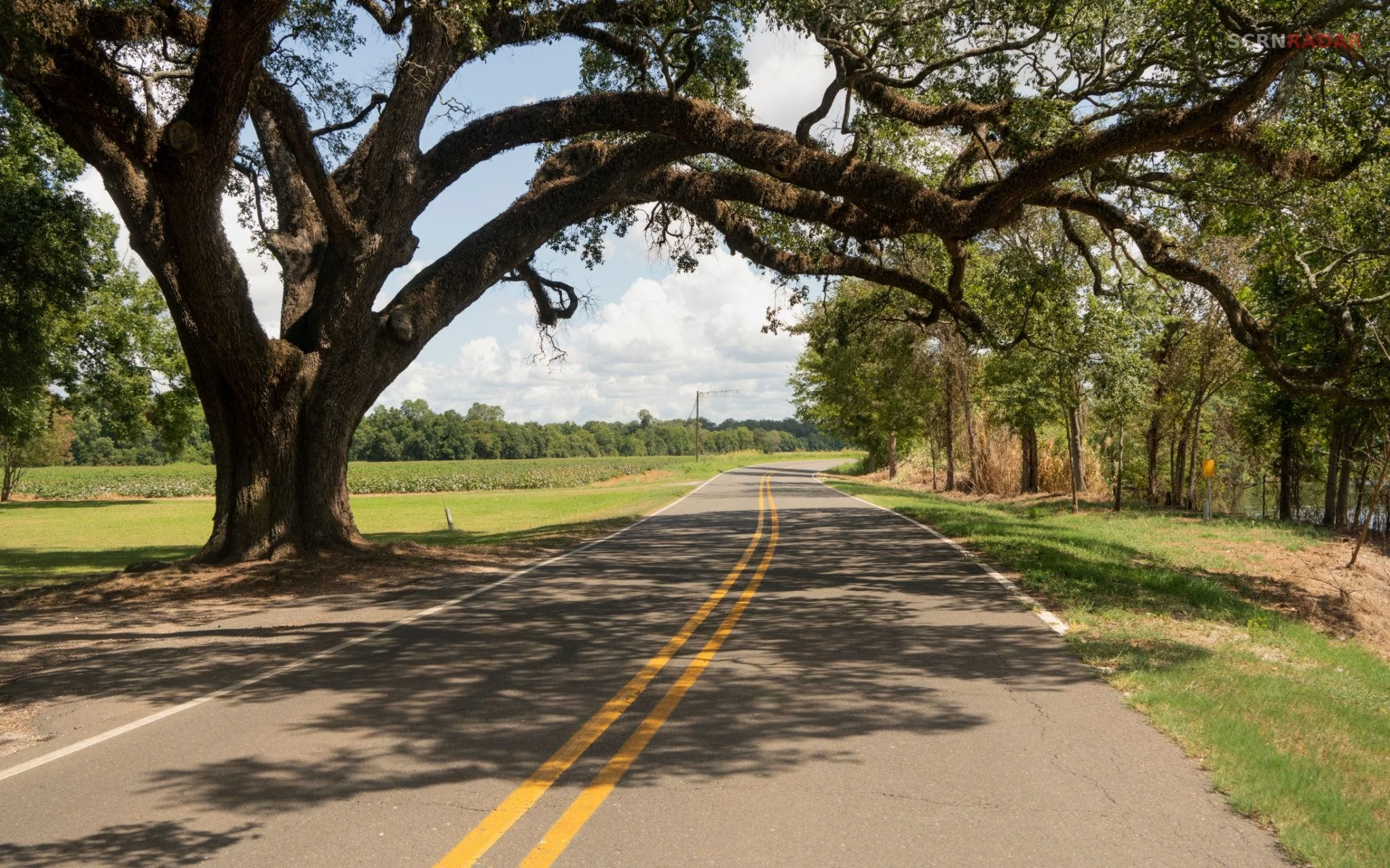
The production also filmed on remote roads, farms, and cotton fields throughout Mississippi. One sequence required the art department to manually attach cotton to plants because the crops had not fully bloomed during production.
Rural Mississippi was essential to the movie’s visual identity because the story revolves around hidden violence, fear, and isolation in small southern communities. Alan Parker specifically avoided overly polished locations because he wanted the environments to feel raw and realistic.
The extensive use of real southern landscapes became one of the movie’s defining strengths. Even critics of the film’s historical interpretation often acknowledged the authenticity of its locations and atmosphere.
The filming locations of Mississippi Burning remain significant because they helped create one of the most visually immersive civil rights dramas ever produced. Instead of relying on studio recreations, the filmmakers chose real towns, courthouses, and roads tied closely to the culture and geography of the Deep South.
Locations like LaFayette, Jackson, Vaiden, and Vicksburg gave the film an authenticity that strengthened its tense atmosphere. The weathered architecture, rural landscapes, and historical surroundings all contributed to the movie’s realism.
Today, many of these filming sites continue attracting movie fans and civil rights history enthusiasts. Even decades later, the locations remain deeply connected to the legacy and controversy surrounding Mississippi Burning.