Joe Kidd remains one of Clint Eastwood’s lesser-discussed westerns, but its rugged filming locations continue to attract classic movie fans decades after release. Directed by John Sturges and written by Elmore Leonard, the 1972 western follows former bounty hunter Joe Kidd as he becomes involved in a violent land dispute in New Mexico. While the story is set in New Mexico, the production actually filmed across Arizona and California to create the movie’s dusty frontier atmosphere.
The film used famous western production sites including Old Tucson Studios in Arizona and the dramatic Alabama Hills region in California. These locations helped establish the movie’s harsh desert environment and gave the film the visual authenticity expected from classic western cinema. Here’s a full breakdown of where Joe Kidd was filmed and why these locations became important parts of western movie history.
Old Tucson Studios Was the Film’s Main Western Town
The majority of Joe Kidd was filmed at Old Tucson Studios, located west of Tucson, Arizona. Built originally in 1939 for the western film Arizona, Old Tucson became one of Hollywood’s most famous western filming locations and was used extensively throughout the 1940s to 1970s.
In Joe Kidd, Old Tucson provided the fictional New Mexico border town where much of the story unfolds. The production used the location’s saloons, courthouse streets, jail buildings, and frontier-style storefronts to create the movie’s central setting. Many of the film’s shootouts and dramatic confrontations were staged directly on these western sets.
Director John Sturges was already familiar with Old Tucson because several major westerns had previously been filmed there, including Gunfight at the O.K. Corral and Rio Bravo. The location’s realistic Old West appearance reduced the need for expensive set construction while maintaining visual authenticity.
The area surrounding Old Tucson also added natural desert scenery to the film. The production specifically wanted Arizona’s famous saguaro cacti visible in the background because they reinforced the southwestern atmosphere. According to production reports, the filmmakers intentionally chose Arizona over studio backlots partly for this reason.
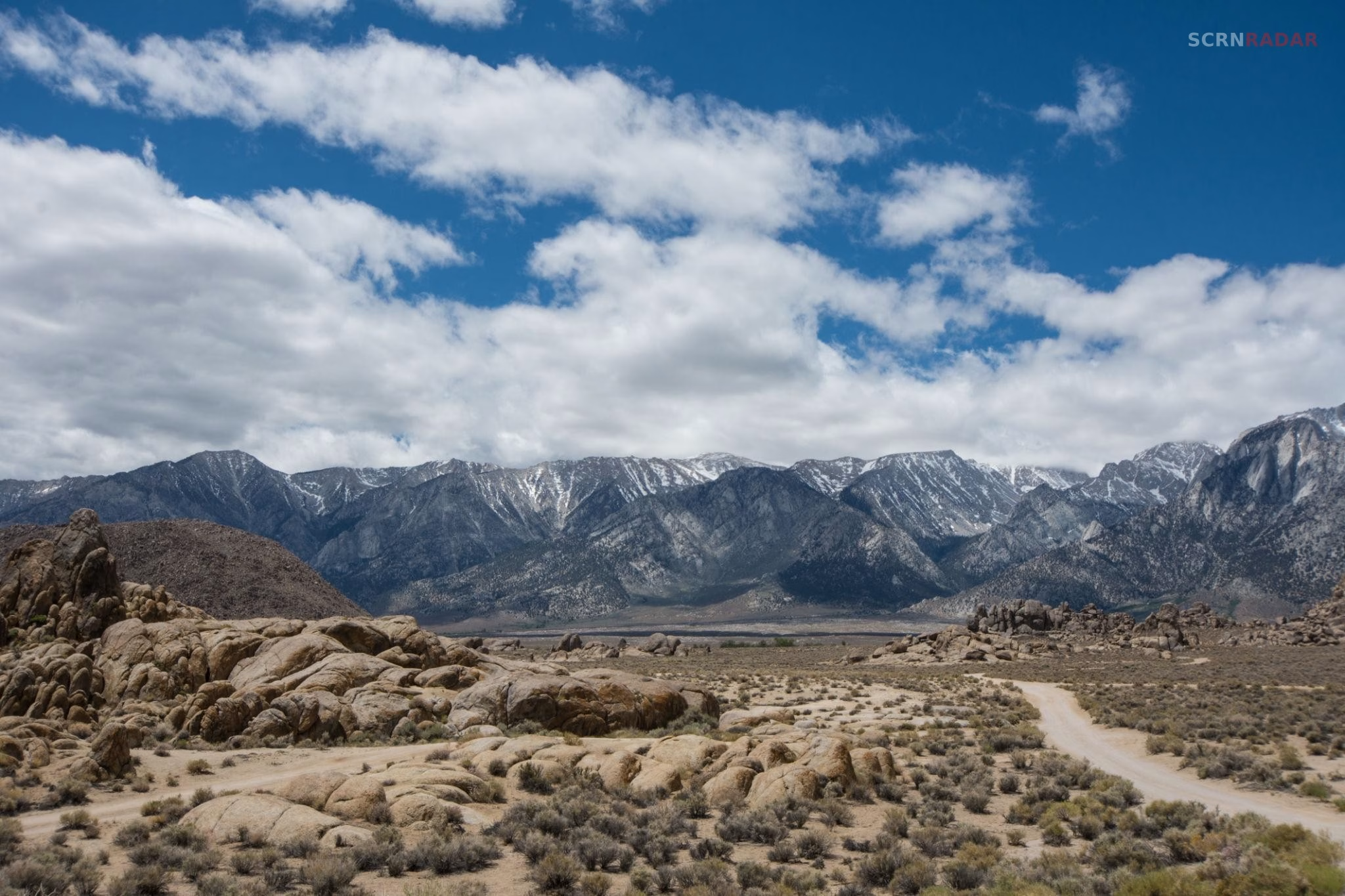
Alabama Hills Created the Movie’s Rugged Mountain Landscapes
Another major filming location for Joe Kidd was Alabama Hills near Lone Pine, California. The Alabama Hills are famous for their rocky formations, desert terrain, and dramatic mountain backdrops, making them one of the most recognizable western filming locations in Hollywood history.
The production used the Alabama Hills for many of the movie’s outdoor pursuit scenes involving Clint Eastwood’s Joe Kidd tracking revolutionaries through rough terrain. The region’s wide-open landscapes helped create the isolated and dangerous atmosphere central to the story.
The nearby Sierra Nevada mountains also appear prominently in several scenes. Their snow-covered peaks created striking visual contrast against the dry desert terrain below. This combination of desert and mountain scenery became one of the movie’s defining visual characteristics.
The Alabama Hills had already appeared in hundreds of westerns before Joe Kidd, including How the West Was Won and several Randolph Scott films. Because of this long cinematic history, the location immediately gave the movie a classic western aesthetic recognizable to audiences.
Inyo National Forest Added Wilderness Sequences
Portions of the movie were also filmed in Inyo National Forest, which stretches across eastern California near the Sierra Nevada mountains. The production specifically acknowledged the cooperation of the U.S. Forest Service and Inyo National Forest in the film’s credits.
The forest region was used for several wilderness travel scenes and horseback pursuit sequences. Unlike the dry desert landscapes of Arizona, Inyo National Forest offered more rugged mountain environments that expanded the visual scale of the film.
The filmmakers also used roads and open terrain around Bishop and Sherwin Summit in California for additional outdoor sequences. IMDb’s filming records specifically mention Sherwin Summit and Lone Pine among the production locations.
These California locations helped diversify the movie’s scenery while maintaining the rough frontier atmosphere expected from a Clint Eastwood western. Instead of relying entirely on one desert environment, the production mixed rocky hills, forests, and mountain passes to make the story feel larger in scale.