Few films capture the vast beauty of the American frontier quite like Dances With Wolves. Directed by and starring Kevin Costner, the film is widely regarded as one of the greatest Westerns ever made. Its sweeping landscapes, authentic cultural portrayal, and emotional storytelling helped it win seven Academy Awards, including Best Picture.
Set during the American Civil War, the story follows Lieutenant John Dunbar as he journeys into the frontier and gradually forms a deep connection with a Lakota Sioux tribe. While the narrative is powerful, it is the film’s breathtaking locations that truly heighten the experience. From rolling grasslands to rugged canyons, the movie was shot almost entirely on location, giving it an unmatched sense of realism.
So, where exactly was Dances With Wolves filmed? Let’s break down all the major filming locations and how they helped bring this iconic story to life.
South Dakota: The Heart of Dances With Wolves
The majority of Dances With Wolves was filmed in South Dakota, making it the central location of the film’s production. Filming took place between June and November 1989, with the state’s natural landscapes playing a key role in shaping the film’s visual identity.
South Dakota’s wide-open prairies, vast skies, and rich Native American history made it the perfect stand-in for the 19th-century frontier. The filmmakers chose this region not just for its beauty but also for its authenticity. The land itself tells a story, reflecting both the freedom and isolation experienced by Dunbar.
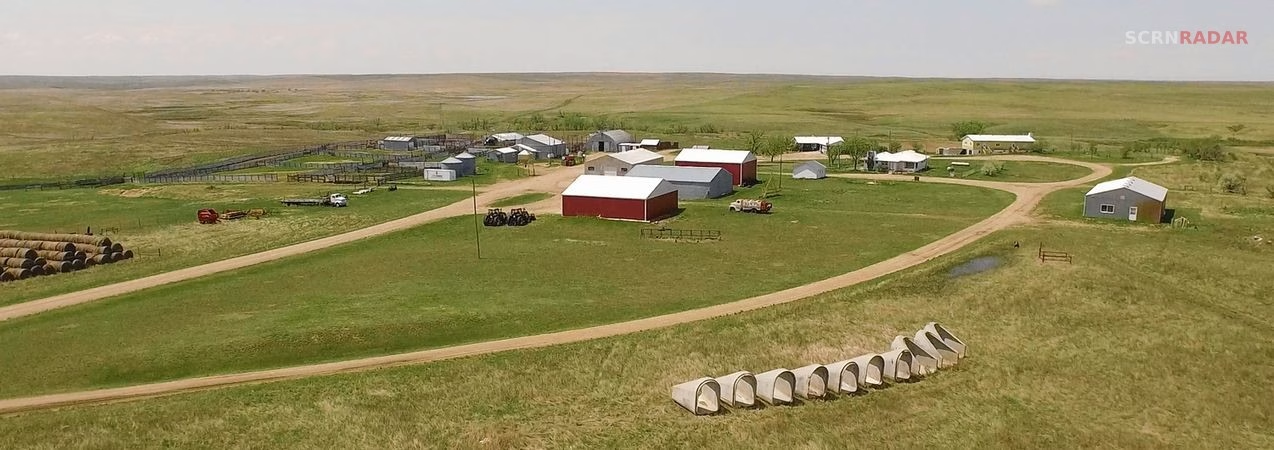
The state is also home to one of the largest herds of American bison, which was essential for filming the iconic buffalo hunt sequence. This commitment to realism is one of the reasons the film still feels so immersive decades later.
Triple U Buffalo Ranch: The Iconic Buffalo Hunt Scene
One of the most memorable sequences in Dances With Wolves is the massive buffalo hunt, which was filmed at the Triple U Buffalo Ranch near Pierre.
This sprawling ranch covers tens of thousands of acres and houses a large herd of bison. The production team spent days filming the sequence, carefully coordinating riders, animals, and camera crews to capture the action.
The scene is not just visually stunning but also narratively important. It marks a turning point in Dunbar’s relationship with the Sioux tribe, symbolizing his growing acceptance into their community. The authenticity of the location plays a huge role in making this moment feel real and impactful.
Spearfish Canyon: The Emotional Final Goodbye
Another key filming location is Spearfish Canyon, located in the Black Hills region of South Dakota. This breathtaking canyon served as the setting for the film’s emotional final scenes.
The winter camp of the Sioux tribe, where Dunbar says goodbye to his friends, was filmed near Roughlock Falls in this area. Surrounded by snow-covered trees, frozen waterfalls, and rugged cliffs, the location adds a powerful emotional layer to the scene.
The natural beauty of Spearfish Canyon contrasts with the sadness of Dunbar’s departure, creating one of the most memorable moments in the film. Today, the area remains a popular destination for hiking, wildlife viewing, and photography.
Sage Creek Wilderness Area: The Open Frontier terrain
The vast plains seen throughout the film were largely captured in the Sage Creek Wilderness Area, located within Badlands National Park.
This area is known for its rolling grasslands and dramatic rock formations. It served as the backdrop for several scenes, including Dunbar’s journey to Fort Sedgwick.
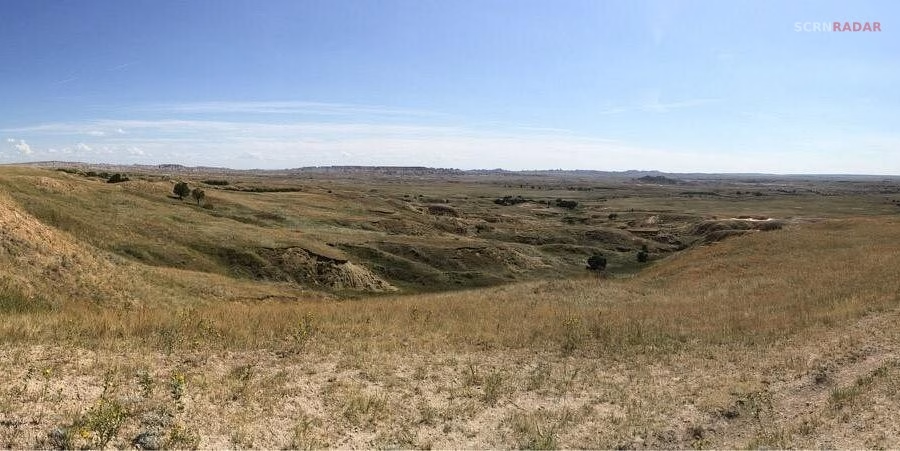
The emptiness of the terrain emphasizes the isolation of the frontier, allowing viewers to feel the same sense of solitude experienced by the characters. It also highlights the film’s central theme of man’s relationship with nature.
Fort Hays Set: Recreating Frontier Life
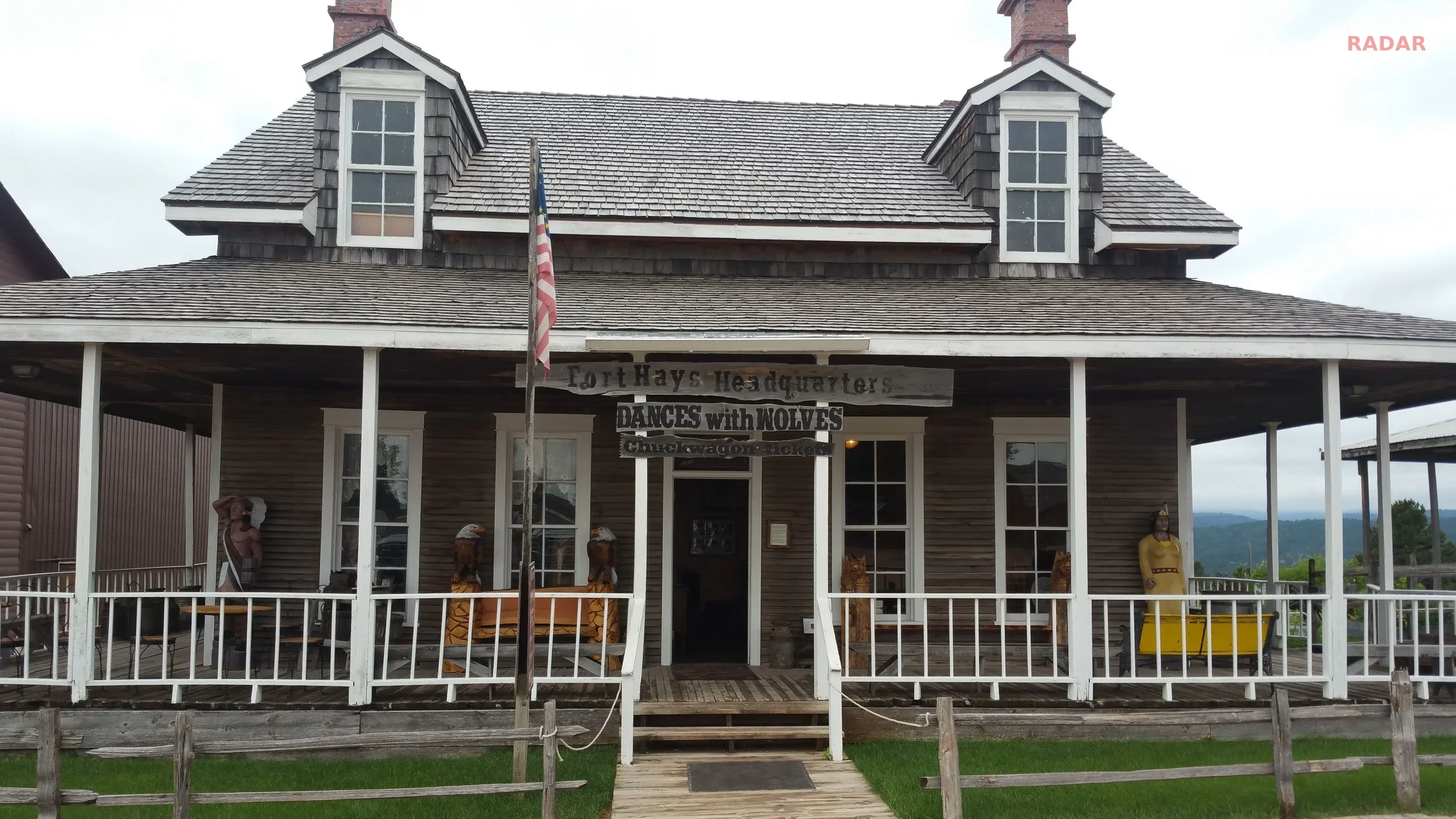
To bring the story’s military and settlement scenes to life, the production team constructed a detailed film set near Rapid City, now preserved at Fort Hays.
This set was used to depict Fort Sedgwick and other frontier locations. Built using traditional materials and techniques, the structures were designed to look historically accurate, adding to the film’s authenticity.
Today, visitors can explore the preserved set, walking through cabins, supply buildings, and wooden boardwalks that were used during filming. It offers a rare opportunity to step directly into the world of Dances With Wolves.
The Black Hills: A Stunning Natural Backdrop
The Black Hills region played a major role in shaping the film’s visual tone. Stretching across western South Dakota and into Wyoming, this area features dense forests, rolling hills, and scenic valleys.
The filmmakers used the Black Hills for various outdoor scenes, taking advantage of its diverse landscapes. The region’s historical significance, particularly its connection to Native American culture, also adds depth to the film.
By filming in real locations rather than relying on sets, the production was able to capture the true essence of the American frontier.
Wyoming: Expanding the Visual Scope
While South Dakota served as the primary filming location, some scenes were also shot in Wyoming, particularly around the Jackson Hole area.
This region is known for its dramatic mountain ranges and pristine wilderness. The towering peaks of the Tetons provided a striking contrast to the plains of South Dakota, adding variety to the film’s visuals.
These additional locations helped expand the scope of the story, making the frontier feel vast and limitless.
Why These Locations Were Perfect for the Film
The success of Dances With Wolves is closely tied to its filming locations. Unlike many films that rely heavily on studio sets, this production embraced real environments.
Filming in South Dakota allowed the filmmakers to capture landscapes that could not be replicated elsewhere. The natural lighting, weather conditions, and terrain all contribute to the film’s authenticity.
Moreover, the locations hold historical and cultural significance. By filming in areas connected to Native American history, the film adds a layer of realism that enhances its storytelling.
Many of the filming locations used in Dances With Wolves are still accessible to visitors today. Places like Spearfish Canyon and Fort Hays offer a chance to experience the landscapes seen in the film.
Other attractions include 1880 Town, where props and memorabilia from the movie are displayed, and Tatanka: Story of the Bison, a cultural site created by Kevin Costner.
These destinations not only celebrate the film but also highlight the history and culture of the region. For fans of the movie, visiting these sites can be a deeply rewarding experience.