Where Eagles Dare remains one of the most iconic World War II action thrillers ever made. Directed by Brian G. Hutton and starring Richard Burton and Clint Eastwood, the film blends espionage, action, and suspense into a gripping narrative that still holds up decades later.
Set against the backdrop of Nazi-occupied Europe, the story follows a dangerous Allied mission to infiltrate a mountain fortress and rescue a captured American general. What truly elevates the film, beyond its performances and plot twists, is its use of real-world locations. From towering Alpine castles to cable cars suspended over dramatic valleys, the film’s settings play a crucial role in building tension and authenticity.
Let’s break down the filming locations of Where Eagles Dare, explore their real-life significance, and understand how they contributed to the film’s lasting legacy.
The Core Mission and Why Location Matters
At its core, Where Eagles Dare follows a high-risk mission led by Major John Smith and Lieutenant Morris Schaffer. Their objective is to rescue Brigadier General George Carnaby, who is being held in a heavily guarded mountain fortress. What makes the mission so compelling is its environment.
The story unfolds in the Bavarian Alps, where snow-covered peaks, isolated villages, and steep cliffs create a sense of danger and isolation. These natural elements are not just background visuals. They actively shape the narrative, making every movement feel risky and every decision more intense.
The use of real locations enhances this realism, giving the film a grounded feel that studio sets alone could never achieve.
Schloss Adler in the Film: The Real Castle Behind the Fortress
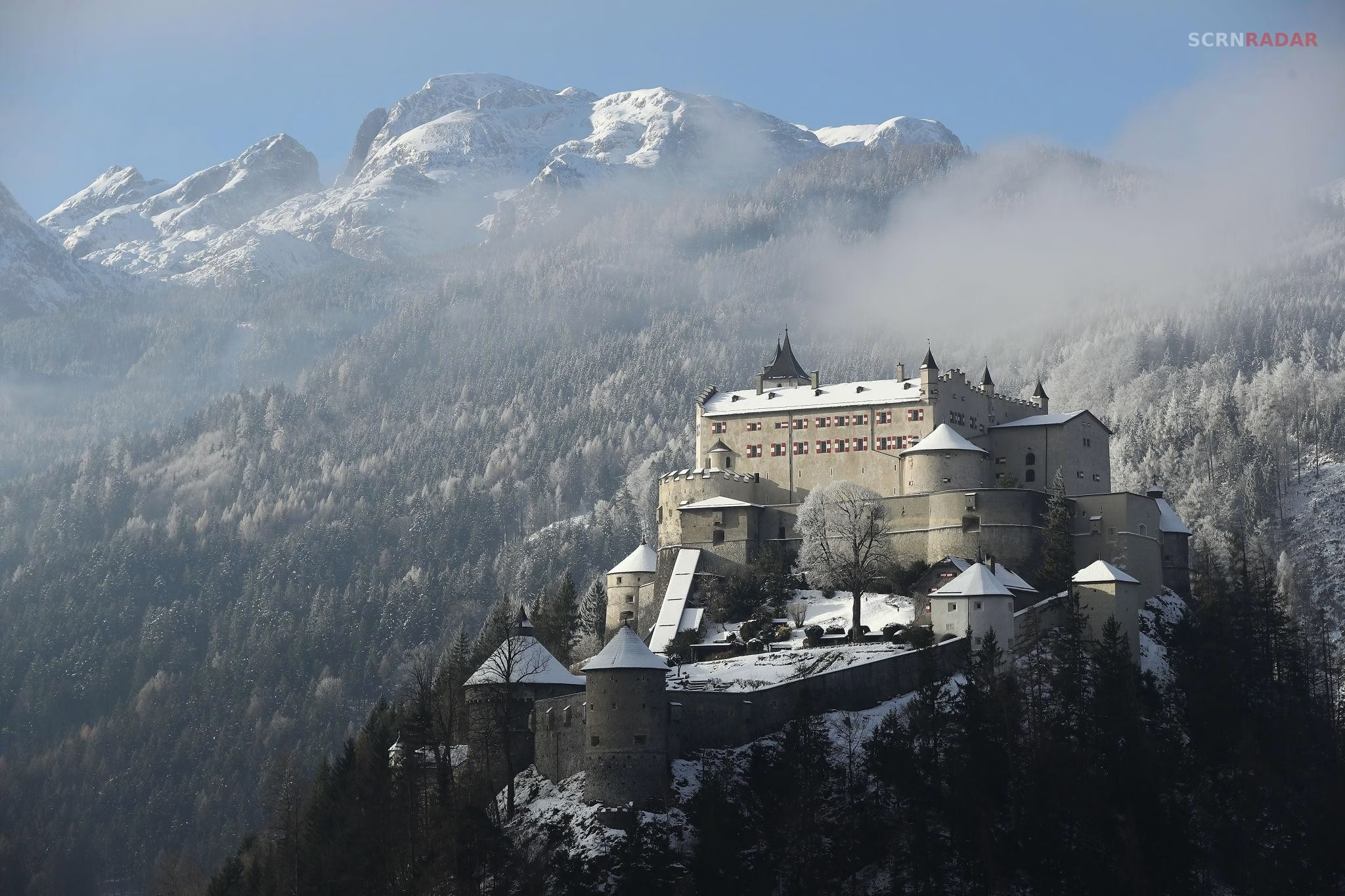
The most memorable location in the film is Schloss Adler, the mountain fortress where the captured general is held. In reality, these scenes were filmed at Hohenwerfen Castle.
Perched high above the Salzach Valley, this medieval fortress dates back over 900 years. Its elevated position and commanding views make it the perfect stand-in for a Nazi stronghold.
The castle’s architecture adds to the tension of the film. Narrow passageways, towering walls, and steep drops create a sense of confinement and danger. These elements are used effectively during infiltration and escape sequences.
Today, Hohenwerfen Castle is a popular tourist destination. Visitors can explore its historic interiors, enjoy panoramic Alpine views, and even watch falconry demonstrations.
Werfen Village: The Quiet Town with High Stakes
The peaceful Austrian town of Werfen plays a key role in the film’s early sequences.
In the story, this village serves as the staging ground for the mission. It is where the commandos blend in, gather intelligence, and begin their infiltration.
The contrast between the town’s calm appearance and the underlying tension is striking. Quaint streets and traditional houses hide a world of espionage and danger.
Filming in a real village adds authenticity to these scenes. It makes the story feel more believable and immerses viewers in the setting.
For modern visitors, Werfen offers a mix of natural beauty and historical charm, making it a worthwhile stop for film enthusiasts.
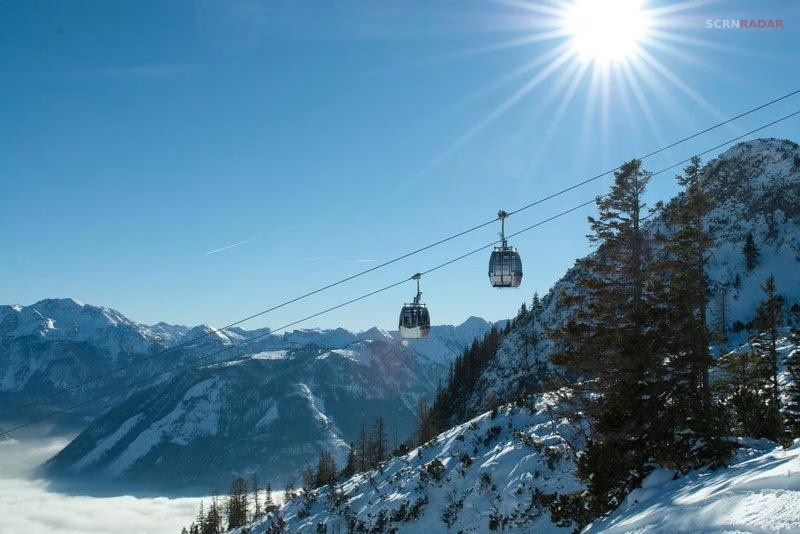
One of the most iconic sequences in Where Eagles Dare involves a cable car suspended high above the mountains. These scenes were filmed using the Feuerkogel Cable Car.
The cable car adds a unique layer of tension to the film. Suspended in mid-air, with nowhere to hide, the characters are forced into close-quarters confrontations. The height and isolation amplify the danger.
Visually, the sequence is stunning. The sweeping views of the Alps create a cinematic spectacle that remains memorable even today.
In real life, the Feuerkogel cable car offers access to a scenic plateau known for hiking and skiing. It is considered one of the most beautiful vantage points in the region.
Airfield and Military Sequences: Real Locations, Real Impact
The film’s airfield scenes were shot in Aigen im Ennstal, specifically at a military garrison.
These sequences play a crucial role in establishing the mission’s stakes. They show the scale of the operation and the presence of enemy forces.
Using a real airfield enhances the realism of these moments. The environment feels authentic, with wide runways and surrounding mountains adding depth to the visuals.
This attention to detail is part of what makes the film stand out among other war movies of its time.
The Hidden Interior Sets: Studio Work in the UK
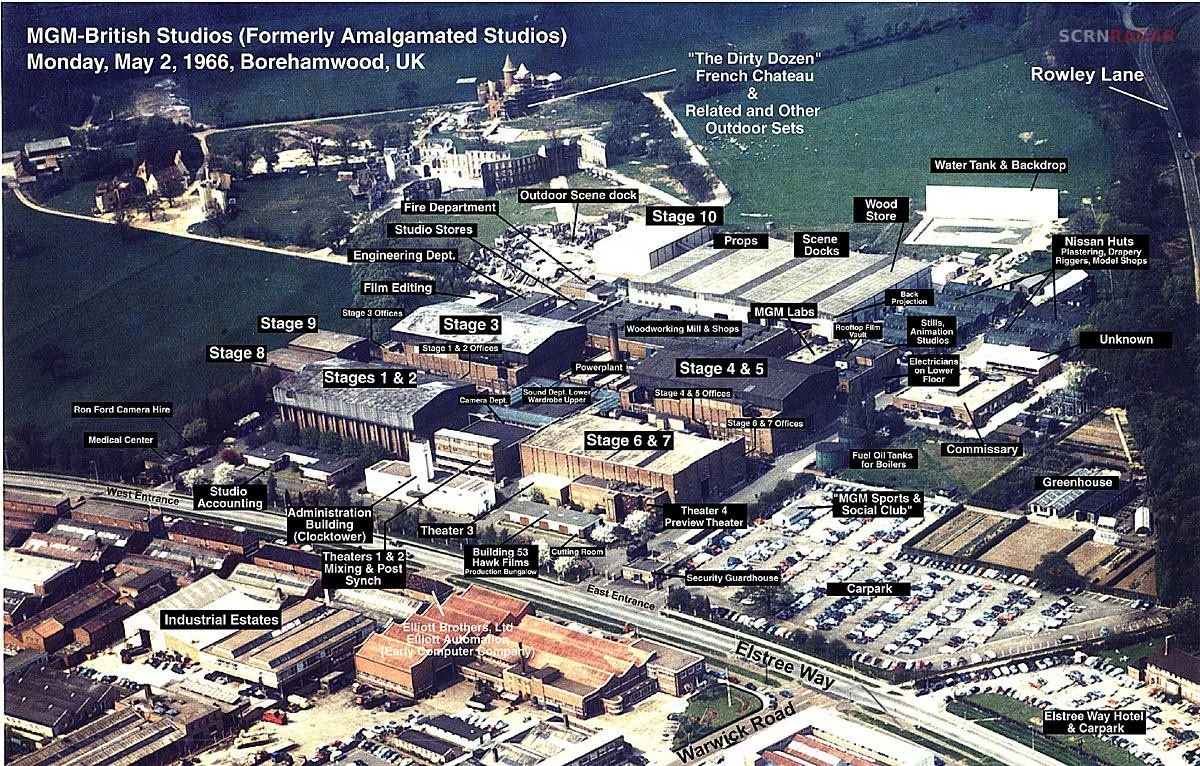
While many exterior scenes were filmed in Austria, several interior sequences were shot at MGM British Studios.
These studio sets were used to recreate interiors that would have been difficult or impossible to film on location. This includes certain castle rooms and controlled action environments.
The combination of real locations and studio sets creates a seamless viewing experience. Viewers rarely notice the transition, which speaks to the film’s strong production design.
MGM British Studios was a major production hub during the mid-20th century, contributing to many classic films before its closure.
Why These Locations Still Matter Today
The filming locations of Where Eagles Dare are more than just backdrops. They are essential to the film’s identity.
Each location adds a layer of realism and atmosphere that enhances the story. From the imposing castle to the breathtaking cable car scenes, these settings create a sense of immersion that is difficult to replicate.
For fans of the film, visiting these locations offers a unique experience. It allows them to step into the movie and see firsthand the places where iconic scenes were shot.
For history enthusiasts, these sites also provide insight into the region’s cultural and historical significance.
Where Eagles Dare remains a standout in the war thriller genre, and its filming locations play a major role in that legacy.
By combining real-world settings with strong storytelling, the film achieves a level of authenticity that continues to resonate with audiences. The use of Austrian landscapes, historic castles, and practical environments gives the movie a timeless quality.
Whether you are revisiting the film or discovering it for the first time, understanding its locations adds a new layer of appreciation.
It is not just a story about a daring mission. It is a cinematic journey through some of Europe’s most stunning and historically rich landscapes.