The Road, based on Cormac McCarthy’s novel, delivers one of the most emotionally powerful endings in post-apocalyptic storytelling. The film follows a father and son steering a devastated world where society has collapsed, and survival often comes at the cost of morality.
While much of the story focuses on their physical journey, the ending shifts toward something deeper. It becomes a reflection on legacy, ethics, and what it means to remain human when everything else has fallen apart. The final moments are not just about death or survival, but about what values endure after everything is lost.
Understanding the ending requires looking beyond the surface events and focusing on the emotional and symbolic weight carried by the characters.
What Happens to the Man at the End
By the final act of the film, the man’s condition has clearly worsened. Throughout the story, he is shown coughing and struggling physically, which hints at an underlying illness. Combined with the harsh environment, it becomes clear that his survival is limited.
At the coast, his journey comes to an end. The man dies after ensuring that his son is as prepared as possible to survive alone. His death is not sudden, but something the story has been building toward from the beginning.
Before he dies, he has one final conversation with his son. In this moment, he passes on the responsibility of survival, emphasizing the importance of continuing their values. This scene is central to the film’s emotional impact because it marks the end of his role as protector.
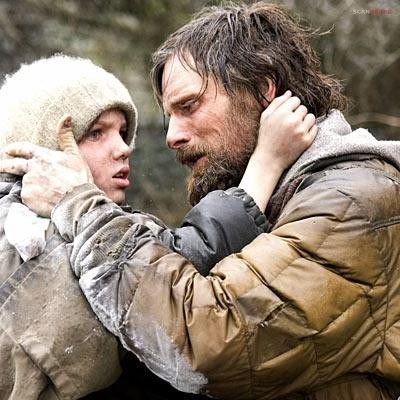
His death represents both loss and completion. He has fulfilled his purpose, even if it means leaving his son behind.
What Happens to the Boy After His Death
After the man’s death, the boy is left alone for the first time. This moment is critical because it tests everything his father has taught him. The world remains dangerous, and without his father, survival becomes even more uncertain.
Shortly afterward, the boy encounters a man who had been following them from a distance. Unlike the threats seen earlier in the film, this individual appears calm and non-threatening. He offers to take the boy with him and reveals that he has a family.
The boy hesitates, reflecting his father’s warnings about trusting others. However, he ultimately chooses to go with the man. This decision shows that he has internalized his father’s teachings, not just about survival, but about recognizing goodness.
The ending suggests that the boy may have found a safer environment. While the future is uncertain, this moment introduces a sense of cautious hope.
The Meaning Behind “Carrying the Fire”
One of the most important ideas in The Road is the concept of “carrying the fire.” The man repeatedly tells his son that they are carrying the fire, but the phrase is never explained directly.
Symbolically, the fire represents humanity, morality, and hope. In a world where many people have abandoned ethics to survive, carrying the fire means holding onto compassion and doing what is right.
The man’s final message to his son reinforces this idea. He is not just teaching him how to survive, but how to remain human. This is what separates them from others in the film who resort to violence and cruelty.

By the end, the fire is no longer something the man carries. It becomes the boy’s responsibility. This shift represents the continuation of values across generations.
Is the Ending Hopeful or Tragic?
The ending of The Road exists between tragedy and hope. The man’s death is undeniably heartbreaking, as it leaves the boy alone in a hostile world. At the same time, the introduction of the new family offers a possibility of survival and connection.
This balance is what makes the ending so powerful. It does not provide a traditional happy conclusion, but it avoids complete despair. Instead, it suggests that hope can exist even in the smallest form.
The boy’s decision to trust the stranger is especially significant. It shows that he has not lost faith in humanity, despite everything he has experienced. This choice reinforces the film’s central message about maintaining moral values.
Ultimately, the ending is hopeful, not because the world improves, but because the boy chooses to carry forward what his father taught him.
The Deeper Meaning of the Ending
At its core, The Road is not just about survival, but about what survival means. The man’s journey is driven by the desire to protect his son, but also to ensure that he grows up with a sense of morality.
The ending highlights the idea of legacy. The man’s physical presence ends, but his teachings continue through his son. This suggests that human values can persist even when society collapses.
The film also explores the idea of choice. Characters in the story face constant decisions between survival and morality. The man and his son choose to remain ethical, even when it puts them at risk.
This message becomes especially important in the final moments. The boy’s decision to trust others shows that he has embraced these values, ensuring that they will continue beyond his father’s life.
Another layer to the ending lies in how it redefines strength. Throughout the film, the man believes strength comes from protection, control, and constant vigilance. However, the final moments suggest that true strength is the ability to trust and to continue living without losing one’s humanity.
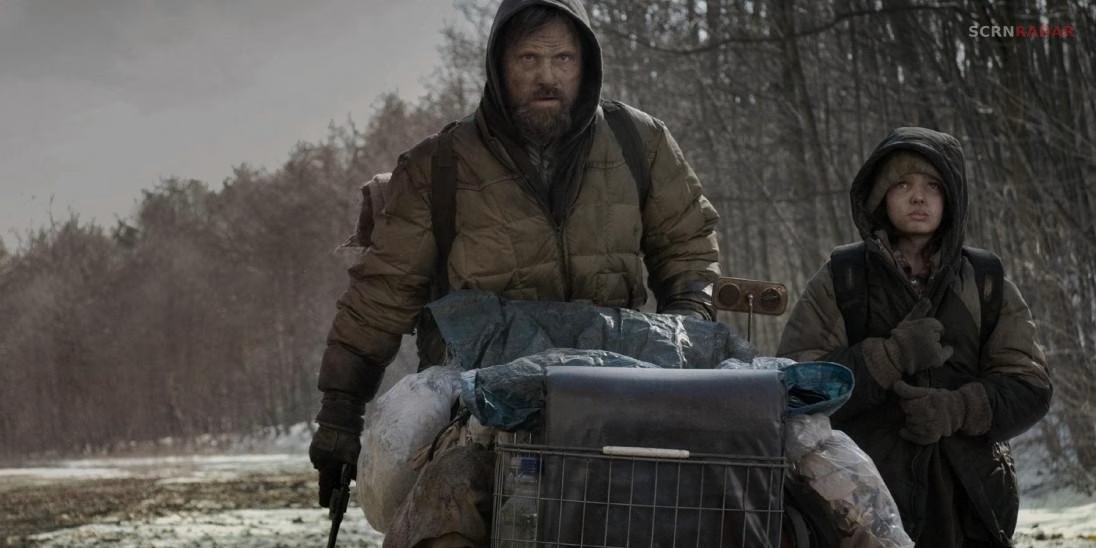
The boy represents this shift, as he chooses connection over isolation despite everything he has witnessed. This contrast highlights the evolution of survival itself, moving from fear-driven instincts to value-driven choices. In this sense, the ending is not just about passing on life, but about passing on a better way to live within a broken world.
The ending of The Road is both simple and profound. The man dies, but his purpose is fulfilled through his son. The boy survives, carrying forward the values that define their journey.
Rather than focusing on the destruction of the world, the film emphasizes what remains. Humanity, compassion, and hope still exist, even in a broken environment.
This is what makes the ending so impactful. It is not about victory or defeat, but about endurance. The fire continues to burn, not as a literal force, but as a symbol of what it means to be human.
In the end, The Road leaves viewers with a powerful question. In a world stripped of everything, what would you choose to carry forward?