Few fantasy films have endings as emotional, layered, and memorable as The Lord of the Rings: The Return of the King. After nearly twelve hours of storytelling across the trilogy, Peter Jackson’s epic concludes with the destruction of the One Ring, the fall of Sauron, Aragorn’s rise as king, and Frodo’s heartbreaking departure from Middle-earth. Yet many viewers are left with questions about what these final scenes actually mean.
Why does Frodo leave when everyone else gets a happy ending? Did he die when he sailed away? Why couldn’t he stay in the Shire with Sam? And what is the significance of Aragorn’s coronation and the Grey Havens farewell?
The ending of The Return of the King is about much more than defeating a villain. It explores sacrifice, healing, friendship, and the idea that some wounds never fully disappear. While Sauron is defeated and peace returns to Middle-earth, the story reminds viewers that victory often comes with a personal cost.
Let’s break down exactly what happens at the end of The Return of the King and what it means for the major characters.
The Destruction of the One Ring and the Fall of Sauron
The climax of the film takes place at Mount Doom, where Frodo and Sam finally reach the Crack of Doom after an exhausting journey through Mordor. Throughout the trilogy, Frodo has carried the burden of the One Ring, resisting its corrupting influence for far longer than almost anyone else could have managed.
However, when he finally reaches the place where the Ring must be destroyed, Frodo cannot let it go. Instead of throwing it into the fire, he claims it for himself. This moment is crucial because it shows that the Ring’s power is ultimately too strong for even the pure-hearted Frodo to resist. Tolkien’s story was never about a hero simply overcoming temptation through willpower alone.
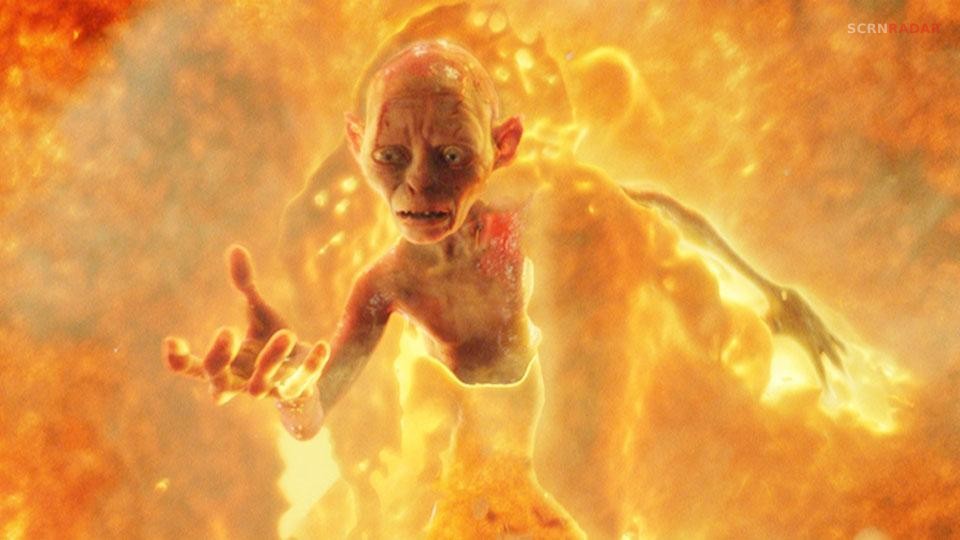
At that moment, Gollum attacks Frodo and bites off his finger, taking the Ring for himself. In his excitement, Gollum loses his footing and falls into the lava with the Ring. The One Ring is finally destroyed, and with it, Sauron’s power collapses forever. The Dark Lord is reduced to a powerless shadow, his armies are defeated, and his kingdom begins to crumble.
Ironically, the quest succeeds not because Frodo remains perfect but because Gollum’s obsession ultimately leads to the Ring’s destruction. This twist highlights one of Tolkien’s central themes: even flawed individuals can play a role in saving the world.
Why Gollum Was Essential to the Story
One of the most misunderstood aspects of the ending is Gollum’s role. Many viewers see him merely as a villain, but he is actually one of the most important characters in the trilogy.
Throughout the story, Gandalf repeatedly argues that Gollum deserves pity rather than hatred. Frodo follows this advice and spares Gollum’s life multiple times. Those acts of mercy eventually become critical to the success of the mission.
If Frodo or Sam had killed Gollum earlier, nobody would have been present to take the Ring from Frodo when he finally succumbed to its power. In a strange way, Gollum becomes the instrument through which the quest is completed. His fall into the fire represents the final consequence of his lifelong obsession with the Ring.
The ending suggests that compassion and mercy can have unforeseen benefits. What seemed like a weakness earlier in the story ultimately becomes the reason evil is defeated.
Why Aragorn Marches to the Black Gate
While Frodo struggles in Mordor, Aragorn leads the armies of Gondor and Rohan to the Black Gate. On the surface, this decision appears suicidal because the combined forces of Men are vastly outnumbered.
The true purpose of the march is not victory. Aragorn knows his army cannot defeat Sauron directly. Instead, he intends to distract the Dark Lord and draw his attention away from Frodo’s mission. By presenting himself as a threat, Aragorn convinces Sauron that the Ring may be with the western armies rather than hidden inside Mordor itself.
This strategy buys Frodo valuable time to reach Mount Doom. The battle serves as the ultimate act of faith, with Aragorn and his allies willingly risking death for a chance that Frodo might succeed.
When the Ring is destroyed, Sauron’s forces instantly lose their purpose and organization. What seemed like certain defeat suddenly becomes victory.
Aragorn’s Coronation and the Return of the King
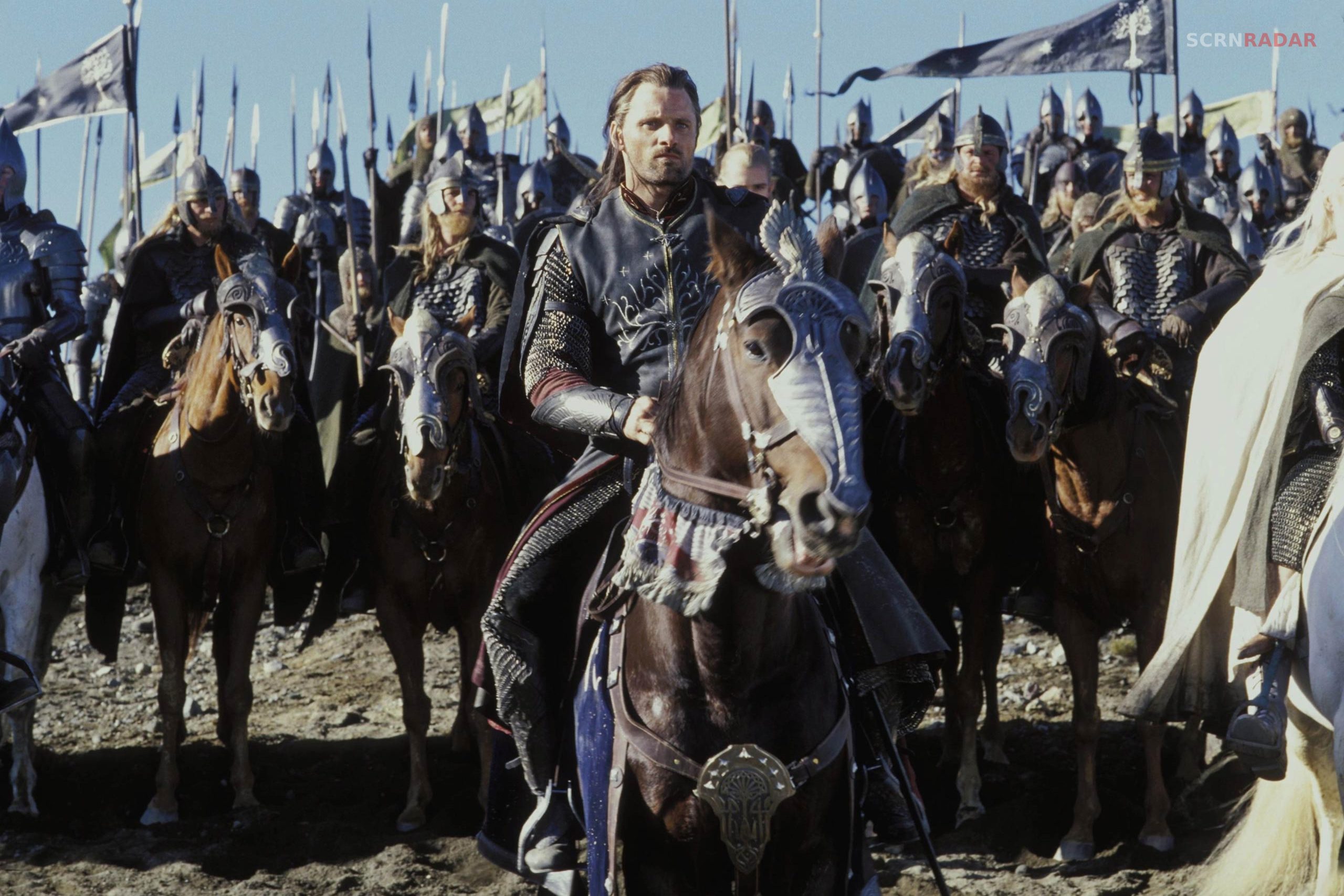
The title The Return of the King refers primarily to Aragorn. Throughout the trilogy, he struggles with his destiny as the heir of Isildur and the rightful king of Gondor.
After Sauron’s defeat, Aragorn finally accepts the role he has spent years avoiding. He is crowned King Elessar and becomes ruler of the reunited kingdoms of Gondor and Arnor. This marks the beginning of a new age for Middle-earth.
One of the most powerful moments during the coronation occurs when Aragorn tells the assembled crowd, “My friends, you bow to no one.” He then bows before Frodo, Sam, Merry, and Pippin.
This scene recognizes that the true heroes of the war were not kings, warriors, or wizards. They were ordinary hobbits who carried unimaginable burdens and made extraordinary sacrifices. The moment reinforces Tolkien’s belief that courage and heroism can come from the most unlikely people.
Why Frodo Doesn’t Get a Traditional Happy Ending
After the celebrations end, the four hobbits return to the Shire. At first, it seems like everything should return to normal.
However, Frodo struggles to find peace. Although the Ring is gone, the physical and emotional damage it caused remains. He continues to suffer from wounds received during his journey, including the stab wound from the Witch-king and the trauma of carrying the Ring for so long.
This is one of the most realistic elements of the story. The quest may be over, but Frodo cannot simply forget everything that happened. His experiences have permanently changed him.
While Sam, Merry, and Pippin are able to rebuild their lives, Frodo feels increasingly disconnected from the peaceful world he fought to protect. His pain serves as a reminder that even successful battles leave scars behind.
What Are the Undying Lands?
The most emotional scene in the film takes place at the Grey Havens, where Frodo boards a ship with Gandalf, Bilbo, and the departing Elves.
Many viewers mistakenly believe Frodo dies during this sequence. In reality, he is sailing to the Undying Lands, a blessed realm located across the sea. The Undying Lands do not grant immortality to mortals. Frodo remains mortal, but he is given the opportunity to find peace and healing away from the burdens of Middle-earth.
The journey is a special exception granted because of the sacrifices Frodo made while bearing the Ring. Bilbo receives the same privilege due to his own connection with the Ring.
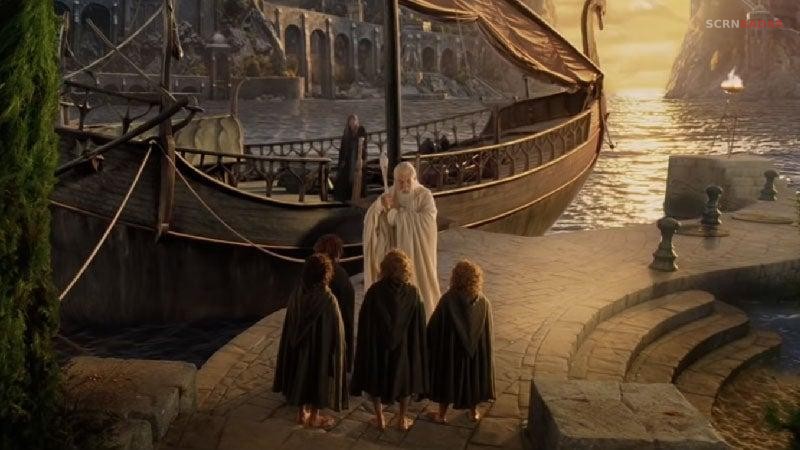
For Frodo, the voyage represents hope rather than death. He is leaving behind a world where his wounds can never fully heal and traveling to a place where he can finally find rest.
Why Frodo Leaves Sam Behind
The farewell between Frodo and Sam is one of the most heartbreaking moments in cinema. After everything they endured together, many viewers wonder why Sam does not accompany Frodo.
The answer lies in their different circumstances. Sam was deeply affected by the quest, but he was not burdened by the Ring for nearly as long as Frodo. He still has a future waiting for him in the Shire.
Frodo, on the other hand, has reached a point where he can no longer fully participate in the life he once loved. His departure is not a rejection of Sam or the Shire. Instead, it is an acknowledgment that healing requires him to move on.
Before leaving, Frodo passes the Red Book to Sam. Symbolically, he is handing over the responsibility of preserving their story and continuing the life that Frodo can no longer live himself.
What Sam’s Final Line Means
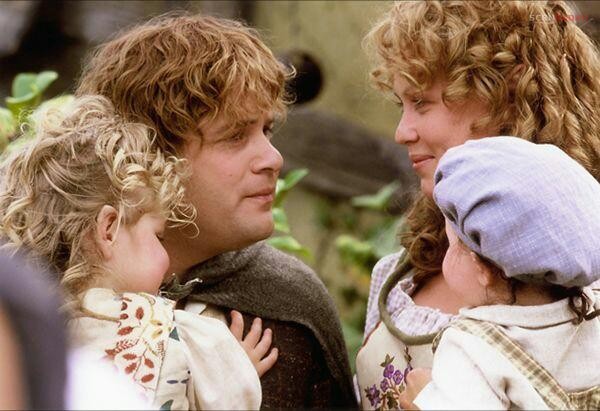
After Frodo’s departure, the film concludes with Sam returning home to Rosie and their children. He opens the door, looks at his family, and says, “Well, I’m back.”
At first glance, the line appears simple. Yet it carries enormous emotional weight. Throughout the trilogy, Sam dreamed of returning home and living a peaceful life. Unlike Frodo, he is able to achieve that dream.
The final scene represents the completion of Sam’s journey. While Frodo’s story ends with departure, Sam’s ends with belonging. He becomes the embodiment of what the entire quest was meant to protect: home, family, and ordinary happiness.
It is a quiet ending, but it perfectly captures Tolkien’s belief that the greatest victories are often found in simple things rather than grand achievements.
The Real Meaning of The Return of the King Ending
The ending of The Return of the King is ultimately about sacrifice and renewal. Sauron is defeated, the Ring is destroyed, and Aragorn restores the kingdom of Men. Middle-earth enters a new age defined by peace and hope.
Yet the story refuses to pretend that victory comes without consequences. Frodo saves the world but loses the ability to fully enjoy the world he saved. His departure reflects the emotional cost of heroism and the reality that some wounds never completely disappear.
At the same time, the film remains optimistic. Sam builds a family, Aragorn becomes king, and Middle-earth begins to heal. The ending balances sorrow and hope, reminding viewers that while one age may end, another can begin.
That bittersweet balance is precisely why The Return of the King remains one of the most powerful endings in fantasy cinema. More than two decades later, Frodo’s final voyage and Sam’s quiet return home continue to resonate with audiences around the world.