The legend of the banshee is one of the most enduring and chilling pieces of Irish folklore, passed down through generations as both a warning and a mystery. Known for her eerie wail that signals impending death, the banshee has become a powerful symbol of grief, fate, and the unknown. Unlike typical ghost stories that focus on revenge or unfinished business, the banshee exists as a messenger, a supernatural figure tied closely to family lines and ancestral destiny.
For centuries, stories of the banshee have been recorded in Irish oral tradition, with different regions offering their own interpretations of her appearance and purpose. Some describe her as a beautiful woman mourning the dead, while others portray her as a terrifying hag whose cry brings dread to anyone who hears it. Despite these variations, the core idea remains the same: the banshee’s presence is never random, and her cry is always connected to death.
Understanding the legend of the banshee requires more than just recounting ghost stories. It involves exploring Irish mythology, cultural beliefs about death, and the symbolic meaning behind her haunting cry. By breaking down her origins, evolving interpretations, and deeper significance, the banshee emerges as more than just a frightening figure. She becomes a reflection of how people understand mortality, loss, and the unseen forces that shape human life.
Origins of the Banshee in Irish Folklore
The word “banshee” comes from the Irish term “bean sí,” which translates to “woman of the fairy mound” or “fairy woman.” In traditional Irish belief, these fairy mounds were considered gateways to the Otherworld, a supernatural domain inhabited by spirits and mystical beings. The banshee is therefore not simply a ghost but part of a larger mythological system that connects the human world with something beyond it.
Early Irish folklore often associated the banshee with noble families, particularly those with ancient Gaelic lineages. It was believed that certain families had their own personal banshee who would appear or cry as a warning of death within the household. This connection made the banshee less of a random entity and more of a guardian figure tied to ancestry and bloodlines.
Historical records and folklore collections from Ireland frequently mention banshee sightings, often describing her as a solitary figure seen near rivers, graveyards, or family homes. These locations are significant because they represent boundaries between life and death. The presence of the banshee in such places reinforces her role as a messenger who exists between two worlds.

The origins of the banshee may also be linked to older Celtic traditions involving keening women, who would mourn the dead through ritualized wailing. Over time, this human practice may have evolved into a supernatural belief, transforming the act of mourning into a mythological figure who embodies grief itself.
The Banshee’s Appearance and Variations Across Stories
One of the most fascinating aspects of the banshee legend is how her appearance changes depending on the story or region. Unlike many mythological figures with a fixed image, the banshee is described in multiple forms, each carrying its own symbolic meaning. These variations reflect the flexibility of oral storytelling and the way folklore adapts over time.
In some accounts, the banshee appears as a young and beautiful woman with long flowing hair, often dressed in white or silver. This version emphasizes her connection to purity, mourning, and the spiritual realm. Her beauty contrasts with the fear she inspires, suggesting that death itself is not always monstrous but can be quiet and inevitable.
Other stories describe the banshee as an old, terrifying hag with red eyes from constant crying and tangled gray hair. This version highlights the horror of loss and the emotional toll of grief. Her appearance becomes a physical representation of sorrow, reinforcing the idea that her role is tied to mourning rather than malice.
There are also descriptions of the banshee washing bloodstained clothing near rivers, a figure sometimes referred to as the “washer at the ford.” This image connects her to death in a more direct way, symbolizing preparation for the passing of a loved one. Each version of the banshee, whether beautiful or frightening, serves the same purpose of signaling an approaching death.
The Meaning Behind the Banshee’s Cry
The most iconic aspect of the banshee is her cry, often described as a high-pitched wail that can be heard in the night. This sound is not just meant to frighten but to warn, making it one of the most distinctive features of her legend. The cry is said to be heard before a death occurs, giving families a sense of impending loss.
In Irish tradition, the banshee’s wail is deeply connected to the concept of keening, a form of vocal mourning performed at funerals. This connection suggests that the banshee is not causing death but responding to it, expressing grief before it fully manifests in the human world. Her cry becomes a bridge between the living and the dead.
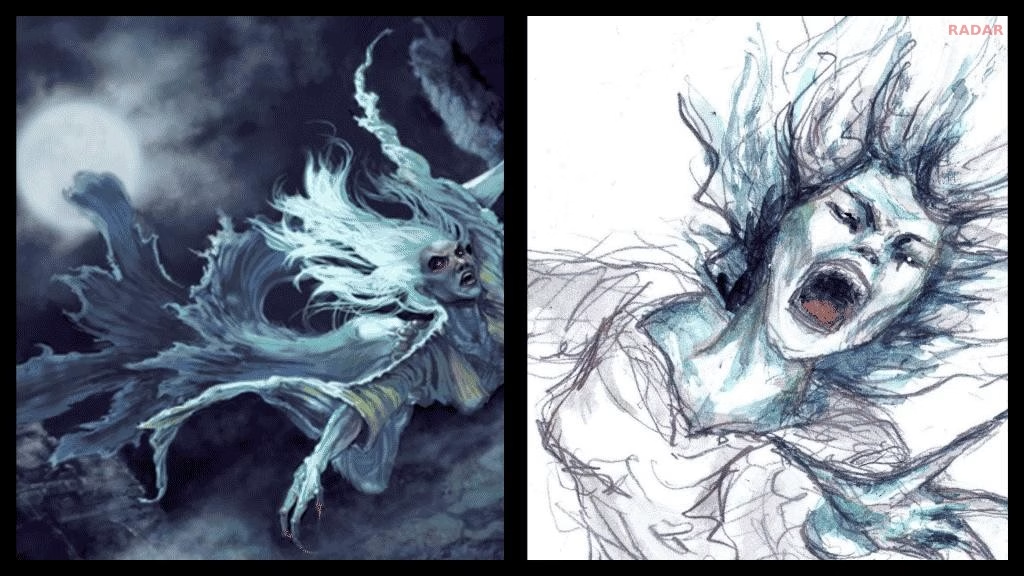
Different interpretations exist regarding what the cry sounds like. Some describe it as a sorrowful lament, while others compare it to a piercing scream that fills listeners with dread. These variations reflect how individuals experience grief differently, with the banshee’s cry symbolizing both emotional pain and supernatural warning.
The meaning of the cry also extends beyond individual death. It represents the inevitability of mortality and the idea that death is a natural part of life. By announcing death rather than causing it, the banshee reinforces the belief that fate cannot be avoided, only acknowledged.
Cultural Significance of the Banshee in Irish Tradition
The banshee holds a unique place in Irish culture, blending mythology, spirituality, and emotional expression. She is not viewed purely as a villain but as a complex figure who embodies both fear and respect. This duality makes her one of the most compelling figures in Irish folklore.
In many ways, the banshee represents a cultural understanding of death that is both personal and communal. Her connection to specific families emphasizes the importance of ancestry and heritage in Irish society. Death is not seen as an isolated event but as something that affects an entire lineage.
The banshee also reflects how Irish culture historically approached grief. Instead of suppressing emotions, traditional practices like keening encouraged the open expression of sorrow. The banshee’s cry can therefore be seen as an extension of this cultural value, turning human grief into a supernatural phenomenon.
Over time, the banshee has become a symbol of Irish identity, appearing in literature, art, and modern media. While interpretations have evolved, the core elements of her legend remain intact, preserving her role as a messenger of death and a representation of loss.
Modern Interpretations and Pop Culture Influence
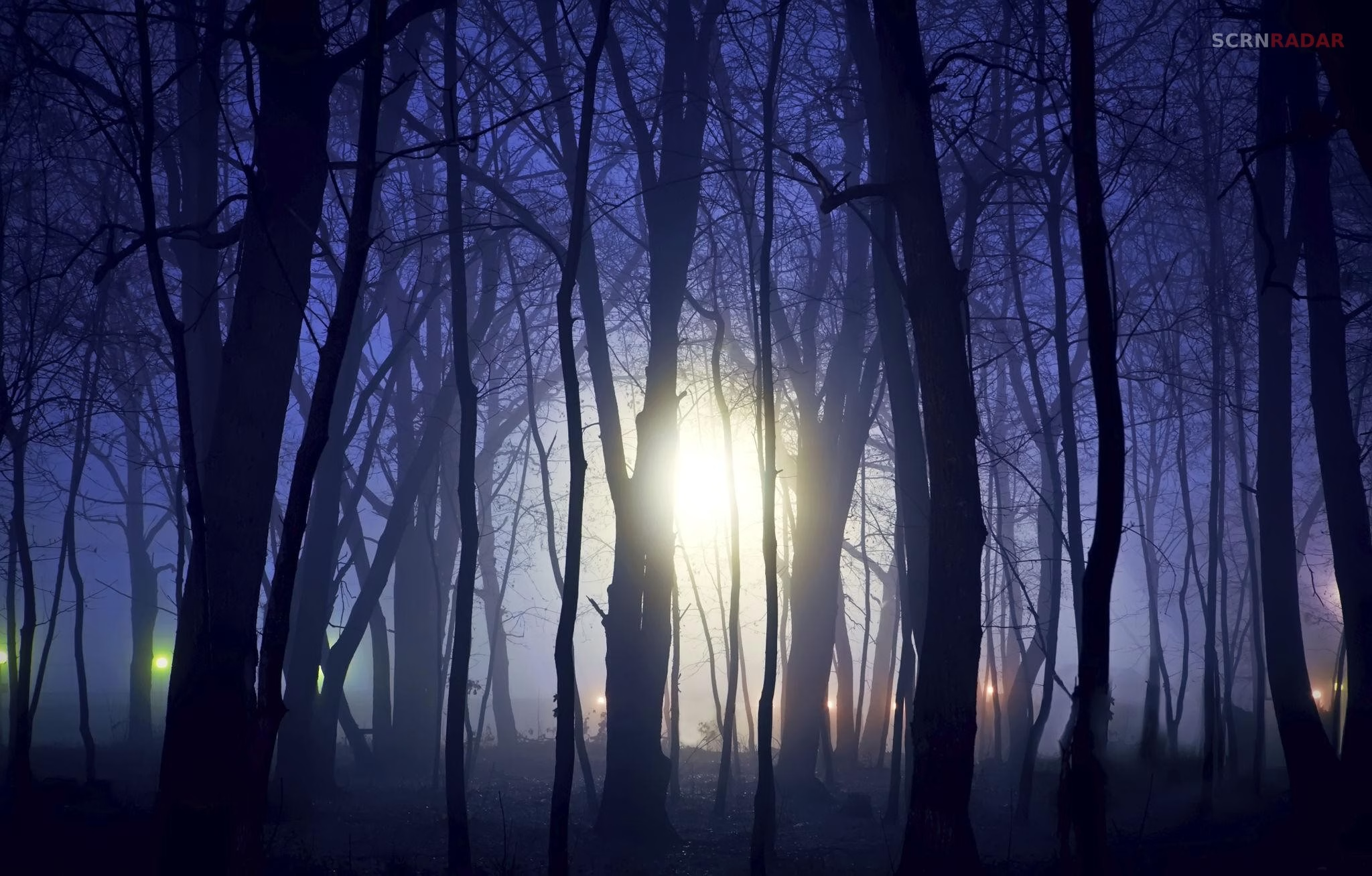
In contemporary media, the banshee has been reimagined in various ways, often adapting her characteristics to fit new storytelling formats. Films, television shows, and novels frequently portray banshees as powerful supernatural beings with abilities beyond their traditional role as messengers.
Some modern interpretations give the banshee a more active role, depicting her as a spirit capable of influencing events or interacting directly with characters. This shift reflects a broader trend in fantasy storytelling, where mythological figures are expanded to create more dynamic narratives. However, these versions often retain the signature element of her haunting scream.
Pop culture has also introduced the banshee to global audiences, making her one of the most recognizable figures from Irish folklore. While these portrayals sometimes diverge from traditional beliefs, they help keep the legend alive and relevant in modern storytelling.
Despite these changes, the essence of the banshee remains tied to her original purpose. Whether portrayed as a terrifying creature or a misunderstood spirit, she continues to symbolize the connection between life, death, and the unseen forces that govern human existence.
The Deeper Meaning Behind the Banshee Legend
At its core, the legend of the banshee is not just about fear but about understanding death and the emotions that surround it. Her presence forces people to confront the inevitability of loss and the fragility of life. Rather than hiding from death, the banshee brings it into focus, making it impossible to ignore.
The banshee also represents the idea that grief is a natural and necessary part of the human experience. Her cry, while unsettling, is ultimately an expression of sorrow. This perspective challenges the notion that fear and sadness should be avoided, instead suggesting that they are integral to understanding life.
Another layer of meaning lies in the connection between the banshee and family. By tying her presence to specific lineages, the legend emphasizes the importance of relationships and shared history. Death becomes not just an individual event but a moment that resonates across generations.
The enduring nature of the banshee legend highlights its relevance across time. While the details may change, the themes of mortality, grief, and the unknown remain universal. This is why the banshee continues to charm audiences, serving as both a cultural symbol and a timeless reminder of life’s most profound truths.
The legend of the banshee stands as one of the most powerful and enduring stories in Irish folklore, blending fear, emotion, and cultural identity into a single haunting figure. Her role as a messenger of death sets her apart from other supernatural beings, giving her a unique place in mythological storytelling. Rather than causing harm, she serves as a reminder of life’s inevitable end and the emotional weight that comes with it.
By examining her origins, variations, and symbolic meaning, it becomes clear that the banshee is more than just a ghostly presence. She represents the human experience of loss, the importance of family, and the cultural ways in which people process grief. Her cry, though frightening, carries a deeper message about acceptance and understanding.
In the end, the banshee’s legend endures because it speaks to something universal. Fear of death, the pain of loss, and the mystery of what lies beyond are experiences shared by all cultures. Through the haunting figure of the banshee, these themes are given a voice that continues to echo through time.