The final season of The Last Kingdom arrives with the weight of years of storytelling resting on its shoulders. Since its debut in 2015, the series has consistently explored a central question: can Uhtred reclaim Bebbanburg while England moves toward unity? Season 5, released on Netflix in March 2022, answers these long-standing questions while delivering an emotionally rich and action-packed conclusion.
The stakes feel higher than ever as the Saxons and Danes continue their uneasy coexistence. With leaders like Edward, Uhtred, and Aethelflaed shaping the future, the show leans heavily into themes of leadership, identity, and legacy. What makes this final season stand out is how it ties together personal conflicts and political ambitions without losing narrative focus.
Season 5 succeeds not just as a conclusion but as a reflection of how far its characters have come. While it is not flawless, it remains a compelling and satisfying end to one of Netflix’s strongest historical dramas.
A Story Built on Long-Standing Questions Finally Pays Off
From its earliest episodes, The Last Kingdom has revolved around key narrative threads. Uhtred’s desire to reclaim Bebbanburg, Edward’s mission to fulfill Alfred’s dream of a united England, and the ongoing conflict between Saxons and Danes have driven the story forward. Season 5 finally addresses these arcs with a sense of closure that feels earned.
The writing carefully builds on four seasons of character development. Rather than introducing entirely new conflicts, it deepens existing ones, allowing emotional payoffs to feel natural. The result is a narrative that feels cohesive and purposeful rather than rushed.
Importantly, the show does not rely solely on spectacle to conclude its story. It understands that the emotional journeys of its characters are just as important as the political outcomes. This balance is what gives the final season its impact.
Character Development Remains the Show’s Strongest Asset
One of the defining strengths of Season 5 is how it showcases the evolution of its characters. Years of hardship, betrayal, and shifting loyalties have shaped who these individuals have become. The final season takes time to reflect on those transformations.
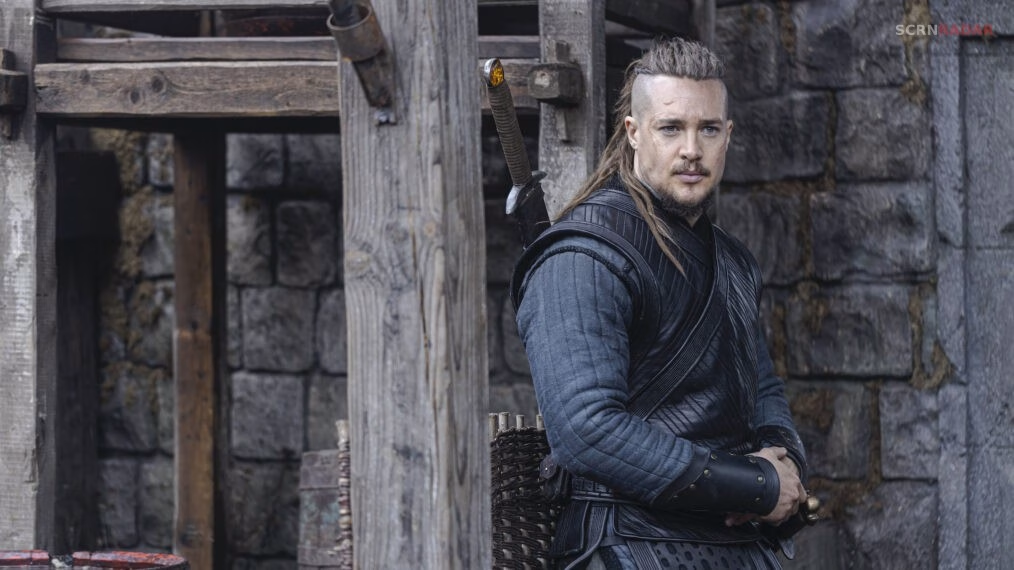
Uhtred, portrayed by Alexander Dreymon, is no longer the impulsive warrior from earlier seasons. He is more measured, more reflective, and deeply aware of his responsibilities. His internal conflict between Saxon and Dane identities continues to define his decisions.
King Edward also stands out as a significantly evolved character. Now more mature and cautious, he faces the burden of leadership with a sense of realism that contrasts with his earlier uncertainty. His decisions reflect both his ambition and the pressure of living up to his father’s legacy.
Brida remains one of the most complex characters in the series. Her resentment toward the Saxons and her fractured relationship with Uhtred drive much of the emotional tension. While her arc has drawn mixed reactions, it undeniably adds intensity to the narrative.
Leadership and Identity Take Center Stage
A major theme throughout Season 5 is leadership and how it reveals a character’s true nature. Figures like Uhtred, Edward, and Aethelflaed are all placed in positions where their choices define not only their own futures but the fate of entire kingdoms.
The show effectively illustrates that leadership is not just about power. It is about responsibility, sacrifice, and the ability to make difficult decisions. Each character approaches leadership differently, reflecting their personal values and experiences.
Uhtred’s leadership, in particular, is shaped by his dual identity. As someone raised by Danes but born a Saxon, he embodies the possibility of unity. His perspective allows the show to explore the idea that peace between cultures is achievable, even if it remains fragile.
Political Intrigue and Complex Alliances Lift the Narrative
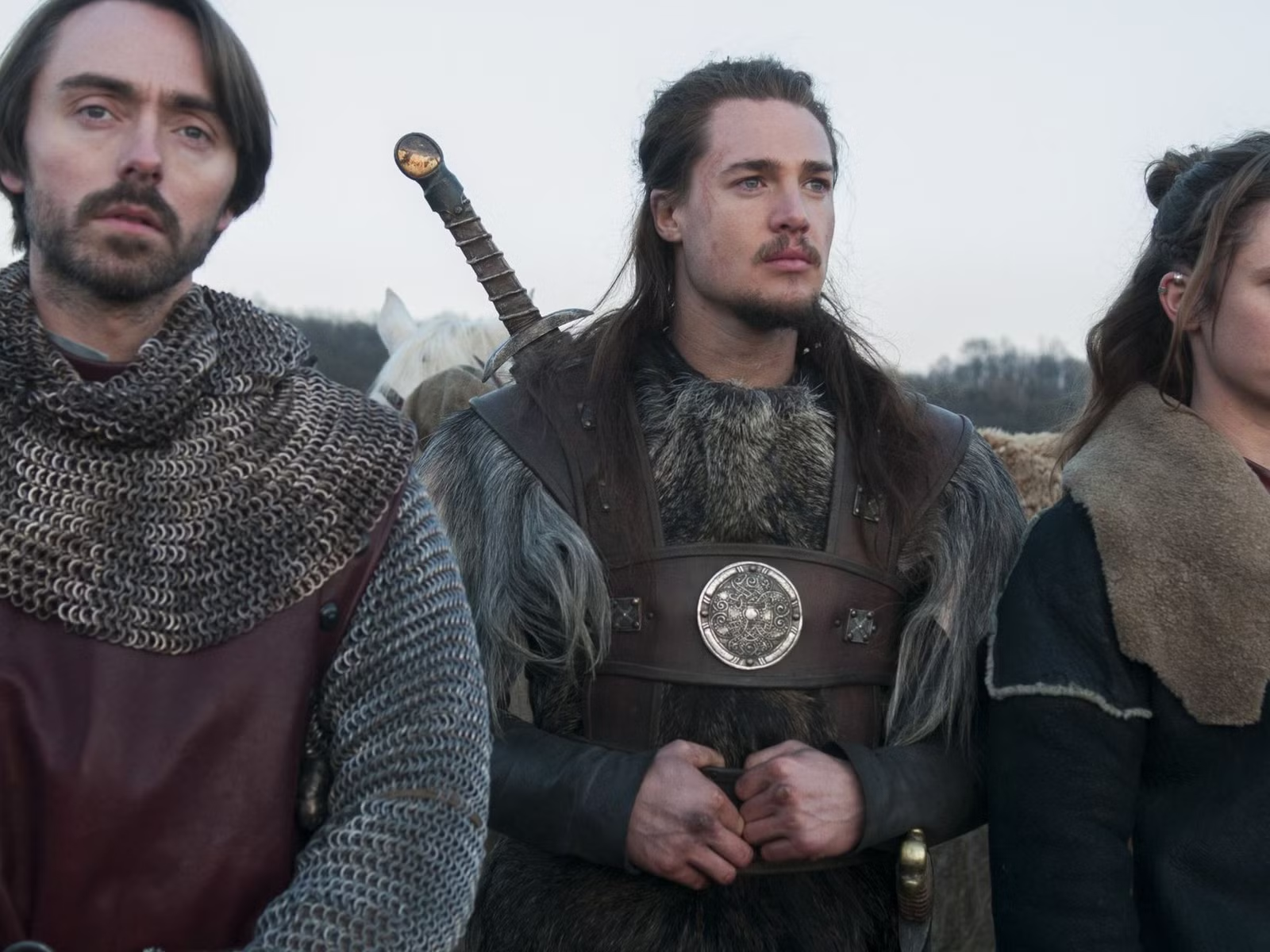
The Last Kingdom has always balanced action with political storytelling, and Season 5 continues that tradition. The shifting alliances between kingdoms create a dynamic narrative where no decision is without consequence.
The conflict between Saxons and Danes has evolved significantly over time. What began as a straightforward clash has become more nuanced, with years of coexistence creating opportunities for peace. However, ambition and mistrust continue to threaten that possibility.
Subplots involving succession and power struggles add further depth. Characters like Aethelhelm manipulate events behind the scenes, reminding viewers that politics can be just as dangerous as warfare. These elements keep the story engaging and unpredictable.
Despite the complexity, the season manages to maintain clarity. The interconnected storylines never feel overwhelming, which is a testament to the strength of the writing.
Action Sequences Deliver Emotional and Visual Impact
While character drama and political intrigue drive the story, the action remains a key component of the show’s appeal. Season 5 delivers several memorable battle sequences that feel grounded and intense.
The series avoids overly stylized combat in favor of realism. Battles are chaotic and brutal, emphasizing the human cost of war. This approach makes each confrontation feel meaningful rather than purely spectacle-driven.
Importantly, the action is always tied to character stakes. Whether it is Uhtred fighting for his homeland or armies clashing over power, the emotional context enhances the impact of every scene. This ensures that the action never feels disconnected from the story.
The production values continue to impress as well. From detailed costumes to immersive set design, the show maintains a high level of authenticity that enhances the viewing experience.

Pacing and Structure Keep the Season Engaging
One of the notable achievements of Season 5 is its pacing. Despite juggling multiple storylines and a large cast, the show manages to maintain a steady rhythm throughout its ten episodes.
The decision to release all episodes at once allows viewers to fully immerse themselves in the story. Each episode builds on the last, often ending with compelling developments that encourage continued viewing.
While there are moments where the pacing slows, particularly in the early episodes, this is often used to establish emotional context. These quieter moments provide necessary breathing room between major events.
The balance between plot progression and character development is handled effectively. Even with so much happening, the story never feels rushed or incomplete.
Where the Final Season Falls Slightly Short
Despite its strengths, Season 5 is not without flaws. One of the most notable criticisms is the absence of a definitive depiction of England’s unification. Given how central this goal has been throughout the series, its omission feels like a missed opportunity.
Some storylines, particularly in the early episodes, struggle with momentum. Brida’s arc, for example, has been criticized for feeling repetitive or less convincing at times. While her character remains compelling, certain choices may not resonate with all viewers.
Additionally, the season condenses elements from multiple novels in Bernard Cornwell’s series. This results in some plotlines receiving less development than they might have otherwise. While understandable, it does lead to moments that feel slightly rushed.
These issues do not significantly detract from the experience. However, they do prevent the season from reaching absolute perfection.