More than a decade after its release, The Dark Knight remains one of the most discussed superhero films ever made. While the movie delivers unforgettable action sequences, its lasting impact comes from its ending. Christopher Nolan transformed a comic book story into a complex moral drama about heroism, corruption, sacrifice, and chaos.
The final act brings together several major storylines. The Joker attempts to prove that everyone is ultimately selfish. Harvey Dent transforms into the murderous vigilante Two-Face. Batman faces a decision that will define his legacy. By the time the credits roll, Gotham believes Harvey Dent died a hero while Batman becomes the city’s most wanted criminal.
Many viewers initially find the ending bittersweet or even confusing. Why does Batman take responsibility for crimes he did not commit? Did the Joker actually win? What is the significance of the ferry experiment? Understanding these questions reveals why The Dark Knight has one of the most powerful endings in modern cinema.
What Happens at the End of The Dark Knight?
The final act begins after the Joker successfully destroys Harvey Dent’s life. Earlier in the film, Dent was Gotham’s idealistic district attorney, widely seen as the city’s best hope for defeating organized crime through legal means. However, everything changes when Rachel Dawes dies in an explosion orchestrated by the Joker, and Dent suffers horrific burns on half of his face.
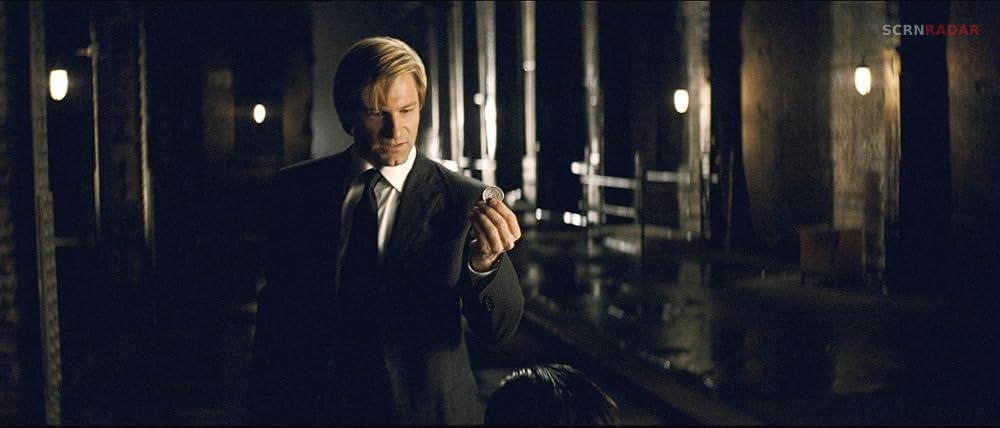
While recovering in the hospital, Dent is visited by the Joker. Instead of directly ordering him to seek revenge, the Joker manipulates Dent into embracing chaos. He convinces him that the world is fundamentally unfair and that chance is the only true form of justice. Dent abandons his belief in law and order and becomes Two-Face, using his scarred coin to determine whether his victims live or die.
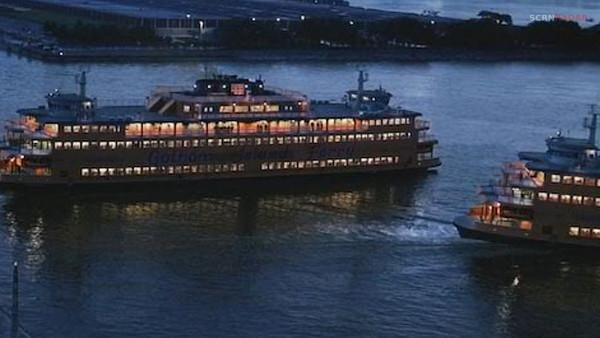
At the same time, the Joker launches his final plan. He rigs two ferries with explosives, placing ordinary citizens on one boat and prisoners on the other. Each ferry receives a detonator supposedly capable of destroying the other vessel. The Joker believes fear and self-preservation will push one group to murder the other.
Batman tracks down the Joker while Commissioner Gordon attempts to contain the citywide crisis. These parallel storylines ultimately converge into the film’s central message about human nature.
The Joker’s Real Plan Was Never About Explosions
Many viewers focus on the physical destruction caused by the Joker, but his real goal throughout the film is ideological rather than criminal.
The Joker repeatedly insists that he is trying to prove a point. He wants to demonstrate that morality is an illusion and that every person will abandon their principles when pushed far enough. In his worldview, civilization is a fragile mask hiding humanity’s true selfish nature. Gotham’s citizens simply need the right amount of pressure before revealing who they really are.
The ferry experiment represents the ultimate test of this philosophy. The Joker believes both groups will choose survival over morality. If either ferry destroys the other, his theory is validated. People will have willingly become murderers to save themselves.
However, the experiment does not unfold as he expects. On the civilian ferry, passengers debate whether to press the button but ultimately refuse. On the prisoner ferry, a large inmate takes the detonator and throws it out the window rather than use it. Both groups choose humanity over survival.
This moment is crucial because it proves the Joker wrong. Despite immense fear and pressure, ordinary people refuse to become killers. The scene directly challenges the Joker’s cynical worldview and suggests that moral choices still matter even during extreme circumstances.
Why Harvey Dent Becomes Two-Face
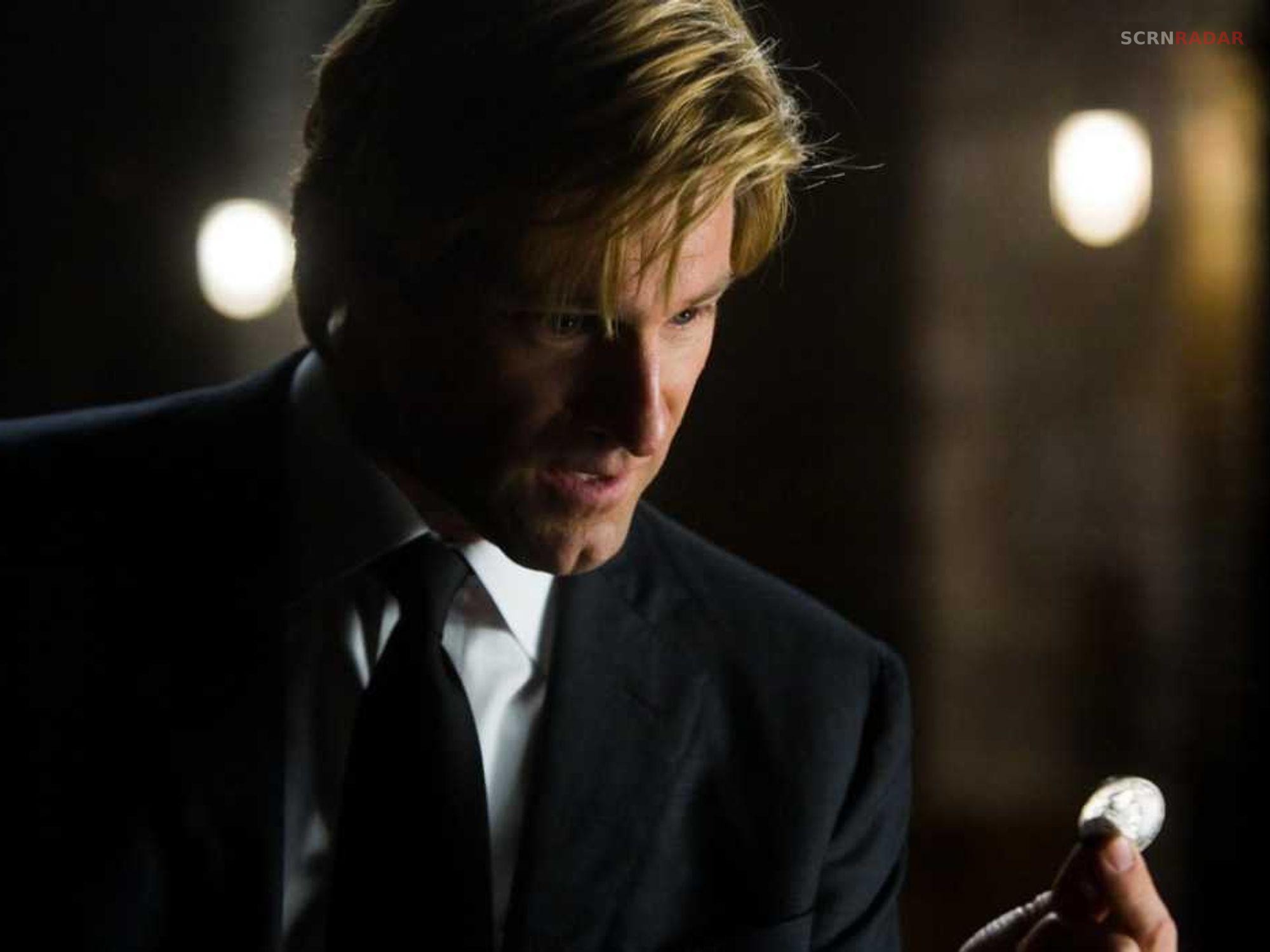
Harvey Dent’s transformation is one of the most tragic aspects of The Dark Knight.
At the beginning of the film, Dent represents hope. He is Gotham’s “White Knight,” a public hero capable of fighting crime legally. Bruce Wayne even considers retiring as Batman because he believes Dent can achieve what vigilantism cannot.
The Joker specifically targets Dent because he understands the symbolic value Dent holds for Gotham. Corrupting an already corrupt person would prove nothing. Corrupting Gotham’s brightest symbol of justice would demonstrate that nobody is immune to darkness.
Rachel’s death and Dent’s disfigurement destroy the foundations of his identity. He loses the woman he loves and the belief that justice is fair. The scarred coin becomes a symbol of his new worldview. Instead of trusting legal systems, he lets random chance decide people’s fate.
What makes Dent’s downfall so devastating is that it validates part of the Joker’s argument. Unlike the ferry passengers, Dent does break. He becomes exactly what the Joker hoped he would become: proof that even the best people can fall when pushed far enough.
By the film’s conclusion, Dent has murdered multiple people and kidnaps Gordon’s family. Gotham’s greatest hero has become one of its most dangerous criminals.
The Meaning of the Ferry Scene
The ferry sequence is often considered the philosophical climax of The Dark Knight.
On the surface, it appears to be a suspenseful thriller scenario. Two groups are given a terrible choice, and the clock is ticking toward midnight. Beneath that tension, however, lies a deeper exploration of morality.
The Joker assumes people are fundamentally selfish. He believes self-preservation will always outweigh ethics. His confidence comes from the idea that civilization is merely a convenient illusion. Once survival is threatened, morality disappears.
The citizens and prisoners prove otherwise. Neither group detonates the bombs despite having every incentive to do so. Their decision demonstrates that people are capable of compassion and restraint even in terrifying circumstances.
The prisoner who throws away the detonator becomes especially important. Society views him as a criminal, yet he displays more moral courage than many supposedly respectable citizens. Nolan deliberately blurs the distinction between heroes and villains, suggesting that goodness can emerge from unexpected places.
The ferry scene therefore serves as the film’s answer to the Joker’s philosophy. Human beings are flawed, but they are not inevitably monstrous. Given a choice between survival and morality, many will still choose morality.
Batman vs. Joker: Who Actually Wins?
One of the most debated questions surrounding The Dark Knight is whether Batman or the Joker wins.
The answer is more complicated than it first appears.
On one hand, Batman clearly achieves several victories. He stops the Joker’s bomb plot, saves both ferries, rescues the hostages hidden among the Joker’s fake henchmen, and prevents further mass casualties. Most importantly, Gotham’s citizens reject the Joker’s worldview. The ferry passengers refuse to murder each other, proving that the Joker’s assumptions about humanity are flawed.
On the other hand, the Joker succeeds in corrupting Harvey Dent. He destroys Gotham’s symbol of hope and turns him into a killer. Dent’s transformation demonstrates that even strong moral figures can break under enough pressure.
This dual outcome is exactly what makes the ending so compelling. Neither side wins completely. Batman defeats the Joker’s public schemes, but the Joker succeeds in inflicting lasting damage on Gotham’s soul.
The film ultimately suggests that moral victories are rarely absolute. Goodness survives, but it comes at a tremendous cost.
Why Batman Takes the Blame for Harvey Dent’s Crimes
The movie’s most controversial decision occurs after Harvey Dent’s death.
Batman and Gordon realize that exposing Dent’s crimes would have devastating consequences. Throughout the film, Dent became a symbol of lawful justice. He inspired citizens, prosecutors, judges, and police officers. If the public learned that Gotham’s greatest hero became a murderer, faith in the entire justice system could collapse.
Batman understands that symbols matter.
Unlike Dent, Batman already operates outside the law. The public is accustomed to viewing him as a controversial figure. If someone must become the villain, Batman is the logical choice.
As a result, Batman convinces Gordon to blame him for Dent’s crimes. The police begin hunting Batman while Dent’s reputation remains intact. Gotham continues believing in the ideal that Dent represented, even if the reality is far more complicated.
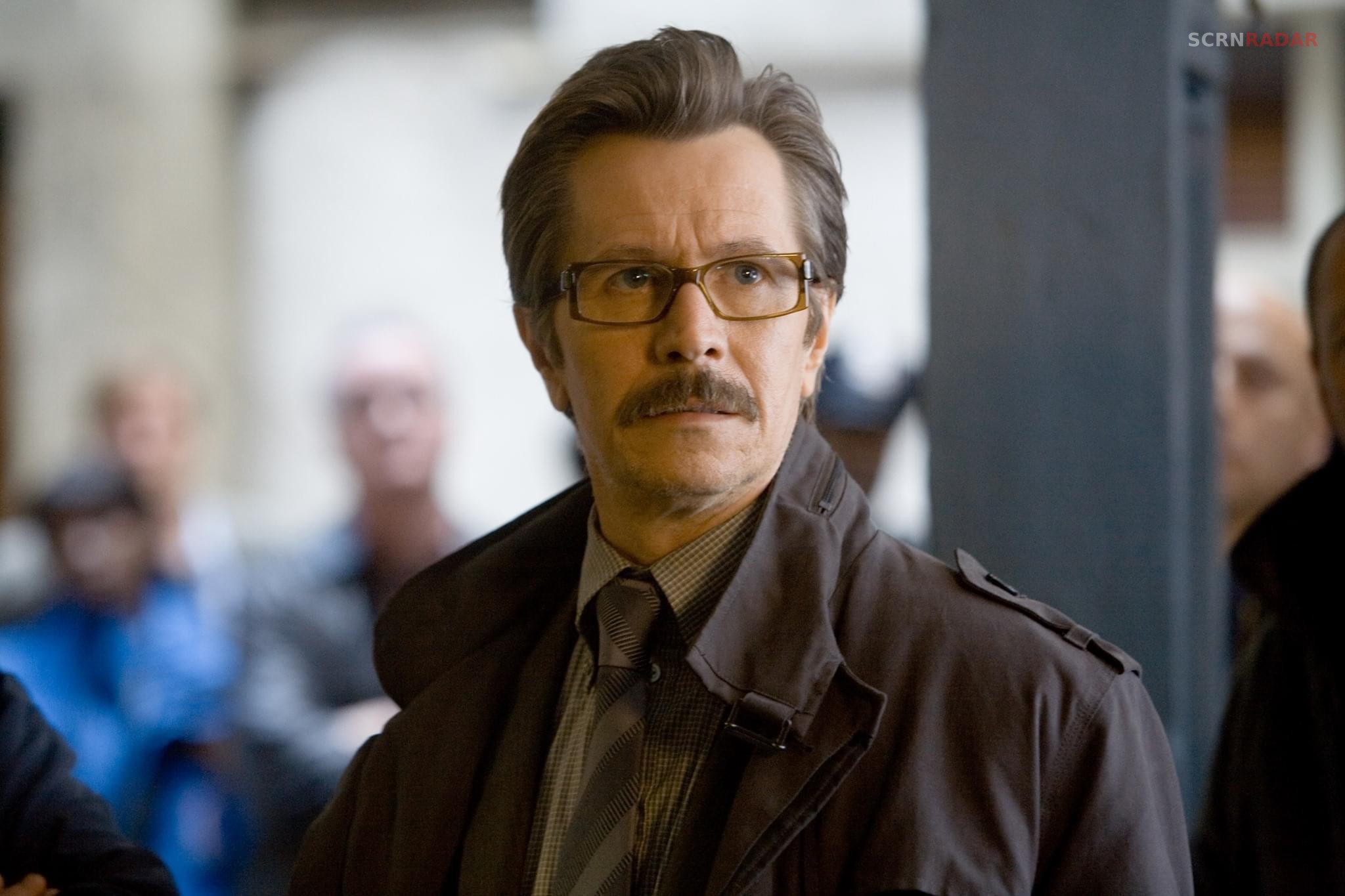
This decision reflects Batman’s core philosophy. He is willing to sacrifice his reputation if doing so protects others. He does not need public admiration. He only needs Gotham to survive.
The ending transforms Batman from a celebrated protector into a hunted fugitive, but it also elevates him into something more meaningful: a hero willing to be hated for the greater good.
“The Hero Gotham Deserves, But Not the One It Needs Right Now”
The film’s final lines are among the most famous in superhero cinema.
Gordon explains that Batman is “the hero Gotham deserves, but not the one it needs right now.” This statement summarizes the entire movie’s thematic core.
Batman deserves recognition because he saves Gotham repeatedly throughout the film. He risks his life, stops the Joker, and protects innocent people. Yet public recognition would undermine the lie that keeps Dent’s legacy alive.
At that moment, Gotham needs hope more than truth. The city requires the inspiring symbol represented by Harvey Dent. Batman understands this and willingly accepts exile.
The phrase also highlights the difference between idealism and reality. Dent embodied Gotham’s ideal future. Batman represents the messy sacrifices necessary to achieve that future.
Rather than seeking credit, Batman chooses responsibility. That choice defines him as the true Dark Knight.
What the Ending Says About Truth and Hope
One reason the ending remains controversial is its treatment of truth.
Traditionally, stories celebrate honesty and transparency. The Dark Knight takes a more complicated approach. Batman and Gordon deliberately create a false narrative about Harvey Dent.
From a moral perspective, this raises difficult questions. Is it acceptable to lie for the greater good? Can a society be built on a myth? Does preserving hope justify concealing the truth?
The film does not provide easy answers. Instead, it presents the dilemma and allows audiences to wrestle with it.
Batman believes Gotham needs Dent’s symbol more than it needs factual accuracy. Gordon reluctantly agrees. Their decision prioritizes social stability over transparency.
This ambiguity is intentional. Nolan avoids simple moral conclusions and instead explores the complicated realities of leadership, justice, and sacrifice.
How The Dark Knight Sets Up The Dark Knight Rises
The ending directly establishes the foundation for the sequel, The Dark Knight Rises.
By taking responsibility for Dent’s crimes, Batman becomes a fugitive. Gotham’s authorities spend years pursuing him while celebrating Harvey Dent as a fallen hero. The city’s anti-crime efforts become heavily associated with Dent’s legacy.
This arrangement appears successful on the surface. Crime rates fall, and Gotham enjoys relative peace. However, that peace depends on a lie. The truth about Dent remains hidden beneath the city’s apparent stability.
The sequel eventually explores the consequences of this deception. Once Dent’s actions become public knowledge, Gotham must confront the uncomfortable reality that its foundation was built on misinformation.
In this sense, The Dark Knight ending is not merely a conclusion. It is the beginning of a larger story about truth, mythology, and accountability.
The Real Meaning of The Dark Knight Ending
At its heart, The Dark Knight is not a movie about Batman defeating the Joker. It is a story about competing visions of humanity.
The Joker believes people are inherently selfish and corruptible. Batman believes people are capable of choosing goodness despite fear and suffering. Harvey Dent exists between those extremes, beginning as an idealist before succumbing to tragedy.
The ending suggests that neither optimism nor cynicism fully captures reality. Some people break under pressure, as Dent does. Others rise above it, as the ferry passengers do. Human nature contains the potential for both darkness and heroism.
Batman’s final sacrifice reinforces this idea. He willingly accepts public condemnation to preserve Gotham’s hope. His decision proves that genuine heroism is not about recognition or reward. It is about choosing the difficult path when it serves a greater purpose.
That is why the ending continues to resonate with audiences. It combines action, tragedy, philosophy, and emotion into a conclusion that feels both satisfying and unsettling. Batman saves Gotham, yet loses everything. The Joker is defeated, yet partially succeeds. Harvey Dent dies a villain, yet is remembered as a hero.
Few superhero films dare to embrace such complexity, and that complexity is precisely why The Dark Knight remains a modern classic.
The ending of The Dark Knight works because it operates on multiple levels simultaneously. It concludes the battle between Batman and the Joker, completes Harvey Dent’s tragic transformation into Two-Face, and explores profound questions about morality, justice, and sacrifice.
The Joker’s attempt to prove humanity’s corruption ultimately fails when ordinary citizens refuse to destroy each other. Yet his corruption of Harvey Dent demonstrates how fragile even the strongest ideals can be. Batman responds by making the ultimate sacrifice, surrendering his reputation to preserve Gotham’s faith in a better future.
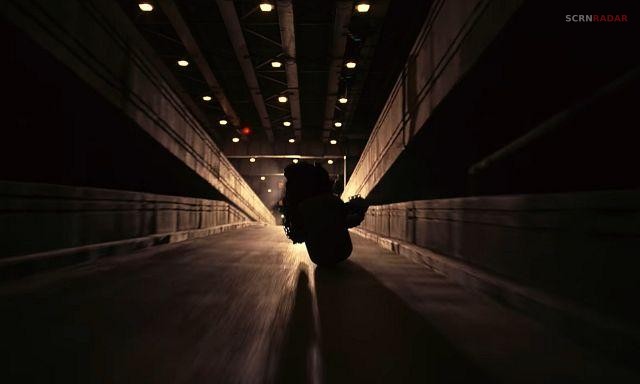
The final image of Batman fleeing into the night encapsulates everything the character represents. He becomes a hunted outlaw not because he deserves punishment, but because Gotham needs someone willing to carry its burdens. In doing so, he becomes more than a superhero. He becomes a symbol of selfless sacrifice, ensuring that The Dark Knight ends not with triumph, but with one of cinema’s most unforgettable moral choices.