The Big Bang Theory Season 12 serves as the final chapter of the long-running sitcom, bringing Sheldon Cooper, Amy Farrah Fowler, Leonard Hofstadter, Penny, Howard Wolowitz, Bernadette Rostenkowski, and Raj Koothrappali to the end of their shared journey. The season focuses heavily on Sheldon and Amy’s work on super-asymmetry, which eventually earns them a nomination for the Nobel Prize in Physics.
At the same time, the characters face major personal changes, including Penny and Leonard’s unexpected pregnancy and the arrival of Howard and Bernadette’s children on screen. Sheldon, meanwhile, struggles with the attention surrounding his scientific achievement and the changes happening within his close-knit group. The final episodes ultimately shift the focus away from scientific success and toward friendship, showing how much Sheldon has changed since the beginning of the series. The result is an ending centered less on a dramatic goodbye and more on the characters remaining together despite everything changing around them.
How The Big Bang Theory Season 12 Ends
The season’s biggest storyline reaches its conclusion when Sheldon and Amy win the Nobel Prize in Physics for their work on super-asymmetry. Their achievement sends the entire group to Stockholm for the Nobel ceremony, but the trip quickly becomes complicated when Penny reveals that she is pregnant with Leonard’s baby. The revelation is especially significant because Penny had previously insisted that she did not want children.
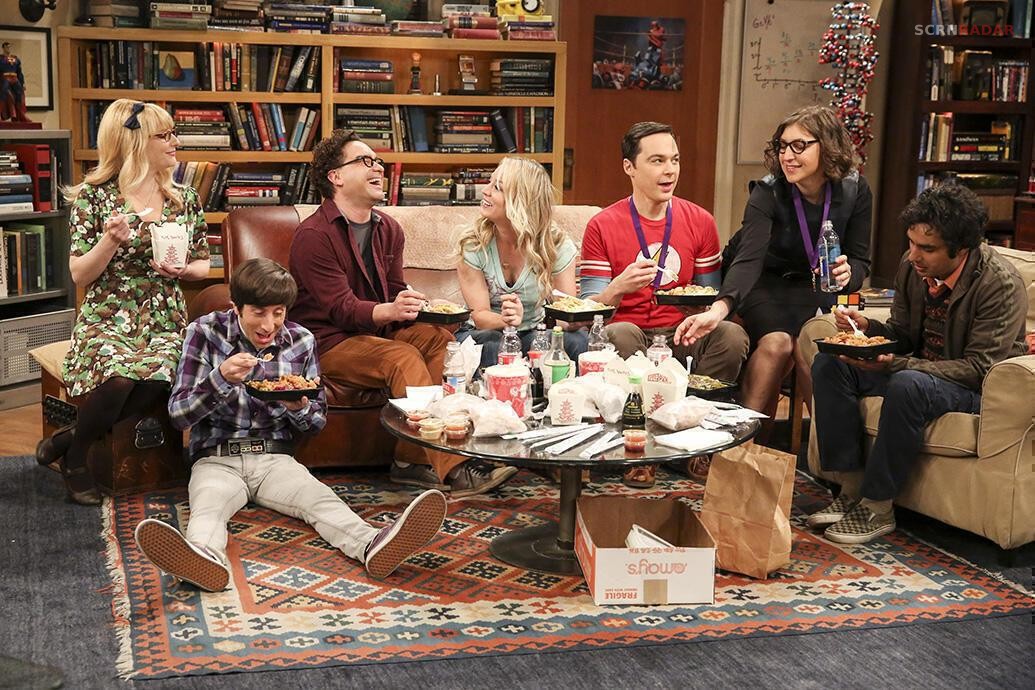
Sheldon initially reacts to the pregnancy with his usual lack of empathy, while Howard and Bernadette become increasingly worried about leaving their children behind. The group briefly considers abandoning the trip because Sheldon is behaving selfishly, but Amy eventually forces him to confront how badly he has treated the people who supported him throughout his life. This becomes the final major turning point in Sheldon’s character development.
At the Nobel ceremony, Amy encourages young girls interested in science to pursue their ambitions before Sheldon takes the stage. Instead of delivering the self-centered speech he had prepared, Sheldon recognizes that his achievement belongs partly to the friends and family who helped him reach that point. He thanks each member of the group and apologizes for not always being the friend they deserved, marking one of the clearest signs of his emotional growth.
The finale then returns to the apartment for one final gathering over Chinese food. Sheldon and Amy are still wearing their Nobel medals, while Leonard and Penny prepare for parenthood, and the familiar group sits together much as it did throughout the series. The ending reinforces the central idea of The Big Bang Theory: the characters’ greatest achievement was not necessarily their careers, but the friendships they built along the way.