Years after Ad Astra reached theaters, director James Gray has revealed that the final version audiences saw was not the film he originally intended to make.
Speaking at the Cannes Film Festival while promoting his latest project, Gray reflected on his experience working on the sci-fi drama starring Brad Pitt. In a conversation with Brut, he made it clear that the creative process was heavily impacted by studio intervention.
“I didn’t control everything on Ad Astra. That film was taken away from me. That’s not my cut of the movie,”
Gray said, directly addressing long-standing speculation about behind-the-scenes issues.
A Big-Budget Film With Complicated Development
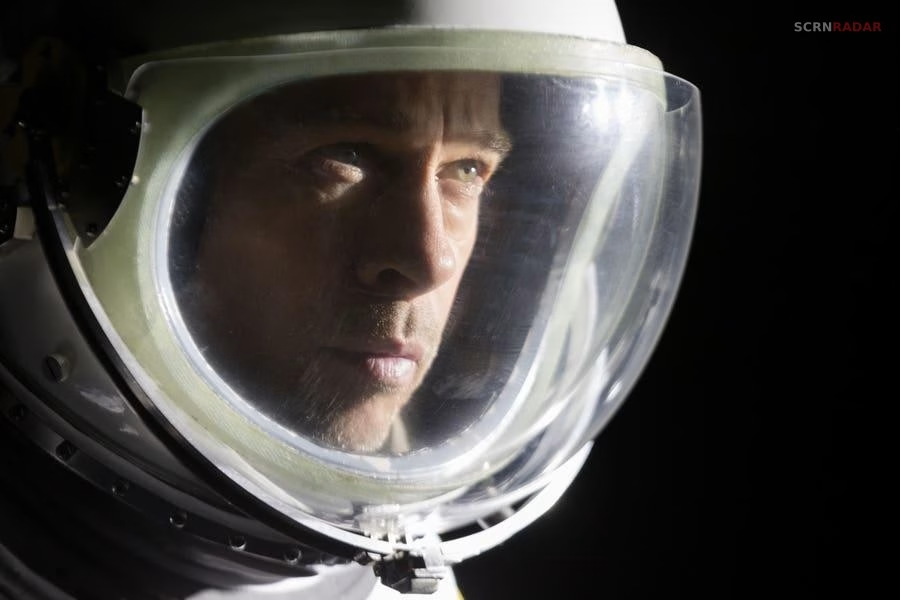
Released in 2019, Ad Astra was positioned as a major sci-fi release, blending introspective storytelling with large-scale visuals. The film followed Pitt’s astronaut character on a mission across the solar system, combining emotional depth with high-concept science fiction.
However, the production process proved far more complex than the final product suggested. Gray pointed to the film’s budget and studio environment as key factors that influenced the outcome.
“You get into discussions and debates, there’s a studio, then the studio got sold,”
he explained, referencing the transition of 20th Century Fox to Disney during the film’s production cycle.
This corporate shift added another layer of oversight, making it more difficult for the director to maintain full creative control.
Reshoots and Studio Influence Shaped the Final Cut
Reports surrounding Ad Astra at the time of its release indicated that the film underwent multiple reshoots following test screenings. While such adjustments are common in major productions, they often signal deeper creative disagreements.
Gray’s recent comments confirm that these changes significantly altered his original vision. Interestingly, he noted that his preferred version of the film would not have been longer or more expansive, as is typical with director’s cuts.
Instead, he revealed that his version would have been shorter and more focused, suggesting a different tonal and narrative approach than what audiences ultimately saw.
Critical Success Despite Behind-the-Scenes Issues
Despite the creative challenges, Ad Astra performed reasonably well with critics and audiences. The film earned positive reviews and currently holds a strong rating on major review platforms.
It also developed a dedicated fanbase over time, particularly among viewers who appreciated its slower, more philosophical take on the sci-fi genre.
At the box office, the film grossed approximately $135 million worldwide, a respectable figure given its niche appeal and introspective storytelling style.
Why Gray Prefers Smaller Projects Now
Reflecting on the experience, Gray suggested that working on large-scale studio films comes with compromises that he is no longer eager to navigate.
Comparing Ad Astra to his newer film Paper Tiger, he highlighted the difference in creative freedom.
“I control everything completely on this,”
he said, emphasizing how smaller productions allow for greater artistic independence.
The contrast also extends to budget, with Ad Astra reportedly costing around $80 million, while Paper Tiger was made for a fraction of that amount.
For Gray, the trade-off between scale and control appears to be clear, with his recent work favoring a more personal and controlled filmmaking approach.