When Squid Game debuted on Netflix, it didn’t just become a hit, it became a cultural phenomenon. Created by Hwang Dong-hyuk, the South Korean survival drama quickly became Netflix’s most-watched series, drawing millions of viewers worldwide. While its deadly games and surprising twists grabbed attention, the real strength of Squid Game lies in its characters.
Each player in the competition represents a different side of society. From debt-ridden individuals to migrants, criminals, and elites, the show builds a layered narrative that reflects real-world struggles. The cast delivers performances that lift these roles beyond stereotypes, turning them into deeply human stories.
Understanding the characters is key to understanding why Squid Game works. Let’s break down the major players, their motivations, and how their journeys shape the story.
Seong Gi-hun (Player 456) – Played by Lee Jung-jae
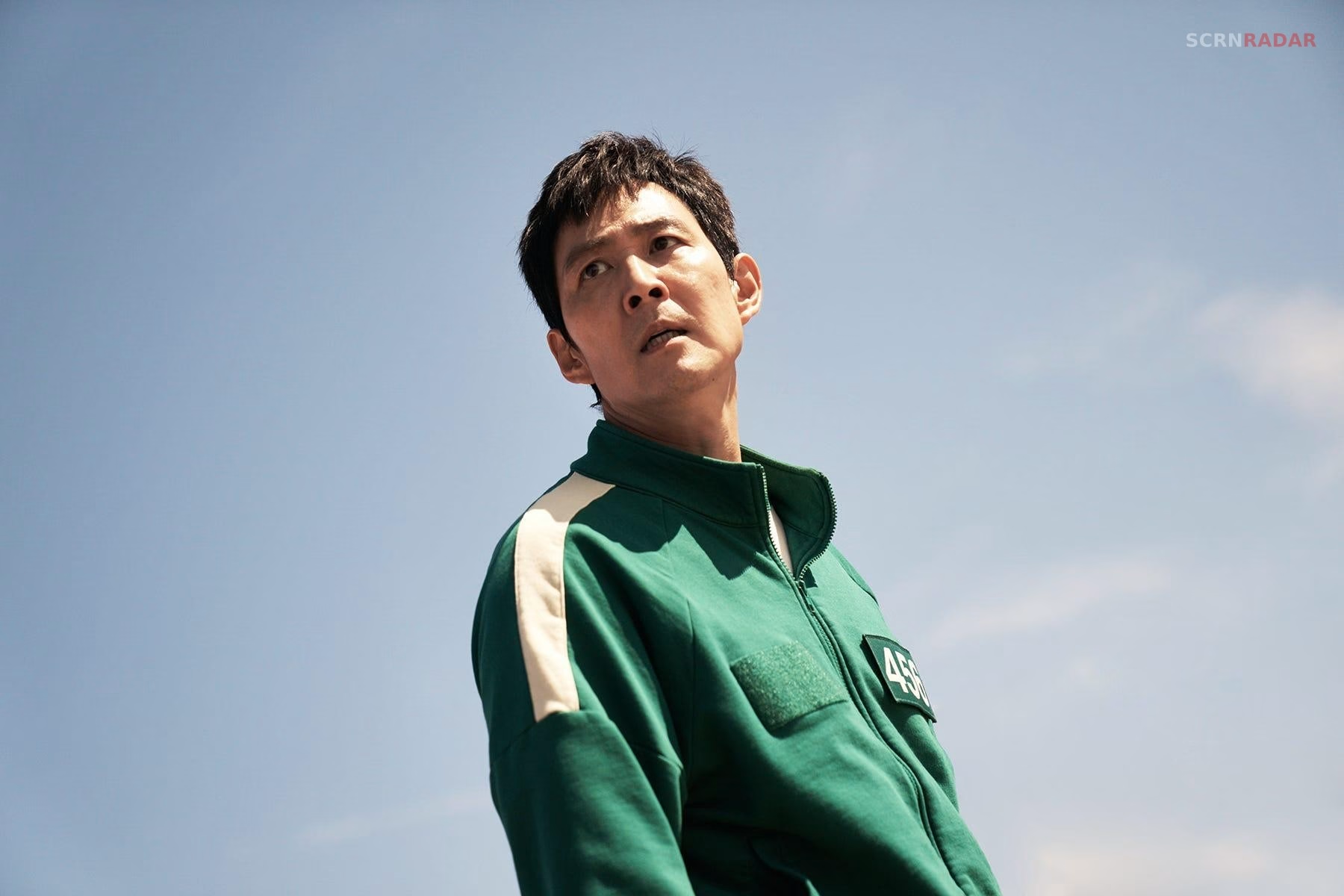
Seong Gi-hun begins as a flawed but relatable protagonist. He is a divorced father struggling with gambling addiction and debt, living with his elderly mother while failing to support his daughter. His situation reflects the harsh realities faced by many working-class individuals.
As the games begin, Gi-hun initially relies on luck and kindness rather than strategy. Unlike other players, he hesitates to harm others, which often puts him at a disadvantage. However, this moral hesitation becomes his defining trait.
Throughout the series, Gi-hun’s arc is about maintaining humanity in an inhumane system. In the tug-of-war game, for example, he survives not through strength but through teamwork and trust. His decisions often prioritize relationships over personal gain.
By the final episode, Gi-hun is no longer the same person. The trauma of the games transforms him, leaving him emotionally scarred despite winning. His decision at the end reflects a deeper realization about the system behind the games, setting up future conflict.
Cho Sang-woo (Player 218) – Played by Park Hae-soo

Cho Sang-woo represents intelligence corrupted by desperation. Once a successful investment banker, he is revealed to be deeply in debt due to financial fraud. His entry into the games reflects how even the educated elite can fall into ruin.
At the start, Sang-woo appears calm and rational. He quickly becomes one of the smartest players, using logic and strategy to survive. However, his intelligence also leads him to make increasingly ruthless choices.
The turning point in his character comes during the marble game. His betrayal of Ali is one of the most surprising moments in the series, showing how far he is willing to go. Unlike Gi-hun, Sang-woo abandons morality in favor of survival.
His final moments are tragic rather than villainous. He recognizes the consequences of his actions and ultimately sacrifices himself. This ending adds depth to his character, portraying him as a victim of the system as much as anyone else.
Kang Sae-byeok (Player 067) – Played by Jung Ho-yeon

Kang Sae-byeok is one of the most compelling characters in the series. As a North Korean defector, she enters the game to secure a better future for her younger brother and reunite her family.
Unlike many contestants, Sae-byeok is quiet and observant. She rarely speaks, but her actions reveal her intelligence and determination. Her survival strategy relies on caution rather than aggression.
Her bond with Ji-yeong in the marble game is one of the most emotional moments in the series. Their conversation reveals Sae-byeok’s vulnerability and longing for a normal life. This humanizes her beyond her tough exterior.
Sae-byeok’s story highlights themes of displacement and survival. She represents individuals who are forced into extreme situations due to circumstances beyond their control. Her tragic fate reinforces the show’s message about the cost of survival.
Oh Il-nam (Player 001) – Played by O Yeong-su

Oh Il-nam initially appears as the weakest player. As an elderly man with a brain tumor, he seems unlikely to survive the competition. However, his cheerful attitude and childlike excitement make him stand out.
During the early games, Il-nam forms a bond with Gi-hun. Their friendship adds warmth to the otherwise brutal environment. His apparent vulnerability makes his later reveal even more surprising.
The twist that Il-nam is the mastermind behind the games redefines the entire narrative. His explanation reveals that the games were created as entertainment for the wealthy, exposing the series’ central theme of inequality.
O Yeong-su’s performance balances innocence and menace. His character embodies the moral complexity of the show, forcing viewers to reconsider everything they have seen.
Abdul Ali (Player 199) – Played by Anupam Tripathi

Abdul Ali is one of the most sympathetic characters in Squid Game. A migrant worker from Pakistan, he enters the competition to support his family after being exploited by his employer.
Ali’s kindness sets him apart from other players. He helps Gi-hun early in the series and consistently shows loyalty to those he trusts. His innocence makes him a symbol of moral purity within the game.
His storyline reaches its peak during the marble game. Sang-woo’s betrayal of Ali is devastating because of the trust Ali placed in him. This moment highlights the cruelty of the system.
Ali’s character represents marginalized individuals who are often taken advantage of. His fate serves as a critique of exploitation and inequality.
Jang Deok-su (Player 101) – Played by Heo Sung-tae

Jang Deok-su is the embodiment of brute force and survival instinct. A gangster on the run, he relies on intimidation and violence to navigate the games.
Unlike other characters, Deok-su shows little internal conflict. He embraces the brutality of the competition, forming alliances only when it benefits him. His leadership of a group of players adds tension to the series.
His rivalry with Mi-nyeo adds another layer to his character. Their dynamic introduces unpredictability and dark humor. However, his downfall on the glass bridge serves as a reminder that even the strongest players are vulnerable.
Deok-su represents unchecked power within the game. His character highlights how systems of survival often reward aggression over morality.
Han Mi-nyeo (Player 212) – Played by Kim Joo-ryoung
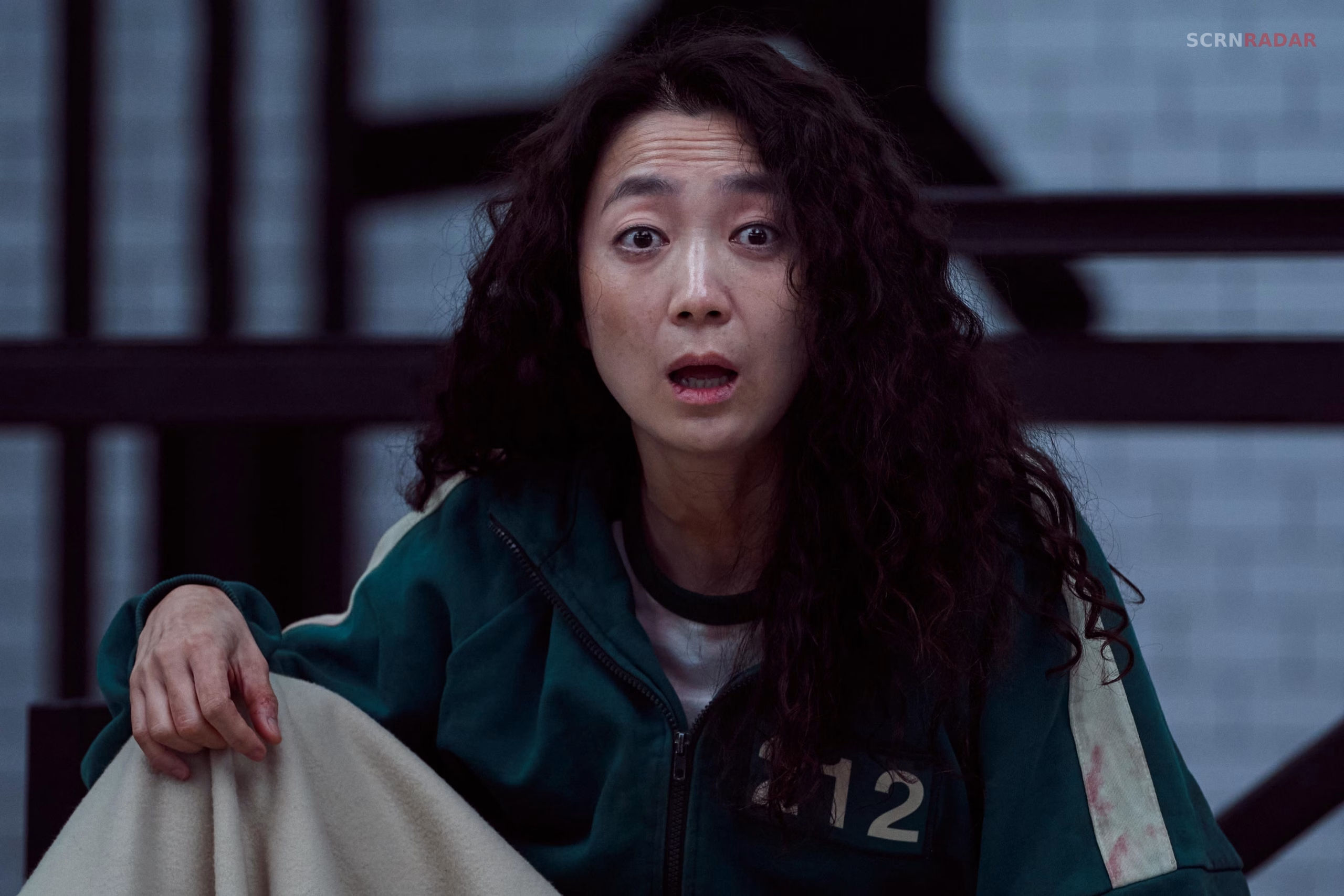
Han Mi-nyeo is one of the most unpredictable characters in the series. Her loud personality and emotional outbursts make her stand out, but they also mask her survival instincts.
Mi-nyeo constantly shifts alliances, adapting to the changing dynamics of the game. Her ability to manipulate situations keeps her alive longer than expected.
Her final act on the glass bridge is both surprising and symbolic. By taking Deok-su down with her, she asserts control over her fate in a system designed to strip players of agency.
Her character represents resilience and adaptability. She may not be physically strong, but her unpredictability becomes her greatest weapon.
Hwang Jun-ho – Played by Wi Ha-joon

Hwang Jun-ho provides an outside perspective on the games. As a police officer searching for his missing brother, he infiltrates the organization to uncover the truth.
His storyline adds depth to the series by exploring the structure behind the games. Through Jun-ho, viewers learn about the hierarchy and operations of the organization.
His discovery that the Front Man is his brother adds emotional weight to his journey. This twist connects the personal and systemic aspects of the story.
Jun-ho’s arc highlights the difficulty of challenging powerful systems. Despite his efforts, he is ultimately unable to stop the games, reinforcing the show’s themes of power and control.
The Front Man – Played by Lee Byung-hun
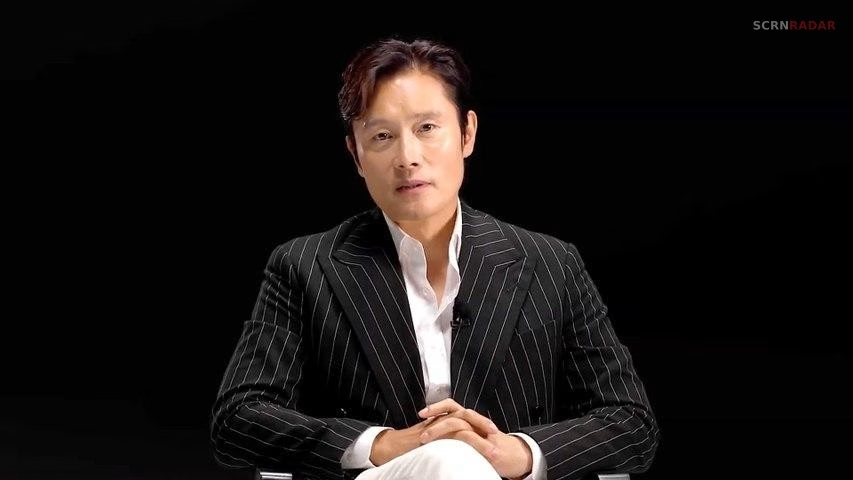
The Front Man represents authority within the game. As the overseer, he enforces rules and ensures that the competition runs smoothly.
His identity as Jun-ho’s brother adds complexity to his character. He is not simply a villain but someone who has become part of the system.
His calm demeanor contrasts with the chaos of the games. This control makes him a powerful figure, even without direct involvement in the competition.
The Front Man symbolizes how individuals can become complicit in oppressive systems. His character raises questions about morality and responsibility.
The characters of Squid Game are the foundation of its success. Each one brings a unique perspective, allowing the series to explore themes of survival, morality, and inequality in depth.
Through strong performances and layered storytelling, the show creates a narrative that resonates globally. The characters are not just players in a game but reflections of real-world struggles. That is why Squid Game continues to charm audiences. Its story may be fictional, but its characters feel real.
Another important layer in Squid Game is how the characters represent different social classes and systemic inequalities. From Gi-hun’s working-class struggles to Sang-woo’s fall from elite status, the show highlights how financial desperation cuts across societal boundaries. Each player’s background adds realism, making the competition feel like a reflection of real-world economic pressures rather than pure fiction.
The relationships between characters also play a crucial role in shaping the narrative. Alliances form out of necessity but are constantly tested by the structure of the games. Trust becomes both a survival tool and a liability, creating emotional tension that drives many of the show’s most memorable moments.
Ultimately, the characters’ choices reveal a central truth about the series: survival often comes at the cost of morality. Whether through sacrifice, betrayal, or resilience, each player’s journey contributes to the show’s powerful commentary on human nature under extreme conditions.